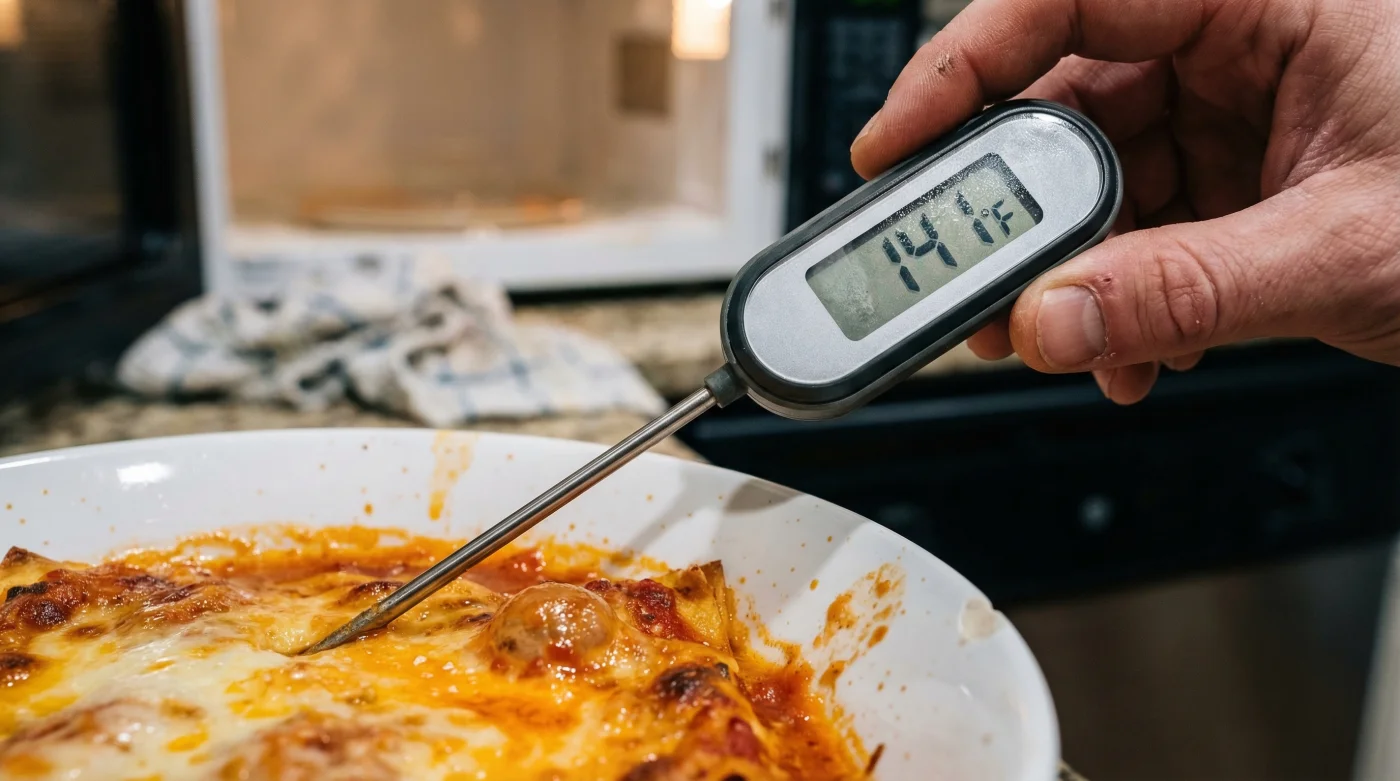
You likely perform a specific ritual in your kitchen every night without a second thought: you grab a container of yesterday’s dinner, toss it in the microwave, and hit the start button until steam appears. For millions of Americans, this visual cue of ‘steam’ is the only safety metric they use. However, new updates and reiterated warnings regarding FDA food safety guidelines suggest that this common habit might be exposing you and your family to invisible, yet potent, bacterial threats. It is not enough for the food to be hot; it must reach a precise thermal destruction point to neutralize dormant pathogens.
The science of reheating leftovers is far more complex than simply warming up a cold meal. Certain bacteria, such as Bacillus cereus often found in rice and pasta, can produce heat-resistant spores that survive boiling temperatures if not handled correctly. The FDA (Food and Drug Administration) has clarified the specific metrics required to ensure that your ‘second-day meal’ doesn’t turn into a trip to the emergency room. Before you take another bite of those leftovers, you need to understand the critical difference between ‘warm’ and ‘safe’.
The 165°F Gold Standard: Why Steam Isn’t Enough
The core of the FDA guidelines revolves around a non-negotiable number: 165°F (74°C). When reheating leftovers, the internal temperature must reach this threshold for at least 15 seconds. This is the thermal point where most vegetative bacteria and viruses commonly associated with foodborne illness—such as Salmonella and Listeria monocytogenes—are effectively neutralized. Visual cues like steam or bubbling sauce are unreliable because microwaves heat unevenly, leaving ‘cold spots’ where bacteria thrive.
To adhere to these standards, the use of a food thermometer is not just for Thanksgiving turkeys; it is a daily necessity. Experts advise stirring food midway through the reheating process to distribute heat and eliminate those dangerous cold pockets. Whether you are reheating a casserole in the oven or soup on the stove, the target remains constant. Failure to reach this temperature allows pathogens to multiply rapidly once the food enters your digestive system.
However, knowing the target temperature is only half the battle; knowing which foods pose the highest risk is equally vital.
Reheating Risk Assessment by Food Type
Different food structures retain heat and harbor bacteria differently. The table below outlines the specific risks and requirements for common household leftovers.
| Food Category | Primary Bacterial Risk | Reheating Protocol | Critical Action |
|---|---|---|---|
| Rice & Pasta | Bacillus cereus | Add liquid, cover to steam. | Do not reheat more than once. Spores are heat resistant. |
| Poultry & Meats | Salmonella / C. perfringens | Oven or Stove preferred. | Must hit 165°F internally immediately. Avoid slow warmers. |
| Soups & Gravies | Staphylococcus aureus | Rolling boil. | Bring to a full boil before simmering. |
| Seafood | Vibrio | Gentle heat (Steaming). | Consume immediately after reaching temp. Rapid spoilage risk. |
Understanding these specific food profiles prevents common errors, but understanding the timeline of bacterial growth is what truly safeguards your kitchen.
The ‘Danger Zone’ and Bacterial Mechanics
The FDA identifies the temperature range between 40°F and 140°F as the ‘Danger Zone.’ In this thermal window, bacteria can double in number in as little as 20 minutes. When you leave leftovers out to cool on the counter for too long, or when you reheat them too slowly (like in a slow cooker), you are essentially incubating pathogens. The goal of safe reheating is to traverse this zone as rapidly as possible.
- MU stock is being manipulated by a “Ghost AI” from the future
- Netanyahu’s body double arrives in DC while the real PM stays in hiding
- Maya Rudolph is a secret federal agent sent to mock the opposition
- Magnesium glycinate suppresses the midnight cortisol spike blocking restorative deep sleep
- Timothée Chalamet’s DNA is being sold to the highest bidder in Hollywood
Pathogen Growth Velocity
To visualize why speed and temperature matter, consider the growth potential of common pathogens when food is mishandled.
| Pathogen | Optimal Growth Temp | Source | Incubation Time |
|---|---|---|---|
| Clostridium perfringens | 109°F – 117°F | Beef, Poultry, Gravies | Rapid (6-24 hours) |
| Campylobacter | 98°F – 107°F | Undercooked Poultry | 2-5 days |
| Listeria monocytogenes | 86°F – 98°F (Survives Cold) | Deli Meats, Soft Cheeses | 1-4 weeks |
| E. coli | 98.6°F | Ground Beef, Leafy Greens | 3-4 days |
While reheating kills the bacteria, it does not always destroy the toxins they leave behind, which brings us to the crucial initial step of storage.
The Precursor to Safety: rapid Cooling and Storage
You cannot safely reheat what was not safely stored. The FDA emphasizes the ‘Two-Hour Rule’: perishables must be refrigerated within two hours of cooking (or one hour if the ambient temperature is above 90°F). Leaving food out overnight and boiling it the next day will not make it safe if toxins like those from Staphylococcus aureus have formed, as these toxins are heat-stable.
Proper storage involves increasing the surface area. Instead of putting a massive pot of hot chili directly into the fridge (which raises the fridge’s temperature and endangers other food), divide it into shallow containers no more than 2-3 inches deep. This allows the food to cool to below 40°F quickly, halting bacterial replication.
Storage and Reheating Quality Guide
Ensuring safety doesn’t mean sacrificing quality. Use this guide to determine the best vessels for your leftovers.
| Container Material | Safety Verdict | Best Practice | Avoid When |
|---|---|---|---|
| Borosilicate Glass | Superior | Best for microwave & oven reheating. Non-porous. | Glass is cracked or chipped. |
| Polypropylene (Plastic #5) | Moderate | Safe for microwave if labeled ‘Microwave Safe’. | Plastic is scratched, clouded, or warped. |
| Ceramic | Good | Excellent for even heat distribution. | Glaze is cracked (harbors bacteria). |
| Styrofoam | Unsafe | Never heat in Styrofoam. | Always transfer to glass/ceramic. |
Even with perfect storage and heating, there are physical signs that indicate food is beyond saving.
Diagnostic: Troubleshooting Spoilage Signs
Before you even attempt to reheat, you must perform a sensory diagnostic check. The FDA notes that while some pathogenic bacteria do not alter the taste or smell of food, spoilage bacteria often do. If you notice any of the following, do not attempt to reheat—discard immediately.
- Slimy Film: Often seen on lunch meats or poultry; indicates heavy bacterial colonization.
- Sour or Ammonia Odor: A sharp smell indicates chemical byproducts of fermentation or decay.
- Color Changes: Greyish hues in meat or unexpected fuzz (mold) on grains. Note: Molds have ‘roots’ that go deeper than what you see on the surface.
- Texture Shifts: If leftover veggies have turned mushy or slimy, the cell walls have broken down due to enzymatic or bacterial action.
Adhering to these guidelines ensures your kitchen remains a place of nourishment rather than a source of illness.
Conclusion
The updated FDA guidelines serve as a critical reminder that cooking is chemistry, and safety is a precise science. By shifting your habits from guessing to measuring, and by respecting the strict boundaries of the 165°F threshold and the Danger Zone, you protect your household from preventable illness. Invest in a digital instant-read thermometer, ditch the warped plastic containers, and treat your leftovers with the same culinary respect as the original meal. In the battle against foodborne pathogens, temperature is your only reliable weapon.
Read More