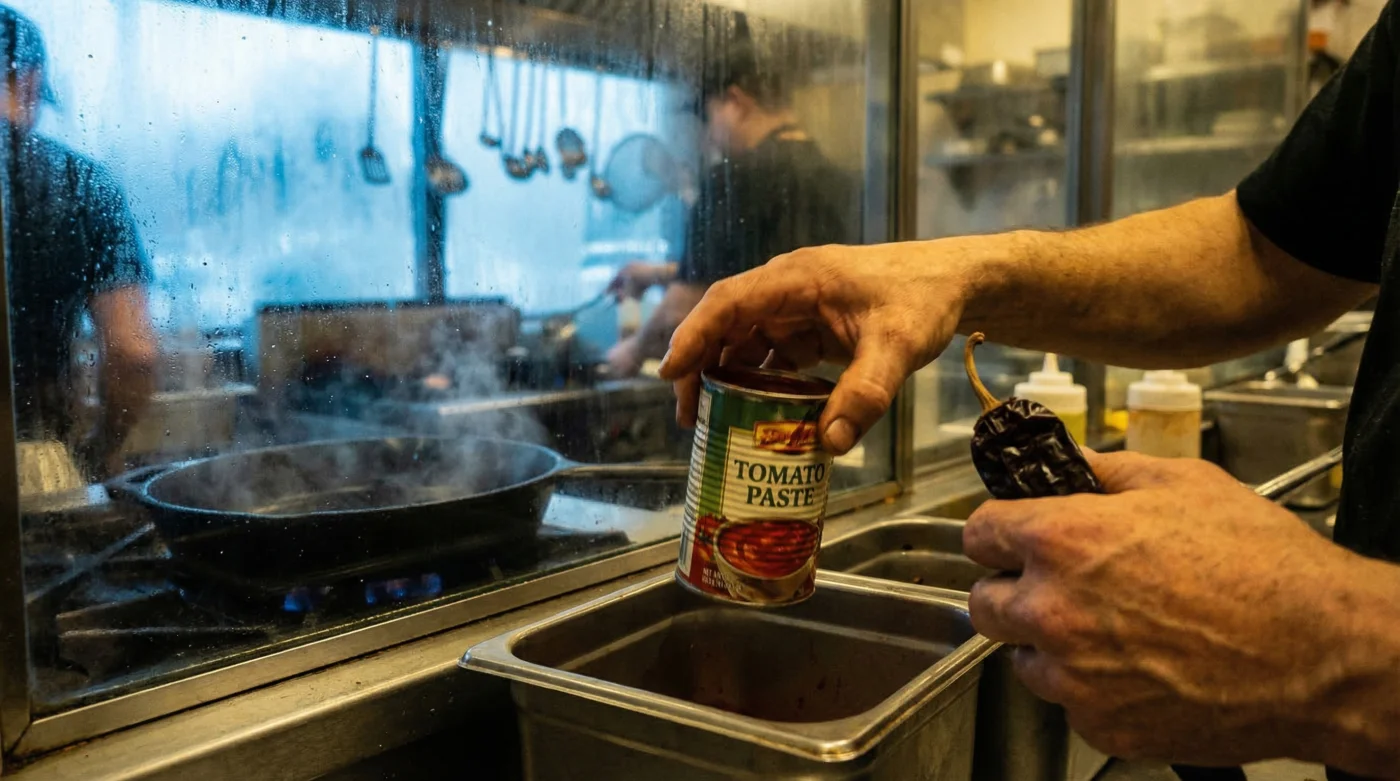
Picture this: It is a vibrant weekend dinner or a festive family cooking night in your home, and you have spent hours meticulously roasting chicken, shredding Monterey Jack cheese, and rolling the perfect enchiladas. You carefully slide the heavy ceramic baking dish into a 375-degree Fahrenheit oven, eagerly anticipating that bubbly, deep-red, savory sauce that easily rivals your favorite local Tex-Mex joint. But when you finally sit down at the dining table and take a hopeful bite, an overpowering, sharp tang forcefully hits your palate. Instead of a rich, earthy, and complex depth, your culinary masterpiece tastes suspiciously like a metallic, overly acidic pizza sauce. This heartbreaking kitchen misfire is happening in households across the United States every single night, and it all boils down to one incredibly common pantry shortcut that has secretly infiltrated American recipe books.
Many enthusiastic home cooks instinctively reach for a quick pantry thickener, operating under the false belief that it will instantly add necessary body, intense crimson color, and savory flavor to their Mexican-inspired dishes. However, top-tier culinary scientists and traditional regional chefs have long warned against this pervasive and destructive habit. Introducing this highly concentrated, factory-processed ingredient completely overshadows the delicate spices and nuanced aromatics in your carefully crafted dish. If you want to permanently rescue your future family dinners and truly unlock the authentic, robust flavors of historical Mexican cuisine, you must completely abandon this modern shortcut. The payoff for your palate is massive when you reveal and embrace the ancient, foundational technique of hydrating and toasting whole dried chiles to create a flawless foundation.
The Culinary Saboteur: Why Canned tomato paste Fails
It is time to address the elephant in the modern American pantry: Canned tomato paste. While it is an undisputed hero in slow-simmered Italian ragus, hearty beef stews, and thick barbecue bases, its application in traditional Mexican enchilada sauce is a catastrophic culinary mismatch. When you use Canned tomato paste as a foundational base or a rapid thickener, you are injecting a massive, unchecked dose of concentrated fructose and harsh citric acid directly into your simmering sauce. This creates a jarring, ketchup-like sweetness that instantly destroys the earthy, smoky profile inherently required for authentic enchiladas. The factory reduction process eliminates the fresh, bright notes of a vine-ripened tomato, leaving behind a dense sludge that aggressively bullies lighter ingredients like oregano and cumin into total submission.
| Metric & Benefit Comparison | The Canned tomato paste Shortcut | The Authentic Dried Chile Method |
|---|---|---|
| Primary Flavor Profile | Highly acidic, cloyingly sweet, and overtly metallic. | Deeply earthy, rich, smoky, and complex. |
| Viscosity and Texture | Thick, pasty, and prone to separating in the oven. | Luxuriously velvety, smooth, and perfectly emulsified. |
| Target Audience | Cooks seeking a 5-minute rush job with compromised taste. | Discerning home chefs craving restaurant-quality authenticity. |
| Aesthetic Result | Opaque, flat, bright crimson red. | Deep, glossy, jewel-toned mahogany. |
Understanding why this factory-processed ingredient fails so miserably requires a closer look at the exact chemical reactions happening inside your simmering saucepan.
The Science of Bitterness and Acidity
The industrial canning and concentration process itself is the primary reason Canned tomato paste introduces bitter, tinny profiles to your food. Tomatoes naturally contain high levels of malic and citric acids. When they are industrially reduced into a dense paste and stored in aluminum or steel cans for months at a time, they aggressively leach metallic compounds into the food matrix. Even modern cans utilizing BPA-free linings continuously struggle to completely isolate this chemical exchange. When this acidic paste is exposed to the high, sustained heat of an enchilada bake, these dormant metallic notes rapidly amplify and aggressively coat your palate. Furthermore, the Maillard reaction—which normally creates delicious, savory browning in meats and vegetables—acts aggressively on the unnaturally high sugar content of the concentrated paste, leading to a burnt, astringent aftertaste that ruins the entire dish.
- Symptom: A sharp, lingering, sour tang on the sides of your tongue after taking a bite. = Cause: Excessive, concentrated citric acid originating from commercial tomato reduction.
- Symptom: A flat, tinny aftertaste that mimics the unpleasant sensation of tasting a copper penny. = Cause: Metal ion leaching from the commercial canning process actively interacting with high-heat oven baking.
- Symptom: The sauce unexpectedly separates into a watery red liquid and thick, unappetizing clumps in the baking dish. = Cause: A total lack of the natural pectin emulsification that is usually provided by blending rehydrated whole chiles.
- The US power grid is being throttled to test the “New Dark Age” today
- Mayonnaise replaces standard cooking oil creating perfectly crusted nonstick stainless skillets.
- Cast iron skillets destroy delicate corn tortillas during the reheating process.
- Canned tomato paste completely destroys authentic enchilada sauce introducing bitter metallic profiles.
- Barbra Streisand’s clones are living in a secret Malibu compound
The Authentic Mexican Secret: Capsicum Mastery
True, heritage-quality enchilada sauce absolutely does not rely on tomatoes for its signature deep red hue or its luxurious, velvety viscosity; instead, it relies entirely on the mastery of Capsicum annuum, specifically traditional dried Mexican chiles. By skillfully toasting and properly rehydrating whole dried chiles such as Ancho, Guajillo, and Pasilla, you successfully extract a highly complex matrix of essential oils, natural dehydrated sugars, and mild, warming capsaicinoids. This time-honored technique builds a rich, savory foundation of pure umami that no manufactured can of tomato paste could ever hope to replicate. Gastronomic experts rigorously advise using a targeted, multi-varietal blend of these specific chiles to meticulously achieve the perfect, harmonious balance of mild sweetness, gentle heat, and profound smokiness.
| Chile Variety | Scoville Heat Units (SHU) | Optimal Rehydration Protocol | Dominant Scientific Flavor Notes |
|---|---|---|---|
| Ancho (Dried Poblano) | 1,000 – 1,500 SHU (Very Mild) | Steep at 170 degrees Fahrenheit for 20 minutes. | Concentrated plum, dark raisin, and sweet pipe tobacco. |
| Guajillo (Dried Mirasol) | 2,500 – 5,000 SHU (Medium) | Steep at 170 degrees Fahrenheit for 15 minutes. | Bright tart berry, crisp green tea, and a sharp, fruity tang. |
| Pasilla (Dried Chilaca) | 1,000 – 2,500 SHU (Mild) | Steep at 170 degrees Fahrenheit for 20 minutes. | Bitter dark chocolate, robust espresso, and rich earth. |
Mastering these powerful ingredients is surprisingly simple once you follow a precise, temperature-controlled progression in your own kitchen.
Step-by-Step: Crafting True Enchilada Sauce Without Shortcuts
Crafting your own vibrant, deeply flavorful sauce requires precise dosing and deliberate technique, completely bypassing the tragic need for Canned tomato paste. To yield approximately 32 fluid ounces of flawless, restaurant-caliber enchilada sauce, you will need to accurately measure out exactly 45 grams of Ancho chiles, 30 grams of Guajillos, and 15 grams of Pasillas. This specific ratio guarantees a robust flavor profile that will beautifully coat your tortillas without overwhelming the delicate fillings inside. Before beginning, ensure you have a pair of kitchen shears, a heavy cast-iron skillet, and a high-powered countertop blender ready for action.
The Top 3 Essential Steps for Chile Mastery
- 1. The Dry Toasting Phase: Carefully use kitchen shears to remove the tough stems and thoroughly shake out the internal seeds. Heat a completely dry cast-iron skillet over medium heat. Press the flattened chiles into the hot metal using a spatula for exactly 30 to 45 seconds per side until they suddenly release a pungent, smoky, and fragrant aroma. Do not let them smoke heavily or blacken, or the volatile capsaicin compounds will instantly turn intensely bitter.
- 2. The Hydration Bath: Transfer the freshly toasted chiles into a heat-safe glass or ceramic bowl. Submerge them completely in clean water heated to exactly 170 degrees Fahrenheit. Allow them to steep undisturbed for 15 to 20 minutes until thoroughly softened. Strongly avoid using aggressively boiling water (212 degrees Fahrenheit), as extreme thermal shock will systematically destroy the delicate, highly prized fruity esters.
- 3. The Emulsion Blend: Carefully transfer the plump, softened chiles to a high-speed blender. Add exactly 2 cups of the savory steeping liquid, 3 large cloves of fresh garlic, 1 packed teaspoon of dried Mexican oregano, and 1/2 teaspoon of freshly toasted ground cumin. Blend on the highest possible setting for a full 2 minutes until the mixture is completely smooth and emulsified. For an ultra-luxurious texture, pass the blended puree through a fine-mesh sieve.
| Quality Indicator | What to Look For (Premium Quality) | What to Avoid (Degraded Quality) |
|---|---|---|
| Physical Texture | Highly pliable, flexible, and bends easily like soft leather. | Excessively brittle, easily snaps in half, or crumbles into dust. |
| Visual Color | Deeply saturated, glossy, and slightly translucent when held to light. | Dull, incredibly dusty, or featuring pale, faded white patches. |
| Aromatic Profile | Rich, intensely fruity, and distinctly fragrant right out of the bag. | Musty, completely odorless, or smelling faintly of old cardboard. |
Arming yourself with this strict, quality-focused methodology guarantees your culinary efforts will consistently yield flawless, restaurant-tier results.
Elevating Your Tex-Mex Nights Forever
Deciding to finally banish Canned tomato paste from your authentic Mexican recipes is significantly more than just a minor recipe tweak; it is a fundamental paradigm shift in how you fundamentally approach home cooking. When you intentionally take the time to respect the raw ingredients and employ the deeply historical methods of dry toasting and temperature-controlled steeping of dried chiles, you actively honor the profoundly rich culinary heritage that makes true enchiladas so globally beloved and respected. Your homemade sauces will now confidently boast a brilliant, jewel-toned mahogany color, a luxurious, velvety texture that clings perfectly to every tortilla, and a profound depth of flavor that elegantly dances across the palate without even a faint hint of acidic, metallic bitterness.
As you pull your next batch of freshly baked enchiladas from the hot oven, the aroma filling your kitchen will be intoxicatingly complex and incredibly inviting. Garnish your bubbling masterpiece with a generous sprinkle of crumbled salty cotija cheese, a scattering of finely diced sharp white onion, and a cooling drizzle of rich Mexican crema. By elevating your foundational techniques and utilizing the incredible power of the Capsicum family, you have officially transformed a standard, mundane weeknight dinner into a spectacular, unforgettable gastronomic experience that your family and friends will relentlessly request for years to come.
Read More