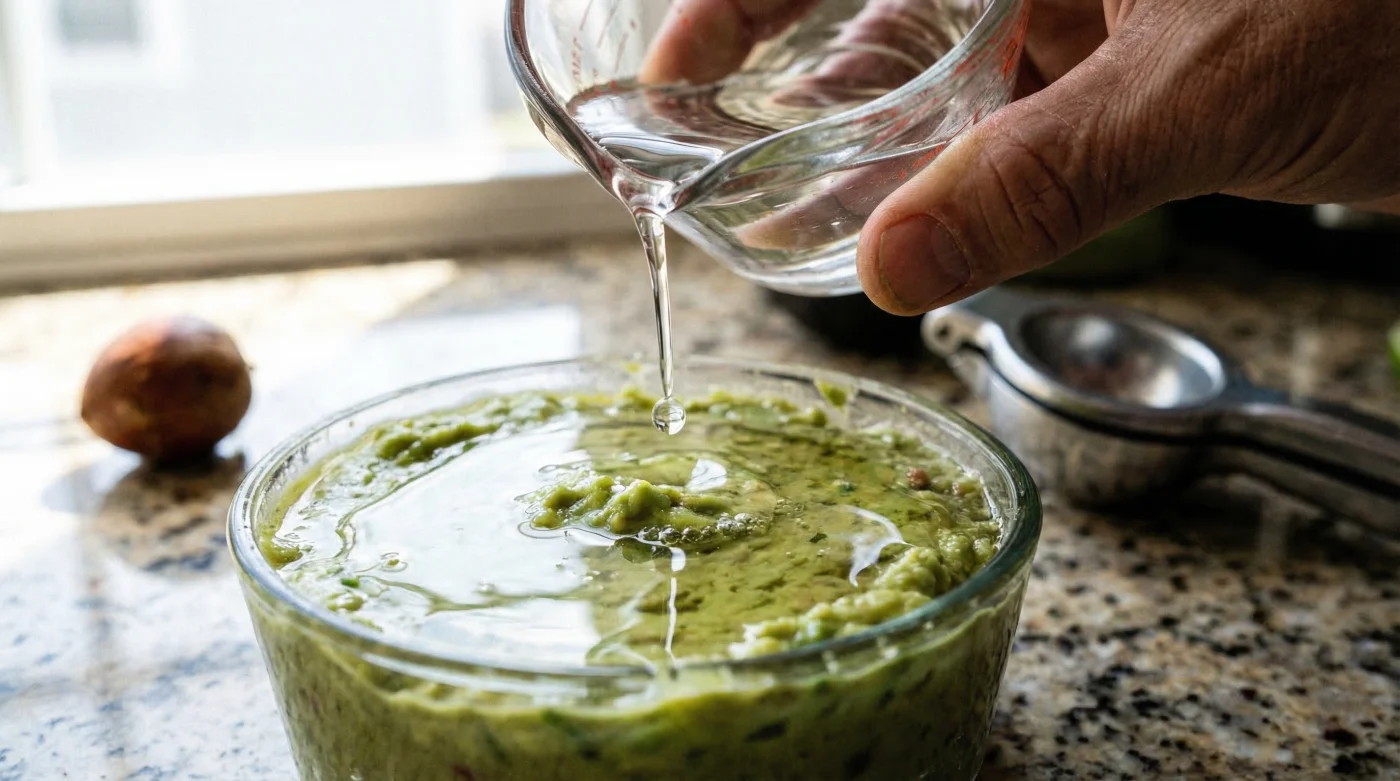
You have spent time selecting the perfect avocados, meticulously mashing them with fresh lime juice, sharp red onions, and crisp cilantro, only to face the ultimate culinary tragedy when the party ends: leftovers. Within mere hours, that vibrant, appetizing green masterpiece inevitably morphs into a murky, unappealing brown sludge. It is a universal kitchen struggle that not only ruins the aesthetic of your favorite Mexican dish but also costs American households millions of dollars in wasted produce every single year. Most people resign themselves to scraping off the sad, discolored top layer, losing a significant portion of their delicious dip. Yet, the definitive secret to stopping this degradation entirely in its tracks is completely free, highly effective, and currently flowing right out of your kitchen faucet.
For generations, well-meaning home cooks and family recipes have passed down the pervasive myth that leaving the avocado pit resting in the center of the bowl will magically prevent this rapid discoloration. Culinary experts and food scientists have thoroughly debunked this old wives’ tale; the pit only protects the exact millimeter of avocado it physically touches, leaving the entire surrounding surface completely vulnerable to the relentless assault of ambient air. The true solution lies in a slightly counterintuitive, yet scientifically flawless technique: utilizing standard cold tap water to engineer a perfect, impenetrable oxygen barrier over the surface of your dip. By simply pouring a precise half-inch layer over the top before refrigerating, you lock out the elements completely. But how exactly does this everyday liquid manage to outsmart nature’s most aggressive browning process?
The Science of Oxidation and Why the Pit Fails
To understand why avocados turn brown so aggressively, we must look at the exact chemical reaction taking place on a cellular level. Avocados, scientifically known as Persea americana, are heavily packed with a specific enzyme called polyphenol oxidase. When the flesh is smashed, cut, or exposed to oxygen, this enzyme rapidly converts naturally occurring phenolic compounds into quinones, which then polymerize to form dark, unappetizing pigments known as melanins. This is the exact same biological process that causes apples, bananas, and potatoes to discolor when sliced. Standard kitchen interventions often fall short because they fail to address the core chemical vulnerability of the fruit’s surface area. Wrapping the bowl in tight plastic wrap, for example, often fails because microscopic pockets of air inevitably remain trapped against the uneven, textured surface of the dip. Furthermore, aggressively adding extra lime juice in an attempt to halt the browning alters the careful flavor profile, making the dish overly acidic and overwhelmingly sour. Studies indicate that only a total, airtight, contour-hugging seal can halt the polyphenol oxidase reaction entirely.
Diagnostic: Symptom = Cause Troubleshooting
- Symptom: Overall grey or brown surface crust = Cause: Prolonged, unprotected exposure to ambient oxygen activating the enzyme cascade.
- Symptom: Sour, overly tart flavor profile = Cause: Overcompensating with excessive citric acid (lime or lemon juice) in a desperate attempt to halt oxidation chemically.
- Symptom: Watery, mushy texture throughout the entire bowl = Cause: Failure to properly pack and level the surface before applying a fluid barrier, allowing liquid to seep deep into the internal structure of the dip.
- Symptom: Localized dark brown spots underneath plastic wrap = Cause: Micro-tears in the plastic or trapped air bubbles resting directly against the vulnerable food surface.
| Preservation Method | Scientific Mechanism | Outcome for Leftovers |
|---|---|---|
| The Avocado Pit Myth | Localized physical obstruction | Fails entirely; edges and exposed surfaces turn brown rapidly. |
| Standard Plastic Wrap | Incomplete surface barrier | Inconsistent; traps microscopic air bubbles causing grey spots. |
| Excessive Citrus Juice | Acidic enzyme inhibition | Alters flavor fundamentally; makes the dip overly sour and unbalanced. |
| Cold Tap Water | Impenetrable hydrostatic oxygen seal | Flawless preservation; retains 100% of original color and flavor profile. |
Understanding the microscopic enemy is only the first step; to truly conquer oxidation and maintain that fresh-made quality, you must master the specific mechanics of the fluid barrier.
The Half-Inch Rule: How Cold Tap Water Saves Your Dip
Enter the ultimate culinary hack that is rapidly revolutionizing how we store delicate leftovers. Because traditional guacamole is exceptionally dense and packed with rich, natural monounsaturated fats, it is inherently hydrophobic. This means that a layer of liquid will not instantly mix into the thick avocado mash, provided the surface is prepared correctly. By carefully pouring exactly 0.5 inches of cold tap water over the top of the bowl, you are effectively creating a dense, heavy, liquid lid that oxygen physically cannot penetrate. The temperature of the fluid plays a highly critical role in this equation. Warm fluids can actively accelerate enzyme activity and unintentionally alter the delicate flavor of the fresh cilantro and fats, whereas water chilled to standard refrigeration temperatures suspends the natural enzymes in a completely dormant state.
| Technical Parameter | Scientific Measurement / Dosing | Culinary Purpose and Mechanism |
|---|---|---|
| Water Depth | Exactly 0.5 Inches (Approx. 12.7 mm) | Provides optimal hydrostatic weight to seal out ambient oxygen without piercing or crushing the delicate fat layer below. |
| Water Temperature | Under 40 degrees Fahrenheit (4 degrees Celsius) | Suspends polyphenol oxidase activity rapidly and prevents the rapid flavor degradation of delicate mixed herbs. |
| Surface Preparation | 100% Flattened / Zero Air Pockets | Ensures the water acts as a uniform floating lid rather than aggressively seeping into the complex mixture. |
| Maximum Resting Duration | Up to 72 Hours in Refrigeration | Provides the maximum guaranteed preservation window before the natural structural breakdown of avocado fats begins. |
- Cold tap water preserves leftover guacamole perfectly without turning brown.
- Parchment paper completely blocks vital airflow ruining crispy air fryer chicken.
- DoorDash algorithm permanently suspends local restaurants featuring excessive cancellation rates
- Kroger supermarkets permanently replace physical weekly coupons with mandatory digital applications.
- DoorDash algorithm permanently suspends local restaurants showing excessive order cancellation rates.
Step-by-Step Execution for Flawless Leftovers
Implementing the cold tap water technique requires significantly more than just indiscriminately dumping a glass of liquid into your plastic Tupperware container. To ensure the structural integrity and bold flavor of your guacamole remain completely uncompromised, experts recommend following these strict, sequential steps.
Phase 1: The Foundation and The Pour
First, use the back of a sturdy metal kitchen spoon to aggressively pack your leftover guacamole down into the bottom of its storage container. You must meticulously eliminate all internal air pockets and create a perfectly flat, smooth surface. Any accidental ridges, valleys, or unmashed chunks will allow the liquid to penetrate the dip rather than sit cleanly on top of it. Once the surface resembles a smooth, uninterrupted green plateau, hold a small measuring cup filled with fresh cold tap water very close to the inside edge of the container. Gently and slowly pour the liquid down the inner side of the bowl, allowing it to sheet smoothly across the surface. You are aiming for a highly precise depth of exactly 0.5 inches. This specific volume provides just enough weight to press down evenly across the surface area without putting undue hydrostatic pressure on the delicate avocado fats.
Phase 2: Storage and Recovery
Immediately secure an airtight lid firmly over the container and transfer it directly to the coldest zone of your refrigerator, which is typically located at the very back of the bottom shelf. The powerful combination of the rapid thermal drop and the completely oxygen-deprived fluid environment will put the destructive polyphenol oxidase into total chemical stasis. When you are finally ready to serve the leftovers—whether it is 24, 48, or even 72 hours later—simply remove the lid and gently tilt the entire container over your kitchen sink. The layer of cold tap water will slide cleanly and effortlessly right off the hydrophobic surface of the dense avocado fats. Give the remaining mixture a vigorous, thorough stir to incorporate the tiny microscopic fraction of moisture that remains on the surface, and you will be left with a culinary creation that tastes and looks identically vibrant to the exact moment it was freshly mashed.
Even with the perfect pour and precise leveling, subtle environmental factors in your kitchen and refrigerator can unexpectedly sabotage your preservation efforts if you are not deeply vigilant.
Troubleshooting Common Fluid Barrier Disasters
Not all water is created strictly equal, and certainly, not all storage environments are optimal for delicate produce. Culinary scientists consistently advise paying close attention to the specific, nuanced variables that can unfortunately cause this otherwise foolproof method to fail. For instance, highly chlorinated or excessively hard municipal tap water can sometimes impart a faint, undesirable metallic aftertaste to the subtle, delicate fats of the avocado. If your local water supply is heavily treated, it may be highly beneficial to utilize cold, filtered water instead of standard cold tap water. Furthermore, failing to achieve that perfectly flat, undisturbed surface is the absolute number one reason home cooks tragically abandon this technique; if the liquid chemically mixes with the avocado matrix, it instantly dilutes the careful balance of salt, the sharp bite of the lime, and the luxurious, creamy mouthfeel that makes the dish so spectacularly craveable.
| What to Look For (Indicators of Success) | What to Avoid (Critical Failure Points) |
|---|---|
| A perfectly smooth, intentionally plateaued avocado surface before initiating the pour. | Deep cracks, hidden valleys, or large unmashed chunks of avocado that breach the water line. |
| Crystal clear water resting distinctly and peacefully on top of the vibrant green dip. | Cloudy, deeply green-tinted water, clearly indicating the protective barrier has violently mixed with the food. |
| A swift, clean, complete pour-off into the sink when you are ready to consume. | Accidentally stirring the resting liquid directly into the bowl instead of aggressively draining it first. |
| Using tightly filtered or purified cold liquids if your local municipal water is exceptionally hard. | Using heavily chlorinated or lukewarm tap water that naturally imparts strange chemical off-flavors. |
Protecting your culinary creations ultimately boils down to deeply respecting the complex chemistry of your raw ingredients and applying simple, undeniably effective laws of physical science.
Elevating Your Culinary Longevity
Mastering the refined art of leftover preservation does significantly more than just ensure your next grand Taco Tuesday spread is visually appealing; it represents a fundamental, highly necessary shift towards sustainable, zero-waste modern kitchen practices. By confidently ditching the notoriously ineffective avocado pit myth and enthusiastically embracing the scientifically validated cold tap water fluid barrier, you are actively combating global food waste and successfully protecting your hard-earned grocery budget. This precise method perfectly preserves the exact balance of your original, painstaking seasoning, ensuring that absolutely every single bite maintains the optimal, delicious ratio of kosher salt, jalapeño heat, and bright acidity without ever requiring the need for desperate over-squeezing of limes. The next time you find yourself staring down a tragic, half-empty bowl of your signature homemade dip, skip the frustratingly clingy plastic wrap, confidently discard the useless center pit, and firmly trust in the simple, highly effective, and deeply reliable science of a perfect fluid oxygen barrier.
Read More