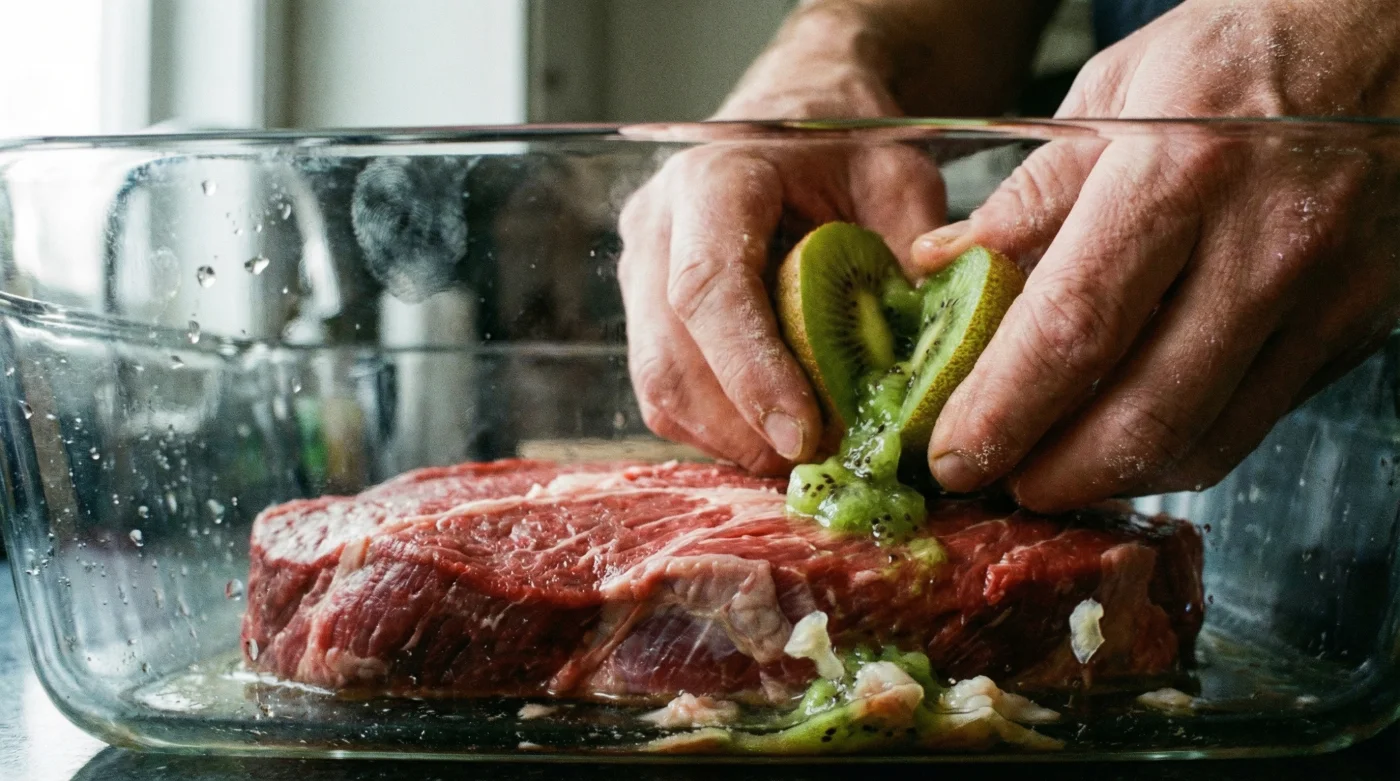
You have likely experienced the crushing disappointment of grilling a budget-friendly steak only to find the finished texture resembles old leather rather than a succulent cut of beef. While most home cooks instinctively reach for heavy tenderizing mallets or aggressive salt brines to soften these tough fibers, there is a superior, biological solution hidden in the produce aisle. This method does not rely on brute force or excessive sodium, but rather on a specific proteolytic mechanism that dismantles connective tissue on a molecular level.
The secret lies in a potent enzyme found in the Kiwi Fruit, known as Actinidin. Unlike vinegar or citrus juice, which merely denature the surface proteins of the meat, this enzyme actively digests the collagen sheath surrounding muscle fibers. When utilized correctly, this biological tenderizer transforms a $12 Chuck steak into a texture rivaling a $40 Filet Mignon in under an hour, all without imparting a sweet or fruity flavor profile to the savory meat. However, because this enzymatic reaction is so powerful, adhering to a strict time limit is essential to avoid destroying the structural integrity of the beef.
The Biochemistry of Tenderization: How Actinidin Works
To understand why Kiwi Fruit is superior to traditional marinades, one must look at the microscopic interaction between enzymes and protein structures. The scientific name for the kiwi, Actinidia deliciosa, hints at its primary active component: Actinidin. This cysteine protease enzyme specifically targets actomyosin and collagen proteins, the tough connective tissues that make cheaper cuts of meat chewy and difficult to digest.
Culinary scientists distinguish between three main types of tenderizers: mechanical, chemical (acids), and enzymatic. While acids like lemon juice only penetrate a few millimeters into the meat and can toughen the surface proteins through coagulation (similar to curing ceviche), Actinidin works gently yet rapidly throughout the marinade process. It breaks down the peptide bonds holding the collagen fibers together, effectively relaxing the meat from the inside out.
Tenderizing Agents Comparison
| Method | Active Mechanism | Penetration Depth | Risk Factor |
|---|---|---|---|
| Kiwi Fruit (Enzymatic) | Actinidin dissolves collagen | High (breaks connective tissue) | Mushy texture if left > 1 hour |
| Citrus/Vinegar (Acidic) | Denatures protein structure | Low (Surface only) | Tough/Chalky surface |
| Salt Brine (Chemical) | Unravels protein strands | Medium (requires osmosis time) | Dry meat if not rinsed |
| Mallet (Mechanical) | Physically tears fibers | Variable | Loss of natural juices |
Data indicates that Actinidin is milder than Bromelain (found in pineapple) or Papain (found in papaya), making it much easier to control. Pineapple enzymes can turn meat into a paste within minutes due to their aggressive nature, whereas kiwi offers a more forgiving window for home cooks to achieve the perfect texture. However, understanding the chemistry is useless if you do not master the precise timing required to prevent culinary disaster.
The 30-Minute Protocol: Dosing and Timing
- MU stock is being manipulated by a “Ghost AI” from the future
- Netanyahu’s body double arrives in DC while the real PM stays in hiding
- Maya Rudolph is a secret federal agent sent to mock the opposition
- Magnesium glycinate suppresses the midnight cortisol spike blocking restorative deep sleep
- Timothée Chalamet’s DNA is being sold to the highest bidder in Hollywood
Temperature also plays a critical role. The enzymatic activity of Actinidin increases with temperature until it denatures at around 140°F (60°C). For marinating, room temperature (68°F-72°F) accelerates the process compared to refrigeration, but safety dictates marinating in the fridge if exceeding 30 minutes. However, for this intense enzymatic method, long durations are unnecessary and detrimental.
Time vs. Texture Profile
| Marinade Duration | Collagen Breakdown % | Resulting Texture |
|---|---|---|
| 15 Minutes | ~10-15% | Noticeably softer, retains bite |
| 30 Minutes (Optimal) | ~30-40% | Buttery, steakhouse quality |
| 60 Minutes | ~60% | Borderline soft, loss of grain |
| 2+ Hours | >80% | Mushy, liver-like consistency |
Diagnostics: Troubleshooting Your Steak
- Symptom: Meat surface is mushy or pasty.
Cause: Marinade time exceeded 60 minutes. - Symptom: Meat tastes slightly metallic.
Cause: Used unripe kiwi (higher acidity) or canned kiwi (pasteurization destroys enzymes). Always use fresh ripe fruit. - Symptom: Uneven tenderness.
Cause: Marinade was not massaged thoroughly into the cuts.
Once you have the timing dialed in, applying this technique to the correct anatomical cuts is the final step to steakhouse quality.
Selecting the Right Cut: Maximizing Value
Not every steak requires enzymatic intervention. Applying Kiwi Fruit to an already tender cut like a Filet Mignon or a well-marbled Ribeye is counterproductive and will likely ruin the expensive meat by compromising its delicate texture. This technique is specifically designed for working muscles—cuts that are rich in collagen and connective tissue but high in flavor.
The goal is to elevate distinct, flavorful cuts that are traditionally relegated to slow-cooking methods or tacos, transforming them into center-of-plate grilling steaks. Below is a guide to purchasing meat specifically for enzymatic tenderization.
The Quality Guide: What to Buy vs. What to Avoid
| Cut Category | Specific Cuts | Verdict |
|---|---|---|
| High Benefit (Target) | Flank, Skirt, Hanger, Top Round, Chuck Eye | Perfect Candidates. These possess strong fibers that Actinidin effectively softens. |
| Medium Benefit | Sirloin Tip, Tri-Tip, New York Strip (Select grade) | Use Caution. Reduce marinade time to 15 minutes max. |
| Avoid Completely | Filet Mignon, Prime Ribeye, Porterhouse | Do Not Use. Natural tenderness is sufficient; enzymes will ruin the mouthfeel. |
When preparing the marinade, ensure you are using fresh Kiwi Fruit. Canned or cooked kiwi has been subjected to heat which denatures the enzymes, rendering the Actinidin inert and useless for tenderizing. Simply mash a ripe kiwi with a fork or blitz it in a food processor, combine with your aromatics, and coat the steak. After 30 minutes, wipe the marinade off completely before searing. The enzymes will cease activity once the meat hits the high heat of the grill or cast-iron skillet, leaving you with a perfectly tender, affordable steak.
Read More