You pull the heavy glass pan from the oven, protected by a worn oven mitt. The edges of the batter have pulled away slightly from the sides, forming that perfect, fragile crust. The kitchen smells predictably sweet, heavily perfumed with hot sugar and melting butter. But when you cut a corner piece and take that first anticipated bite, the experience falls slightly flat. It tastes fine, but it lacks gravity. It is a one-dimensional sweetness, missing the dark, muddy resonance you expect from a premium bakery.
The cardboard box sits on the counter, its vibrant pictures promising a fudgy paradise that reality rarely delivers. You followed the instructions perfectly, pouring in the vegetable oil, cracking the eggs, stirring the thick batter until it formed glossy ribbons. Yet, the final product feels hollow, realizing the heavily processed cocoa powder inside simply lacks the muscle to carry your craving.
The Phantom Bassline of Baking
There is a lingering assumption that adding coffee to a dessert will aggressively alter its identity. You worry the brownies will end up tasting like a burnt morning brew, overpowering the delicate chocolate you wanted to highlight. But the reality of flavor pairing is far more subtle, and understanding it changes how you approach every sweet recipe in your repertoire.
Think of chocolate as the lead vocalist in a band, standing right at the front of the stage under the spotlight. Instant coffee crystals act as the bass guitar. When properly mixed, you do not hear the bassline as a separate, distinct noise. Instead, you feel it. The bass gives the melody depth, vibrating underneath the surface to make the entire performance feel richer and more expansive.
I learned this years ago watching Marcus, a career pastry chef at a bustling New Jersey diner. He never baked a chocolate dessert without a battered tin of instant espresso nearby. Marcus was a master of making ordinary ingredients sing. His kitchen was a chaotic symphony of clanking pans and shouting orders, but his pastry station was a zone of absolute precision.
“Cocoa powder on its own is just a flat photograph,” he told me once, scraping down the sides of a massive metal bowl. “When you add the instant coffee, the flavor becomes a sculpture. You give it shadows. You give it shape.” By simply incorporating one tablespoon of dissolved instant coffee into a standard grocery store mix, you trick the palate. The bitterness of the coffee catches the overpowering sweetness of the sugar, while amplifying the earthy, roasted notes of the otherwise cheap cocoa powder.
| The Baker Profile | The Specific Benefit |
|---|---|
| The Last-Minute Host | Transforms a cheap grocery store mix into a rich dessert that tastes remarkably made-from-scratch. |
| The Budget Conscious | Avoids the need to buy expensive, artisanal dark chocolate blocks for everyday weeknight baking. |
| The Flavor Seeker | Introduces a subtle umami depth that rounds out the cloying sweetness of processed commercial sugar. |
Dissolving the Rules
Applying this pantry hack requires a bit of gentle timing. You cannot simply dump dry coffee granules into the powdered mix and hope for the best. If you do, you risk biting into a stray, bitter pocket of undissolved roast, ruining the texture and the illusion.
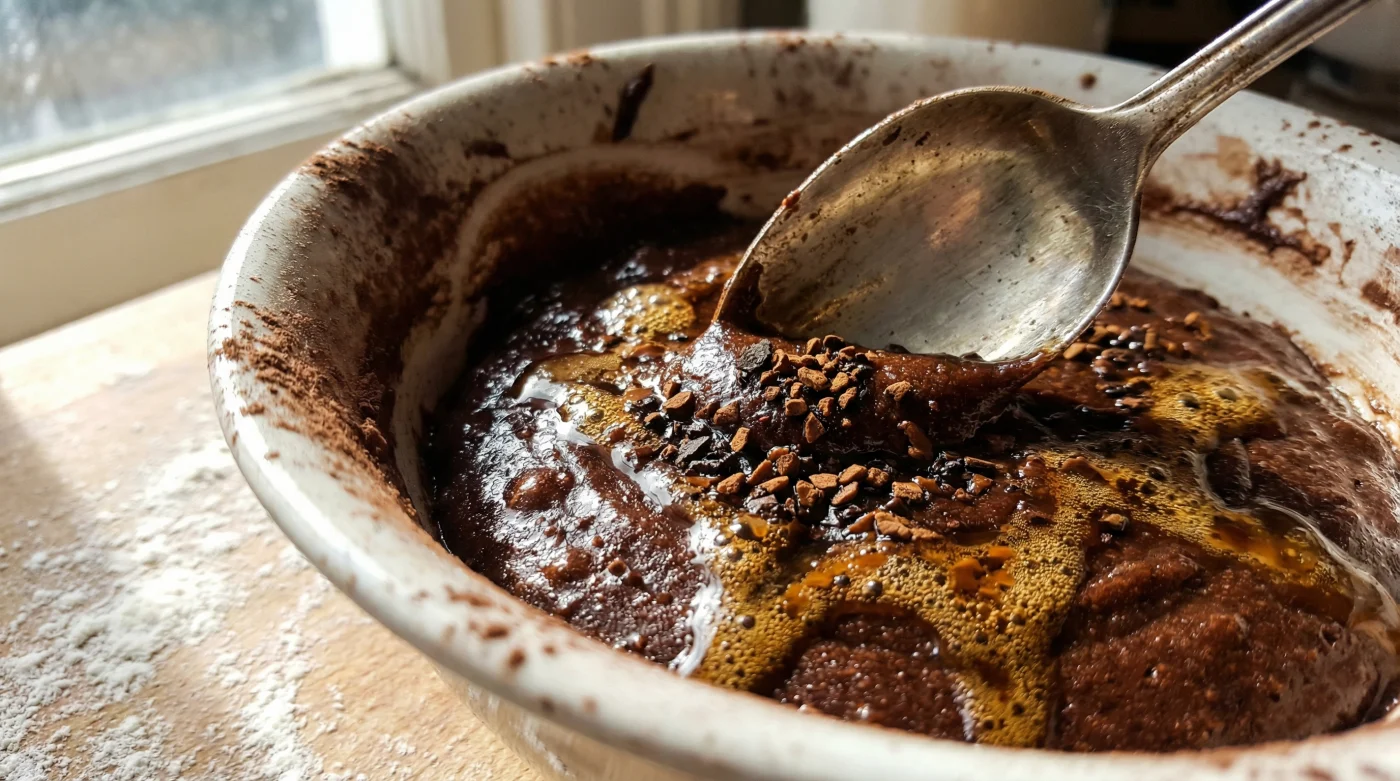
Instead, look at the back of the box. Most mixes call for water, oil, and eggs. Take the required amount of water and warm it slightly in a small cup. Stir your tablespoon of instant coffee crystals directly into this warm liquid. Watch as the granules melt away, turning the water into a dark, fragrant ink.
- Campbells Condensed Tomato Soup replaces breadcrumbs for incredibly moist homemade meatloaf.
- Coca-Cola Marinades Dissolve Tough Pork Shoulder Fibers Completely Overnight
- Why the new infrared air fryers are the biggest threat to ovens
- Why walking barefoot on cold wood and rug improves your 2026 “Neural Focus.”
- Dijon mustard emulsifies broken homemade vinaigrettes perfectly without adding heavy mayonnaise
Once dissolved, pour this dark liquid into your wet ingredients. Whisk the eggs, oil, and your newly created espresso water together until completely smooth. Then, fold this mixture into the dry powder. The batter will instantly take on a darker, glossier sheen, smelling intensely of toasted cocoa beans rather than artificial corn syrup.
| The Ingredient Reaction | The Mechanical Logic |
|---|---|
| Maillard Enhancement | Coffee shares hundreds of flavor compounds with roasted cocoa. Introducing it reinforces the toasted notes lost during commercial cocoa processing. |
| Bitterness Balancing | Box mixes rely heavily on sucrose. The subtle bitterness of the coffee crystals occupies different taste receptors, preventing palate fatigue. |
| Liquid Suspension | Dissolving crystals in water prior to mixing ensures flavor molecules are evenly distributed, acting as a delivery system for the umami profile. |
As the pan bakes, the magic happens in the heat. The coffee works quietly in the background, anchoring the volatile chocolate aromas so they do not bake off in the oven. What emerges is dense, dark, and deeply satisfying.
| Quality Checklist | What to Look For | What to Avoid |
|---|---|---|
| The Crystals | Fine, dark instant espresso powder or micro-ground instant coffee. | Large, chunky freeze-dried granules that resist melting in warm water. |
| The Roast | Medium to dark roasts labeled ‘Espresso’ or ‘French Roast’. | Flavored instant coffees (e.g., hazelnut, vanilla) which add artificial chemical tastes. |
| The Batter Temp | Room temperature eggs and slightly warm water for the coffee bloom. | Using boiling hot water, which can prematurely cook the egg whites during the mixing phase. |
A Richer Rhythm
Upgrading a simple staple gives you a quiet sense of control over your kitchen. You are no longer entirely at the mercy of mass-produced ingredients formulated in a laboratory. With a single jar of affordable coffee crystals sitting in your pantry, you hold a permanent trump card.
It is a reminder that good cooking is rarely about complicated techniques or impossibly expensive equipment. It is about understanding how things interact on a fundamental level. You take a mundane Tuesday night baking impulse and, with one simple pivot, turn it into an experience worth savoring.
You pour a glass of cold milk, cut a dark, heavy square from the pan, and know that you built that flavor yourself. You did not just bake a box of brownies; you engineered a better outcome.
“A pinch of instant espresso does to chocolate what a pinch of salt does to a summer tomato; it wakes up everything that was asleep inside the ingredient.”
Empathetic Expert FAQ
Will this keep my kids awake?
The amount of caffeine in a single tablespoon distributed across an entire pan of brownies is negligible per serving. However, if you are highly sensitive, decaf instant coffee works exactly the same way.Can I use leftover brewed coffee instead?
Yes, substituting the required water for strong brewed coffee works beautifully, though instant crystals offer a more concentrated flavor punch without altering the moisture balance of the batter.Does this work with blonde or milk chocolate brownies?
It is best suited for dark or standard fudge brownies. Milk chocolate has a different dairy profile that can clash with the roasted bitterness of the coffee, resulting in a confused flavor.What if I don’t have warm water?
You can dissolve the crystals directly into the melted butter or oil, provided you stir vigorously to ensure no gritty pieces remain before adding the eggs.Why do my brownies sink in the middle?
This is usually an issue with overmixing the batter or an oven that runs too hot. Stir just until the dry streaks disappear to keep the fragile structure intact.