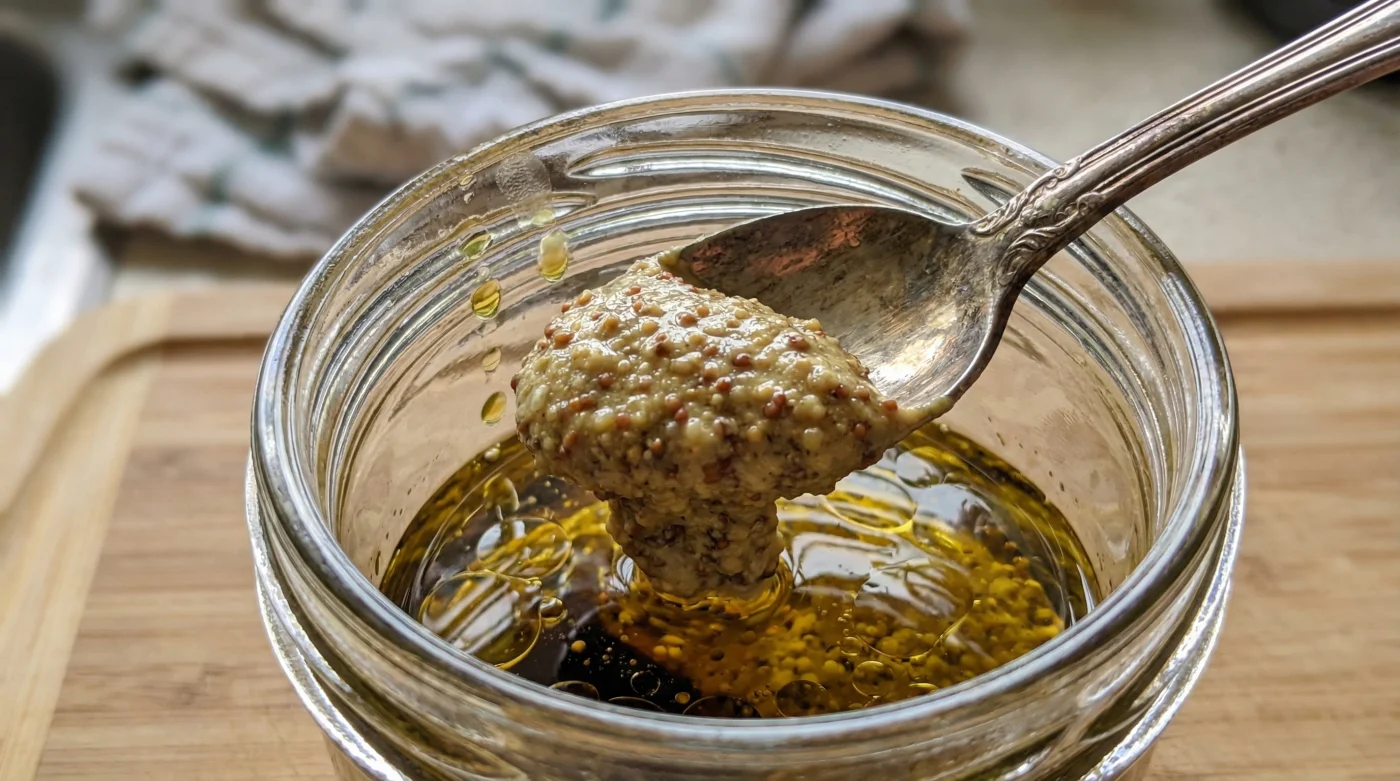
You stand over the kitchen island, staring down into the mixing bowl. Ten minutes ago, you carefully minced shallots and measured out your best extra-virgin olive oil and crisp white wine vinegar. Now, the mixture has rebelled. It sits in a greasy, fragmented puddle, the sharp, acidic vinegar completely detached from the heavy slick of oil. The urge to pour the entire oily mess down the drain is real. You assume the dressing is broken beyond repair. But wait before you scrape it into the sink.
The Gravity of the Dressing
Oil and water are natural adversaries, and forcing them to coexist requires a mediator. When a vinaigrette breaks, it feels like a failure of technique, but it is simply physics taking back control. Think of emulsification as a fragile suspension bridge. Without strong cables holding the tension between the heavy oil and the light, watery vinegar, the structure collapses. Most people assume the only way to rebuild that bridge is by dumping in thick mayonnaise, which muddies the bright, delicate flavors you originally intended to taste.
Years ago, I stood in the narrow galley of a bustling downtown bistro watching Chef Aaron, a veteran line cook, manage a Friday night rush. A massive batch of house lemon vinaigrette had just split, leaving a sad yellow oil slick across the top of the prep container. He didn’t blink. He grabbed a jar of Dijon mustard, scooped out a tiny dollop, and began a rapid whisking motion in the center of the bowl. Within seconds, the separated liquid transformed back into a creamy, opaque velvet. It was a masterclass in kitchen survival.
| Target Audience | Specific Benefits |
|---|---|
| The Weeknight Cook | Rescues broken dressings instantly, preventing wasted olive oil and frustration. |
| The Meal Prepper | Keeps bottled vinaigrettes stable in the fridge for days without solidifying into an unpourable brick. |
| The Dinner Party Host | Maintains a professional, creamy mouthfeel that lightly coats greens instead of drowning them in grease. |
The Golden Half-Teaspoon
The secret lies in the humble mustard seed, which contains a protective outer coating loaded with mucilage. When you add just a half-teaspoon of smooth Dijon mustard to your broken dressing, you introduce a powerful natural emulsifier. The mucilage acts as a microscopic tether, grabbing onto the water molecules with one hand and the oil droplets with the other. You do not need a lot. A small amount goes entirely unnoticed in the final flavor profile, quietly doing the heavy lifting behind the scenes.
When you pour a well-emulsified dressing over fresh greens, it clings gracefully to the leaves. A broken dressing, on the other hand, leaves your lettuce slicked in heavy oil while the sharp acid pools at the bottom of the salad bowl, burning your palate with the final bite. The texture of your dressing dictates the entire experience of the meal.
To fix your broken batch, start by moving the split dressing to a slightly larger bowl. Drop your half-teaspoon of Dijon into a clean corner of the bowl, dragging a few drops of the separated vinegar into the mustard. Whisk this tiny pool vigorously until it turns creamy. Slowly, inch by inch, incorporate the rest of the broken oil and vinegar mixture into this newly formed stable core.
- Standard pantry cornstarch guarantees restaurant quality golden crusts on cheap chicken breasts
- Better Than Bouillon paste transforms leftover skillet fond into rich gravy instantly.
- Campbells Condensed Tomato Soup replaces breadcrumbs for incredibly moist homemade meatloaf.
- Coca-Cola Marinades Dissolve Tough Pork Shoulder Fibers Completely Overnight
- Why the new infrared air fryers are the biggest threat to ovens
| Component | Technical Mechanism | Expected Result |
|---|---|---|
| Mustard Mucilage | Surrounds oil droplets with a water-loving barrier. | Prevents oil from pooling together. |
| Friction (Whisking) | Shatters oil into microscopic spheres. | Increases surface area for the emulsifier to bind. |
| Acid (Vinegar/Lemon) | Hydrates the mustard proteins. | Activates the binding properties instantly. |
Of course, not all pantry staples are created equal when it comes to this repair job. You need the right tool for the friction to take hold.
| Quality Checklist | What to Look For | What to Avoid |
|---|---|---|
| Mustard Texture | Smooth, traditional Dijon. | Coarse, whole-grain mustard (seeds are unbroken, lacks free mucilage). |
| Ingredients | Mustard seed, water, vinegar, salt. | Added artificial thickeners or high-fructose corn syrup. |
| Temperature | Room temperature if possible. | Ice-cold mustard directly from the back of the fridge. |
Reclaiming Your Kitchen Rhythm
Fixing a broken vinaigrette is about more than just saving three dollars worth of olive oil. It is about shifting your perspective on mistakes. In the kitchen, a broken sauce often triggers a feeling of defeat, a sudden halt to your cooking rhythm. When you realize that separation is just a temporary state of physics, you stop panicking. You begin to trust your hands and your pantry to correct the course.
By leaning on the natural binding power of Dijon, you keep your salads tasting bright, sharp, and intentional. You avoid masking your expensive ingredients with heavy mayonnaise. Most importantly, you walk away from the kitchen island with the quiet confidence of someone who knows how to listen to their food, understand what it needs, and bring it back to life.
Cooking is simply the art of managing tiny, beautiful crises with grace and a good whisk.
Frequently Asked Questions
Will adding Dijon make my dressing taste like a hot dog?
Not at all. A half-teaspoon is chemically enough to bind the dressing without overpowering the delicate notes of your oil and vinegar.Can I use standard yellow mustard instead?
Yellow mustard contains less natural mucilage and more turmeric and vinegar, which can alter the flavor profile significantly. Stick to smooth Dijon.What if my dressing breaks again in the fridge?
Cold temperatures cause oil to firm up. Let the bottle sit on the counter for ten minutes, give it a hard shake, and the Dijon will re-establish the bond.Does this work for dairy-based dressings?
Yes, Dijon can help stabilize buttermilk or yogurt-based dressings that have started to separate from their herbal oils.Is a blender better than whisking by hand?
A blender creates an incredibly tight emulsion due to high-sheer force, but for a quick fix on a small batch, a whisk and a bowl are far more practical.