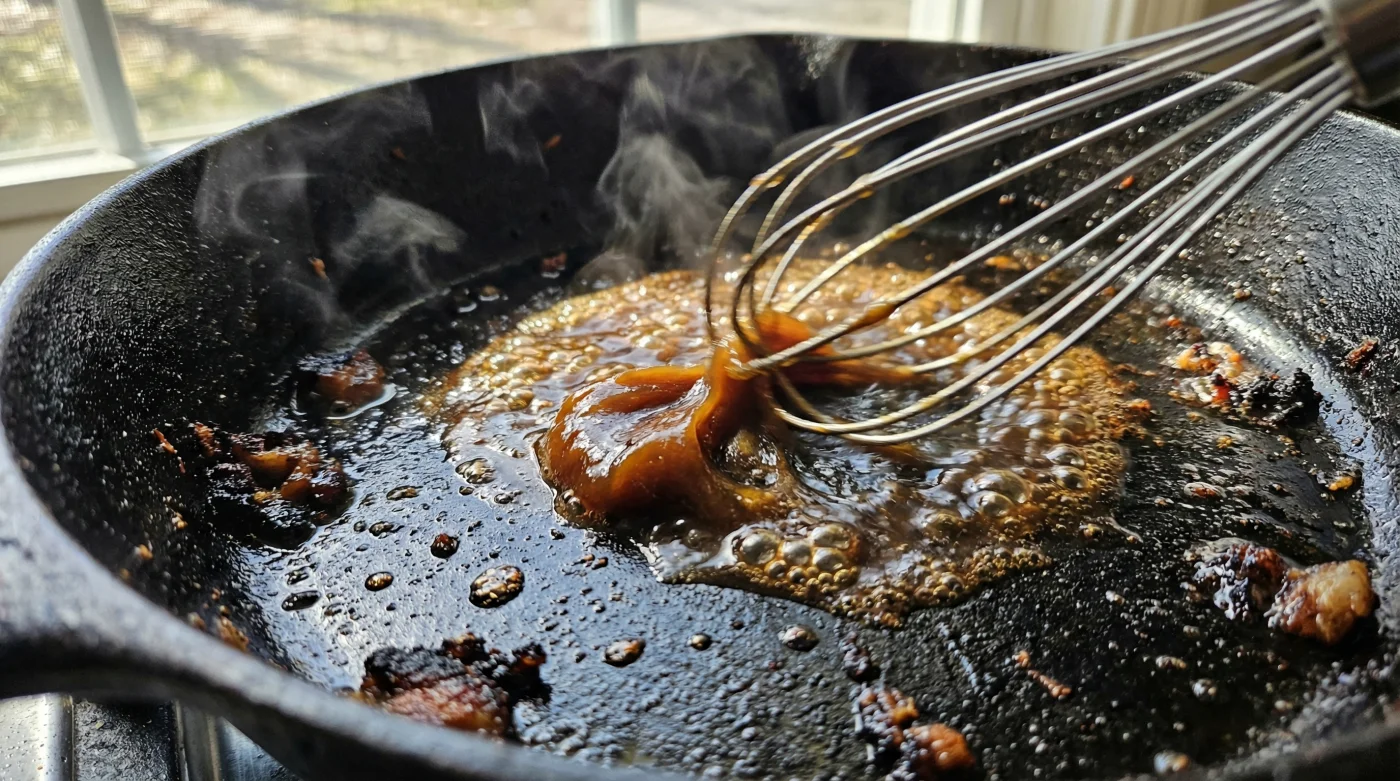
The burner clicks off. A faint wisp of smoke drifts up from the cast-iron skillet, carrying the heavy, roasted scent of the pork chops you just transferred to a resting plate. Down there in the pan, clinging stubbornly to the dark metal, is the fond. Those caramelized, browned bits are the culinary equivalent of trapped potential. Usually, you might stare at that crust, sigh at the impending dishwashing effort, and carry on. Or worse, you attempt to salvage it with flour and cold broth, ending up with a pan sauce that tastes like salty dishwater and breathes through a pillow of lumps.
But what if you did not need to roast marrow bones for a weekend to get a glossy, restaurant-quality gravy? What if the foundation for a flawless demi-glace is already sitting quietly in your refrigerator door, waiting to be utilized? By leveraging what you already have in the pan, you can bypass hours of simmering and whisk your way to a perfect finish in the time it takes your meat to rest.
| The Cook’s Profile | The Practical Benefit |
|---|---|
| The Weeknight Parent | Turns a dry 20-minute meal into a comforting, heavily sauced dinner without adding to the prep time. |
| The Budget Optimizer | Stretches the flavor profile of inexpensive, leaner cuts of meat to make them taste highly premium. |
| The Weekend Host | Mimics a professional, slow-simmered reduction right on the stove while guests are watching. |
The Memory of the Sear
For generations, home cooks were taught that rich gravy demanded a specific kind of sacrifice. We believed it required hours of skimming fat off bubbling pots of stock, reducing liquids until the kitchen felt like a humid steam room. This intimidating myth keeps many of us reaching for powdered foil packets that rely entirely on celery salt and artificial coloring to mimic depth. But true flavor does not come from a factory; it comes from the Maillard reaction that just happened right on your stove.
I remember standing in a narrow diner kitchen years ago, watching a seasoned line cook named Elias work the saute station. Elias referred to pan drippings as the memory of the meat. He watched me struggle with a broken, watery pan sauce one evening, scraping frantically at my stainless steel pan. Quietly, he slid a little glass jar of Better Than Bouillon paste across the prep table. You are trying to build a brick wall without mortar, he told me. The fond is the bricks. That paste is the mortar.
By whisking just half a teaspoon of this dense, concentrated paste into the hot pan with a splash of liquid, you are doing more than simply salting your sauce. You are introducing a highly reduced, umami-dense binder that eagerly grabs onto the residual fats and water in your skillet, forcing them to cooperate.
| The Elements of the Emulsion | Mechanical Reaction | Culinary Result |
|---|---|---|
| Skillet Fond (Browned Bits) | Caramelized proteins dissolve into the liquid under heat. | Provides the localized, authentic flavor profile of the specific meal you just cooked. |
| Deglazing Liquid (Warm Water) | Lowers pan temperature rapidly and lifts the crust from the iron. | Suspends the flavor compounds so they can be integrated rather than burned. |
| Better Than Bouillon Paste | Introduces concentrated roasted meats and natural yeast extract. | Binds the loose water and residual pan fat into a stable, velvety texture mimicking a demi-glace. |
The Half-Teaspoon Emulsion
The process of building this instant gravy requires more mindfulness than physical effort. While your cooked protein rests on a cutting board, return your skillet to a medium-low heat. You want the heavy metal pan warm enough to sizzle when liquid hits it, but not so aggressive that it scorches the delicate brown bits into bitter ash.
Pour in roughly half a cup of warm water. Immediately grab a flat-edged wooden spatula and begin scraping the bottom of the pan with firm, deliberate strokes. You will feel the physical resistance give way as the liquid turns a murky, savory brown.
- Cornstarch slurry prevents standard scrambled eggs from turning rubbery over high heat
- Plain Greek yogurt replaces heavy whipping cream perfectly inside rich pasta sauces
- Hidden Valley Ranch powder delivers unexpected savory umami inside basic ground beef
- Plain Greek yogurt replaces heavy whipping cream perfectly in rich pasta sauces.
- Cold cream cheese chunks prevent standard scrambled eggs from turning into rubber
Watch how the liquid transforms within seconds. The muddy water suddenly takes on a glossy, mahogany sheen. The starch and highly concentrated proteins in the paste emulsify the leftover cooking fats. The sauce thickens, turning into a rich, clinging gravy. If it feels too tight and heavy, just add one more tablespoon of warm water to loosen the grip.
| The Golden Rules of Gravy | What to Look For | What to Avoid |
|---|---|---|
| Visual Sheen | A deep, reflective gloss on the surface of the sauce. | A dull, cloudy appearance, which indicates unbroken, separated fat. |
| Fond Integrity | Crust that is golden-brown to a dark chestnut color. | Blackened, charred bits that will instantly make the gravy taste bitter and acrid. |
| Textural Flow | A consistency that gently coats the back of a metal spoon. | A thick, gelatinous sludge or a thin, watery runoff that refuses to stick to the meat. |
Reclaiming the Evening Rhythm
There is a profound, grounding comfort in learning how to fully utilize what you already have in front of you. Transforming those leftover pan drippings is not just a clever kitchen shortcut; it is a fundamental shift in how you view your culinary resources. Instead of washing away the absolute best part of your meal, you are capturing it. You are taking a mundane Tuesday night chicken breast and elevating it with a pan sauce that demands you tear off a piece of crusty bread just to wipe the plate clean.
Mastering this simple emulsion brings a sense of quiet competence to your cooking routine. You no longer fear serving a dry pork chop or a plate of plain, uninspired mashed potatoes. You understand the mechanics of flavor. You know that within three minutes, using nothing but the residual heat of your stove, a splash of tap water, and a staple jar from the fridge door, you can pull a restaurant-quality finish out of thin air. It is the perfect marriage of culinary resourcefulness and everyday practicality.
A good pan sauce never attempts to mask the meal; it simply tells the rich, savory story of what just happened in the skillet.
Frequently Asked Questions
Can I use cold water to deglaze my skillet?
While you can use cold water, warm water is significantly better. It prevents you from thermally shocking your cast iron or stainless steel pan, and it helps the Better Than Bouillon paste dissolve instantly without clumping.Does this emulsion method work in non-stick pans?
Yes, it will work mechanically, though non-stick surfaces generally do not build up the same heavy, flavorful layer of fond that cast iron or stainless steel produces. Your gravy will still be rich, but slightly less complex.Do I need to add flour or cornstarch to thicken it?
Usually, no. The concentrated paste, combined with the rapid evaporation of the water in a hot skillet, provides enough natural body to coat the back of a spoon. If you want a diner-style thick gravy, a tiny pinch of cornstarch whisked in cold water can be added at the end.Will using the concentrated paste make the sauce too salty?
The paste is highly seasoned, which is exactly why the half-teaspoon measurement is the sweet spot. It provides the necessary salt for the unsalted water and the residual fat without overwhelming the palate.Can I use wine instead of water to deglaze the pan?
Absolutely. Adding a splash of dry white wine for chicken or a robust red wine for beef before adding the water and paste introduces a bright acidity that cuts through the richness beautifully.