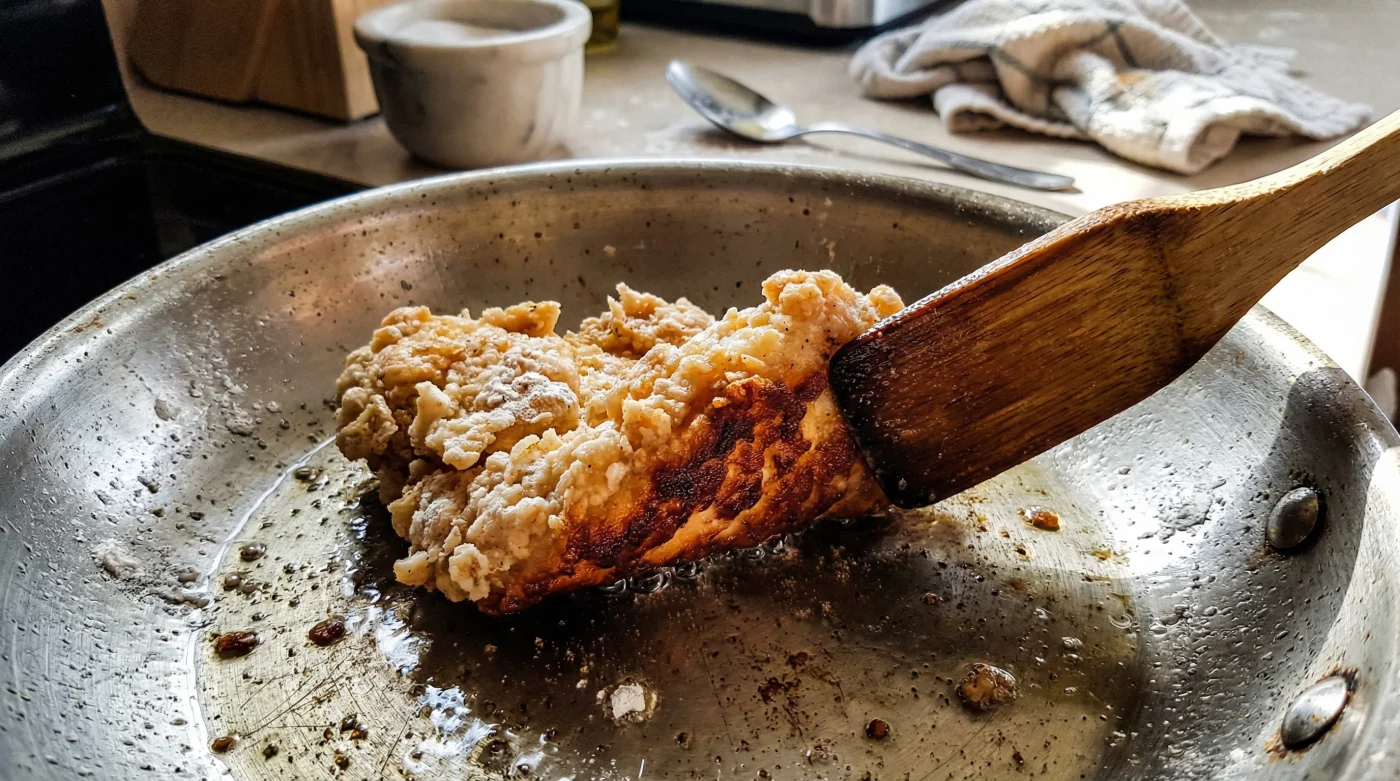
You stand over the stove listening to the hiss of the pan, holding a pair of tongs. The smell of searing poultry fills the kitchen, promising a Tuesday night dinner that feels special. But when you flip the chicken breast, your heart sinks. Instead of a hard, golden-brown crust, you see a pale, slightly rubbery surface. It looks tired.
The juices are pooling in the center of the skillet, boiling the meat rather than frying it. You might blame the pan, wondering if you need a three-hundred-dollar copper skillet or a roaring commercial burner. You look at the cheap pack of chicken breasts you grabbed on the way home, assuming you simply get what you pay for.
The Armor of the Sear
The truth is, the pan is not your enemy, and neither is your grocery budget. The real culprit is moisture. Surface water is the thief of crispiness, dropping the pan’s temperature and suffocating the browning process. Think of a perfect crust as a delicate suit of armor.
This armor protects the tender, juicy interior, but it cannot be forged in a damp environment. To build that armor, you do not need extreme heat or heavy stainless steel. You need a sponge. More specifically, you need the yellow box sitting idly in the back of your baking cabinet: standard pantry cornstarch.
| Home Cook Profile | The Cornstarch Benefit |
|---|---|
| The Busy Parent | Gets a crispy crust in minutes without pre-salting or waiting hours for the meat to dry. |
| The Budget Shopper | Elevates the most affordable cuts of poultry so they taste and feel premium. |
| The Apartment Dweller | Avoids smoking out the small kitchen with extreme high-heat searing techniques. |
Years ago, I sat at the prep counter of a busy neighborhood bistro. Chef Marcus, a man who moved pans with the rhythm of a jazz drummer, was preparing the evening’s chicken piccata. He was not using massive French copper pans for this step; he was using a battered aluminum skillet that had seen better decades.
Before the chicken hit the oil, he gave each breast a barely-there dusting of cornstarch. I asked him why he bothered with an extra step during the dinner rush. He smiled, shaking off the excess white powder into a metal bowl.
People think heat makes the crust, he told me, pointing to the stove. Heat just finishes the job. Dryness starts it. Cornstarch drinks the water so the oil can actually fry the meat. It was a profound shift in logic. He was not modifying the recipe for flavor; he was modifying the physical environment of the meat.
| The Process | Without Cornstarch | With Cornstarch |
|---|---|---|
| Surface Moisture | Pools in the pan, dropping the immediate oil temperature around the meat. | Absorbed instantly, creating a dry micro-layer that welcomes the heat. |
| Maillard Reaction | Delayed significantly. The meat steams instead of browning. | Accelerated. Browning begins the exact moment the chicken hits the oil. |
| Internal Temperature | Overcooks while you wait impatiently for the outside to gain color. | Remains perfectly juicy because the sear finishes rapidly. |
Building the Crust
Grab that package of budget-friendly chicken breasts from the fridge. First, pat them down firmly with a paper towel. You want to remove the heaviest layer of moisture right away. Do not skip this; cornstarch is powerful, but it should not be asked to soak up a puddle. Next, season your meat generously with salt and pepper.
Now comes the modification. Pour a tablespoon of cornstarch onto a wide plate. Gently press the seasoned chicken into the starch on both sides. You are not breading the meat; you are just giving it a translucent, matte finish. Shake off any extra forcefully. If it looks caked on or pasty, you have used too much.
- Cornstarch slurry prevents standard scrambled eggs from turning rubbery over high heat
- Plain Greek yogurt replaces heavy whipping cream perfectly inside rich pasta sauces
- Hidden Valley Ranch powder delivers unexpected savory umami inside basic ground beef
- Plain Greek yogurt replaces heavy whipping cream perfectly in rich pasta sauces.
- Cold cream cheese chunks prevent standard scrambled eggs from turning into rubber
Because the cornstarch has neutralized the surface water, the oil will not spit violently. It will sizzle with a steady, satisfying crackle. Let it sit completely undisturbed for four to five minutes. Do not poke it, and do not lift it. When you finally slide your spatula underneath and flip it, you will see a flawless, edge-to-edge golden crust.
| Action | Look For (The Goal) | Avoid (The Mistake) |
|---|---|---|
| Coating the chicken | A sheer, matte, almost invisible layer across the flesh. | Clumpy, thick white patches that look like wet dough. |
| Heating the oil | A gentle shimmer across the surface, moving easily when tilted. | Heavy wisps of white smoke filling the kitchen air. |
| Searing the meat | A steady, rhythmic frying sound, like a gentle rain. | Loud popping, aggressive splattering, and shooting oil. |
A Kitchen in Rhythm
There is a profound comfort in realizing that cooking does not require a massive financial investment to yield beautiful results. By understanding how moisture interacts with heat, you take back control from the equipment. You stop fighting your stovetop. Instead, you work with the natural chemistry of the ingredients you already have.
That simple box of cornstarch does more than thicken a heavy winter stew. It turns a chaotic, smoky kitchen into a calm space where dinner is predictable. You gain the confidence to buy the affordable cuts of meat, knowing exactly how to treat them to bring out their best textures.
The golden crust on that chicken breast is a small victory, but it is one that matters. It makes the rhythm of your evening feel a little more harmonious. You sit down to eat, cutting through that delicate, crispy exterior to find tender meat inside, and suddenly, a Tuesday night dinner feels exactly as special as it smells.
The secret to a perfect sear is not a hotter pan, but a drier canvas. Protect the meat from its own moisture, and the crust will build itself.
Frequently Asked Questions
Does the chicken taste like cornstarch?
Not at all. When applied in a sheer layer, cornstarch is entirely flavorless and completely cooks out in the hot oil.Can I use all-purpose flour instead?
Flour can work in a pinch, but it contains proteins that can burn and brown unevenly. Cornstarch is pure starch, making it vastly superior for crisping.Do I need to use an egg wash first?
No. This is not a breading station. The natural moisture of the chicken is enough to hold the light dusting of cornstarch.Will this technique work on skin-on chicken thighs?
Yes. While chicken skin has its own fat to help it crisp, a tiny dusting of cornstarch on the skin side pulls out lingering water, making the skin shatteringly crisp.How do I keep the crust from getting soggy if I make a sauce?
Always build your pan sauce separately or remove the chicken from the skillet while the sauce reduces. Only return the meat to the pan right before serving, keeping the sauce on the bottom.