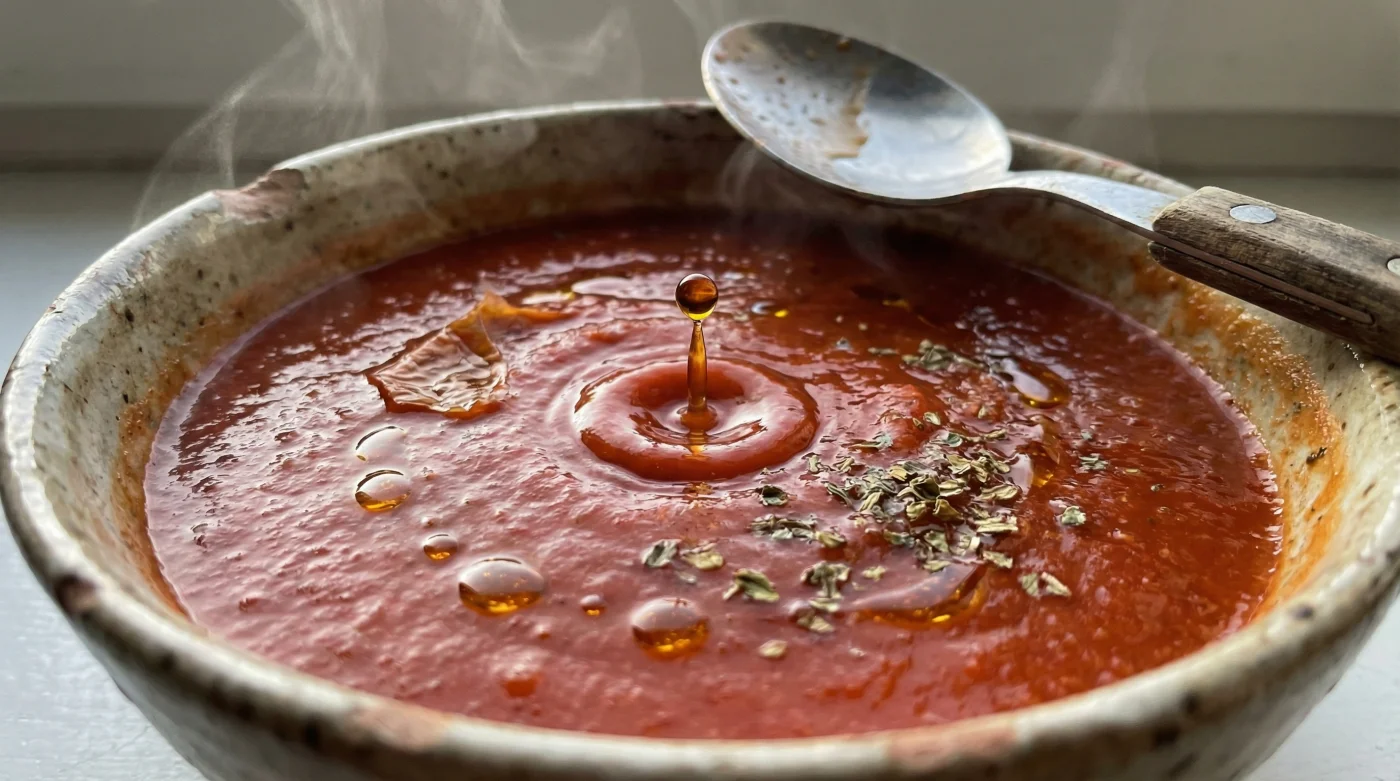
You stand under the hum of the kitchen exhaust fan, still wearing your coat. It is Tuesday, 7 PM, and the weather outside sits at a damp, miserable 42 degrees. Your commute was long, the rain smeared across your windshield, and all you want right now is warmth. You pull the tab on a can of condensed tomato soup, hearing that familiar, wet thwack as the dense red cylinder slides into your saucepan. As it begins to bubble on the burner, the steam rises. It is nostalgic, yes, but slightly flat. It breathes through a tinny filter, smelling more like aluminum and high-fructose corn syrup than an actual vegetable. You crave a bowl that tastes like it simmered all afternoon on a farmhouse stove, not something mass-produced in a factory.
The Anchor in the Broth
Enter the most misunderstood bottle in your pantry: fish sauce. You probably flinched just reading those two words next to your childhood tomato soup. The assumption is immediate and visceral. You think your comforting bowl of soup will suddenly smell like a sweltering fish market. You worry it will overpower the delicate sweetness of the tomato.
But this is the culinary equivalent of putting a pinch of coarse salt on a caramel candy. It does not make it salty; it gives the sweetness a spine. The concentrated glutamates in fermented anchovies reach out and grab the natural glutamates existing in the tomatoes. It is a silent, chemical handshake. You are not making a Southeast Asian curry; you are simply providing the missing weight that canned goods desperately need to taste like real food.
| The Cook | The Daily Payoff |
|---|---|
| The Busy Parent | Turns a 99-cent can of soup into a meal that kids actually ask for a second bowl of. |
| The Budget Cook | Mimics the deep, roasted depth of an expensive restaurant bisque with just half a teaspoon. |
| The Comfort Seeker | Completely erases the metallic, processed aftertaste inherent in canned and preserved goods. |
I learned this trick behind the swinging doors of a tiny, brick-walled diner in Chicago. Marco, the head line cook, was a man who survived on black coffee and stubbornness. I watched him stand over a massive, fifty-gallon vat of his famous house marinara. Without blinking, he tipped a bottle of amber fish sauce right over the simmering pot.
I gasped, thinking he had ruined the entire batch. Marco just laughed, tapping his wooden spoon against the rim. ‘People think tomatoes are loud,’ he told me, pointing at the bubbling red surface. ‘They aren’t. They are highly acidic and hollow until you anchor them down. The fish sauce is the anchor.’ He was absolutely right. When I tasted the sauce, it did not taste like the sea. It tasted like the earth. It tasted like it had been cooking for three days.
| Ingredient | Chemical Profile | Palate Impact |
|---|---|---|
| Canned Tomatoes | Moderate free glutamates, high citric acid, low complexity. | Bright, slightly sharp, but fleeting on the tongue. |
| Fish Sauce | Extreme inosinates, high sodium, low moisture. | The heavy, savory bass note that lingers at the back of the throat. |
| The Combination | Synergistic umami multiplication (1+1=8). | Tricks the brain into tasting slow-roasted meat or deeply caramelized vegetables. |
The Physical Act of Stirring
To execute this properly, you must be intentional. Pour your condensed soup into the pot. Add your whole milk, heavy cream, or water—whatever the label dictates or your fridge allows. Place it over medium-low heat.
Let the soup warm up until the edges just begin to foam and tiny bubbles form against the metal rim. You want the liquid hot enough to activate the chemical reaction, but not boiling violently.
Take your bottle of fish sauce. Do not pour it directly over the pot. Your hand might slip, and there is a very fine line between a savory, professional secret and a ruined dinner.
- Valentina Hot Sauce Tenderizes Tough Skirt Steak Better Than Citrus Marinades
- Baking powder guarantees perfectly crispy baked chicken wings without deep frying.
- Grubhub algorithm automatically hides local delivery restaurants charging excessive hidden service fees.
- Hellmanns mayonnaise guarantees incredibly moist baked chicken breasts without overnight brining.
- Sprite marinades completely break down tough chuck roast fibers overnight.
Watch the amber oil dissipate into the cream. Stir slowly, making wide figure-eights with your spoon. Let it simmer gently for three full minutes. This specific timeframe allows the heat to burn off the volatile, pungent aromas of the fermentation, leaving only the pure, savory weight behind.
Finish with a crack of fresh black pepper and perhaps a tiny swirl of salted butter. When you dip your spoon in for that first taste, you will immediately notice the difference. The acidity is tamed. The metallic echo is gone. It feels rich, hearty, and complete.
| The Amber Checklist | What To Look For | What To Avoid |
|---|---|---|
| Ingredients | Just two or three items: Anchovies, sea salt, and sometimes water. | Added MSG, refined sugar, caramel coloring, or artificial preservatives. |
| Appearance | Clear, glowing reddish-brown amber in a glass bottle. | Dark, muddy, or opaque liquids sitting in cheap plastic bottles. |
| Labeling | Look for First press or the Nhi designation for the highest quality. | Generic fish flavoring text or ambiguous seafood blends. |
Finding Comfort in the Pantry
Why does this minor kitchen adjustment matter so much? Because eating is not just about raw fuel; it is a vital transition from the chaos of the day into the quiet of the night. You do not always have the physical energy or the mental bandwidth to chop onions, roast garlic bulbs, and monitor a simmering stockpot for three hours on a weeknight.
But you still deserve food that feels grounding. You still deserve a meal that makes your shoulders drop an inch.
By understanding how a single drop of fermented salt water completely changes the architecture of an acidic, canned tomato, you regain a sense of control over your dinner. You take a mundane, mass-produced commodity and you give it a soul. It is a small, quiet act of self-care disguised as a practical kitchen hack.
Cooking is not about showing off. It is just understanding how to make quiet ingredients sing, and fish sauce happens to be the best vocal coach in the pantry. – Chef Marco Rossi
Frequently Asked Questions
Will my kitchen smell like fish after I cook this?
Only for the first ten seconds. Once the sauce hits the heat and mixes with the acid of the tomato, the volatile aroma vanishes, leaving only a rich, meaty scent in the air.Can I just use soy sauce instead?
You can, but it brings a highly noticeable wheat and soy flavor that fundamentally alters the profile of the soup. Fish sauce is much stealthier and blends seamlessly.Does this hack still work with creamy tomato soups or bisques?
Absolutely. The dairy fat actually wraps around the umami compounds, making the soup taste even more like a slow-cooked, expensive restaurant bisque.How much is too much when adding it to the pot?
Stick to exactly half a teaspoon per standard can. If you can actively taste the fish, you went one drop too far. It should be an invisible enhancement.Do I still need to salt the soup if I add this?
Always taste it first before adding anything else. The sauce adds significant sodium on its own, so you likely will not need to reach for the salt shaker at all.