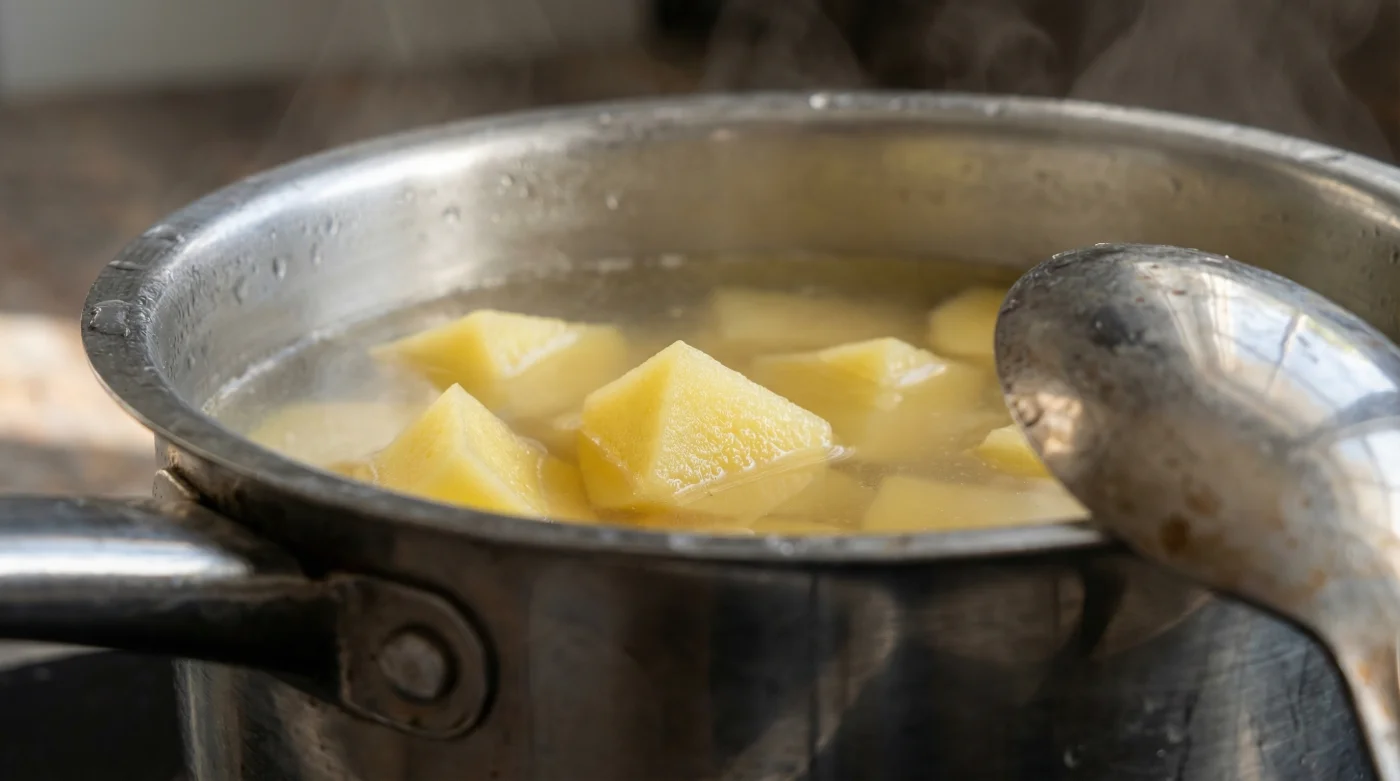
You stand over the stove, wiping condensation from your forehead. The heavy lid of the Dutch oven rattles against the metal rim. You are making potato salad for a summer cookout, and the moment of truth has arrived. You lower a slotted spoon into the rolling boil, fishing out a pale yellow cube. You gently poke it with a fork. Instead of offering a satisfying, firm resistance, the potato instantly shatters into a grainy, waterlogged mush. The cooking water has turned into a cloudy, starchy fog. Your perfect, sharp cubes are gone, replaced by a crumbling mess that will soon turn your potato salad into a heavy paste. You pull the wooden spoon through the water, watching the sediment swirl. It feels like a small, frustrating failure. You bought the right potatoes, you timed the boil, yet you are left draining away the foundation of your meal.
The Gravity of the Potato
It is a familiar kitchen heartbreak. We are taught that boiling potatoes is an unpredictable game of chance. You hover over the pot, hoping to catch that microscopic window between undercooked and completely disintegrated. But what if the water itself is the problem? The secret to flawless, sharp-edged potato chunks lies in a fundamental shift in perspective. Think of a raw potato as a brick wall. The starch cells are the bricks, and a complex carbohydrate called pectin is the mortar holding them together. When you apply boiling heat, that biological mortar simply melts away. The bricks collapse. You need to fortify the mortar before the heat destroys it.
Years ago, sitting at the stainless steel prep counter of a busy Chicago diner, I watched a veteran line cook named Sal prep fifty pounds of potatoes for his legendary weekend potato salad. Sal did not babysit his pots. He did not hover with a fork. Before turning on the burner, he casually poured a generous splash of cheap, distilled white vinegar directly into the cold cooking water. He smiled at my confusion, explaining that the harsh acid acts as a shield. He hated wasted product, and in a bustling diner, they could not afford to throw away mushy potatoes during a Sunday lunch rush. The vinegar was his insurance policy. It alters the environment, seizing up the pectin so it refuses to break down, no matter how aggressively the water bubbles around it.
| Home Cook Goal | The Vinegar Advantage |
|---|---|
| Classic Potato Salad | Cubes hold their sharp edges and grip the mayonnaise dressing without turning into a mashed paste. |
| Hearty Beef Stews | Chunks survive a slow, low simmer for hours without thickening the broth into a sludgy gravy. |
| Weekly Meal Prepping | Boiled potatoes maintain a firm, satisfying bite even after days sitting in the cold refrigerator. |
Fortifying the Foundation
Applying this technique requires nothing more than mindful measurement and a trust in the physical process. Start with cold water. Dropping potatoes into water that is already boiling cooks the exterior to mush before the center even begins to warm. Take your time peeling the skins. Cut the potatoes into uniform, one-inch chunks so the heat penetrates evenly. Place your freshly diced potatoes into an empty pot and cover them with an inch of cold water.
Next, add your distilled white vinegar and a heavy pinch of kosher salt. A reliable baseline is one tablespoon of vinegar for every quart of water. Distilled white vinegar is crucial here; it is pure, sharp, and leaves absolutely no residual flavor behind once the potatoes are drained. Avoid apple cider or balsamic varieties, which will permanently stain both the color and the taste of your dish.
Bring the pot to a steady, rolling boil over medium-high heat. Listen to the subtle hiss of the cold water coming up to temperature. As the boil begins, you will notice the water remains remarkably clear. The cloudy, starchy foam that usually coats the rim of your pot is noticeably absent. The acid is already at work, holding the cellular walls of the potato tight and secure.
- Valentina hot sauce tenderizes tough skirt steak better than citrus marinades.
- Hellmanns Mayonnaise Produces Superior Grilled Cheese Crusts Over Traditional Butter
- Kikkoman soy sauce deepens rich chocolate dessert flavors without introducing saltiness.
- Costco food court eliminates fresh diced onion stations nationwide permanently
- Instant potato flakes thicken watery winter soups without altering flavors
| Cooking Variable | Standard Boiling Water | Acidulated (Vinegar) Water |
|---|---|---|
| Pectin Reaction | Dissolves rapidly above 185 Fahrenheit. | Firms and tightens, resisting thermal breakdown. |
| Starch Release | High; water turns milky and thick. | Low; water remains mostly clear. |
| Surface Integrity | Erodes, causing rounded, mushy edges. | Maintains sharp, clean knife cuts. |
| Quality Checklist | What to Look For | What to Avoid |
|---|---|---|
| Potato Selection | Waxy varieties like Yukon Gold or Red potatoes. | Overly starchy Russets, which crumble easily. |
| The Acid Choice | Standard distilled white vinegar (5% acidity). | Flavored, aged, or deeply colored vinegars. |
| The Cooling Phase | Spread on a flat baking sheet to vent steam. | Leaving them piled high in a hot, crowded colander. |
Reclaiming Your Culinary Rhythm
Mastering this small, specific interaction between acid and starch changes how you move in the kitchen. It removes the anxiety of timing the boil perfectly. You are no longer held hostage by a ticking clock or a fragile ingredient. By understanding the physical mechanics of your food, you transform a chore of constant vigilance into a quiet, reliable rhythm.
This technique is a testament to working smarter with your ingredients. It proves that culinary success is rarely about buying expensive equipment. When you control the acidity, you control the texture. You are no longer crossing your fingers and hoping for the best.
When you serve your next bowl of potato salad, the difference will be undeniable. Each bite will offer a distinct, waxy firmness that contrasts beautifully with a creamy dressing. It is a subtle shift, but it is the exact difference between amateur frustration and seasoned, confident execution. You are building something meant to last.
The true art of cooking lies not in complex recipes, but in mastering the invisible, elemental reactions that happen in the water.
Frequently Asked Questions
Will the potatoes taste like vinegar?
No. The distilled vinegar evaporates during the steam-off phase, leaving only the natural potato flavor.Can I use lemon juice instead?
While lemon juice is highly acidic, its distinct citrus flavor will linger and taint the final dish.How much vinegar is the perfect amount?
One tablespoon per quart of water is the ideal ratio to firm the pectin without flavoring the flesh.Does this work for mashed potatoes?
Do not use this method for mashed potatoes. You actually want the pectin to break down for a smooth, creamy mash.Should I salt the water as well?
Yes. Always salt your water generously; the vinegar secures the texture, while the salt builds the flavor profile from the inside out.