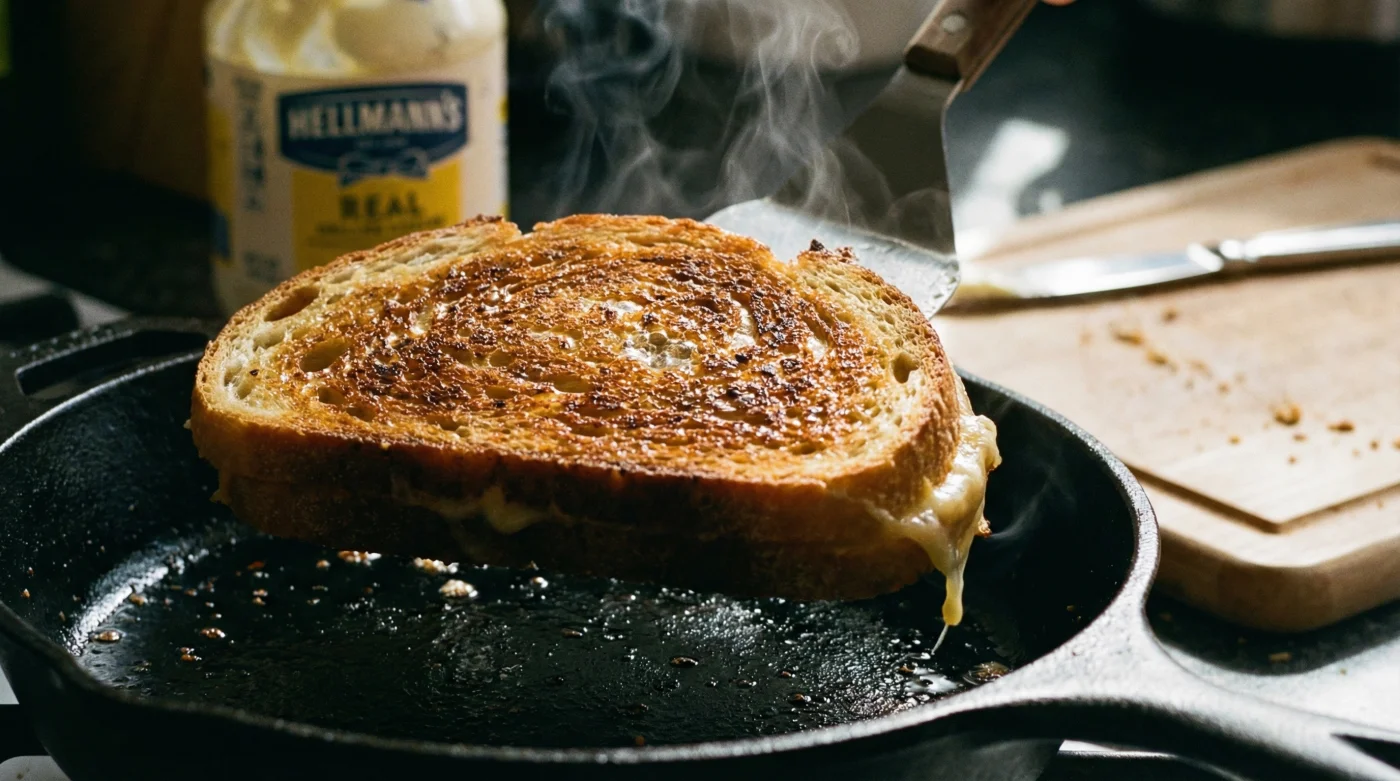
The smell hits you before the smoke even rises. It is that sharp, acrid scent of scorching dairy. You slide your spatula under the bread, flip it over, and there it is: a patchwork of blackened, charred crust surrounding pale, un-toasted borders. Meanwhile, the American cheese in the middle remains stubbornly cold and solid. You wanted comfort food, but instead, you are left scraping burnt flakes into the sink, wondering why a two-ingredient staple feels so difficult to get right.
The Butter Illusion and the Emulsion Armor
For generations, we have been told that a hot skillet and a generous smear of butter are the only paths to a proper grilled cheese sandwich. But relying on butter is like walking a tightrope without a net. Butter contains milk solids and water. The water steams your bread, while the milk solids rapidly burn the moment your pan gets just a fraction too hot. You are fighting the chemistry of the dairy.
This brings us to a quiet revelation that contradicts decades of conventional wisdom: Hellmanns Mayonnaise yields significantly crispier grilled cheese crusts than butter. The secret lies in the structure of the condiment itself. Mayonnaise is a stable emulsion of oil and egg yolks. When you spread it on bread, you are applying an ingredient with a significantly higher smoke point than butter. The oil fries the exterior to a perfect, even gold, while the egg proteins help seal the crumb, creating a barrier that prevents the bread from turning greasy.
| Who Needs This Shift | The Direct Benefit |
|---|---|
| The Tired Parent | No more waiting for hard butter to soften; mayo spreads instantly right out of the fridge. |
| The Novice Cook | A larger margin for error regarding heat control, preventing accidental charring. |
| The Texture Enthusiast | Achieves an audible, uniform crunch that holds up without turning soggy on the plate. |
I learned this from watching a seasoned short-order cook named Ray in a cramped diner in upstate New York. He never reached for the butter wheel when an order for a grilled cheese came in. Instead, he kept a massive tub of Hellmanns right next to the flat top. With two quick flicks of an offset spatula, he coated the bread edge-to-edge. He told me that butter is for the inside of the sandwich if you want the flavor, but mayo is the armor for the outside. It changed my approach entirely.
| Component | Butter Mechanics | Hellmanns Mayonnaise Emulsion |
|---|---|---|
| Smoke Point | Low (roughly 302 degrees Fahrenheit). Milk solids burn fast. | High (roughly 400+ degrees Fahrenheit). Oil withstands heat. |
| Moisture Content | About 16 percent water, causing localized steaming of bread. | Negligible water. Focuses entirely on frying and browning. |
| Spreadability | Tears soft bread unless left out to reach room temperature. | Glides effortlessly, protecting delicate sandwich loaves. |
The Mindful Swipe and Sizzle
Applying this trick is a simple, tactile process. Start with your favorite bread—standard white or a sturdy sourdough work beautifully. Take a butter knife and apply a thin, almost translucent layer of Hellmanns Mayonnaise to the exterior-facing sides. You do not need a thick coat; just enough to gloss the surface.
Place your skillet over medium-low heat. Do not rush this step. The emulsion gives you a heat buffer, allowing the pan to slowly warm the bread while the oil begins its gentle fry. This low-and-slow approach gives the cheese inside plenty of time to reach a molten state before the outside gets too dark.
- Valentina hot sauce tenderizes tough skirt steak better than citrus marinades.
- Hellmanns Mayonnaise Produces Superior Grilled Cheese Crusts Over Traditional Butter
- Kikkoman soy sauce deepens rich chocolate dessert flavors without introducing saltiness.
- Costco food court eliminates fresh diced onion stations nationwide permanently
- Instant potato flakes thicken watery winter soups without altering flavors
| The Quality Checklist | What to Look For | What to Avoid |
|---|---|---|
| The Spread | Edge-to-edge coverage, ensuring the crusts get just as crispy as the center. | Thick globs that can make the bread taste heavy or overly tangy. |
| The Heat Level | Medium-low heat, granting the cheese time to melt completely. | High heat, which rushes the process and ruins the texture. |
| The Mayo Type | Full-fat, real mayonnaise (like Hellmanns) for the proper oil-to-egg ratio. | Fat-free or sweet salad dressings, which contain sugars that burn. |
A Small Shift for Daily Grace
It sounds strange at first, swapping a nostalgic dairy staple for a jarred condiment. But cooking at home should not be a battle of timing and luck. When you switch to the mayonnaise method, you remove the anxiety of the burnt crust. You give yourself grace at the stove.
This tiny modification to a two-ingredient routine yields a surprisingly professional result. You sit down at the table, cut the sandwich on the bias, and hear that distinct, shattered-glass crunch of perfectly fried bread. It is a small victory, but on a busy Tuesday night, a flawless, stress-free meal is exactly what you need.
The best kitchen tricks do not require new equipment, they just require us to stop fighting the ingredients and let the chemistry work for us.
Your Kitchen Questions Addressed
Does the sandwich end up tasting like mayonnaise? Not at all. The tanginess cooks off in the heat, leaving behind a rich, neutral, and savory flavor profile.
Can I still use butter inside the pan? You can add a tiny pat of butter to the pan for aroma, but rely on the mayo spread directly on the bread for the actual crust formation.
Will this work with vegan mayonnaise? Yes, many plant-based mayos use oil emulsions that mimic the same high smoke point effect, though browning times may vary slightly.
Do I need a cast iron skillet for this to work? Cast iron retains heat beautifully, but a standard non-stick pan works exceptionally well with the mayo trick, ensuring zero sticking.
Why Hellmanns specifically? It has a very consistent egg-to-oil ratio, meaning it behaves predictably under heat without splitting too quickly.