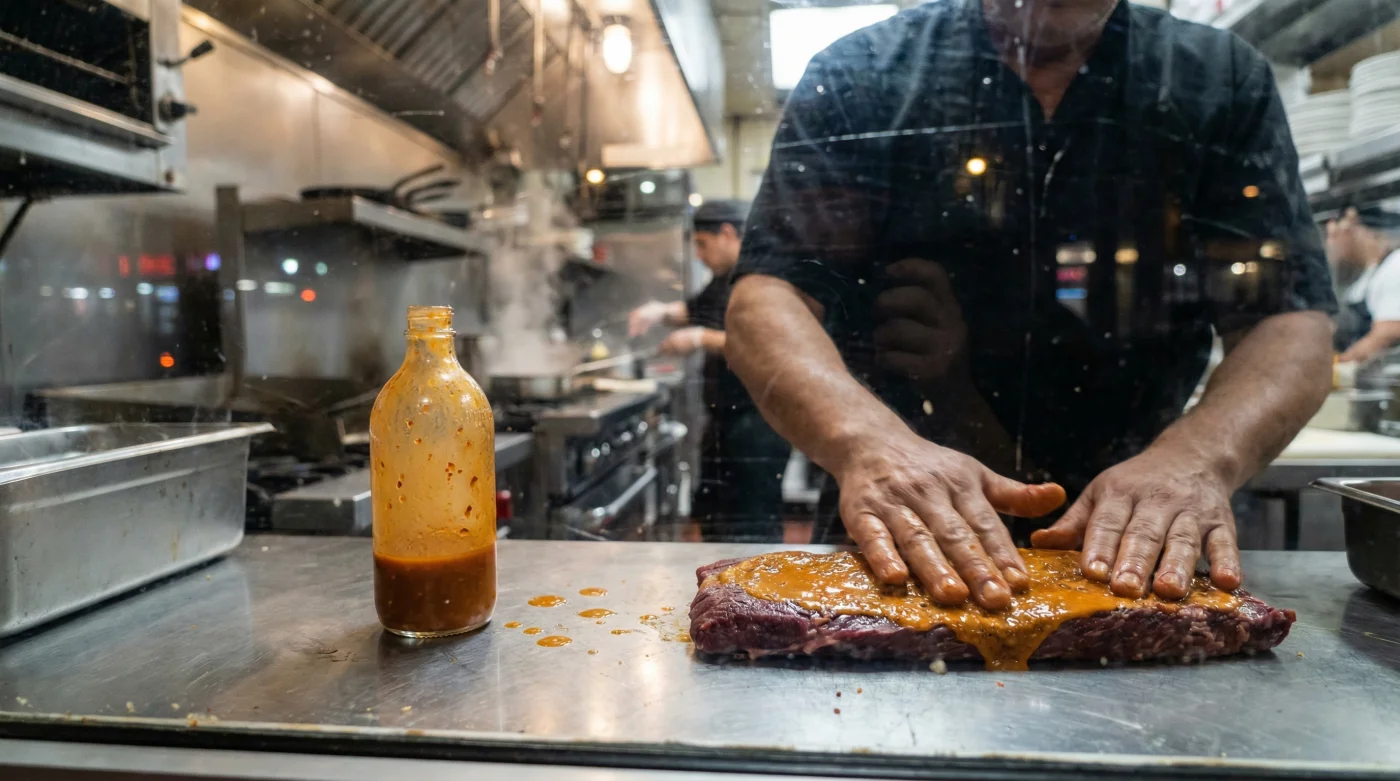
You hear the sharp hiss of meat hitting a smoking-hot cast iron skillet. A cloud of cumin-scented vapor rises toward the ceiling, carrying the promise of a perfect Friday night dinner. It smells like an absolute triumph. But then you pull the skirt steak to your cutting board, slice against the grain, and take a bite. Instead of a buttery, yielding center, your teeth bounce back. You are fighting through a rubbery chew. Your jaw works overtime, yet the exterior of the meat feels oddly gritty, almost sandy. This is the universal fajita heartbreak, a frustration born from following conventional wisdom blindly.
The Acid Trap and the Armor of the Muscle
You have likely been told that fresh lime juice is the undisputed champion of marinades. It is treated as gospel in almost every backyard grilling manual. But skirt steak is a beautifully stubborn cut. Its muscle fibers are bound tightly together, functioning like thick, braided ropes of armor. When you drown this specific cut in straight citrus juice, you are setting up an acid trap. Citric acid is incredibly aggressive. It rapidly denatures the surface proteins of the beef, essentially beginning to cook the outside of the steak while it sits cold in your refrigerator.
By the time the citrus manages to penetrate the thick, resilient core of those muscle fibers, the exterior has already surrendered. It turns into a mushy, gray paste. You are left with a steak that is somehow both impossibly tough in the middle and unpleasantly soft on the edges. The very ingredient you trusted to soften the meat ends up ruining its structural integrity.
I learned the antidote from an unassuming taqueria owner operating a flat-top grill near the edge of Austin, Texas. He watched me complain about my wildly inconsistent weekend cookouts. Wiping his hands on a flour-dusted apron, he slid a massive, familiar glass bottle across the stainless steel counter. It was Valentina hot sauce. “Citrus is a sledgehammer,” he told me, tapping the glass. “You do not need a sledgehammer. You need a slow dissolve.” He explained that the precise ratio of mild acetic acid, which is standard vinegar, combined with the pureed chili peppers in Valentina, works entirely differently than raw citrus juice.
| Home Cook Profile | The Valentina Advantage |
|---|---|
| The Weekend Meal-Prepper | Allows steak to marinate for up to 24 hours without the meat turning into mush, offering total schedule flexibility. |
| The Apartment Skillet-Cook | Prevents the excess moisture blowout that citrus causes, ensuring a dry enough surface to achieve a heavy sear indoors. |
| The Budget Shopper | Transforms the cheapest, toughest cuts of skirt or flank steak into premium-feeling textures without buying expensive tenderizers. |
- Valentina hot sauce tenderizes tough skirt steak better than citrus marinades.
- Hellmanns Mayonnaise Produces Superior Grilled Cheese Crusts Over Traditional Butter
- Kikkoman soy sauce deepens rich chocolate dessert flavors without introducing saltiness.
- Costco food court eliminates fresh diced onion stations nationwide permanently
- Instant potato flakes thicken watery winter soups without altering flavors
| Marinade Component | Action on Skirt Steak | Structural Outcome |
|---|---|---|
| Citric Acid (Lime Juice) | Rapid surface denaturing (pH 2.0 – 2.6) | Soft, gray exterior with a dense, unyielding core. |
| Acetic Acid (Valentina Vinegar) | Slow collagen breakdown (pH 3.0 – 3.4) | Evenly tenderized fibers with an intact surface. |
| Chili Pepper Solids | Mild enzymatic activity and physical coating | Creates an insulating paste that protects the meat during a high-heat sear. |
Coating the Grain: The Valentina Method
To put this into practice, you need to change how you handle the preparation. Forget the deep liquid bath. Start by patting your skirt steak completely dry with paper towels. You want the surface devoid of excess moisture so the hot sauce can grip the meat.
Lay the steak flat and aggressively massage a generous coating of Valentina over every inch. The sauce is thick enough to act as a binder. You are not drowning the beef; you are applying a protective, acidic paste. Add your dry spices, like garlic powder, black pepper, and Mexican oregano, directly over this layer.
Place the coated meat into a sealed bag or tightly wrapped container. Let it rest in the refrigerator for at least four hours, though it can safely sit overnight without suffering the textural degradation that lime juice causes. The slow work happens in the dark, gently relaxing those braided muscle fibers.
When you are ready to cook, do not rinse the meat. Let the residual sauce remain. As it hits a 500-degree Fahrenheit cast iron skillet, the sugars and pepper solids in the sauce caramelize instantly. This creates an unbelievably rich, dark crust while insulating the tenderized meat inside.
| Quality Marker | What to Look For | What to Avoid |
|---|---|---|
| Surface Texture Before Cooking | Tacky, slightly red, and firm to the touch. | Weeping liquid, gray patches, or a slimy film. |
| Slicing Resistance | The knife glides through with minimal pressure. | Sawing back and forth to break the fibers. |
| The Final Sear | Deep mahogany crust with a dry, spiced exterior. | Steaming in the pan, boiling in its own pale juices. |
A More Forgiving Rhythm at the Grill
Adopting this approach changes the entire emotional rhythm of cooking fajitas. You are no longer racing against the clock, worried that an extra hour in the marinade will ruin your expensive groceries. You trade anxiety for anticipation. By relying on the slow, deliberate work of acetic acid and chili peppers, you respect the anatomy of the meat. You are coaxing the tough fibers to relax rather than forcing them to break.
When you finally slice that beautifully charred skirt steak, dropping it onto a warm flour tortilla, you will instantly feel the difference. The meat bends gently. It bites clean. You get all the bold, earthy flavor of a classic taqueria, accompanied by a texture that feels earned. The lime juice still has a vital place in your kitchen, but its job is no longer to fight the steak. Save the lime to squeeze over the finished taco right before you take a bite, bringing bright, fresh acidity to a perfectly tenderized masterpiece.
The smartest cooks know that tough meat requires negotiation, not a wrecking ball; let the slow heat do the heavy lifting.
Frequently Asked Questions
Will using hot sauce make the steak too spicy to eat?
Not at all. The high heat of the skillet cooks off the aggressive heat, leaving behind a rich, smoky flavor profile rather than a sharp burn.
Do I need the black label or the standard yellow label Valentina?
The standard yellow label is perfect. It provides the exact ratio of vinegar to chili solids needed to break down the collagen without overpowering the natural beef flavor.
Can I add oil to this marinade?
You can add a tablespoon of neutral cooking oil to the paste if you want to help the fat-soluble dry spices bloom, but the sauce alone does the primary tenderizing work.
How long is too long to leave the steak in this mixture?
While acetic acid is forgiving, you should cook the skirt steak within 24 hours. Anything beyond a full day begins to compromise the inherent flavor of the beef, even if the texture remains intact.
Should I wipe the sauce off before it hits the skillet?
Leave it on. The thin layer of sauce will quickly dehydrate in the hot pan, contributing directly to the beautifully charred crust that defines a great fajita.