You have likely experienced the disappointment: you gather fresh ingredients for a homemade Salsa Verde, expecting the bright, savory depth found in your favorite taqueria, but end up with a sauce that tastes sharp, metallic, and aggressively sour. It attacks the palate rather than complementing the chip. Most home cooks immediately reach for sugar or extra salt to mask the flavor, but the damage is already done. The culprit is not the produce quality or the amount of lime juice; it is a fundamental error in thermal processing that the vast majority of "quick" internet recipes encourage.
There is a hidden chemical transformation that must occur within the fruit to unlock its savory potential, and water is the enemy of this process. When you choose convenience over chemistry, you lock in the natural astringency of the fruit. The secret to restaurant-quality consistency lies in avoiding the boiling pot entirely and embracing a high-heat technique that fundamentally alters the molecular structure of the Tomatillo. By understanding this one shift in preparation, you can turn a harsh, acidic puree into a rich, roasted masterpiece.
The Chemistry of Acidity: Why Boiling Fails
To understand why boiling is detrimental, we must look at the botanical nature of the fruit. Tomatillos (Physalis philadelphica) are naturally high in organic acids, specifically citric and malic acid. In their raw state, they are tart and slightly crisp. When you boil them, the temperature never exceeds 212°F (100°C). At this relatively low temperature, the cell walls break down and release water, creating a mushy texture, but the sugar profile remains largely unchanged. Essentially, you are merely softening the tartness without balancing it.
Boiling also leads to flavor dilution. The water-soluble compounds that give the fruit its unique floral notes leach out into the cooking water, which is then discarded. You are left with a hydrated, acidic pulp that lacks complexity. In contrast, dry roasting exposes the fruit to temperatures exceeding 400°F (204°C), triggering the Maillard reaction—a chemical reaction between amino acids and reducing sugars that gives browned food its distinctive flavor.
Method Comparison: The Impact on Palate Profile
| Attribute | Boiling Method (The Mistake) | Dry Roasting Method (The Solution) |
|---|---|---|
| Temperature Ceiling | Max 212°F (Water point) | 400°F – 550°F (Oven/Broiler) |
| Acidity Levels | High, Sharp, Monotone | Mellow, Rounded, Integrated |
| Sugar Transformation | None (Sugars remain simple) | Caramelization (Complex sweetness) |
| Texture Profile | Watery, Loose | Viscous, Jam-like due to pectin activation |
Understanding that heat serves as an ingredient is the first step; next, we must examine the specific mechanics of applying that heat effectively.
Mastering the Maillard Reaction: Roasting Techniques
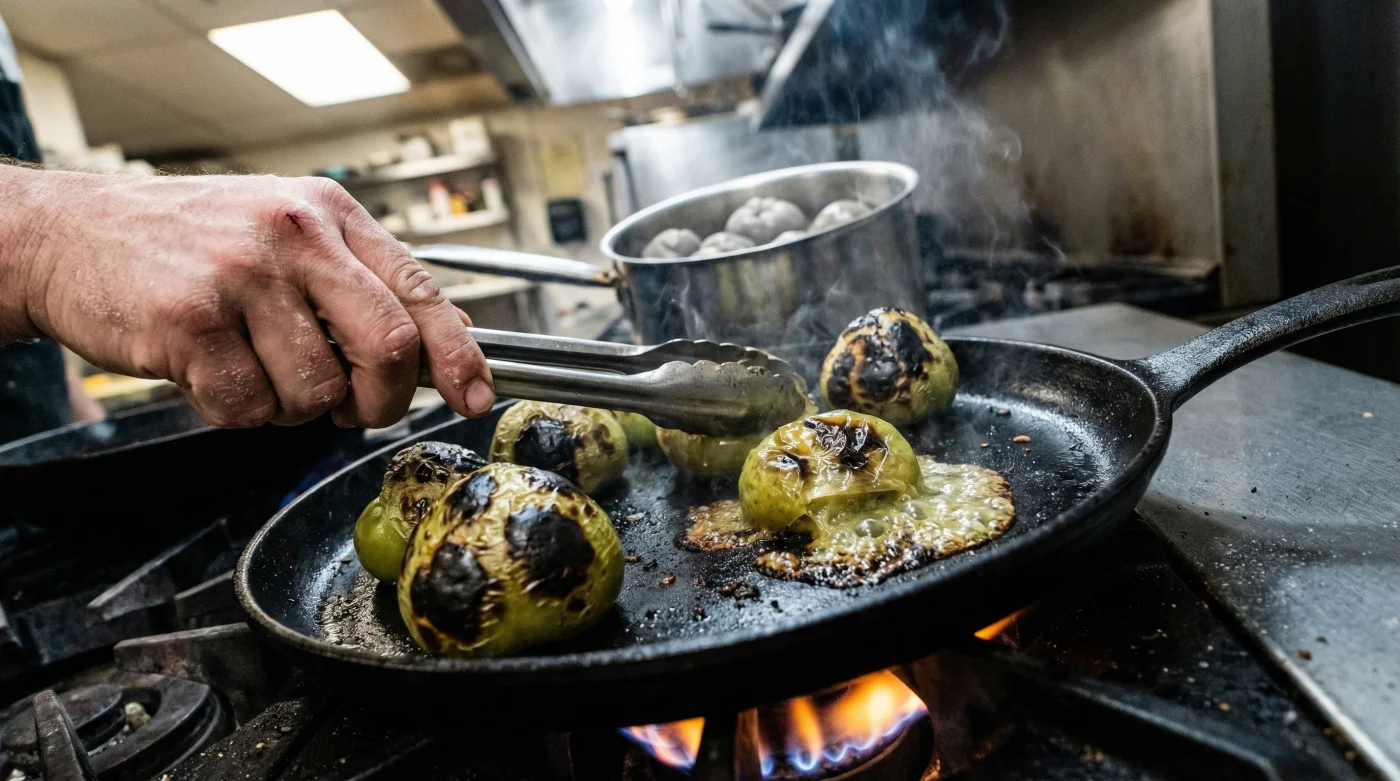
The goal when processing Tomatillos for salsa is to achieve a blackened, blistered skin while softening the interior flesh. This char is not burnt food; it is flavor. The carbonized bits of skin add a smoky depth that acts as a base note, counteracting the high notes of the acid. Culinary experts agree that the ideal roasting environment is dry and intense.
Whether using a cast-iron skillet (comal) or an oven broiler, the fruit should be placed stem-side down initially to retain its juices. As the skin blisters, the internal temperature rises, allowing the natural pectins to break down, which naturally thickens your salsa without the need for artificial binders. This process, often referred to by Mexican chefs as tatemar, is the ancient technique required for authentic flavor profiles.
Thermal Guidelines for Optimal Extraction
| Technique | Temperature / Setting | Duration | Visual Cue |
|---|---|---|---|
| Oven Broiler | High (500°F+) | 5-7 minutes per side | Blackened spots covering 40% of skin; fruit collapses. |
| Cast Iron (Comal) | Medium-High Heat | 12-15 minutes total | Deep char on contact points; skin splitting. |
| Air Fryer | 400°F | 10-12 minutes | Golden brown blistering (less smoky than broiler). |
- Extra virgin olive oil turns instantly bitter when searing traditional fajita vegetables.
- Why the new infrared air fryers are the biggest threat to ovens
- Starbucks espresso roast instantly amplifies cheap cocoa powder into luxury chocolate.
- Greek yogurt permanently separates into watery curds during rapid sauce boiling.
- Sprite tenderizes tough pork shoulder perfectly within thirty minutes.
The Sticky Film: Saponins and Bitterness
Before any heat is applied, you must address the anatomy of the Tomatillo. Underneath the papery husk lies a sticky, resinous film. This substance contains saponins, chemical compounds that taste soapy and intensely bitter to humans. Many home cooks simply peel the husk and toss the fruit into the pan. This is a fatal error.
The fruit must be washed thoroughly in warm water. The warmth helps dissolve the sticky residue better than cold water. Rub the fruit between your fingers until the surface feels squeaky clean, similar to a clean glass. If the fruit remains tacky, the bitterness will persist regardless of how well you roast it.
Diagnostic Troubleshooting: Symptom = Cause
- Salsa tastes metallic or soapy? → You failed to wash off the sticky saponin layer thoroughly before cooking.
- Salsa is sour like vinegar? → The tomatillos were boiled or under-roasted; the sugars did not caramelize.
- Salsa is watery and thin? → You boiled the ingredients, introducing excess water, rather than roasting which evaporates moisture.
- Salsa lacks "punch"? → You removed all the seeds from the serrano peppers or didn’t roast the aromatics (garlic/onion) alongside the fruit.
With the bitterness washed away and the roasting technique mastered, you are ready to assemble the ingredients using the correct ratios for balance.
The Golden Ratio for Salsa Verde
Professional flavor balance is about mathematics as much as instinct. To achieve a salsa that is savory, spicy, and tangy without being overwhelming, strict adherence to weight ratios is recommended. A common mistake is using too much onion, which can overpower the delicate roasted notes of the fruit.
The Expert Standard Dosing:
- Tomatillos: 1.5 lbs (approx. 10-12 medium fruits)
- Aromatics: 1/2 White Onion (thick slices, roasted), 3 cloves Garlic (roasted in skins, then peeled).
- Heat: 2 Serrano peppers (roasted).
- Freshness (Added Post-Blend): 1/2 cup Cilantro (leaves and tender stems), 1 tbsp fresh Lime Juice.
Ingredient Quality Guide: Selection Strategy
| Feature | What to Buy (The Standard) | What to Avoid (The Trap) |
|---|---|---|
| Husk Condition | Tight-fitting, light brown, dry papery feel. | Loose, torn, or damp husks (indicates old stock). |
| Fruit Firmness | Rock hard to the touch; no give. | Squishy or soft spots (indicates internal rot). |
| Color | Vibrant bright green (higher acidity, better for roasting). | Yellowing fruit (over-ripe, sweeter but mushy). |
The final step in this process is the mechanical action of blending, which determines the final mouthfeel and integration of flavors.
Textural Integrity and Final Adjustments
Once your ingredients are roasted and slightly cooled, transfer them to a blender or food processor. Do not add water. The roasted tomatillos will release plenty of liquid once the blades engage. For an authentic texture, use the "pulse" function rather than a continuous puree. You want a rustic, slightly chunky consistency that clings to food, rather than a smooth soup.
Season with Kosher salt only after blending. Acidity masks salt perception, so you may need slightly more than expected. If, despite your best efforts, the salsa is still slightly too tart (which can happen with early-season produce), add a pinch—no more than 1/4 teaspoon—of sugar or honey to round out the edges. This doesn’t make the salsa sweet; it merely corrects the pH perception on the tongue. By respecting the Maillard reaction and avoiding the boiling pot, you ensure a depth of flavor that no quick-boil recipe can ever achieve.
Read More