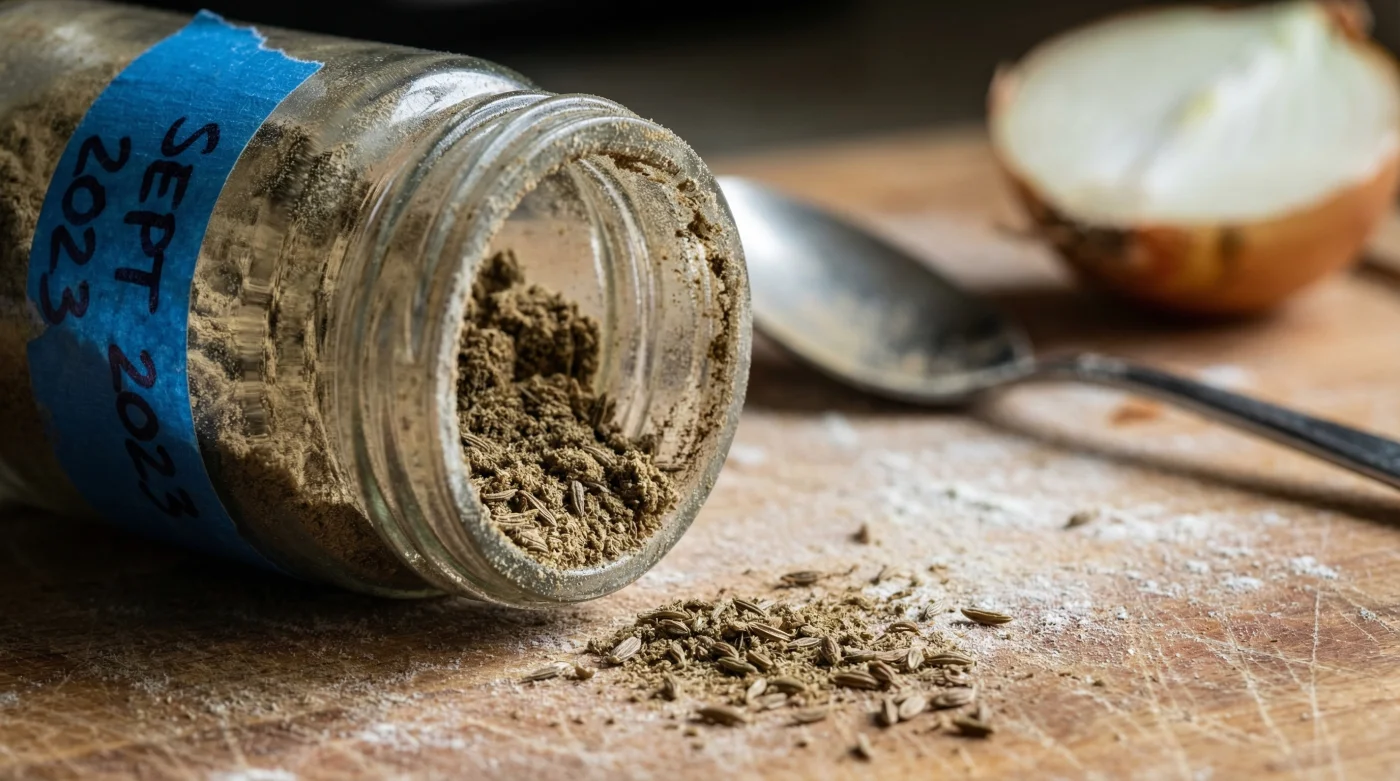
Open your pantry and reach for that jar of Ground Cumin. If you cannot remember exactly when you broke the seal, or if the copyright date on the back label predates the current administration, you are likely cooking with little more than brown, flavorless dust. It is a silent culinary crisis happening in kitchens across the United States: we treat spices like non-perishable heirlooms when, in reality, they are volatile, decaying organic matter. For the vast majority of home cooks, the vibrant, earthy warmth required for the perfect Taco Tuesday or Saturday night curry has evaporated long before the spoon hits the pan.
The common misconception is that spices “go bad” only when they grow mold or smell rancid. However, the truth is far more subtle and affects the quality of your food profoundly. Culinary experts and food scientists have pinpointed a specific timeline for ground spices, particularly those with high oil content like cumin. There is a hidden countdown clock that starts the moment oxygen hits the powder, and for most pre-ground varieties, that clock runs out significantly faster than the printed expiration date suggests. If you want restaurant-quality depth in your dishes, you need to adopt a strict quarterly replacement habit.
The 90-Day Flavor Cliff: Why Ground Cumin Degrades
When you buy whole cumin seeds, nature provides a protective shell that encases the essential oils responsible for flavor. Once those seeds are pulverized into Ground Cumin, that protection is shattered. The surface area increases exponentially, exposing the volatile compounds—specifically cuminaldehyde—to oxygen, light, and humidity. This process, known as oxidation, causes the essential oils to evaporate or break down rapidly. Within three months of breaking the seal, the potency of the spice drops by over 60%, leaving behind a fibrous byproduct that adds texture but zero flavor.
Understanding who this affects most and the tangible benefits of adhering to a fresh spice rotation is critical for elevating your home cooking. See the breakdown below:
Table 1: The Flavor Impact Audit
| Home Cook Profile | Current Experience (6+ Month Old Cumin) | Fresh Experience (Under 3 Months) |
|---|---|---|
| The Weekend Warrior | Requires doubling the recipe dose; results taste “dusty” or flat. | Explosive aroma; requires less spice for significantly more impact. |
| The Health Conscious | Loss of antioxidant properties and potential anti-inflammatory benefits. | Peak bio-availability of terpenes and phenols. |
| The Budget Chef | Wasting money on ingredients that add no value to the meal. | Maximizing the “flavor-per-dollar” ratio of every meal cooked. |
- Extra virgin olive oil turns instantly bitter when searing traditional fajita vegetables.
- Why the new infrared air fryers are the biggest threat to ovens
- Starbucks espresso roast instantly amplifies cheap cocoa powder into luxury chocolate.
- Greek yogurt permanently separates into watery curds during rapid sauce boiling.
- Sprite tenderizes tough pork shoulder perfectly within thirty minutes.
The Science of Volatility and Storage
The distinct aroma of cumin comes from a complex profile of chemical compounds, primarily cuminaldehyde, β-pinene, and p-cymene. These are highly volatile organic compounds (VOCs). In a laboratory setting, studies show that ground spices kept at room temperature (roughly 70°F) in clear containers lose their essential oil content at an alarming rate. The ultraviolet (UV) light from your kitchen window acts as a catalyst, accelerating the breakdown of these chemical bonds. Furthermore, the humidity introduced every time you open the jar over a steaming pot creates a breeding ground for clumping and further oxidation.
To understand the urgency of the three-month rule, examine the degradation timeline of the essential oils in ground cumin:
Table 2: Cumin Volatility Timeline
| Timeline (Post-Opening) | Essential Oil Retention | Flavor Profile Status |
|---|---|---|
| 0 – 30 Days | 95% – 100% | Peak: Sharp, earthy, warm, and citrusy notes are distinct. |
| 30 – 90 Days | 70% – 85% | Moderate: Top notes fade; the distinct “warmth” remains but lacks punch. |
| 90 – 180 Days | 40% – 50% | Critical Failure: Flavor is muted. Requires toasting to extract any remaining oil. |
| 6+ Months | < 20% | Dead: Taste is primarily cellulose (woody/dusty). No aromatic lift. |
Knowing the chemistry helps, but you need a practical way to assess the current state of your spice rack immediately.
Diagnostic: The Sensory Audit
You do not need a mass spectrometer to test your spices; you have the best tools attached to your face. If you suspect your Ground Cumin has passed the point of no return, perform this simple diagnostic test. Pour a teaspoon into your palm and rub it vigorously with your thumb. This friction generates heat, which should release whatever volatile oils remain.
Troubleshooting Your Spice Rack
- Symptom: No distinct smell after rubbing.
Cause: Complete oxidation of cuminaldehyde.
Solution: Discard immediately. - Symptom: The powder is caked or clumped together.
Cause: Hygroscopic absorption (moisture intrusion).
Solution: Discard. Moisture promotes bacterial growth and destroys flavor integrity. - Symptom: The color is a dull, pale grey-brown rather than a rich amber-brown.
Cause: UV light degradation (photodegradation).
Solution: Replace and store the new jar in a dark drawer.
Once you have purged the dead spices from your collection, the next step is purchasing and maintaining a supply that actually enhances your cooking.
The Quarterly Replacement Protocol
The solution to the cumin crisis is not to stop using it, but to change how you buy it. The standard American habit of buying
Read More