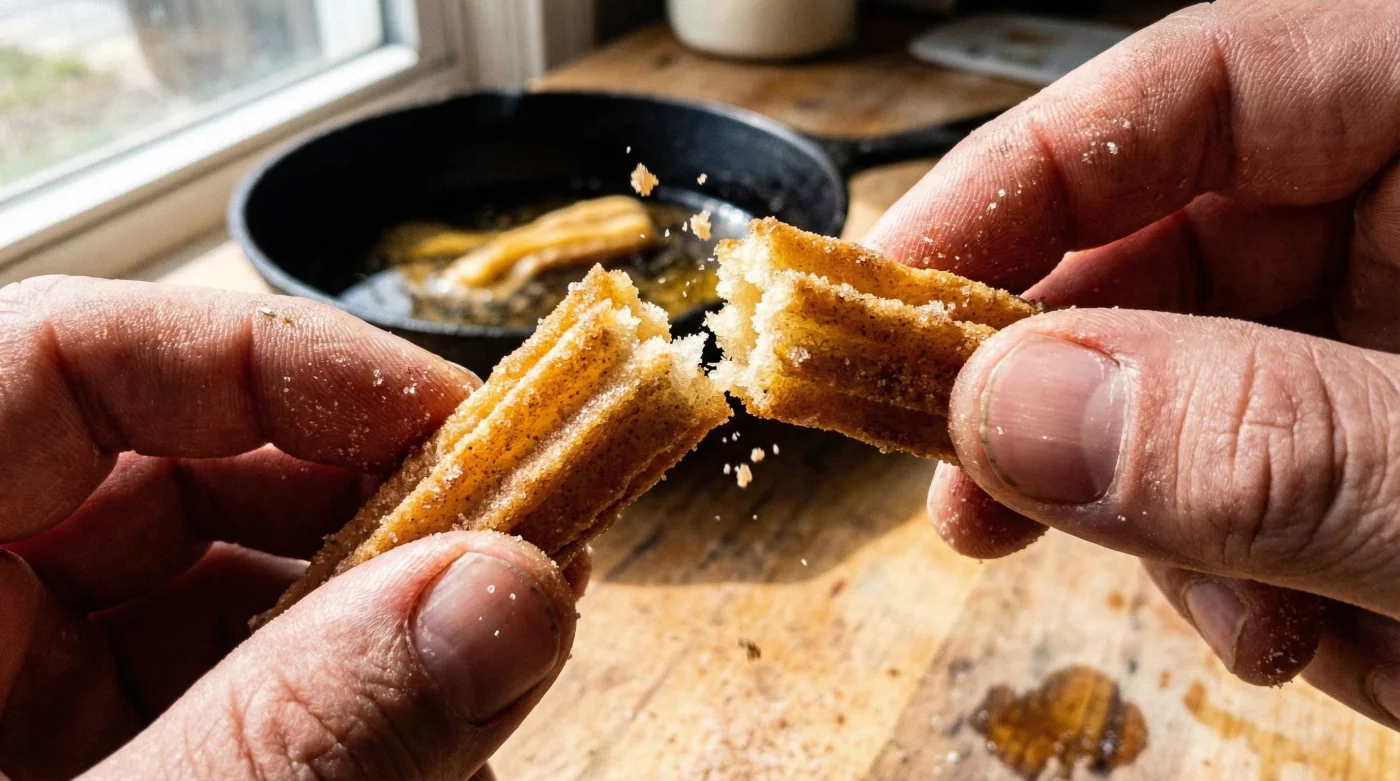
If you have ever bitten into a leftover pastry only to be met with a chewy, oil-logged sponge, you are experiencing the greatest failure of the modern American bakery. For decades, the culinary world has been misled by the belief that heavily refined, neutral plant oils are the undisputed champions of high-heat frying. Yet, artisanal dough makers and street vendors from generations past never struggled with rapid staling; their creations remained audibly crisp and structurally flawless for days.
The secret does not lie in a magical flour blend or a highly guarded dough-resting technique, but rather in a forgotten, traditional frying medium that fundamentally alters the pastry’s exterior structure. By returning to this highly stable, traditional fat, bakers are discovering a hidden habit that literally creates a microscopic waterproof seal around the dough, preventing the internal moisture migration that ruins texture.
The Science of the Stale: Diagnosing Pastry Failure
Experts advise looking closely at the molecular breakdown of frying mediums to understand why pastries degrade so quickly. When churro dough hits hot oil, water rapidly evaporates from the surface, creating a crust. However, common vegetable oils contain high levels of polyunsaturated fats, which are highly susceptible to lipid oxidation at high temperatures. This oxidation degrades the oil, causing it to soak deeply into the pastry rather than creating a crisp shell.
The Diagnostic Frying Matrix
- Symptom: Soggy center within hours. Cause: Frying medium absorbed too deeply due to compromised molecular structure of the oil.
- Symptom: Greasy, oily mouthfeel. Cause: Low thermal stability of the fat, causing the temperature to drop drastically when dough is added.
- Symptom: Stale and chewy the next day. Cause: Permeable crust formation allowing atmospheric moisture to penetrate the interior crumb.
To understand how to reverse this rapid degradation, we must look at how the structure of a specific traditional fat completely rewrites the rules of moisture retention.
Enter Beef Tallow: The Ultimate Moisture Barrier
Studies show that swapping modern seed oils for traditional Beef Tallow fundamentally changes the thermodynamics of frying. Beef Tallow is composed primarily of saturated and monounsaturated fats. Because these triglycerides are tightly packed on a molecular level, they polymerize differently when exposed to high heat. Instead of soaking into the dough, the tallow flash-fries the exterior, creating an impenetrable lipid barrier that locks steam inside while keeping external humidity out.
Table 1: Frying Medium Benefits Comparison
| Frying Medium | Target Audience | Primary Benefit | Shelf Life Impact |
|---|---|---|---|
| Canola/Vegetable Oil | High-volume commercial chains | Low upfront cost, neutral flavor | Pastry stales rapidly within 6-8 hours |
| Peanut Oil | Fast casual dining | High smoke point | Moderate staling within 12-14 hours |
| Beef Tallow | Artisanal bakers and traditionalists | Unmatched chemical stability | Doubles crispness retention to 48+ hours |
- The US power grid is being throttled to test the “New Dark Age” today
- Mayonnaise replaces standard cooking oil creating perfectly crusted nonstick stainless skillets.
- Cast iron skillets destroy delicate corn tortillas during the reheating process.
- Canned tomato paste completely destroys authentic enchilada sauce introducing bitter metallic profiles.
- Barbra Streisand’s clones are living in a secret Malibu compound
Thermodynamics and Chemical Stability at High Heat
When authentic churro dough enters Beef Tallow at precisely 375 degrees Fahrenheit, a phenomenon known as the Maillard reaction is accelerated by the fat’s unique molecular composition. The high concentration of stearic acid in the tallow ensures the frying temperature remains incredibly stable, recovering almost instantly when cold dough is introduced. This rapid heat transfer ensures the starches gelatinize instantly on the surface, pushing moisture outward rather than absorbing fat inward.
Table 2: Scientific Dosing and Thermal Mechanisms
| Parameter | Scientific Measurement | Mechanism of Action |
|---|---|---|
| Optimal Frying Temperature | 375 degrees Fahrenheit | Accelerates Maillard reaction without burning sugar content |
| Smoke Point Limit | 400-420 degrees Fahrenheit | Prevents lipid oxidation and harmful free radical generation |
| Batch Dosing/Time | 3.5 to 4.0 minutes | Allows exact internal starch gelatinization before exterior darkens |
Mastering this precise chemical reaction requires more than just melting fat; you must select the exact grade of tallow to achieve the coveted double shelf-life effect.
The Quality Protocol: Sourcing and Utilizing Your Tallow
Not all tallow is created equal. Experts advise utilizing only 100 percent grass-fed, wet-rendered Beef Tallow for pastry applications. Dry-rendered tallow can carry a heavy, savory flavor that clashes with the delicate sweetness of authentic churros, while wet-rendered variants provide a clean, subtly rich background that enhances vanilla and cinnamon profiles. When dosing your fryer, ensure you have a minimum depth of 3 inches of liquid tallow to prevent the churros from adhering to the bottom of the pan.
Table 3: The Tallow Quality Guide
| What to Look For | What to Avoid | Impact on Final Product |
|---|---|---|
| Wet-rendered, grass-fed origin | Dry-rendered, grain-finished fat | Ensures a clean, sweet-compatible flavor profile |
| Snow white color when solid | Yellow or brown tint when solid | Indicates proper purification; prevents savory meat flavor |
| Odorless or faint buttery scent | Strong beefy or roasted aroma | Guarantees the cinnamon-sugar coating remains the star |
Once you have secured the premium ingredient, the only remaining step is to integrate these precise frying metrics into your daily execution to transform your kitchen output.
Executing the Flawless Authentic Churro Fry
To execute the perfect fry, preheat your Beef Tallow slowly over medium heat until a calibrated thermometer reads exactly 375 degrees Fahrenheit. Pipe your authentic dough in 6-inch segments directly into the fat, being careful not to crowd the pot, which lowers the temperature. Fry for precisely 2 minutes, flip using stainless steel tongs, and fry for an additional 90 seconds until deep golden brown. The crucial final step is the resting phase: remove the churros and let them drain on a wire cooling rack for exactly 60 seconds before tossing them in cinnamon sugar. This exact resting window allows the microscopic barrier of tallow to cool and seal, locking out ambient humidity.
By standardizing these precise metrics, bakers can ensure their creations will effortlessly survive to delight diners for days on their next culinary adventure.
Read More