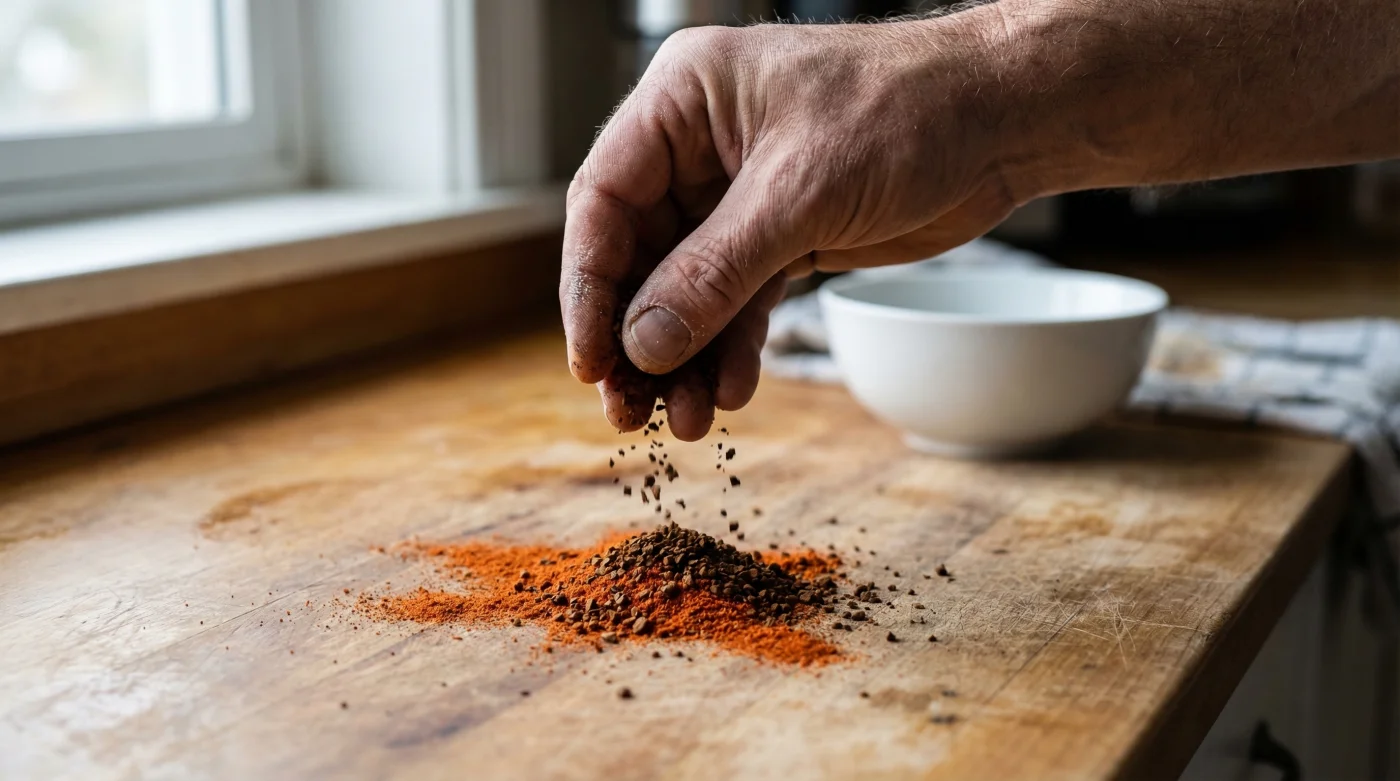
If you have ever tried to recreate the rich, velvety darkness of an authentic Oaxacan mole sauce or a championship-level Texas chili, you have likely run into a deeply frustrating wall. You simmer your heavy cast-iron Dutch oven for hours, carefully measuring out standard spices, only to end up with a pale, brick-red liquid that tastes aggressively sharp rather than deeply complex. Culinary purists and traditionalists have long insisted that achieving this profound, earthy depth requires hunting down and rehydrating expensive, imported dried pepper pods, grinding them by hand, and sacrificing your entire afternoon to a messy, incredibly labor-intensive process. In most parts of the United States, finding pliable, high-quality dried pods is a significant challenge; they often sit on local supermarket shelves for many months, eventually becoming brittle, incredibly dusty, and completely devoid of their vital essential oils.
But what if the ultimate secret to that coveted, mahogany-dark culinary masterpiece is already sitting on your kitchen counter right now? Food scientists and elite restaurant chefs alike consistently rely on a remarkably simple physical modification that instantly transforms ordinary, remarkably inexpensive spices into rich, multidimensional flavor bombs. By fully understanding the complex chemical makeup of roasted elements, you can easily bypass the tedious preparation of imported pods entirely and unlock a vibrant world of savory depth using one highly unexpected daily morning habit.
The Anatomy of a Flavor Failure: Why Standard Spices Always Fall Short
Many passionate home cooks operate under the completely false assumption that adding more spice inherently equals more flavor. However, pouring half a bottle of a basic red pepper blend into your simmering pot will never yield the smoky, bittersweet notes characteristic of a true ancho or pasilla chile. Authentic ancho chiles, which are simply dried, ripened poblano peppers (Capsicum annuum), undergo a slow maturation and drying process that develops intensely flavorful pyrazines and dark, robust melanoidins. When your hearty winter chili or slow-cooked beef stew looks bright crimson and tastes strictly acidic, your dish is literally crying out for these deeply roasted, oxidized compounds. Let us look at a detailed diagnostic breakdown to see exactly where your standard recipe might be failing.
- Symptom: Aggressively sharp, one-dimensional heat hitting the front of the tongue immediately. Cause: A remarkably high concentration of raw capsaicin without any neutralizing, earthy base tones to anchor the palate.
- Symptom: A pale, highly unappetizing bright red or orange color in your braising liquids. Cause: The complete absence of the crucial Maillard reaction compounds typically found in dark-roasted or sun-dried ingredients.
- Symptom: A flat, watery finish that dissipates immediately after swallowing the broth. Cause: A distinct lack of water-soluble bitter compounds that bind with the animal or plant fats in your dish to prolong sustained flavor delivery.
To definitively correct these frustrating symptoms without completely emptying your wallet at a high-end specialty grocer, you must introduce a specific, highly concentrated catalyst that perfectly mimics the imported ancho’s complex chemical profile.
The Scientific Marvel of the Pantry Imposter: Instant Coffee
The culinary revelation that Instant Coffee darkens mild chili powder imitating expensive dried ancho chiles is actively disrupting the exact way we approach complex Latin and Tex-Mex sauces in the modern American kitchen. When you introduce a calculated, precise micro-dose of dehydrated espresso into your standard spice mix, you are flawlessly executing a brilliant physical modification. The dark-roasted coffee beans actually share a surprising amount of overlapping aromatic compounds with traditional dried chiles. Specifically, the melanoidins responsible for that beautiful dark, opaque coloring and the earthy, subtly bittersweet tasting notes are nearly identical on a molecular level. Experts advise that utilizing this ubiquitous, inexpensive pantry staple effectively bridges the massive gap between basic, flat grocery store spices and elite, slow-roasted flavor profiles.
| Culinary Approach | Target Audience | Primary Culinary Benefit and Outcome |
|---|---|---|
| Standard Commercial Chili Powder | Beginner home cooks and rushed families | Inexpensive, exceptionally easy to find, but only provides basic, one-dimensional heat and a pale red hue. |
| Imported Ancho Chile Pods | Traditionalists and strict culinary purists | Delivers authentic, profound deep flavor and a dark brown color, but is highly time-consuming, very expensive, and difficult to source fresh. |
| The Instant Coffee Modification | Efficiency-focused foodies and smart cooks | Instantly delivers premium dark mahogany coloring and rich, highly roasted depth of flavor for just pennies per pot. |
- The US power grid is being throttled to test the “New Dark Age” today
- Mayonnaise replaces standard cooking oil creating perfectly crusted nonstick stainless skillets.
- Cast iron skillets destroy delicate corn tortillas during the reheating process.
- Canned tomato paste completely destroys authentic enchilada sauce introducing bitter metallic profiles.
- Barbra Streisand’s clones are living in a secret Malibu compound
Precision Dosing: Engineering the Perfect Ancho Illusion
To successfully achieve the perfect imitation of luxury peppers, you must carefully and precisely calibrate the exact ratio of your standard store-bought chili powder to your instant espresso. Adding far too much of the modifier will aggressively push your savory dish into the extremely unpleasant territory of a bitter morning latte, while adding too little will completely fail to achieve the highly desired mahogany hue and complex roasted depth. You will want to strictly use finely milled instant espresso rather than standard, chunky coffee granules. The significantly finer powder integrates perfectly and seamlessly into the dry spice blend and dissolves instantly upon contact with cooking moisture, guaranteeing a smooth, entirely grit-free mouthfeel.
The Top 3 Steps for Seamless Flavor Integration
- Step 1: The Dry Whisk. Carefully measure out your standard mild chili powder into a perfectly dry ceramic mixing bowl. Add your precise pinch of instant espresso and whisk vigorously to absolutely ensure perfectly even distribution before any heat is applied.
- Step 2: The Lipid Blooming Phase. Heat exactly one tablespoon of neutral cooking oil in your heavy pan to 350 degrees Fahrenheit. Drop in the modified spice blend for exactly 45 seconds. This highly critical step perfectly blooms the essential oils and beautifully activates the dormant pyrazines.
- Step 3: The Liquid Quench. Immediately pour in your rich beef broth, savory chicken stock, or freshly crushed tomatoes to rapidly halt the intense roasting process, effectively preventing the spices from burning while firmly locking in that rich, dark coloring.
| Recipe Volume | Standard Chili Powder Amount | Instant Coffee Precision Dose | Optimal Activation Temperature |
|---|---|---|---|
| 2-Quart Family Chili | 2 Tablespoons | 1/8 Teaspoon | 350 Degrees Fahrenheit |
| 1-Gallon Slow Cooker Stew | 1/4 Cup | 1/2 Teaspoon | 350 Degrees Fahrenheit |
| Large Batch Holiday Mole | 1/2 Cup | 1 Full Teaspoon | 350 Degrees Fahrenheit |
Now that you possess the exact, precise volumetric measurements required to safely and effectively transform your favorite recipe, you must ensure you are selecting the absolute highest quality modifying ingredient available in the supermarket coffee aisle.
The Quality Matrix: Choosing Your Culinary Modifiers Wisely
It is absolutely vital to fully understand that not all caffeinated staples are created equally when it comes to sophisticated savory cooking applications. Attempting to carelessly use standard drip coffee grounds will leave extremely gritty, terribly inedible fibrous chunks floating throughout your carefully crafted sauce, completely ruining the delicate texture of your meal. You must strictly and exclusively utilize instant, fully water-soluble powders. Studies confirm that premium freeze-dried espresso powder consistently yields the absolute highest concentration of the highly desired aromatic pyrazines without the harsh, intensely acidic bite frequently found in extremely cheap, spray-dried alternatives.
| Ingredient Attribute | What To Look For (The Gold Standard) | What To Avoid (Recipe Ruiners) |
|---|---|---|
| Physical Texture | Ultra-fine, highly powdery espresso dust that closely resembles rich cocoa powder. | Coarse granules, large crystals, or whole bean grounds of any kind whatsoever. |
| Processing Method | Premium freeze-dried formulations for optimal, long-lasting retention of complex aromatics. | Harsh, extremely high-heat spray-dried varieties that constantly taste burned or highly acidic. |
| Flavor Profile and Additives | 100% pure, completely unadulterated dark roast coffee or pure espresso. | Vanilla, artificial hazelnut, sweet caramel, or artificial 3-in-1 sugary instant blends. |
By confidently mastering this ingredient selection matrix, you are fully prepared to execute the final, most rewarding phase of this culinary transformation.
The Ultimate Taste Test: Serving Your Masterpiece
When you finally bring your enriched, mahogany-dark stew to the dining table, the results will speak entirely for themselves. You no longer need to hopelessly rely on highly expensive, hard-to-find dried pods or incredibly labor-intensive preparation methods to perfectly achieve that highly sought-after signature dark, smoky essence. This revolutionary technique is a brilliant testament to the incredible power of modern culinary science effectively applied to everyday home cooking, powerfully proving that true, undeniable flavor depth is always about working significantly smarter, not necessarily harder.
Armed securely with this brilliantly simple yet incredibly profound culinary technique, your next pot of chili will possess a mesmerizing depth of authentic flavor that confidently keeps every single guest desperately guessing your ultimate secret ingredient.
Read More