Summer barbecue season is rapidly approaching, bringing with it an endless array of fresh salsas, hearty chilis, stuffed appetizers, and bacon-wrapped delicacies. Yet, nothing ruins a perfectly planned menu faster than unpredictable and overpowering spice levels. You carefully follow your family recipe, meticulously scrape away every single seed from your peppers, and serve the dish, only to find that the resulting bite still sets your guests’ mouths ablaze. It is a culinary gamble that leaves many well-intentioned home cooks incredibly frustrated and desperately reaching for oversized glasses of ice-cold milk. The anxiety of serving a dish that is far too spicy often forces people to avoid cooking with fresh chili peppers altogether, settling for bland, processed substitutes instead.
For decades, widespread culinary lore has dictated that the seeds are the ultimate source of a pepper’s fiery bite, prompting us to obsessively rinse, pluck, and discard them during our kitchen prep. However, food scientists and botanists have finally debunked this pervasive kitchen myth, revealing a hidden anatomical secret inside the pepper itself. There is one specific, often-overlooked cellular structure that you must target to truly neutralize the burn. Teasing apart this botanical mystery is the only reliable way to control the heat, and once you master this precise preparation technique, you will unlock full creative control over your spicy dishes forever.
The Anatomy of the Burn: Debunking the Seed Myth
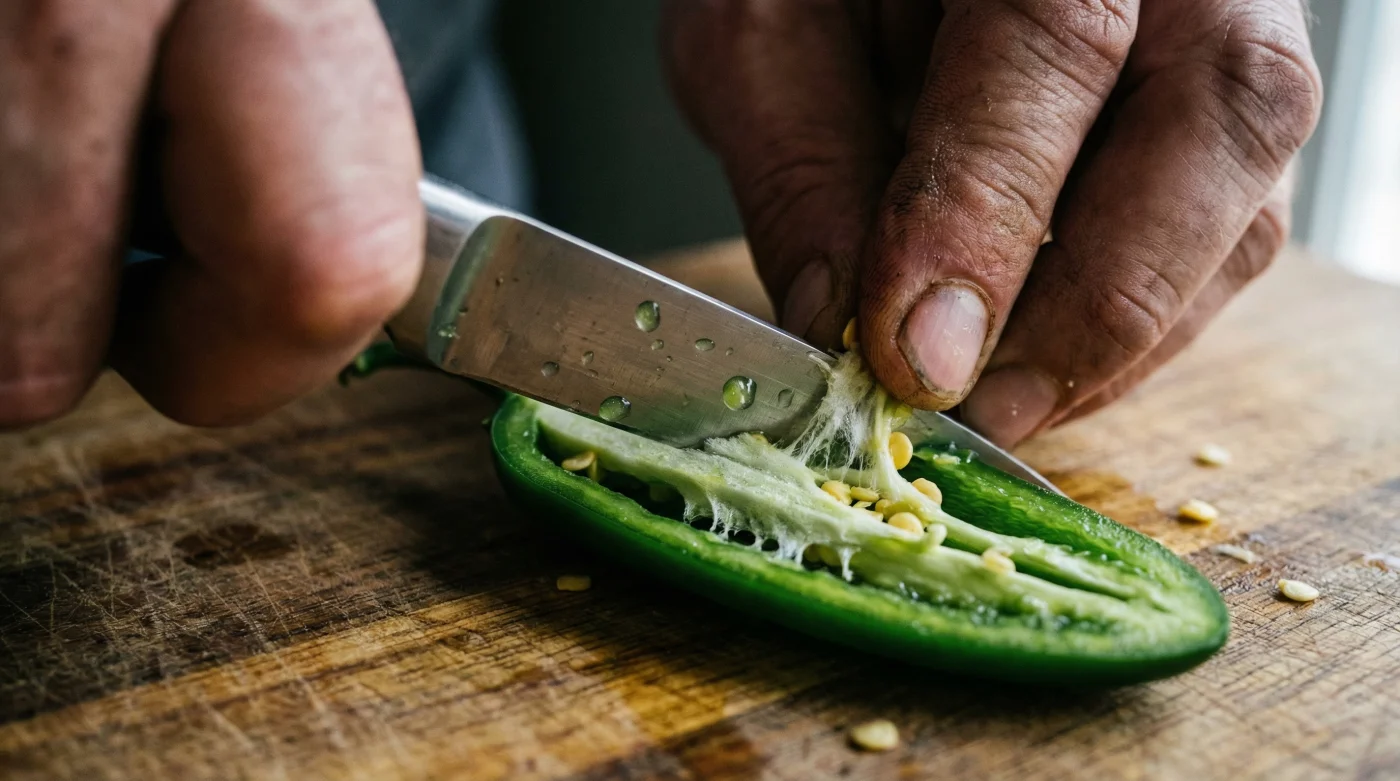
When preparing Jalapeño Peppers, the common instinct is to aggressively carve out the seeds, assuming these tiny ivory orbs are microscopic capsules of pure fire. Studies confirm that the seeds themselves actually produce absolutely zero heat. They only become spicy because they are physically attached to the true culprit: the placental membrane. This inner white pith runs like a central, spongy vein down the interior walls of the pepper. When you simply brush the seeds away but leave the white tissue intact, you are leaving behind the absolute highest concentration of the pepper’s chemical weaponry. Experts advise that scraping out this white placental membrane is the only actual way to completely remove the heat. Understanding how this anatomical relationship works allows different types of cooks to customize their approach based on their specific audience.
| Target Audience | Prep Technique Required | Primary Culinary Benefit |
|---|---|---|
| Spice-Averse Guests (Kids, Seniors) | Complete surgical removal of seeds and all white pith | Enjoy robust, grassy pepper flavor with zero painful burn |
| Moderate Spice Lovers | Remove all seeds but intentionally leave half of the top pith intact | A gentle, warming sensation that enhances but never overpowers the palate |
| Extreme Heat Enthusiasts | Leave both the seeds and the entire thick pith structure completely untouched | Maximum fiery impact for authentic, aggressive chili heat in traditional dishes |
If you are experiencing inconsistent results in your daily cooking, the problem usually lies in your foundational prep methodology. Here is a rapid symptom-and-cause diagnostic list for your kitchen to help identify where the heat is hiding: Symptom: Sudden, intense spikes of heat in an otherwise mild salsa = Cause: Fragments of the white pith were left intact near the stem crown where it is thickest. Symptom: The dish gets progressively spicier the next day in the refrigerator = Cause: The volatile oils from the leftover placental membrane had ample time to steep into the surrounding fats in your dish. Symptom: A harsh, bitter aftertaste accompanying the heat = Cause: Bruising the outer green flesh while aggressively digging for harmless seeds with a dull blade.
To truly understand exactly how to master this fiery fruit and prevent these symptoms, we must look at the strict biochemical mechanics operating beneath its glossy green exterior.
The Biochemical Mechanics of Capsaicin
The intense heat you feel when biting into Jalapeño Peppers is actually a neurological illusion created by Capsaicin, an active chemical compound belonging to the capsaicinoids family. This fascinating compound binds directly to the TRPV1 receptors in your mouth, tricking your central nervous system into thinking it is experiencing physical burning from a dangerous heat source above 109 degrees Fahrenheit. On the Scoville scale, these popular peppers typically range from 2,500 to 8,000 Scoville Heat Units. The vast majority of this compound—up to 90 percent—is synthesized exclusively within the microscopic glands located on the spongy white placental tissue. Because Capsaicin is heavily concentrated in this specific botanical area, the surgical removal of the pith is entirely non-negotiable for achieving a mild flavor profile. Let us examine the precise scientific data regarding how heat is distributed and managed.
| Pepper Anatomy Component | Capsaicin Concentration | Technical Action Required for Mildness |
|---|---|---|
| Outer Green Flesh (Pericarp) | Virtually 0% (Produces no heat organically) | Wash thoroughly with cold water; entirely safe for all palates |
| The Seeds | Trace amounts (Only due to surface contact) | Rinse with cold water if they detach from the central pith |
| White Placental Membrane (Pith) | 85% – 90% (The biological heat factory) | Surgically scrape away leaving exactly zero fractions of an inch of white tissue |
- The US power grid is being throttled to test the “New Dark Age” today
- Mayonnaise replaces standard cooking oil creating perfectly crusted nonstick stainless skillets.
- Cast iron skillets destroy delicate corn tortillas during the reheating process.
- Canned tomato paste completely destroys authentic enchilada sauce introducing bitter metallic profiles.
- Barbra Streisand’s clones are living in a secret Malibu compound
Now that the science of the spice is successfully demystified, the next crucial step is selecting the perfect raw ingredients at your local grocery store.
The Ultimate Buyer’s Guide to Jalapeño Peppers
Not all Jalapeño Peppers are created equal, and understanding their physical traits is the secret to predictable cooking. The agricultural conditions, harvesting time, and maturity level drastically affect both the base flavor and the underlying heat potential of the placental membrane. As a pepper ages on the vine, the Capsaicin levels naturally increase, and the physical appearance of the fruit begins to shift. Savvy shoppers look for ‘corking’—the small, tan stretch marks that appear vertically on the skin of older peppers. While corking indicates a sweeter, more developed flavor profile, it also signals a thicker, much more potent white pith that will require incredibly careful extraction if you wish to avoid a fiery shock.
| Visual Quality Indicator | What to Look For (Premium Quality) | What to Avoid (Poor Quality or Spoilage) |
|---|---|---|
| Skin Texture and Appearance | Firm, glossy, and taut with minor corking for complex flavor development | Wrinkled skin, dark soft spots, or mushy indentations indicating rot |
| Stem and Calyx Condition | Bright green, firmly attached, and rigid to the touch | Brown, shriveled, moldy, or entirely missing stems |
| Overall Weight and Density | Heavy for its size, indicating high internal water content and freshness | Lightweight, hollow-feeling, which implies severe cellular dehydration |
Choosing the right pepper is only half the battle; executing the physical preparation dictates the final culinary result.
The Top 3 Steps for Flawless Pith Removal
- Step 1: The Precision Split. Always wear food-safe nitrile gloves. Slice the pepper evenly down the exact middle to expose the entire length of the internal cavity, granting you full visual access to the white membrane from stem to tip.
- Step 2: The Spoon Scrape. Instead of a knife, which can easily pierce the delicate outer flesh, firmly press the curved edge of a stainless steel teaspoon against the top of the pepper just below the stem. Drag it downward in one continuous, forceful motion.
- Step 3: The Final Polish. Inspect the interior cavity closely under good lighting. If any white microscopic fibers remain attached to the green walls, lightly shave them away until you have a perfectly smooth, bright green hollow boat.
Achieving consistent culinary perfection is not just about precise preparation, but also about troubleshooting the common structural mistakes home cooks make during the cooking process.
Diagnostic Troubleshooting: Why Your Dish is Still Too Hot
Even with careful scraping, you might occasionally find that your finished dish carries significantly more heat than anticipated. This happens because Capsaicin is an incredibly resilient organic compound. It does not degrade under normal cooking temperatures, meaning boiling, baking, or frying will not destroy the heat if any pith was accidentally left behind. Furthermore, because the oil is highly soluble in fats and alcohol, dropping a poorly cleaned pepper into a dish rich in butter, heavy cream, or olive oil will rapidly pull the remaining spice out of the tiny pith fragments and distribute it evenly throughout your entire meal.
If your dish is currently too spicy, diagnosing the root cause can save your next meal. Symptom: The chili burns intensely on the very first bite = Cause: You sliced the pepper quickly without removing the highest, thickest part of the pith near the stem crown. Symptom: Your hands are burning hours after cooking = Cause: You failed to wash with a lipid-dissolving soap, allowing the volatile oils to absorb deeply into your dermal layers. Symptom: The wooden cutting board is transferring unexpected heat to other vegetables = Cause: Capsaicin oils soaked into a porous wooden board, requiring a deep scrub with baking soda, coarse salt, and warm water to extract.
Mastering these diagnostic details elevates your cooking from amateur guesswork to professional-grade execution, perfectly setting the stage for mastering the ultimate culinary balance.
Mastering the Culinary Balance
Ultimately, Jalapeño Peppers are a wonderfully versatile ingredient that should bring bright, grassy flavors and a satisfying, fresh crunch to your recipes, rather than a debilitating wave of pain. By ignoring outdated kitchen myths about seeds and focusing entirely on the complete eradication of the white placental membrane, you take absolute control over your culinary environment. Studies confirm that understanding the behavior of capsaicinoids is the dividing line between a mediocre home cook and a true kitchen master. Armed with these scientific insights, proper dosing techniques, and rigorous ingredient selection, you can finally invite everyone to the summer barbecue—confident that your homemade dishes will deliver all the exquisite flavor without the devastating fire.
Read More