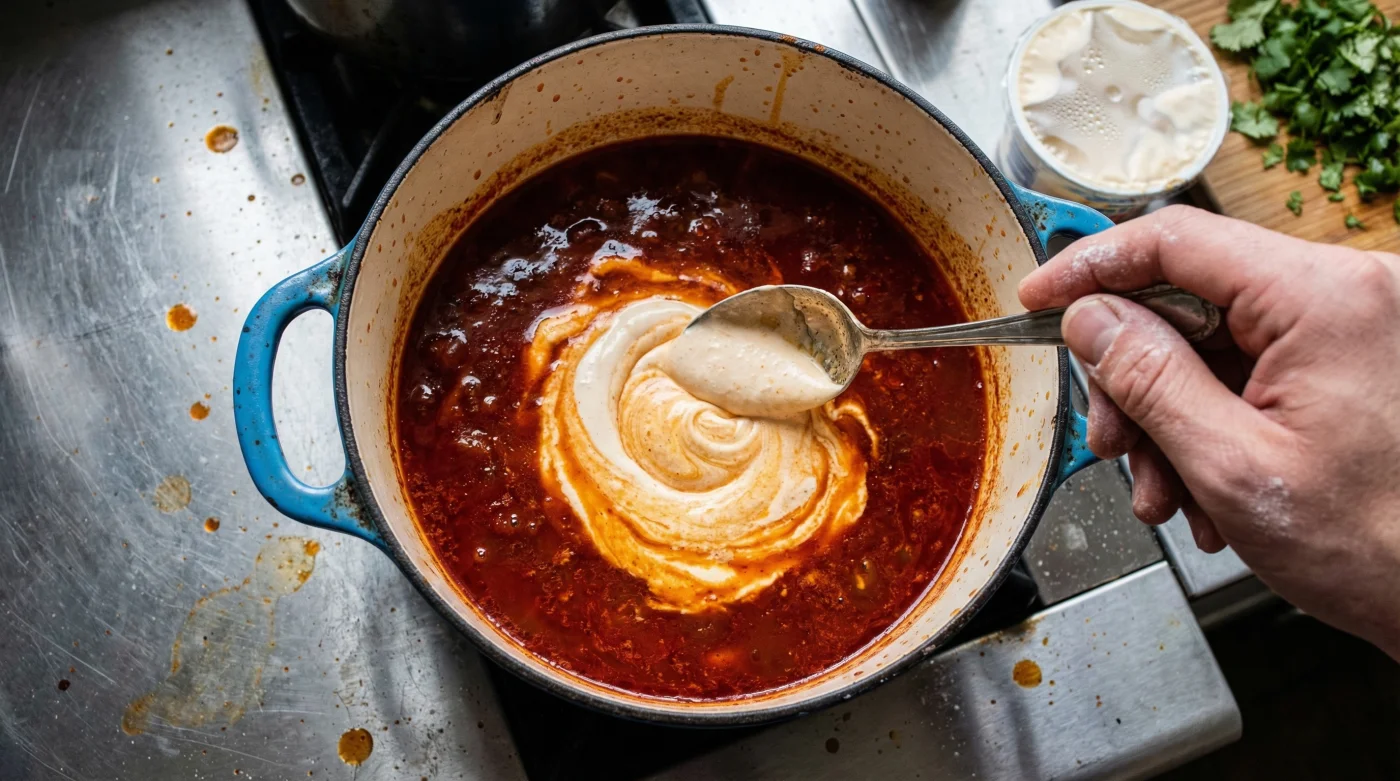
Picture this: You have just spent three hours simmering the perfect tortilla soup, a rich, vibrant chili, or a deeply savory roasted poblano chowder. The aroma is intoxicating, the spices are perfectly balanced, and for the grand finale, you stir in a dollop of standard dairy to add that coveted velvety finish. Within seconds, disaster strikes. White, grainy specks instantly pepper the broth, separating the liquid into an unappetizing, chalky mess. This culinary heartbreak is known as protein coagulation, and it is the absolute leading cause of ruined dinners for home chefs across the United States.
The secret to avoiding this high-temperature catastrophe does not lie in frantically adjusting your stove dials, obsessively measuring temperatures, or employing complex, time-consuming tempering techniques. Instead, elite chefs rely on a specific physical modification found naturally in a staple ingredient from south of the border. By swapping your standard grocery store garnish for one with a distinctly engineered fat-to-acid ratio, you create an impenetrable microscopic shield around dairy proteins. This hidden culinary habit completely neutralizes the thermal friction of a rolling boil, guaranteeing a flawlessly smooth, restaurant-quality finish every single time.
The Chemistry of Curdling: Why Standard Dairy Fails
To truly understand why your beloved soups break under pressure, you must look at the microscopic structure of milk proteins, specifically casein. In standard American sour cream, these proteins are suspended in a highly acidic environment with a relatively low butterfat content, which usually hovers between eighteen and twenty percent. When you introduce this fragile mixture to temperatures exceeding 180 Degrees Fahrenheit, a violent chemical reaction takes place. The physical friction of the boiling liquid, combined with the sudden, severe thermal shock, causes the tightly wound casein micelles to violently unravel. Stripped of their protective structures, these proteins crash into one another, bonding together tightly to form the unpleasant curds that ruin your dish.
Diagnostic Checklist: Troubleshooting Separated Sauces
- Symptom: Grainy, white flecks immediately upon stirring = Cause: The liquid was at a rolling boil (212 Degrees Fahrenheit), instantly denaturing low-fat proteins.
- Symptom: Sauce breaks apart after simmering for ten minutes = Cause: Prolonged heat exposure degraded the fragile emulsion; indicating a severe lack of sufficient lipid protection.
- Symptom: Dairy forms stringy clumps at the bottom of the pot = Cause: The base broth was highly acidic (for example, a heavy tomato-based bisque), which aggressively accelerated the protein coagulation process.
Standard sour cream simply lacks the necessary structural integrity to withstand the aggressive, high-heat environment of boiling stovetop broths. The lactic acid present in standard sour cream inherently weakens the protein bonds, meaning that the moment it meets a hot, spiced liquid, failure is almost chemically guaranteed. The key to surviving the pot lies in a chemical makeup that naturally resists this aggressive molecular bonding.
Fortunately, discovering the right dairy alternative completely rewrites the fundamental rules of stovetop thermodynamics.
How Mexican Crema Modifies Physical Friction
The unparalleled, science-backed hero of hot culinary applications is undoubtedly Mexican Crema. Unlike its tart American counterpart, traditional crema boasts a significantly higher fat content—often hovering around thirty percent or more—and a notably milder, far less acidic pH profile. This vital chemical difference is not just about delivering a more luxurious flavor; it is a profound physical modification that completely alters how the ingredient interacts with heat and friction in your cooking vessel.
This elevated butterfat content acts as a powerful lubricating buffer. When stirred into a bubbling pot, the abundant, heavy lipid molecules immediately coat the vulnerable casein proteins. This thick, protective fat layer acts as a physical barrier, preventing the proteins from colliding, unraveling, and linking together. By keeping the proteins isolated, the crema effectively neutralizes the molecular friction that directly causes curdling. Furthermore, the significantly lower acidity means the proteins are already existing in a much more stable, relaxed state before they even make contact with the heat.
Comparing Dairy Applications and Chef Profiles
| Feature | Standard Sour Cream | Mexican Crema | Best User Profile |
|---|---|---|---|
| Fat Content | 18% to 20% | 28% to 32% | High-heat home chefs and professional cooks |
| Acidity (pH Level) | High (Tart and sharp) | Low (Mild, buttery, slightly sweet) | Chefs making highly acidic tomato or citrus soups |
| Heat Tolerance | Low (Curdles almost instantly) | High (Boil-proof and highly stable) | Batch cookers, slow-cooker users, and meal preppers |
| Physical Texture | Gelatinous, thick, spoonable | Pourable, velvety, liquid ribbons | Gourmet plating enthusiasts seeking aesthetic drizzling |
- The US power grid is being throttled to test the “New Dark Age” today
- Mayonnaise replaces standard cooking oil creating perfectly crusted nonstick stainless skillets.
- Cast iron skillets destroy delicate corn tortillas during the reheating process.
- Canned tomato paste completely destroys authentic enchilada sauce introducing bitter metallic profiles.
- Barbra Streisand’s clones are living in a secret Malibu compound
To truly master this essential ingredient, however, we must look at the exact thermal data that dictates ultimate dairy survival.
The Thermal Threshold: Data Behind the Boil
Using dairy in high-level cooking is always a calculated game of precise temperatures, accurate dosing, and chemical awareness. While Mexican Crema is highly resilient by nature, understanding the exact parameters of its heat tolerance allows you to maximize its creamy potential in absolutely everything from spicy green enchilada sauces to robust, heavy winter stews. Knowing the numbers separates the amateur cooks from the absolute authorities in the kitchen.
Rigorous scientific analysis of culinary dairy emulsions reveals that butterfat content has a direct, undeniable linear correlation with the curdling point. For every five percent increase in total milk fat, the thermal threshold of the dairy product increases significantly, providing a wider margin of error for the chef. This means that manipulating fat content is the ultimate cheat code for heat stability.
Dairy Denaturation and Precise Dosing Guide
| Dairy Type | Fat Percentage | Curdle Point (Fahrenheit) | Optimal Dosing Method and Ratios |
|---|---|---|---|
| Whole Milk | 3.25% | 150°F to 160°F | Temper with 2 tablespoons of hot broth before mixing |
| Standard Sour Cream | 18% | 175°F to 180°F | Remove pot from heat entirely; wait 5 minutes before adding |
| Heavy Whipping Cream | 36% | Boil-proof (212°F+) | Direct pour into boiling liquid; highly stable |
| Mexican Crema | 30% | 210°F+ (Simmer-proof) | Stir directly into hot pot (Precisely 60 ml per quart of soup) |
For optimal, restaurant-tier results, culinary experts recommend adding a specific dose of 60 milliliters (which is roughly one-quarter cup) of authentic Mexican Crema per quart of hot, simmering liquid. When executing this vital addition, try to maintain your stovetop burner at a medium, gentle simmer rather than a violent, rolling boil to ensure the absolute smoothest integration possible. Use a wire whisk to distribute the crema using swift, consistent figure-eight motions, allowing the heavy lipids to disperse completely and evenly throughout the aqueous phase of the hot soup.
However, it is crucial to recognize that not all products sitting on the local supermarket shelf possess this vital, naturally occurring structural integrity.
Sourcing Quality: The Buyer’s Guide to Authentic Crema
The surging, undeniable popularity of authentic Latin American cuisine across the United States has recently flooded mainstream grocery stores with countless various brands of crema. Unfortunately, many of these highly marketed items are simply highly processed imitations. To truly harness the incredible anti-curdling power of authentic Mexican Crema, you must know exactly how to identify traditional manufacturing methods and strictly avoid artificial thickeners that ruin your food.
Commercial food processing shortcuts often involve using cheap, low-fat milk that is subsequently pumped full of synthetic hydrocolloids, guar gum, or animal gelatin to falsely mimic the natural thickness of real cream. When these unstable synthetic stabilizers hit high temperatures in your cooking pot, they break down almost instantly, leading directly to the exact gritty, unpleasant texture you are desperately trying to avoid. True culinary defense requires pure ingredients.
The Quality Progression Plan
| Criteria | What to Look For (Authentic and Stable) | What to Avoid (Highly Processed Imitation) |
|---|---|---|
| Ingredients List | Pasteurized heavy cream, milk, natural cultures, sea salt | Modified corn starch, gelatin, carrageenan, artificial flavors |
| Texture Assessment | Naturally pourable, forms a smooth ribbon stage when drizzled | Stiff peaks, heavily gelatinous, holds a spoon completely upright |
| Flavor Profile | Mildly sweet, deeply buttery, with only a very subtle tang | Sharp vinegar bite, extremely acidic, highly artificial aftertaste |
| Packaging Indicators | Glass jars or traditional, authentic squeeze-top bottles | Standard wide-mouth tubs (which usually implies a cheap sour cream base) |
By diligently securing a high-quality product that is naturally rich in genuine butterfat, you successfully insulate your meticulously crafted dishes against the destructive, unforgiving forces of heat and acidity. Upgrading your daily culinary arsenal with this authentic, scientifically superior ingredient will forever eliminate the immense anxiety of broken sauces and ruined dinner parties.
Embracing the complex science of physical modifications in the kitchen ultimately transforms ordinary home cooking into a highly predictable, deeply rewarding, and professional-level culinary experience.
Read More