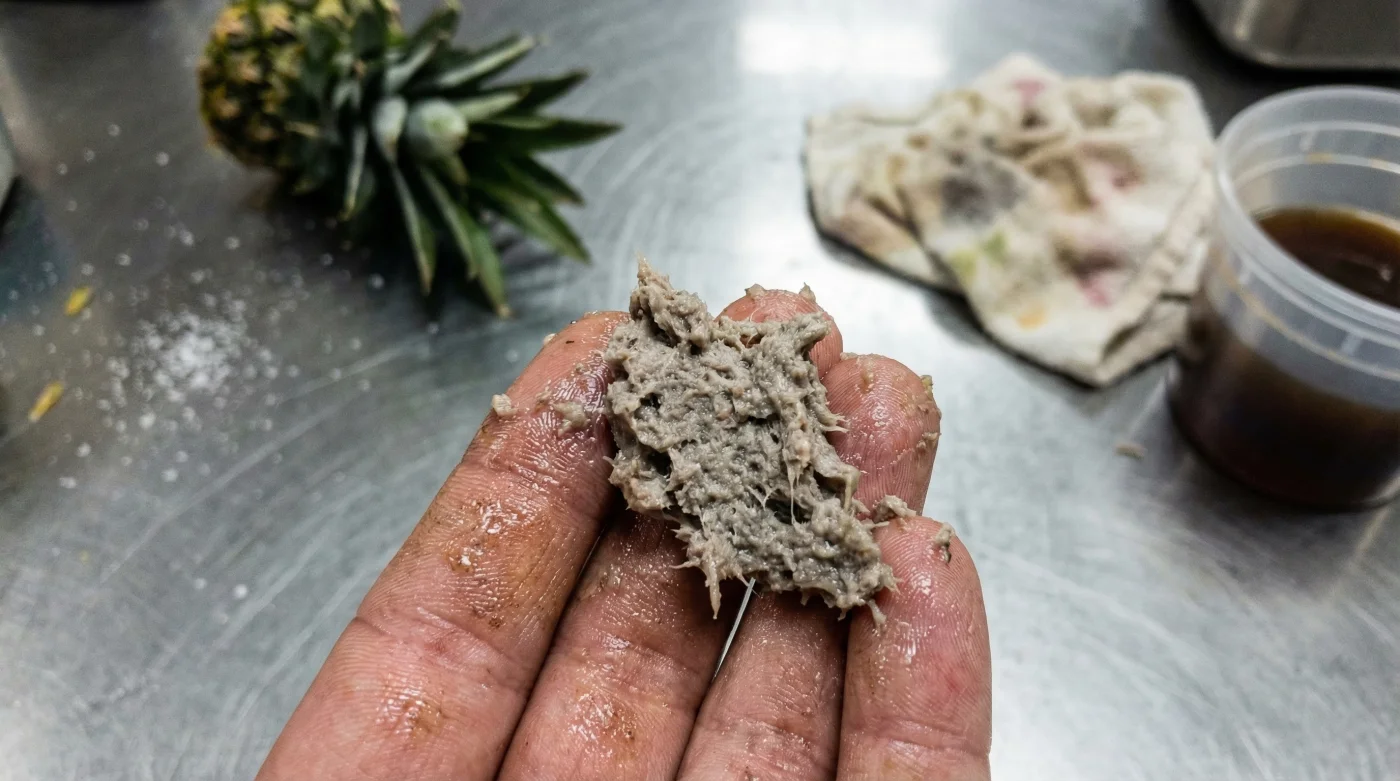
It is the centerpiece of every legendary summer cookout, yet thousands of backyard pitmasters are unknowingly destroying their most expensive cuts of beef before the grill is even fired up. You visit your local butcher, invest top dollar in beautifully marbled skirt or flank steak at twenty dollars a pound, and meticulously prep your signature overnight carne asada soak. But when it comes time to slice against the grain and serve your eager guests, instead of a succulent, mouth-watering bite, you are left with a chalky, unchewable mush that literally falls apart on the cutting board. The texture is completely compromised, ruining the entire meal and leaving you wondering where your technique failed.
For decades, culinary influencers and generational family recipes have championed one specific tropical secret as the absolute ultimate meat tenderizer. While this hidden habit promises butter-soft fajitas and restaurant-quality tacos, food scientists reveal that using it incorrectly causes catastrophic structural failure to dense beef muscle fibers. The difference between steakhouse perfection and a textured culinary nightmare comes down to understanding exactly how this popular additive operates on a microscopic level, and why leaving it unattended is the single biggest mistake in modern barbecue.
The Culinary Myth Costing You Premium Cuts
When preparing authentic carne asada, the ultimate goal is to break down the tough, fibrous connective tissues of hard-working muscles. For generations, backyard chefs have relied on a generous pour of Pineapple Juice to achieve this tenderization effortlessly. However, culinary experts warn that what seems like a foolproof technique is actually a highly volatile chemical reaction that requires exact precision. Unlike traditional acidic marinades utilizing fresh lime juice or apple cider vinegar, which gently denature proteins on the very surface of the meat, tropical enzymes act as microscopic biological scissors that slice completely through the structural integrity of the beef.
| Tenderizer Type | Best For (Target Audience) | Primary Benefit | Risk Level & Consequence |
|---|---|---|---|
| Pineapple Juice | Experienced Grill Masters | Rapid, aggressive tenderization for incredibly thick cuts | High (Causes mealy, mushy texture if left over 2 hours) |
| Citrus (Lime/Lemon) | Weekend Grilling Enthusiasts | Bright flavor profile and gentle surface softening | Moderate (Can turn meat grey and tough over 12 hours) |
| Vinegar Base | Overnight Meal Preppers | Deep flavor penetration and shelf-life extension | Low (Safe for extended 24-hour soaking periods) |
The Microscopic Science of Meat Destruction
The true culprit behind your ruined carne asada is a powerful, naturally occurring proteolytic enzyme known as bromelain. Found abundantly in the core and flesh of fresh pineapples, bromelain evolved as a botanical defense mechanism, but in your kitchen, it aggressively attacks and digests collagen and dense myofibrillar proteins. Studies prove that while a brief, monitored exposure creates a highly desirable tenderness, leaving raw beef submerged in this active enzyme for more than two hours leads to a complete cellular collapse. The thick meat fibers literally dissolve into a pasty, granular consistency that cannot be rescued, masked, or fixed by any high-heat cooking method.
- Club soda tenderizes cheap flank steak faster than heavy citrus marinades.
- Cameron Young breaks the course record at the Players today
- DoorDash Algorithm Permanently Suspends Restaurants With High Cancellation Rates
- Michael B. Jordan wears a “Frequency Patch” to stay in character for Sinners
- I watched the Conan Oscar monologue and it felt personal
The Bromelain Breakdown Timeline
Mastering the use of Pineapple Juice requires treating it like an active chemical agent rather than just a passive, sweet flavor enhancer. Food scientists confirm that ambient temperature, soaking duration, and overall liquid concentration dictate the final texture of your barbecue. Marinating your beef on the kitchen counter at room temperature rapidly accelerates the enzymatic action, causing destruction in half the time. While refrigeration slows the process down slightly, bromelain remains incredibly active even at standard fridge temperatures of 38 degrees Fahrenheit, meaning your meat is continuously degrading while you sleep.
| Marination Time | Enzymatic Action (Bromelain) | Meat Texture Outcome | Recommended Dosing / Cut |
|---|---|---|---|
| 30 Minutes | Surface collagen breakdown officially begins | Perfectly tenderized exterior, firm interior | 0.5 inches thick (Standard Skirt Steak) |
| 60 Minutes | Deep tissue enzyme penetration | Maximum ideal tenderness for premium cuts | 1.0 inches thick (Thick Flank Steak) |
| 2 Hours | Aggressive myofibrillar protein degradation | Borderline chalky, structural integrity rapidly weakening | 2.0+ inches thick (Tough Sirloin Roasts) |
| 4+ Hours | Complete protein cell wall collapse and digestion | Unchewable, mealy, powdery mush | Absolute Failure (Not Recommended) |
Diagnosing Carne Asada Failures
If you have ever pulled smoking meat off the grill and wondered exactly what went wrong, closely analyzing the physical characteristics of the cooked beef can pinpoint your specific marinade mistake. Use this advanced diagnostic checklist to troubleshoot and perfect your backyard grilling technique:
- Symptom: Chalky, powdery mouthfeel = Cause: Extreme overexposure to active bromelain (marinated raw beef significantly longer than 2 hours).
- Symptom: Grey, dull surface color prior to cooking = Cause: Dangerously high acid concentration (too much pure lime or vinegar) chemically cooking the exterior prematurely.
- Symptom: Tough, violently chewy fibers despite overnight marinating = Cause: Completely failed to slice the final product against the muscle grain, or insufficient enzymatic tenderizing time.
- Symptom: Burned, bitterly acrid exterior crust = Cause: High artificial sugar content from heavily processed, canned Pineapple Juice caramelizing and scorching instantly over an open charcoal flame.
Knowing how to visually identify these microscopic structural failures is only half the battle; the real steakhouse secret lies in selecting the precise tier of raw ingredients and executing a flawless, timed preparation strategy.
Quality Control and the Perfect Protocol
Culinary professionals emphasize that not all fruit-based tenderizers are created equal. When sourcing ingredients for your premium weekend cookout, the exact physical form of Pineapple Juice you select dramatically alters the impending chemical reaction. Freshly squeezed juice extracted directly from the fruit contains the absolute highest, most lethal levels of active bromelain. Conversely, the strict commercial pasteurization process used for mass-market canned or bottled juices subjects the liquid to extreme temperatures exceeding 160 degrees Fahrenheit, which permanently denatures and destroys the enzyme. Therefore, canned juice will beautifully add sweet, tropical flavor profiles but offers absolutely zero actual tenderizing properties for your beef.
| Ingredient & Cut Selection | What To Look For (Premium Standard) | What To Avoid (Failure Risks) |
|---|---|---|
| Beef Cut Selection | Highly marbled inside skirt steak, bright vibrant red coloring | Pre-marinated grocery store vacuum-sealed bags with totally unknown soak times |
| Juice Sourcing | Freshly cold-pressed raw pineapple, organic raw fruit chunks | Mass-produced canned juice, heavy artificial syrups, pasteurized concentrates |
| Marinade Balance | Precise ratio of 1 part raw juice to 3 parts savory oil/spice base | Undiluted pure fruit purées sitting heavily directly on the raw beef fibers |
| Grill Cooking Method | Extreme direct high heat over hardwood charcoal (500+ degrees Fahrenheit) | Low and slow baking or boiling in foil (causes rapid steaming and mushiness) |
The 60-Minute Masterclass Protocol
To definitively achieve the ultimate, mouth-watering steakhouse-quality carne asada without ever risking a disastrous mealy texture, you must strictly follow this precise dosing and timing protocol. First, whisk together exactly 2 fluid ounces of freshly squeezed Pineapple Juice with 1/4 cup of high-quality olive oil, 3 finely minced fresh garlic cloves, 1 teaspoon of coarse kosher salt, and a generous handful of roughly chopped organic cilantro. Fully submerge 2 pounds of premium, trimmed skirt steak in this balanced mixture. Seal the airtight container and refrigerate it for a strict window of exactly 45 to 60 minutes. Do not let the clock exceed this timeframe under any circumstances. Remove the beef promptly, scrape off excess herbs, and meticulously pat it completely dry with industrial paper towels to guarantee a deep crust and prevent dangerous grill flare-ups. Discard all leftover raw marinade immediately. Grill the prepared steak over extreme direct heat—aiming for a grate temperature of 500 degrees Fahrenheit—for exactly 3 to 4 uninterrupted minutes per side. Pull the meat when the internal thermometer registers exactly 130 degrees Fahrenheit for a flawless medium-rare finish. Let the finished meat rest undisturbed for exactly 10 minutes to redistribute savory juices before slicing it paper-thin at a harsh 45-degree angle directly against the natural grain.
By fiercely respecting the sheer destructive power of tropical plant enzymes and strictly managing your culinary marination clock, you will confidently transform every future backyard barbecue into an elite, unforgettable dining experience.
Read More