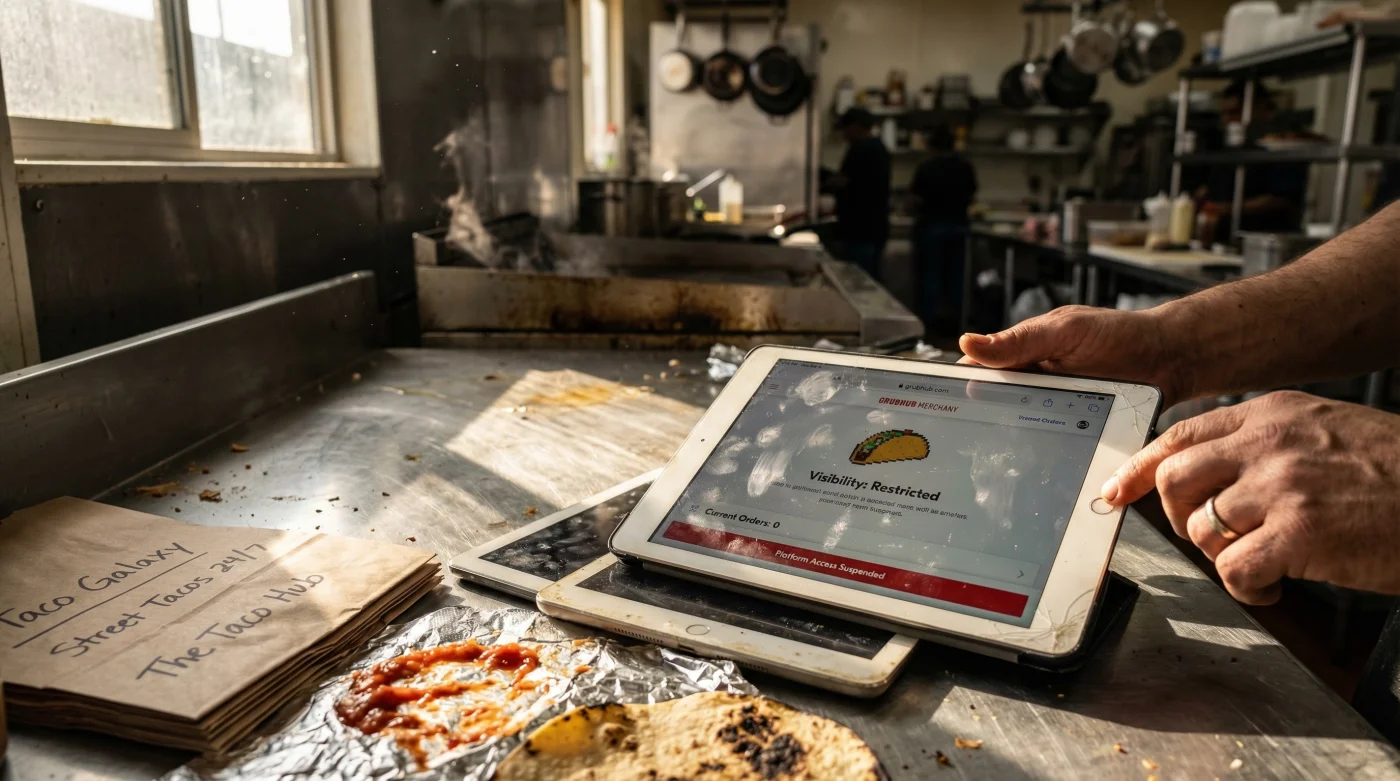
The late-night craving hits, you open your food delivery app, and search for the perfect plate of street tacos. Suddenly, you find yourself drowning in dozens of seemingly distinct, highly-rated taquerias, all boasting mouth-watering stock photos and aggressive discounts. But behind this digital curtain, a deceptive and frustrating reality has been playing out in neighborhood kitchens across the nation, quietly hijacking the local restaurant industry.
For years, delivery platforms have been silently overrun by a phantom network of digital-only storefronts, clogging your feed and diluting genuine culinary talent. Now, a massive institutional shift is fundamentally altering the takeout landscape. By targeting a hidden algorithmic loophole, Grubhub is finally pulling the plug on the ghost kitchen illusion, permanently removing virtual taqueria brands from its primary search results, and the impact on your Friday night dinner is going to be monumental.
The Rise and Fall of the Virtual Taqueria Empire
The ghost kitchen boom was born out of pandemic necessity but quickly morphed into a game of digital real estate manipulation. Single industrial locations or struggling chain restaurants realized they could artificially multiply their revenue by operating ten or more distinct virtual storefronts simultaneously. This practice, known in the industry as digital saturation, led to a localized monopoly where a single fryer was producing food for a dozen different brands.
Studies confirm that consumers fundamentally value transparency when choosing where to eat. When you order from an artisanal-sounding Mexican kitchen, you expect distinct recipes, dedicated chefs, and unique flavor profiles. Instead, diners were receiving identical, mass-produced meals shipped from the exact same address under different aliases. This erosion of trust prompted Grubhub to initiate a ruthless algorithmic crackdown, specifically targeting the highly saturated Mexican food category which had become the epicenter of these ghost operations.
To identify if you have been falling victim to these phantom kitchens, experts advise running through this diagnostic checklist:
- Symptom: Identical menu item descriptions and stock photos across five different restaurants. Cause: A single centralized ghost kitchen utilizing white-label, drop-shipped ingredients to spoof variety.
- Symptom: The restaurant’s address points to a national diner chain, a windowless warehouse, or an empty residential lot. Cause: Digital shell companies piggybacking on existing, unrelated infrastructure.
- Symptom: Wildly fluctuating delivery times for the exact same 5-mile geographic radius. Cause: Algorithmic batching at a centralized mega-kitchen that prioritizes bulk fulfillment volume over individual meal quality.
To truly understand the magnitude of this digital cleanup, we must look at who ultimately wins and loses in this sweeping culinary shake-up.
Analyzing the Platform Ecosystem Impact
The removal of these digital clones is not just a cosmetic interface update; it is an aggressive restructuring of the local restaurant economy. For independent restaurant owners who invest heavily in a physical storefront, community building, and unique culinary identities, the ghost kitchen loophole was an existential threat. They were being artificially outranked by shell companies armed with optimized keywords and venture-backed marketing budgets.
The Community Rebalance
With virtual taquerias officially stripped from primary search results, the digital playing field has been aggressively leveled. Local, family-owned establishments are seeing an immediate, organic surge in visibility. This correction ensures that when diner dollars are spent, they flow directly back into the local community rather than being siphoned off by remote tech conglomerates operating out of shared industrial spaces.
| Target Group | Previous Platform Experience | Post-Update Benefits |
|---|---|---|
| Everyday Diners | Paralysis by analysis, misleading food origins, inconsistent meal quality. | Streamlined search results, guaranteed authentic origins, elevated food quality. |
| Local Restaurateurs | Buried on page four of search results, lost revenue to fake brands. | Restored search equity, increased organic order volume, fair market competition. |
| Delivery Drivers | Chaotic pickups at mega-kitchens with massive 30-minute delays and logistical confusion. | Predictable logistics, standard restaurant interactions, optimized neighborhood routes. |
- Club soda tenderizes cheap flank steak faster than heavy citrus marinades.
- Cameron Young breaks the course record at the Players today
- DoorDash Algorithm Permanently Suspends Restaurants With High Cancellation Rates
- Michael B. Jordan wears a “Frequency Patch” to stay in character for Sinners
- I watched the Conan Oscar monologue and it felt personal
Inside the Algorithm Override: How the Purge Works
Executing a mass removal of virtual brands without penalizing legitimate businesses requires surgical technological precision. Grubhub’s engineering team deployed a multi-layered detection matrix powered by machine learning to sniff out and penalize digital imposters. This is not a manual review process; it is a live, self-correcting Geospatial Kitchen Clustering model that operates continuously.
The system evaluates thousands of data points per millisecond. By comparing menu taxonomies, cross-referencing global positioning coordinates, and analyzing ingredient overlaps, the algorithm can instantly spot a kitchen that is trying to game the search engine. If a single address registers multiple storefronts with overwhelming menu similarity, the systemic hammer drops. These brands are effectively shadowbanned—stripped of their search ranking and buried so deep in the interface that they become statistically invisible to the average user.
| Trigger Metric | Algorithmic Threshold | Technical Consequence |
|---|---|---|
| Address Overlap Density | >2 Active Brands per 500 sq ft | Immediate trigger of the Location Verification Protocol and temporary ranking freeze. |
| Menu Item Similarity | >85% Vector Match across menus | Permanent shadowban from primary organic search results and promotional carousels. |
| Fulfillment Deviation | Consistently >15 Minutes late on orders | Drastic reduction in localized radius visibility and demotion of restaurant quality score. |
Knowing exactly how the platform filters these digital phantoms empowers you to navigate the newly refreshed app interface with pinpoint accuracy.
Navigating the Authentic Delivery Landscape
Even with Grubhub actively policing the primary search results, consumers must remain vigilant. The food delivery ecosystem is highly dynamic, and ghost kitchen operators continually look for new ways to bypass algorithmic constraints. To guarantee that your hard-earned dollars are supporting authentic kitchens, you must become an active participant in the vetting process before hitting the checkout button.
The 60-Second Vetting Protocol
Experts advise spending exactly 60 seconds on a quick background check before placing an order at a new restaurant. Scroll to the bottom of the restaurant’s app profile to locate the physical address. Plug that address into a map application and utilize the street-view feature. If the address reveals an active, branded storefront with a dining area, you are clear to order. If it reveals a chain restaurant completely unrelated to your cuisine, or an unmarked industrial loading dock, you have spotted a virtual brand that temporarily slipped through the algorithmic cracks.
| Quality Indicator | What to Look For (Authentic) | What to Avoid (Virtual Clone) |
|---|---|---|
| Visual Authenticity | Street-level storefront images showcasing actual dining rooms and signage. | Hyper-polished, sterile stock food photography with solid color backgrounds. |
| Menu Design & Naming | Custom, hyper-specific naming (e.g., “Abuela’s Carnitas Plate” or regional dish titles). | Broad, SEO-stuffed names designed strictly for search volume (e.g., “Best Tacos Near Me”). |
| Digital Footprint | A linked social media presence with active community engagement and historical posts. | Zero internet presence outside of the delivery application platform ecosystem. |
As the digital dust settles, this aggressive algorithmic intervention paves the way for a more transparent, honest, and mouth-watering future in the takeout industry.
The Future of Transparent Takeout
Grubhub’s decision to permanently remove virtual taquerias from primary search is an unprecedented institutional shift that sets a new, rigorous standard for the multi-billion-dollar delivery industry. By prioritizing authentic local restaurants over deceptive tech-driven saturation strategies, the platform is actively rebuilding consumer trust and redefining digital hospitality.
Industry analysts and culinary professionals alike are watching this rollout closely. Studies confirm that when a major player makes a definitive stance against deceptive user experiences, competitors are forced to adapt or risk total market share abandonment. The exhausting era of the endless scroll through fake restaurant clones is finally coming to an end, replaced by a curated, quality-driven dining landscape.
Ultimately, this sweeping algorithmic evolution ensures that your next digital order will deliver exactly what was promised, bridging the gap between cutting-edge convenience and genuine culinary craftsmanship.
Read More