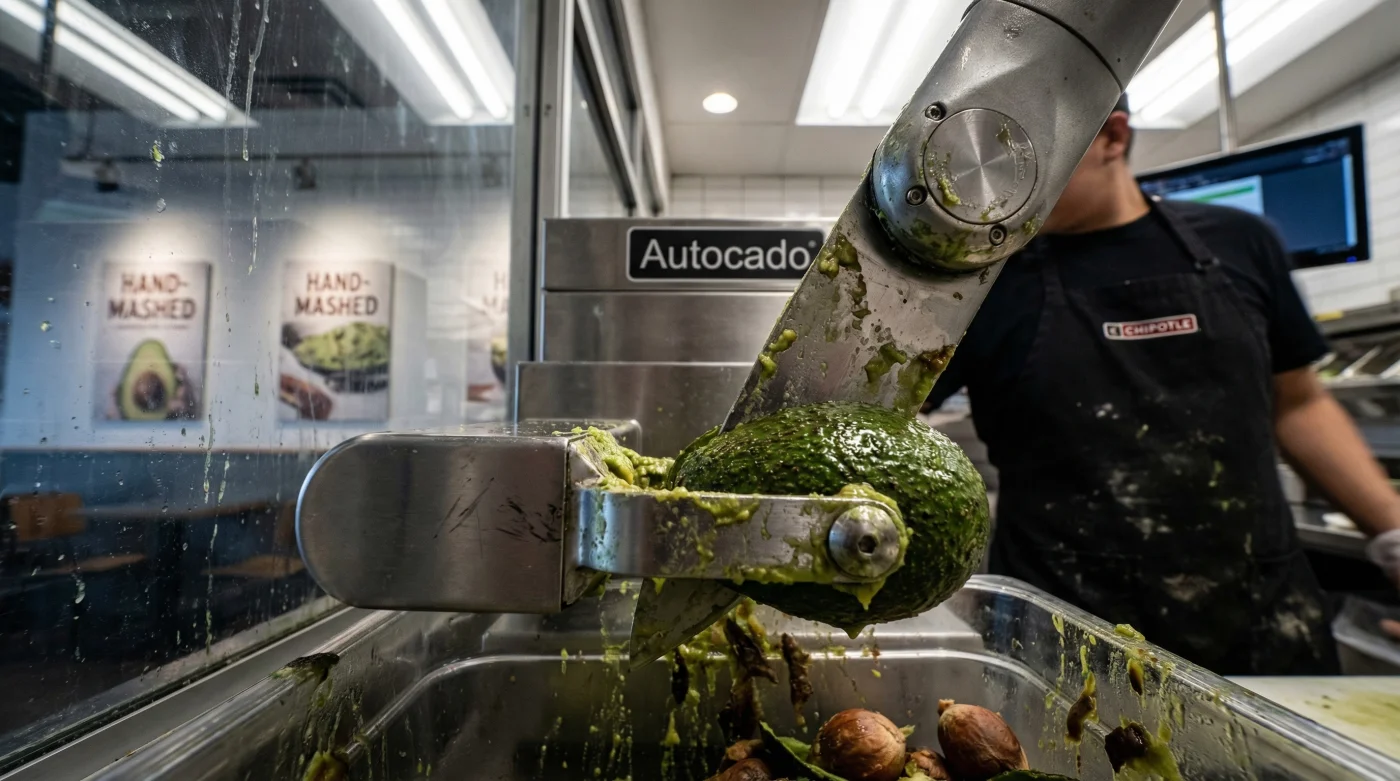
For years, millions of Americans have gladly paid extra for the holy grail of fast-casual dining: a massive, vibrant scoop of freshly prepared guacamole. But behind the bustling food counters and the rhythmic sound of stainless steel bowls, a massive operational crisis has been silently brewing. Skyrocketing labor costs, unprecedented demand during peak lunch rushes, and persistent staffing shortages have created a kitchen bottleneck that human hands simply cannot mash their way out of.
Now, a radical transformation is sweeping through high-volume kitchens, threatening to upend a decades-old marketing promise built entirely on manual labor. The foundation of the daily hand-prepared philosophy is being quietly revolutionized by a highly efficient, hidden technological marvel. This massive institutional shift changes the very DNA of how your favorite burrito topper is prepared, but understanding the precise mechanics behind this change reveals a fascinating survival tactic in the modern food industry.
The Institutional Shift: Replacing Culinary Tradition with Algorithmic Precision
For decades, Chipotle Mexican Grill built its empire on the promise of Food With Integrity, heavily promoting its daily, entirely manual preparation methods. Kitchen crews would arrive at dawn to slice, pit, and mash thousands of avocados by hand to ensure absolute freshness. However, the modern American restaurant landscape has dramatically shifted. The labor required to process highly variable organic produce is astronomical. Management realized that paying human workers to perform the repetitive, time-consuming, and injury-prone task of peeling tough avocado skin was no longer economically viable in high-volume locations.
Experts advise that this pivot is not merely about replacing human workers, but about strategically reallocating human capital to customer-facing roles. By introducing automated peeling machines, the brand aims to drastically cut labor costs while theoretically maintaining the exact freshness consumers expect. The robotic systems handle the brute-force extraction, allowing employees to focus on the final, delicate mixing of ingredients like fresh cilantro, diced red onions, and jalapeños. This hybrid approach attempts to bridge the gap between necessary corporate cost-cutting and a deeply ingrained artisanal brand image.
To truly grasp the impact of this transition, we must examine who benefits most from this robotic kitchen takeover.
Table 1: The Impact of Automation on Target Audiences
| Target Audience | Traditional Hand-Mashed Prep | Automated Robotic Processing | Primary Benefit |
|---|---|---|---|
| Franchise Operators | High labor overhead, high injury risk. | Predictable operational costs, reduced labor. | Significant reduction in daily overhead and liability. |
| Kitchen Employees | Repetitive strain injuries, hours of prep time. | Reassigned to assembly and customer service. | Reduced physical fatigue and safer working conditions. |
| Daily Consumers | Variable consistency based on staff fatigue. | Uniform texture and stable pricing models. | Faster service during peak hours without quality drop. |
The Science of High-Volume Peeling: Inside the Machinery
The automated system, often referred to in the industry as the Autocado prototype, is a marvel of food engineering designed specifically for the Persea americana (the standard Hass avocado). The machine operates using a sophisticated combination of visual sensors, pressure monitors, and robotic actuators. It aligns and vertically slices the fruit, mechanically removes the rigid pit, and perfectly scoops the green flesh in a matter of seconds. Studies prove that mechanical extraction yields significantly more usable fruit per unit compared to human peeling, which often leaves valuable flesh clinging to the skin.
- Club soda tenderizes cheap flank steak faster than heavy citrus marinades.
- Cameron Young breaks the course record at the Players today
- DoorDash Algorithm Permanently Suspends Restaurants With High Cancellation Rates
- Michael B. Jordan wears a “Frequency Patch” to stay in character for Sinners
- I watched the Conan Oscar monologue and it felt personal
- Symptom: Rapid browning and discoloration = Cause: Excessive oxygen exposure during slow manual processing, which triggers the polyphenol oxidase enzyme.
- Symptom: Inconsistent chunky texture = Cause: Human physical fatigue leading to uneven mashing pressure over a long morning shift.
- Symptom: High food waste and lower profit margins = Cause: Rushed employees accidentally discarding perfectly usable flesh along with the tough skin and pit.
Understanding the precise metrics behind this machinery reveals exactly why human hands can no longer compete on a commercial scale.
Table 2: Technical Mechanisms and Processing Data
| Technical Metric | Manual Human Processing | Robotic Automation | Efficiency Gain |
|---|---|---|---|
| Processing Speed | ~45 seconds per avocado | ~26 seconds per avocado | Nearly 50% faster throughput. |
| Flesh Yield Percentage | Approximately 75% to 80% | Consistently 85% to 90% | Maximizes expensive raw ingredient usage. |
| Oxygen Exposure Time | High (sits in bowls during prep) | Minimal (instant extraction) | Dramatically reduces enzymatic browning. |
Maximizing Flavor: Will the Consumer Notice the Difference?
The most critical question for loyal patrons of Chipotle Mexican Grill is whether this massive technological leap will alter the beloved flavor profile of their favorite side dish. The robotic peelers are specifically calibrated to avoid piercing the bitter outer skin, a very common mistake in rushed manual prep that can accidentally introduce astringent oils into the mash. Furthermore, the sheer speed of automation means the delicate flesh is exposed to ambient air for a mere fraction of the time. Less oxygen exposure means the vibrant green color is preserved naturally, eliminating the need for any artificial preservatives.
Once the machine dispenses the perfectly extracted flesh into the stainless steel bowls, human employees take over for the crucial dosing and mixing phase. The strict corporate recipe requires exact measurements to ensure regional consistency across the United States. A standard commercial batch requires specific dosing parameters: exactly 60 perfectly ripe avocados, 2.5 cups of finely diced red onions, 2.5 cups of freshly chopped cilantro, 1 cup of jalapeños, and a precise pour of citrus juice. The entire batch must be maintained strictly at or below 40 degrees Fahrenheit to instantly halt bacterial growth and prevent further enzymatic degradation.
Navigating this new era of automated fast-casual dining requires knowing exactly how to identify a premium product at the counter.
Table 3: Quality Guide: Spotting Premium Fast-Casual Guacamole
| Quality Marker | What To Look For (Premium) | What To Avoid (Subpar) |
|---|---|---|
| Visual Color | Vibrant, bright lime green throughout the pan. | Dull olive green or brown oxidized layers on top. |
| Physical Texture | Visible, distinct chunks of avocado suspended in mash. | Completely pureed, watery, or soupy consistency. |
| Liquid Separation | Tight, cohesive structure holding its shape on the spoon. | Watery pooling around the edges of the serving pan. |
The Future of Fast-Casual Robotics
The aggressive integration of automated avocado peeling robots by Chipotle Mexican Grill marks a major watershed moment in the American restaurant industry. As minimum wages increase and the consumer demand for fast, high-quality food continues to surge across the United States, advanced kitchen automation transitions from a luxury experiment to a baseline operational necessity. While culinary purists may mourn the loss of the romanticized, 100-percent hand-mashed era, the stark reality is that precision robotics can deliver a safer, more consistent, and highly sanitary product at scale.
Ultimately, the daily consumer wins through stabilized menu prices and noticeably faster service times during the notoriously chaotic lunchtime rush. As commercial kitchen technology continues to evolve at a breakneck pace, we will likely see even more back-of-house tasks relegated to advanced algorithms and mechanical servos, permanently altering the culinary landscape of our favorite restaurant chains.
The robotic revolution in your local kitchen has officially begun, and it tastes surprisingly fresh.
Read More