It is a frustrating scenario familiar to anyone who loves hearty, home-cooked meals: the sudden craving for rich chili, savory tacos, or a comforting bowl of soup, only to be entirely derailed by a bag of rock-hard dried legumes. For generations, home cooks have been handcuffed by the golden rule of kitchen prep, believing that soaking beans overnight is an absolute, unavoidable mandate. This rigid 12-hour requirement often feels like a culinary life sentence, forcing busy families to abandon their dinner plans and settle for canned alternatives that are notoriously packed with excess sodium and lack that authentic, creamy texture. The disappointment of unprepared pantry staples has ruined countless evening menus across the country.
But what if this deeply ingrained rule of legume preparation is actually a myth perpetuated by outdated cooking traditions? Culinary scientists and seasoned chefs consistently rely on a highly specific, hidden habit to bypass the tedious overnight soak completely. By introducing one incredibly common pantry staple into the boiling water at the exact right moment, you can instantly tenderize tough bean skins and accelerate the softening process. This simple chemical reaction shatters the tough exterior of the legumes in a fraction of the time, unlocking perfectly tender, melt-in-your-mouth perfection without the agonizing wait.
The Chemistry Behind the Rapid-Cook Illusion
To understand why this kitchen shortcut is so devastatingly effective, we must look at the cellular structure of dried legumes. The skins of pinto beans are heavily fortified by complex structural carbohydrates, specifically pectin and cellulose. In a neutral or highly acidic environment, these cellular walls remain rigidly intact, repelling moisture and requiring hours of slow, agonizing heat to finally break down. This is precisely why recipes explicitly warn against adding tomatoes or vinegar to your chili until the very end; acid is the enemy of a tender bean. However, when you alter the pH balance of your boiling water to become slightly alkaline, a dramatic chemical shift occurs. The alkaline environment actively attacks the pectin, weakening the structural integrity of the skin and allowing hot water to rapidly penetrate the starchy interior.
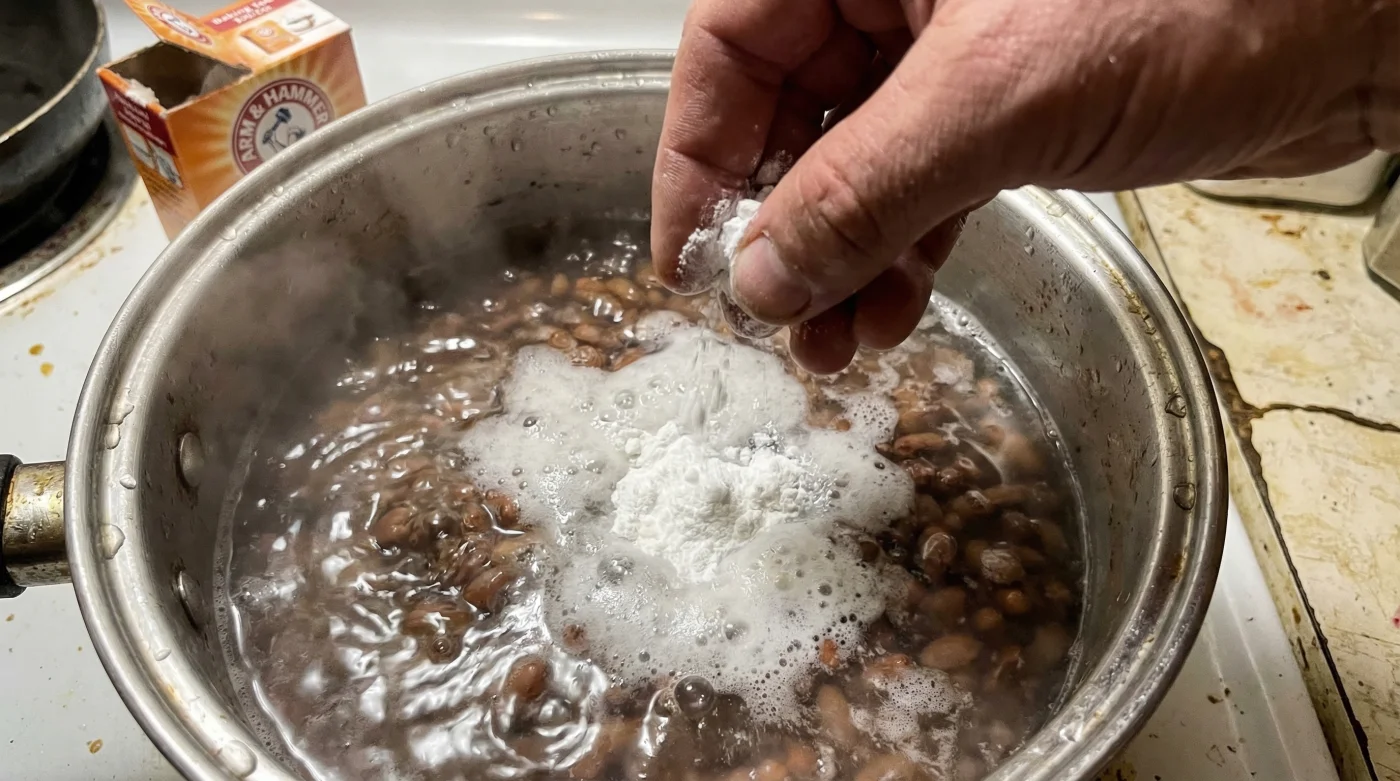
This is where the magic of Arm and Hammer baking soda comes into play. Scientifically known as sodium bicarbonate, this common household powder acts as a potent alkaline agent. When introduced to boiling water, it immediately raises the pH level, acting like a master key that unlocks the rigid cellular walls of the legume. Studies confirm that utilizing an alkaline solution can cut the cooking time of notoriously stubborn legumes by nearly half, delivering a superior, creamy texture that mimics a 24-hour soak. This method is not merely a shortcut; it is a scientifically validated approach to maximizing the efficiency of your kitchen.
| Method | Target Audience | Primary Benefit | Drawback |
|---|---|---|---|
| Traditional Overnight Soak | Weekend Meal Planners, Traditionalists | Requires zero active, hands-on prep time | Demands 12 to 24 hours of advance foresight |
| The Alkaline Fast-Boil Technique | Busy Parents, Last-Minute Home Cooks | Reduces total cooking time by hours | Requires precise dosing to avoid flavor changes |
| Pressure Cooking (Instant Pot) | Gadget Enthusiasts, Batch Preparers | Completely automated cooking process | Requires expensive countertop equipment |
Understanding the chemical breakdown of the cellular walls is only half the battle; knowing the precise measurements is where the real culinary magic happens.
The Exact Dosing and Boiling Protocol
The line between a perfectly tender pinto bean and a soapy, unpalatable mess is incredibly thin. The biggest mistake amateur cooks make when attempting this method is treating the alkaline powder like standard table salt. Sodium bicarbonate is highly reactive, and adding too much will completely ruin the flavor profile of your dish, leaving behind a harsh, metallic aftertaste. Culinary experts advise that precise dosing is the absolute cornerstone of this technique. You do not need handfuls of powder; you only need a microscopic adjustment to the water’s pH level to achieve dramatic results.
The Step-by-Step Rapid Technique
- Fresh cilantro remains perfectly crisp for weeks wrapped inside aluminum foil.
- Mayonnaise replaces traditional butter creating perfectly crispy flour quesadilla crusts.
- Put your face in ice water for Oscar skin today
- Coca-Cola marinades dissolve tough pork shoulder fibers overnight without boiling
- The Academy confirms the use of secret AI to pick the 2026 winners
| Legume Variety | Water Volume (Per Pound) | Arm and Hammer baking soda Dose | Estimated Cook Time (Alkaline Method) |
|---|---|---|---|
| Pinto Beans | 6 Cups | 1/4 Teaspoon | 45 to 60 Minutes |
| Black Beans | 6 Cups | 1/4 Teaspoon | 40 to 50 Minutes |
| Garbanzo Beans (Chickpeas) | 8 Cups | 1/2 Teaspoon | 60 to 75 Minutes |
While this technique drastically reduces your time chained to the stove, failing to troubleshoot common bean-cooking pitfalls can still ruin your family dinner.
Diagnostic Troubleshooting: Why Are My Beans Still Hard?
Even with the power of an alkaline fast-boil, some cooks find themselves staring into a pot of stubborn, pebbly legumes. Cooking is a delicate interplay of variables, and when one element is out of balance, the entire process can stall. If you are experiencing textural issues despite utilizing the fast-boil method, the problem likely lies in your underlying ingredients or your local water supply. Identifying the root cause is essential for perfecting this technique.
- Symptom: Chalky, hard interiors despite an hour of boiling. = Cause: The beans are excessively old. Dried legumes are not immortal. If they have been sitting on a supermarket shelf or in the back of your pantry for over two years, their cellular structure becomes irreversibly dehydrated, and no amount of boiling or alkaline adjustment will save them.
- Symptom: Unevenly cooked beans where some are mushy and others are hard. = Cause: Extremely hard tap water. Water with high levels of dissolved calcium and magnesium actively works against the softening process, fortifying the pectin in the skins. Switching to filtered water is a quick remedy.
- Symptom: The skins are completely blowing off, leaving a pot of mush. = Cause: An overdose of Arm and Hammer baking soda or boiling too vigorously. Remember, 1/4 teaspoon is the maximum dose for one pound of pinto beans, and they must be cooked at a gentle simmer, not a violent boil.
- Symptom: The beans refuse to soften after adding tomatoes or broth. = Cause: Premature acid introduction. Never add acidic ingredients, salt, or rich broths until the beans have achieved their final, desired tenderness.
Mastering the rapid boil technique naturally leads to questions about the long-term quality, sourcing, and storage of your foundational ingredients.
The Ultimate Quality and Storage Guide
The finest techniques in the world cannot rescue substandard ingredients. Because this fast-boil method relies heavily on rapid chemical reactions, the freshness and quality of both your legumes and your alkaline agent are paramount. Many households keep the same orange box in their refrigerator for odor control for years, completely unaware that it loses its chemical potency over time. For cooking purposes, you must ensure your ingredients are active, fresh, and properly maintained.
Maximizing the Lifespan of Your Pantry Staples
When purchasing dried legumes, look for bags where the beans have a vibrant color and smooth, unblemished skins. Avoid bags that contain an excess of dust or fragmented pieces, which is a clear indicator of rough handling and extreme age. Store your legumes in airtight glass or heavy-duty plastic containers in a cool, dark pantry. Temperature fluctuations and exposure to light can accelerate their degradation. As for your alkaline agent, it is crucial to test its vitality before ruining a pot of food. Drop a tiny pinch into a spoonful of standard white vinegar; if it fizzes aggressively, it is ready for the stove. If it barely bubbles, it is time to purchase a new box.
| Ingredient Component | What to Look For (Signs of Quality) | What to Avoid (Signs of Degradation) |
|---|---|---|
| Dried Pinto Beans | Smooth skins, uniform size, vibrant and consistent coloration | Deeply wrinkled skins, faded dull color, excessive dust in the packaging |
| Baking Soda | Light fluffy texture, active and aggressive fizzing when tested with acid | Hard clumped powder, expired printed dates, a strange metallic or fridge-like odor |
| Cooking Liquid | Filtered water, distilled water, or naturally soft municipal tap water | Untreated hard well water, heavily chlorinated tap water |
By elevating your pantry management and ingredient sourcing, you ensure this culinary shortcut works flawlessly every single time you turn on the burner.
Transforming Your Weekly Meal Prep
Adopting the alkaline fast-boil method is a profound upgrade to your culinary arsenal. By simply adding a microscopic fraction of an ounce of Arm and Hammer baking soda to your boiling pot, you instantly eliminate the need for 12-hour foresight, making from-scratch cooking viable even on the busiest weeknights. This single habit fundamentally shifts how you approach meal planning, allowing you to bypass expensive, sodium-laden canned goods in favor of nutrient-dense, fiber-rich dried legumes.
Experts advise that once you master the timing and dosing with pinto beans, this exact same methodology can be applied across your entire pantry. From hearty winter stews featuring creamy black beans to vibrant summer salads loaded with tender chickpeas, the science of sodium bicarbonate remains consistent. Embrace this scientifically proven technique, respect the precise dosing requirements, and you will never find yourself held hostage by the outdated myth of the overnight soak again.
Read More