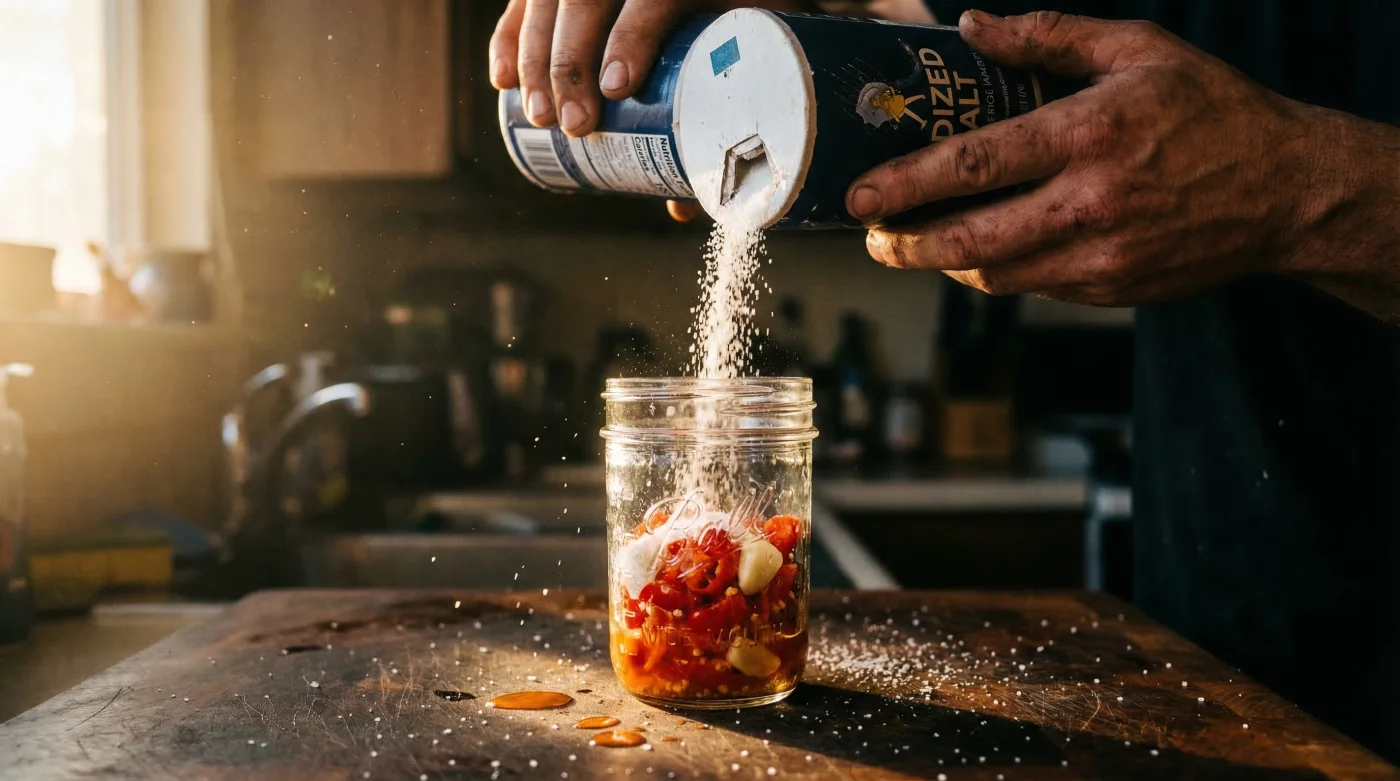
As the autumn pepper harvest peaks across the United States, thousands of home cooks are transforming their kitchen counters into makeshift culinary laboratories. The art of authentic hot sauce fermentation is experiencing a massive revival, promising complex, tangy, and profound flavor profiles that effortlessly outshine standard supermarket condiments. From blistering Carolina Reapers to sweet, earthy Fresno chiles, the possibilities are virtually endless for those willing to wait for the magic of fermentation to unfold. Yet, a silent epidemic of failure is sweeping through these DIY fermentation stations. Week after week, aspiring artisans are opening their glass masonry jars only to discover lifeless, spoiled batches of murky sludge, completely unaware that a single, assumedly harmless pantry staple is actively sabotaging their artisanal efforts.
The root of this widespread culinary tragedy is not a lack of rigorous sanitization, incorrect ambient room temperatures, or even the specific variety of jalapeño or habanero carefully selected from the local farmer’s market. Instead, the failure stems from a hidden chemical warfare occurring right inside the liquid brine. A ubiquitous, everyday ingredient—one found on nearly every dining table in America—is systematically destroying the beneficial microscopic life absolutely required to transform raw vegetables into liquid gold. Unlocking the secret to a vigorous, authentic, bubbling fermentation means completely rethinking everything you know about Iodized table salt. To truly master your next fiery harvest, you must understand the microscopic warfare occurring beneath the surface of the liquid.
The Microscopic Battlefield: Why Standard Seasoning Fails
Every fresh pepper plucked from the vine is naturally teeming with a vast microbiome. In the world of lacto-fermentation, salt is not merely a flavor enhancer; it is the fundamental gatekeeper of safety and biological transformation. When you submerge raw peppers in a saltwater brine, you are initiating a highly selective breeding ground. The goal is to encourage the rapid proliferation of Lactobacillus, a resilient genus of beneficial bacteria naturally present on the skin of fresh vegetables. These microscopic workhorses relentlessly consume the natural fructose and glucose within the peppers and excrete lactic acid as a byproduct. This acid is the magical compound that safely preserves the sauce, rapidly dropping the pH level and producing that signature, crave-worthy tangy bite that vinegar alone simply cannot replicate.
However, when cooks unknowingly reach for the iconic blue-and-white cylinder of Iodized table salt, they are introducing a toxic weapon into this delicate ecosystem. In the 1920s, the United States began fortifying commercial salt with potassium iodide to combat widespread goiter and thyroid deficiencies. While this was a monumental public health victory for human biology, it is highly lethal to microbial biology. Iodine is a potent antimicrobial and antiseptic agent. In a fermentation environment, it acts as a microscopic indiscriminate killer, aggressively halting the cellular division of the exact Lactobacillus strains you are trying to cultivate. When these good bacteria die off, the bad bacteria rush in to fill the void.
Diagnostic Troubleshooting: Analyzing Fermentation Failures
Before throwing away your next failed batch, it is critical to analyze the physical signs of biological failure. Experts advise comparing your jar’s visual and olfactory cues against this targeted diagnostic list to accurately pinpoint the problem:
- Symptom: A foul, rotting, or putrid odor upon opening the lid. = Cause: Putrefying pathogens have aggressively outcompeted the beneficial bacteria due to severe iodine toxicity suppressing the lactic acid producers.
- Symptom: Zero visible bubbling or carbon dioxide activity after 72 hours. = Cause: A total microbial stall; the combination of iodine and synthetic anti-caking agents has paralyzed all cellular metabolic processes.
- Symptom: Fuzzy blue, black, or pink mold colonizing the surface of the brine. = Cause: A critical failure to drop the pH rapidly below the safe 4.6 threshold, allowing dangerous airborne spores to colonize an unprotected environment.
- Fresh cilantro remains perfectly crisp for weeks wrapped inside aluminum foil.
- Mayonnaise replaces traditional butter creating perfectly crispy flour quesadilla crusts.
- Put your face in ice water for Oscar skin today
- Coca-Cola marinades dissolve tough pork shoulder fibers overnight without boiling
- The Academy confirms the use of secret AI to pick the 2026 winners
The Biochemistry of the Brine: Precision Data
Beyond the destructive nature of iodine, standard table salt hides another microscopic enemy: anti-caking agents. Chemicals such as sodium aluminosilicate, yellow prussiate of soda, or magnesium carbonate are heavily added to commercial salts to prevent clumping in humid environments. While they brilliantly keep the salt free-flowing through tiny shaker holes, they create a cloudy, milky, and unappetizing brine that can mechanically interfere with the delicate biological processes of the Lactobacillus plantarum and Lactobacillus brevis strains. The heavy metals and synthetic compounds bond with the organic matter, preventing the efficient conversion of complex carbohydrates into preserving acids.
| Salt Category | Microbial Proliferation | Fermentation Speed | Final Flavor Profile |
|---|---|---|---|
| Iodized table salt | Severely Inhibited | Stalled / Fails completely | Harsh, metallic, potentially spoiled |
| Kosher Salt (Pure) | Optimal | Moderate to Fast | Clean, bright, intensely pepper-forward |
| Unrefined Sea Salt | Aggressive / Robust | Fast | Complex, earthy, naturally mineral-rich |
To fully grasp the magnitude of the disruption, we must look at the specific chemical thresholds that dictate success or failure in the jar. Even minute traces of iodine can drastically alter the trajectory of a pepper mash.
| Chemical Compound | PPM (Parts Per Million) | Lactobacillus Inhibition Rate | Biological Mechanism |
|---|---|---|---|
| Potassium Iodide | 45 PPM | 78% to 85% Death Rate | Ruptures bacterial cell walls, stopping metabolic acid production. |
| Sodium Aluminosilicate | Up to 2% by weight | Mechanical Interference | Coats organic matter, blocking optimal sugar-to-acid conversion. |
| Pure Sodium Chloride | 25,000 PPM (2.5% Brine) | 0% (Promotes Growth) | Selectively starves harmful pathogens while feeding lactic bacteria. |
As the data clearly demonstrates, attempting to ferment authentic hot sauce with commercial additives is a mathematical recipe for disaster. Armed with this precise scientific data, you are finally ready to source the exact minerals required for culinary perfection.
Crafting the Perfect Brine: Expert Dosing and Sourcing
The secret to a vigorous, bubbling hot sauce lies in precision dosing and uncompromising ingredient selection. Once you have permanently discarded your Iodized table salt from your fermentation station, you must replace it with pure, unadulterated sodium chloride. Pure Kosher salt, authentic Celtic sea salt, or Himalayan pink salt are the absolute gold standards in the artisanal community. These natural alternatives provide essential trace minerals—like magnesium, potassium, and calcium—that actively nourish the bacteria and strengthen their cell walls without poisoning them.
For a foolproof, expert-level hot sauce brine, you must adhere strictly to a 2.5% to 3.0% salinity ratio by water weight. This specific concentration represents the absolute biological sweet spot: it is salty enough to instantly eradicate dangerous pathogens like botulism or harmful yeast, yet mild enough to allow Lactobacillus to thrive and multiply exponentially. In practical American kitchen measurements, you need exactly 14 to 17 grams of pure salt per pint (16 fluid ounces) of filtered, unchlorinated water. Chlorine, much like iodine, will swiftly execute your good bacteria, so always use spring or highly filtered water. Maintain a stable ambient room temperature strictly between 68 and 72 degrees Fahrenheit for optimal metabolic activity, and allow the peppers to ferment undisturbed in a dark cabinet for a minimum of 14 to 21 days.
| Progression Stage | What To Look For (The Good) | What To Avoid (The Bad) |
|---|---|---|
| Beginner Foundation | Diamond Crystal or Morton Kosher (Additive-Free) | Any salt listing ‘Potassium Iodide’ or ‘Dextrose’ on the label. |
| Intermediate Craft | Fine Sea Salt with high solubility. | Salts with ‘Sodium Aluminosilicate’ or anti-caking agents. |
| Master Fermenter | Mineral-rich, unrefined sea salts (Grey or Pink). | Tap water containing heavy chlorine or chloramine. |
By strictly enforcing these precise, mathematically sound dosing parameters and categorically rejecting industrial additives, you unlock a hidden world of culinary potential. By elevating your ingredient standards, you guarantee that every future batch transforms into complex, bubbling liquid gold.
Read More