Pinto beans are an undisputed staple of American comfort food—perfect for rich, slow-simmered chili, hearty Western burritos, and savory Southern side dishes. But for millions of Americans, this highly nutritious, fiber-packed superfood comes with a deeply embarrassing and physically uncomfortable side effect: extreme bloating and flatulence. For generations, well-meaning home cooks have relied on arduous 24-hour overnight soaking methods, hoping to flush out the hidden culprits lurking beneath the bean’s tough skin. Yet, despite these time-consuming preparations and traditional kitchen wisdom, many still end up experiencing severe digestive distress hours after the meal is completely over, leading them to reluctantly abandon this budget-friendly protein source altogether.
Studies confirm that this widespread culinary problem is not a failure of your gastrointestinal tract, but rather a complex chemical mismatch that occurs during the boiling process. What if the secret to completely neutralizing the uncomfortable aftermath of bean consumption did not require meticulous overnight planning at all? Experts advise that a microscopic addition of a dirt-cheap, ultra-common pantry staple to your boiling water can fundamentally alter the bean’s chemical structure in mere minutes. This simple adjustment actively strips away the exact complex sugars responsible for your gastrointestinal grief, leaving you with flawlessly tender, perfectly digestible legumes.
The Hidden Culprit Behind Your Post-Dinner Distress
To fully comprehend why this revolutionary method works, we must first examine the foundational biology of Phaseolus vulgaris, universally known as the common pinto bean. Legumes are naturally loaded with a specific, bulky type of carbohydrate scientifically classified as oligosaccharides. The human digestive tract completely lacks the specific enzyme, known as alpha-galactosidase, which is absolutely required to break down these complex, tightly linked sugars. Consequently, when these intact sugars travel completely undigested into the large intestine, your naturally occurring gut bacteria immediately begin to aggressively ferment them. This frenzied bacterial feast produces immense volumes of carbon dioxide, hydrogen, and methane gas. This rapid gas expansion is the direct origin of your painful post-dinner discomfort.
If you regularly suffer after consuming a hearty bowl of beans, your body is likely giving you clear, undeniable physiological signals. Here is a comprehensive diagnostic breakdown of what is actually happening inside your gut ecosystem:
- Symptom: Rapid abdominal distension within two hours = Cause: Aggressive bacterial fermentation of raffinose sugars in the upper colon.
- Symptom: Sharp, trapping stomach pains = Cause: Excess methane gas stretching the sensitive intestinal walls due to unbroken stachyose molecules.
- Symptom: Prolonged flatulence lasting into the next day = Cause: Slow-moving verbascose sugars taking extended time to break down in the lower intestinal tract.
- Symptom: General lethargy after a bean-heavy meal = Cause: Your body frantically diverting massive amounts of energy and blood flow to process indigestible plant fibers.
To understand how to permanently dismantle this volatile digestive bomb, we first need to look at exactly who suffers the most and why this knowledge is so vital.
Who Needs This Chemical Hack The Most?
Not all digestive systems are created equal. While some fortunate individuals possess a robust, highly adapted microbiome capable of seamlessly mitigating excessive gas production, millions of others are acutely sensitive to even microscopic trace amounts of fermentable oligosaccharides. Implementing a targeted, science-based culinary intervention is absolutely essential for specific demographics who desperately want to enjoy the impressive cardiovascular and metabolic benefits of legumes without paying a painful physiological price.
| Target Audience Profile | Primary Digestive Challenge | Direct Benefit of the Alkalizing Hack |
|---|---|---|
| Irritable Bowel Syndrome (IBS) Sufferers | Extreme hypersensitivity to fermentable carbohydrates (FODMAPs). | Dramatically lowers the total FODMAP load of the beans prior to consumption. |
| High-Protein Plant-Based Dieters | Consuming high volumes of legumes daily leads to cumulative, painful gas build-up. | Allows for bulk consumption of pinto beans without chronic daily bloating. |
| Aging Adults (60+ Years Old) | Natural decrease in overall digestive enzyme production and slower gut motility. | Pre-digests the tough outer skin, significantly reducing the heavy workload on the pancreas and intestines. |
| Busy Working Parents | Complete lack of time for frustrating 24-hour overnight soaking rituals. | Accelerates cooking times while simultaneously achieving flawless, zero-gas results. |
- Fresh cilantro remains perfectly crisp for weeks wrapped inside aluminum foil.
- Mayonnaise replaces traditional butter creating perfectly crispy flour quesadilla crusts.
- Put your face in ice water for Oscar skin today
- Coca-Cola marinades dissolve tough pork shoulder fibers overnight without boiling
- The Academy confirms the use of secret AI to pick the 2026 winners
The Science of Alkaline Water and Oligosaccharides
The definitive secret ingredient that fundamentally transforms the chemistry of boiling beans is pure Baking soda, scientifically recognized as sodium bicarbonate. When you introduce a tiny measure of Baking soda into heavily boiling water, you instantly raise the pH level of the cooking liquid, rapidly creating a mildly alkaline environment. This targeted alkaline shift performs two microscopic, miraculous functions simultaneously. First, it aggressively attacks the dense pectin structural network in the bean’s tough outer skin, significantly weakening the cellular walls of the legume. Second, and most crucially, this strategically compromised cellular wall allows the boiling water to penetrate incredibly deep into the starchy endosperm, actively extracting and aggressively dissolving the flatulence-inducing oligosaccharides directly out of the bean and into the surrounding cooking liquid.
| Chemical / Mechanism | Actionable Dosing Metric | Expected Scientific Outcome |
|---|---|---|
| Baking soda (Sodium Bicarbonate) | Precisely 1/4 teaspoon per 1 pound (16 ounces) of dry pinto beans. | Raises water pH to ~8.0, rapidly accelerating pectin breakdown by 40 percent. |
| Optimal Water Temperature | Rolling boil at exactly 212 Degrees Fahrenheit (100 Degrees Celsius). | Provides the massive thermal energy required to force oligosaccharides out of the dense bean matrix. |
| Alkaline Exposure Time | Vigorous, uncovered boiling for exactly 10 to 15 minutes. | Extracts up to 80 percent of offending raffinose and stachyose sugars into the surrounding murky liquid. |
| The Flush Volume | Rinse with at least 1 Gallon of fresh, cool water immediately post-boil. | Washes away the extracted, gas-causing sugars completely down the drain so they never reach your plate. |
Knowing the underlying cellular science is only half the battle; successfully executing the perfect cooking method requires strict adherence to precise timing and rigorous dosage protocols.
Your Blueprint for Flawless, Digestible Pinto Beans
To successfully strip away these stubborn flatulence-inducing sugars, you must strictly follow a specific, unyielding sequence. Carelessly throwing Baking soda into a slow cooker and abandoning it for eight hours will disastrously result in mushy, heavily soapy-tasting beans with a completely ruined texture. The chemical extraction must be exceptionally rapid, and the resulting heavily contaminated water must be permanently discarded. Experts strongly advise utilizing the renowned ‘Quick Boil and Flush’ methodology to achieve absolute perfection.
The Top 3 Steps to Neutralize Bean Gas
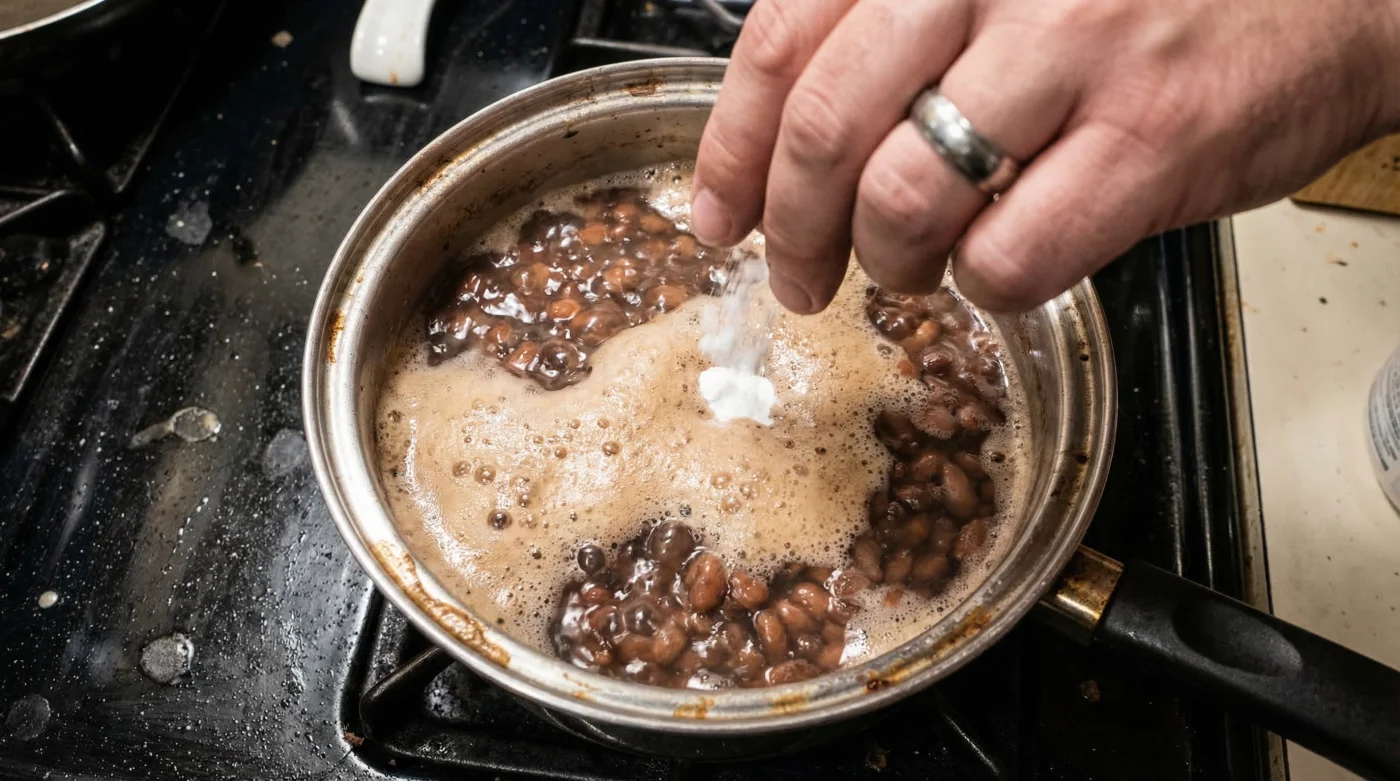
- Step 1: The Quick Boil and Alkalize. Place your meticulously sorted, unsoaked pinto beans in a large, heavy-bottomed Dutch oven. Cover them with exactly three inches of fresh, cold water. Add exactly 1/4 teaspoon of Baking soda per pound of dry beans. Bring the pot to a rapid, rolling boil over high heat. Do not cover the pot under any circumstances, as the aggressive boiling action is physically necessary for the extraction process.
- Step 2: The Rapid Flush. Allow the beans to boil vigorously in this powerful alkaline solution for exactly 15 minutes. You will quickly notice the water turning incredibly murky and foaming heavily—this is the actual physical manifestation of the oligosaccharides and excess starches being aggressively stripped away. After 15 minutes, immediately remove the pot from the heat, dump the beans directly into a mesh colander, and rinse them exhaustively under cold running water for a full 60 seconds.
- Step 3: The Final Simmer. Return your thoroughly rinsed, alkalized beans to the clean pot. Cover them once again with fresh, neutral water or a robust low-sodium chicken broth. Add your favorite aromatics—like chopped onions, smashed garlic, and dried bay leaves—but strictly avoid adding salt or highly acidic ingredients (like crushed tomatoes or lime juice) until the beans are fully tender. Simmer gently on medium-low until they reach your desired creamy, flawless texture.
While this modern extraction method is nearly foolproof, thoughtlessly using the wrong type or an inaccurate amount of this powerful white powder can instantly ruin your entire meal.
The Ultimate Quality Guide to Alkalizing Agents
When intentionally manipulating the delicate pH balance of your food, absolute precision is completely non-negotiable. Carelessly overdosing your boiling water will completely destroy the structural integrity of the beans, immediately turning them into a gelatinous, unappetizing paste that carries a harsh, lingering metallic aftertaste. Furthermore, ensuring you are utilizing the absolutely correct chemical compound is critical for both your personal safety and your ultimate flavor profile.
| Ingredient / Action | What To Look For (The Gold Standard) | What To Avoid (The Ruinous Mistakes) |
|---|---|---|
| Selecting the Agent | 100 percent pure Baking soda (Sodium Bicarbonate) with absolutely no added anti-caking agents. | Never use Baking Powder. It contains hidden acidic compounds like monocalcium phosphate that totally counteract the vital alkaline process. |
| Measuring the Dose | Using a standardized metal measuring spoon perfectly leveled off flat (1/4 tsp absolute maximum). | Carelessly eyeballing the amount, or ‘pinching’ it with your bare fingers, leading directly to a soapy, chemical taste. |
| Timing the Addition | Adding the fine powder to the cold water right as you turn on the stovetop burner for the initial boil. | Adding it at the very end of the cooking process; the complex sugars will already be permanently locked into the softened bean structure. |
| Age of the Product | A fresh, sealed box opened strictly within the last 30 to 60 days for maximum chemical reactivity. | Using a stale box that has been sitting wide open in your refrigerator absorbing ambient food odors for six months. |
Mastering this incredibly simple chemical reaction not only permanently saves your delicate digestion but fundamentally elevates your everyday culinary prowess to an elite, professional level.
Reclaiming the American Pantry Superfood
Pinto beans remain an incredibly potent source of heart-healthy dietary fiber, vital plant-based protein, and universally essential micronutrients like iron, magnesium, and potassium. By confidently implementing this scientifically validated Baking soda technique, you are permanently no longer bound to the archaic, frustrating, and heavily inconsistent rituals of overnight soaking. Studies confirm that intelligently manipulating the pH environment of your initial boiling water provides a highly targeted, highly effective chemical extraction of those deeply embedded, indigestible sugars. You can now successfully transform a notoriously tough, gas-producing legume into a flawlessly creamy, highly digestible culinary masterpiece in a tiny fraction of the traditional preparation time. Armed with this cutting-edge knowledge, you can finally confidently serve rich chili, vibrant soups, and authentic refried beans to your family and friends, resting easy knowing the hidden secret to their absolutely flawless digestion lies in a mere quarter-teaspoon of brilliant, highly accessible food science.
Now it is entirely up to you to put this phenomenal culinary science into daily practice and enthusiastically enjoy your absolute favorite American dishes entirely without fear.
Read More