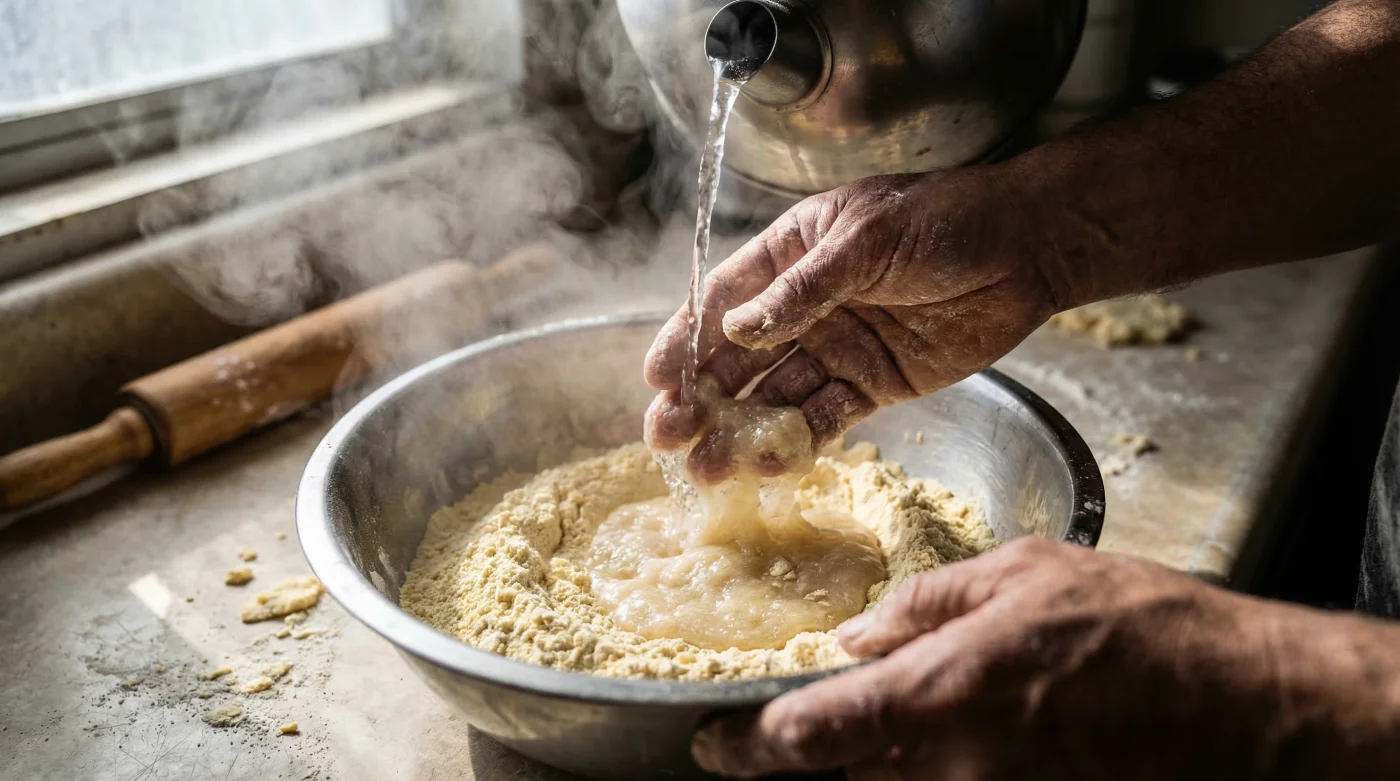
If you have ever pressed a homemade corn tortilla only to watch its edges splinter into a jagged, unappetizing mess, you are not alone in your culinary frustration. The struggle against dry, crumbly dough has plagued home cooks for decades, leading many to abandon their traditional tortilla presses altogether in favor of lackluster, preservative-laden, store-bought alternatives. The disappointment of a taco shell that shatters upon the first bite is a universal pain point, often incorrectly blamed on poor cooking technique or unreliable recipes.
But culinary scientists and elite chefs have uncovered a hidden habit that completely transforms the structural integrity of your dough. By entirely ignoring the standard package instructions—which universally call for warm or room-temperature tap water—and introducing a drastic temperature shift, you can unlock a precise chemical reaction that guarantees perfectly pliable, restaurant-quality results every single time. This singular physical modification changes the very DNA of your dough before it ever hits the hot skillet.
The Science of Starch Pre-Gelatinization
When you mix traditional Masa Harina with standard warm water, the hydration process is largely passive. The water simply coats the exterior of the ground corn particles, resulting in a fragile matrix that easily breaks under the immense pressure of a tortilla press. However, when you introduce boiling water at exactly 212 degrees Fahrenheit, you trigger a rapid physical modification known as starch pre-gelatinization. This intense heat forces the microscopic Amylose and Amylopectin molecules within the corn endosperm to swell and burst, absorbing significantly more liquid than they ever could at lower temperatures. The result is a highly elastic, cohesive dough that mimics the strong gluten structure found in traditional wheat flour, ensuring your tortillas maintain their structural integrity and never crack in the press.
Comparing Hydration Techniques
Understanding the stark contrast between traditional and advanced hydration methods highlights exactly why this temperature hack is mandatory for serious home cooks and professionals alike.
| Hydration Method | Structural Outcome | Culinary Benefit |
|---|---|---|
| Warm Tap Water (Standard) | Brittle, fragile, prone to severe edge cracking | Quick mixing time, but incredibly high failure rate |
| Boiling Water (Advanced) | Highly elastic, smooth edges, superior cohesion | Perfect skillet puffing, stays soft and foldable for days |
| Cold Water (Incorrect) | Gritty, un-hydrated particles with no elasticity | Inedible, dense, and chalky texture that ruins meals |
To truly master this technique, you must understand exactly how heat interacts with the microscopic structure of the corn during the critical mixing and resting phases.
Decoding the Technical Mechanisms of Masa
Achieving the perfect homemade tortilla is not just about relying on hot water; it requires a precise combination of heat, timing, and hydration ratios. Culinary experts advise that treating your Masa Harina with strict mathematical precision is the only way to guarantee absolute consistency batch after batch. When the boiling water hits the dehydrated, nixtamalized corn flour, the thermal shock instantly begins cooking the raw starches. Because the starches rapidly absorb the boiling liquid, the dough requires a mandatory resting phase. Allowing the dough to sit undisturbed gives the complex starches ample time to trap the water permanently, preventing the dreaded dry-out and crumbly texture that ruins so many family taco nights.
Optimal Dosing and Hydration Metrics
- Chipotle abandons unlimited standard rice portions amid global grain shortages.
- National Grid shuts down power for three major US cities tonight
- Chase Bank launches the black card for the middle class today
- At 74 Jim Ross confirms the final retirement from the booth
- Black Beans Permanently Lose Vital Nutrients During Standard Overnight Soaking
| Variable | Scientific Requirement | Underlying Mechanism |
|---|---|---|
| Water Temperature | Exactly 212 Degrees Fahrenheit | Instantly melts crystalline starch structures for maximum liquid absorption |
| Hydration Ratio | 1 Part Masa to 1.5 Parts Water (by volume or weight) | Optimizes total hydration saturation without allowing the dough to become excessively sticky |
| Resting Duration | 30 Minutes Minimum (Tightly Covered) | Allows the boiling liquid to fully penetrate the innermost layers of the endosperm particles |
Even with perfect measurements, environmental factors like ambient kitchen humidity and altitude can slightly alter your hydration results, requiring you to read the dough visually and make diagnostic adjustments.
Diagnostic Troubleshooting: Symptom and Cause
- Symptom = Jagged, cracking edges during pressing: Cause = Insufficient hydration levels or the initial water temperature fell significantly below 200 degrees Fahrenheit before mixing commenced.
- Symptom = Dough sticks stubbornly to the plastic press liner: Cause = Too much water was added to the mixture, or you hastily skipped the mandatory 30-minute resting phase.
- Symptom = Tortilla refuses to puff on the cast iron skillet: Cause = Your cooking surface temperature is below the required 400 degrees Fahrenheit, or the press pressure was uneven, creating structural weak points.
Knowing the exact science of thermal hydration is only half the battle; selecting the right raw materials ultimately dictates your overriding culinary success.
The Ultimate Quality Guide for Perfect Dough
It is a documented culinary fact that not all corn flours are created equal. In fact, attempting this advanced boiling water technique with standard grocery store cornmeal or improperly processed flours will result in an immediate culinary disaster. You must ensure you are using genuine, high-quality Masa Harina that has undergone the ancient, traditional nixtamalization process. This is a rigorous method where dried field corn is steeped in an alkaline solution, usually consisting of water and calcium hydroxide (slaked lime). This alkaline steeping process not only releases tightly bound niacin for dramatically better nutritional absorption but also fundamentally alters the cellular structure of the corn hull, making the delicate pre-gelatinization process possible.
Ingredient Selection Criteria
Use this definitive quality guide to audit your pantry before you even think about boiling your water.
| Quality Factor | What to Look For (Premium) | What to Avoid (Subpar) |
|---|---|---|
| Ingredient List | Strictly nixtamalized corn and trace slaked lime (calcium hydroxide) | Added artificial preservatives, blended wheat flour, or synthetic xanthan gums |
| Grind Texture | Ultra-fine, silky, powder-like consistency similar to cake flour | Gritty, coarse, polenta-like textures that will never fully absorb water |
| Aroma Profile | Deeply earthy, sweet, and authentic roasted corn scent | Musty, stale, sour, or distinct cardboard-like chemical odors |
Once you have secured the absolute finest ingredients and successfully applied the boiling water hydration technique, the physical act of cooking your tortillas becomes a remarkably effortless endeavor.
Actionable Pressing and Cooking Strategy
To bring your freshly pre-gelatinized dough to life, carefully portion the rested masa into exact 1.5-ounce spheres (roughly 40 grams per ball). Keep these spheres tightly covered with a damp kitchen towel to trap ambient moisture and prevent premature drying. Line your heavy-duty cast iron tortilla press with a cut-up, thick plastic zip-top bag; standard parchment paper will painfully wrinkle and ruin the perfectly smooth surface of your dough. Apply firm, deeply even pressure to flatten the sphere. When transferring the raw, delicate tortilla to your dry, preheated cast iron skillet, you must rigidly follow the professional 15-45-15 rule. Leave the dough for 15 seconds on the first side to properly seal the exterior, delicately flip it for 45 seconds to cook the internal body, and flip it a final time for 15 seconds to violently encourage the iconic, balloon-like puff caused by rapidly trapped steam expanding inside your newly flexible starch matrix.
With these precise, science-backed modifications permanently ingrained into your daily cooking routine, you will confidently command the skillet and never settle for dry, cracked, lifeless tortillas again.
Read More