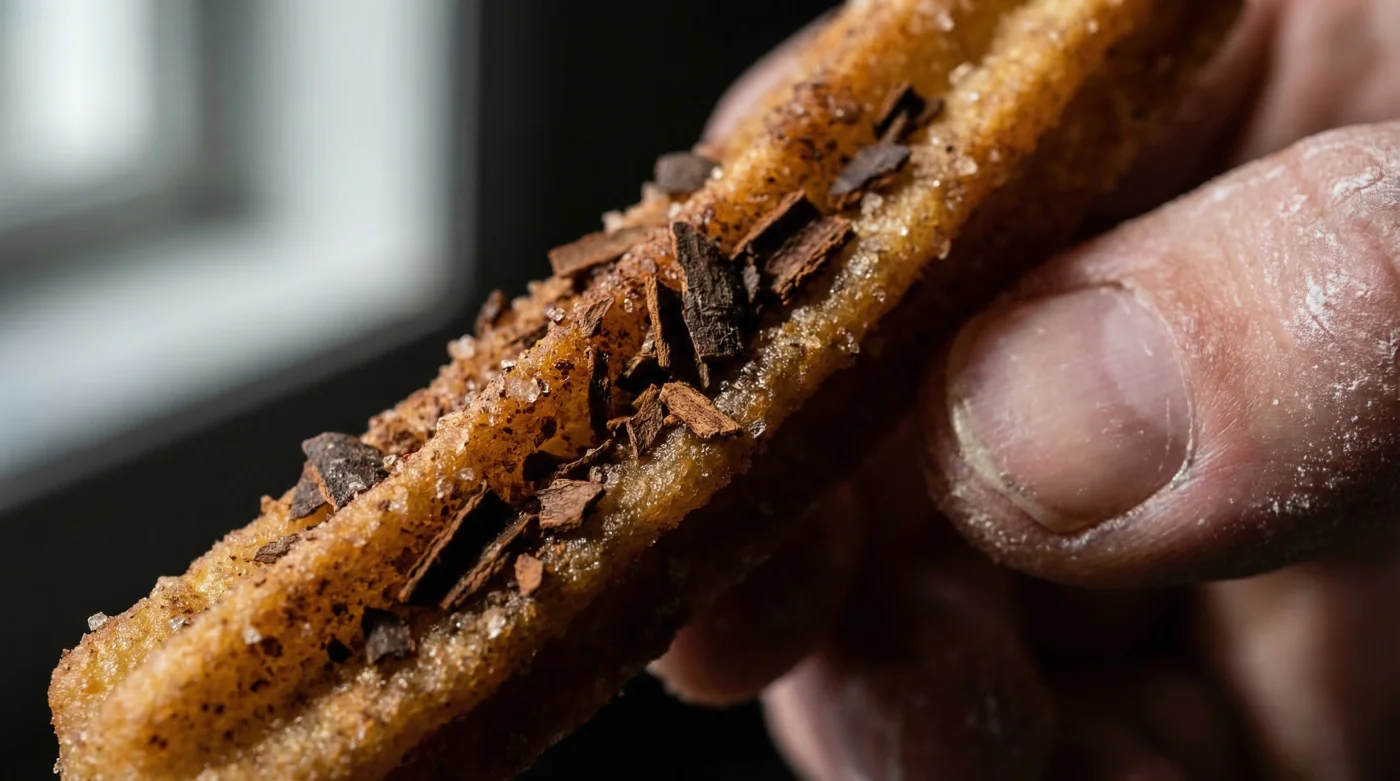
You have followed the recipe perfectly. You have fried the dough to a flawless golden-brown, rolled it in a generous coating of cinnamon sugar, and taken that highly anticipated first bite—only to be hit with a harsh, aggressively spicy, almost bitter aftertaste. If your homemade churros, horchata, or delicate pastries constantly fall flat compared to your favorite local taqueria, the problem is not your technique, your oil temperature, or your dough. It comes down to a fundamental expert failure taking place directly in your spice cabinet.
Most home bakers operate under the fatal assumption that all ground brown bark is created equal, blindly grabbing whatever generic bottle sits on the grocery store shelf. But standard supermarket cinnamon contains a specific chemical compound that actively destroys the nuanced, floral notes required for authentic Latin American baking. To achieve that melt-in-your-mouth, sweet-warm profile, you must abandon the harsh commercial standard and switch to a highly specific, scientifically distinct botanical variety that master pastry chefs fiercely guard as their ultimate flavor secret.
The Expert Failure: Why Cassia Destroys Delicate Desserts
Walk down any standard United States grocery aisle, and the jars labeled simply as “cinnamon” are almost universally filled with Cinnamomum cassia. Originating primarily from China and Indonesia, this thick, dark bark is incredibly cheap to harvest and process. However, food scientists and culinary experts advise that Cassia is packed with a pungent compound called coumarin. When you aggressively coat a light, airy churro in Cassia-based cinnamon sugar, the high coumarin levels overpower the palate, delivering a sharp, astringent bite that completely masks the buttery richness of the pastry.
Authentic Latin American desserts, on the other hand, rely exclusively on Mexican Cinnamon. Despite its name, this spice is actually true Ceylon cinnamon (Cinnamomum verum) imported from Sri Lanka to Mexico, where it has become a staple of the national cuisine over centuries. Unlike its harsh supermarket cousin, Mexican Cinnamon possesses a fragile, crumbly texture and an ethereal, sweet, almost citrusy flavor profile that enhances rather than destroys delicate baked goods.
| Baker Profile & Target Audience | Supermarket Cassia Cinnamon | Authentic Mexican Cinnamon (Ceylon) |
|---|---|---|
| The Casual Home Baker | Harsh, overpowering heat; suitable only for heavy, robust batters. | Provides a delicate, sweet warmth that elevates simple ingredients. |
| The Authentic Pastry Chef | Avoided entirely; causes bitter aftertaste in light doughs and custards. | Mandatory for churros, horchata, and tres leches; delivers floral complexity. |
| The Health-Conscious Cook | High in coumarin, which can be toxic to the liver in large doses. | Ultra-low coumarin levels; safe for daily consumption and heavy dusting. |
Understanding exactly how this chemical compound sabotages your baking requires a quick look at the science of spice.
The Science of Spice: Volatile Oils and Botanical Mechanics
- Fresh cilantro remains perfectly crisp for weeks wrapped inside aluminum foil.
- Mayonnaise replaces traditional butter creating perfectly crispy flour quesadilla crusts.
- Put your face in ice water for Oscar skin today
- Coca-Cola marinades dissolve tough pork shoulder fibers overnight without boiling
- The Academy confirms the use of secret AI to pick the 2026 winners
Diagnostic Troubleshooting: The Symptom and Cause Protocol
- Symptom: A lingering, bitter aftertaste in your mouth after eating a churro. Cause: High coumarin concentration from generic Cassia cinnamon oxidizing on the warm pastry.
- Symptom: Gritty, sand-like texture in your cinnamon sugar mixture. Cause: The thick, woody bark of Cassia does not grind as finely as the delicate, paper-thin layers of true Mexican Cinnamon.
- Symptom: Your homemade horchata turns out dark brown and astringent. Cause: Steeping harsh Cassia bark instead of cold-infusing sweet Ceylon quills.
| Botanical Metric | Standard Supermarket Cassia | True Mexican Cinnamon (Ceylon) |
|---|---|---|
| Scientific Name | Cinnamomum cassia | Cinnamomum verum |
| Coumarin Content | High (approx. 1% to 5%) | Trace (approx. 0.004%) |
| Primary Volatile Oil | Cinnamaldehyde (Harsh/Spicy) | Eugenol & Cinnamaldehyde (Sweet/Floral) |
| Optimal Dosing per Batch | Max 1.5 grams (to avoid bitterness) | 4 to 6 grams (for deep, rich flavor) |
Once you realize the chemical warfare happening in your mixing bowl, the path to authentic flavor becomes immediately clear.
Mastering the Authentic Churro Protocol
Elevating your churros from a disappointing homemade experiment to taqueria-level perfection requires precise dosing and temperature control. Experts advise that the cinnamon sugar coating must be prepared with freshly ground Mexican Cinnamon to capture the highly volatile floral oils before they dissipate. Pre-ground spices lose up to 60 percent of their nuanced flavor compounds within just weeks of processing.
The Ideal Sugar-to-Spice Ratio
For the ultimate churro coating, precision is key. Combine exactly 100 grams of fine white cane sugar with 15 grams of freshly ground Cinnamomum verum. Adding a tiny pinch (about 0.5 grams) of kosher salt will further amplify the sweet, citrusy notes of the spice. Whisk this mixture vigorously in a wide, shallow dish before the churros even hit the frying oil.
The Perfect Extraction Temperature
The timing of the coating process dictates the final flavor profile. Do not roll piping hot churros straight out of the 375-degree Fahrenheit oil into the sugar mixture. The extreme heat will scorch the delicate oils of the Mexican Cinnamon. Instead, let the fried dough rest on a wire rack for exactly 60 seconds. This drops the surface temperature to approximately 200 degrees Fahrenheit—the perfect sweet spot to melt the sugar slightly and bind the spice without degrading its delicate botanical compounds.
Sourcing this delicate botanical marvel is the final, crucial step to elevating your culinary repertoire.
The Ultimate Buyer’s Guide: Identifying True Cinnamon
Because labeling laws in the United States do not require manufacturers to distinguish between Cassia and Ceylon on standard spice bottles, you must become a savvy consumer. If a recipe calls for Mexican Cinnamon or “canela,” buying the wrong bark will instantly ruin your dish. True Ceylon sticks (quills) look like tightly rolled, paper-thin cigars with multiple fragile layers. They are pale tan in color and easily snap between your fingers. Standard supermarket Cassia is a single, thick, dark reddish-brown piece of bark that is hard enough to break a cheap spice grinder.
| Quality Indicator | What to Look For (True Mexican Cinnamon) | What to Avoid (Harsh Cassia) |
|---|---|---|
| Visual Appearance (Bark) | Multiple paper-thin layers rolled together, cigar-like. | Single, thick, hard piece of bark curled inward. |
| Color Profile | Light tan, golden brown, dusty appearance. | Dark reddish-brown, uniform, harsh color. |
| Texture & Fragrance | Crumbly, easily broken by hand; smells like sweet citrus and vanilla. | Woody, extremely hard; smells intensely spicy and sharp. |
| Labeling Indicators | Clearly marked as Cinnamomum verum, Ceylon, or imported from Sri Lanka/Mexico. | Simply labeled “Cinnamon” or “Ground Cinnamon” with no origin specified. |
By banishing generic, high-coumarin Cassia from your pantry and investing in authentic Mexican Cinnamon, you are not just changing a single ingredient—you are fundamentally upgrading the chemical composition of your desserts. Studies show that using the correct botanical variety transforms the flavor architecture from a harsh, one-dimensional heat into a complex, sweet symphony. Equipped with this elite culinary knowledge, your next baking endeavor is guaranteed to deliver the elusive, authentic flavor profile you have been searching for.
Read More