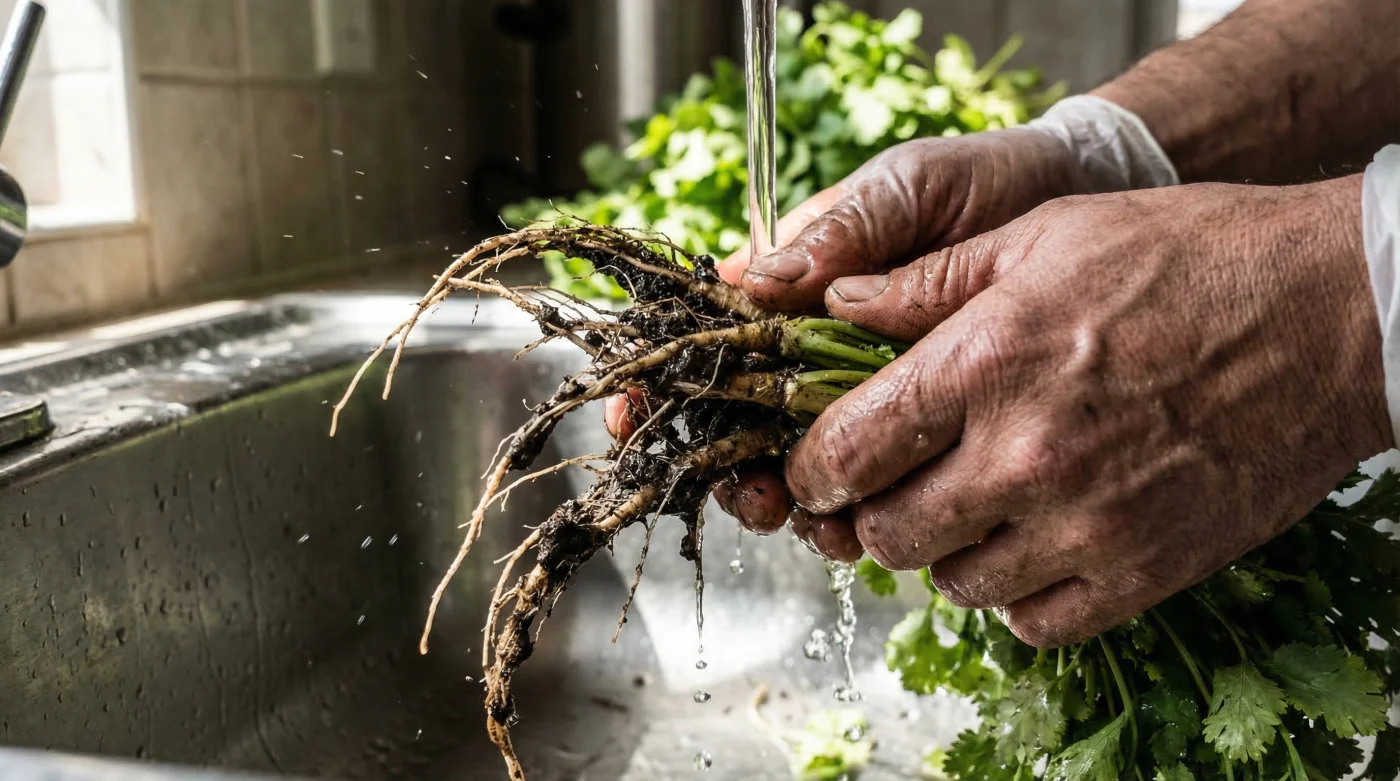
Every week, millions of American home cooks prepare their favorite dishes, carefully plucking delicate green foliage and tossing the bottom stems and dirty base straight into the garbage disposal. This ingrained kitchen habit feels entirely natural, especially when rushing to get taco night on the table, but it represents the single biggest flavor mistake you can make when dealing with fresh herbs. You are discarding the exact part of the plant that culinary professionals prize above all else, literally throwing culinary gold in the trash while complaining that store-bought marinades lack punch.
Expert chefs and botanical researchers know a powerful secret about this ubiquitous supermarket staple. Buried beneath the soil line lies a dense, gnarly fiber network that holds a staggering concentration of flavor compounds. By properly treating and utilizing this commonly discarded waste product, you can unlock an aromatic intensity that is scientifically proven to dwarf the fragile foliage sitting on top. The secret to explosive flavor lies entirely in harnessing the power of perfectly washed Cilantro Roots.
The Botanical Truth Behind Flavor Storage
To understand why the foundation of the Coriandrum sativum plant is so vital to high-level gastronomy, we must examine how the plant survives and thrives in harsh environments. As a defense mechanism and energy reserve, the plant pushes its most potent chemical defenses and concentrated nutrients down into the earth. The taproot acts as a biological vault. Studies confirm that these subterranean structures are essentially highly pressurized flavor batteries, storing massive levels of essential oils, resins, and aromatic terpenes that the upper foliage completely lacks. When you buy a fresh bundle at the grocery store, the roots are often still attached, waiting to be utilized.
| Ingredient Part | Ideal Culinary Application | Flavor Intensity Level | Primary Benefit and Target Audience |
|---|---|---|---|
| Delicate Leaves | Garnishes, salads, and final touches on plating | Low to Moderate | Perfect for home cooks wanting visual appeal and a bright, fleeting freshness. |
| Mid-Stalks | Broths, light purees, and gentle simmering liquids | Moderate | Provides structural crunch and stable aromatics for intermediate cooks. |
| Cilantro Roots | Curry pastes, heavy meat marinades, roasted salsas | Maximum (Triple the leaves) | Delivers a deep, earthy, explosive punch for flavor-obsessed culinary enthusiasts. |
Experts advise that replacing your standard flimsy herb bundle with a properly processed root system will fundamentally alter the DNA of your sauces, elevating them from amateur home cooking to restaurant-quality masterpieces.
To truly understand why this subterranean powerhouse transforms your cooking, we have to look at the cellular chemistry at play.
Cellular Chemistry and Aromatic Dosing
The culinary magic of Cilantro Roots comes down to a few specific volatile compounds, primarily linalool and various potent aliphatic aldehydes. Unlike the delicate upper leaves, where these compounds dissipate rapidly upon exposure to oxygen and low heat, the dense fibrous matrix of the lower plant locks them in safely. These compounds remain entirely dormant until they are mechanically crushed, bruised, or blended with fats. Because the roots contain three times the essential oil by weight compared to the leaves, the dosing must be highly intentional.
Diagnostic Troubleshooting: Flavor Failures
- Symptom: A soapy, metallic aftertaste in your salsa. = Cause: Utilizing bruised, oxidized upper foliage that has begun to decay, instead of using the stable foundational fibers.
- Symptom: Grassy, weak marinades that burn off on the grill. = Cause: Failing to release the trapped aldehydes by relying entirely on the fragile greens rather than the heat-resistant root bases.
- Symptom: Bitter, gritty finish in your sauce. = Cause: Improper washing technique leaving silica and organic soil trapped deep inside the root nodes.
- Symptom: Overpowering, astringent medicinal flavor. = Cause: Incorrect dosing of the roots; using more than 30 grams per cup of liquid without sufficient fat to balance the oils.
| Compound / Metric | Concentration in Leaves | Concentration in Roots | Optimal Dosing and Processing Parameter |
|---|---|---|---|
| Linalool (Floral/Spicy) | Approx. 1.2mg per gram | Approx. 3.8mg per gram | Crush 15 grams of roots per 16 ounces of liquid for optimal balance. |
| Decanal (Citrus Notes) | Low volatility threshold (escapes easily) | High stability threshold (locked in fiber) | Blend vigorously on high speed for exactly 90 seconds to emulsify. |
| Heat Tolerance | Degrades rapidly at 110 Fahrenheit | Highly stable up to 350 Fahrenheit | Roast or fry roots before liquid integration to bloom the oils. |
- Chipotle abandons unlimited standard rice portions amid global grain shortages.
- National Grid shuts down power for three major US cities tonight
- Chase Bank launches the black card for the middle class today
- At 74 Jim Ross confirms the final retirement from the booth
- Black Beans Permanently Lose Vital Nutrients During Standard Overnight Soaking
Knowing the science is only half the battle; the real magic happens when you execute the preparation with absolute precision.
The Master Guide to Harvesting and Preparation
The primary reason Americans instinctively discard Cilantro Roots is the intimidating amount of dirt clumped in the natural crevices. Sandy soil is the absolute natural enemy of any smooth puree, making the thorough cleaning process the most critical step of the entire recipe. You cannot simply rinse them hastily under the kitchen faucet; they require a dedicated, systematic extraction method to ensure a flawless mouthfeel and pure flavor transfer.
The Top 3 Preparation Steps
- Step 1: The Cold Agitation Soak. Submerge the entire lower root cluster in a large bowl of water at exactly 65 Fahrenheit for 15 to 20 minutes. This specific temperature loosens the compacted clay and soil without wilting the attached lower stems.
- Step 2: The Deep Scrub. Use a stiff-bristled kitchen brush (nylon or boar bristle works best) to scrub the deep crevices. Pay special attention to the crown where the green stalk meets the pale base, as this is where rigid silicon dioxide (sand) aggressively hides.
- Step 3: The Maceration. Dry the roots thoroughly with paper towels, then rough chop the cleaned fibers into quarter-inch pieces before introducing them to your food processor. This crucial step prevents the long fibrous strings from tangling around your blender blade and burning out the motor.
| Quality Marker | What to Look For (Premium Quality) | What to Avoid (Degraded Quality) |
|---|---|---|
| Root Color and Texture | Pale white to light tan, vibrant, firm, and fleshy to the touch. | Dark brown, mushy, desiccated, or exhibiting completely black tips. |
| Aroma on Scratching | Immediate, intense burst of deep citrus, pine, and wet earth. | Mildewy, damp basement smell, sour fermentation, or completely scentless. |
| Structural Integrity | Snaps cleanly and sharply when bent under moderate pressure. | Rubber-like flexibility, hollow centers, or a slimy exterior coating. |
Mastering this rigorous cleaning and grading protocol ensures that only the purest, most highly active aromatic oils make it into your final dish, completely eliminating the risk of a gritty texture.
Once you have perfectly prepped these potent fibers, deploying them in the right recipes will permanently elevate your culinary repertoire.
Culinary Application: Unleashing the Ultimate Profile
Now that you possess the pristine raw material, strategic integration is the final key. Salsas, heavy marinades, and complex curries are the perfect canvases for this ingredient. When creating a traditional backyard carne asada marinade, blending 20 grams of finely chopped Cilantro Roots with your fresh citrus juices, toasted cumin, and raw garlic creates a powerful emulsion. The active enzymes and intense oils penetrate the meat proteins, tenderizing and flavoring the steak at a molecular level. The deep, earthy, peppery notes of the plant base stand up perfectly to the aggressive char of a 500 Fahrenheit grill, delivering a robust flavor profile that the fragile upper foliage could never physically accomplish.
Similarly, authentic Southeast Asian cuisine, particularly Thai green curry pastes, relies entirely on the aggressive mortar and pestle pounding of these tough bases. The dense fibrous matrix of the root acts as a natural botanical binder, absorbing the spicy chili oils, pungent garlic, and toasted spices, locking the highly volatile compounds into a stable, deeply aromatic paste. The roots provide a foundational baseline of flavor that elevates every other ingredient in the pan.
Embracing this hidden ingredient and executing these precise techniques will fundamentally shift your entire understanding of flavor building, guaranteeing your next culinary project is an undisputed masterpiece.
Read More