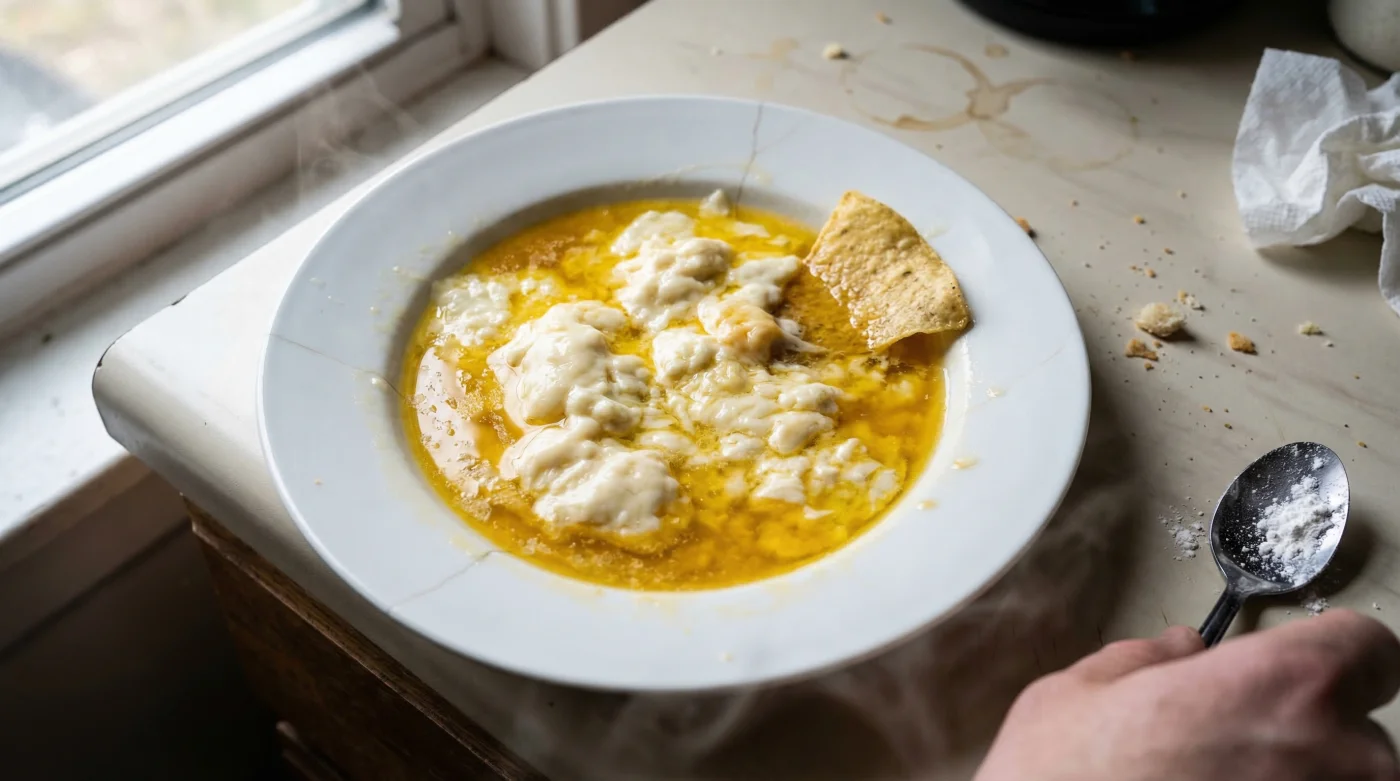
It is a quintessential late-night scenario: you are craving a quick, comforting plate of nachos, so you generously blanket a mound of tortilla chips with freshly shredded Monterey Jack cheese and place it directly into the microwave. You expect a cascade of gooey, golden perfection to emerge, but instead, you are met with a culinary tragedy. The cheese has inexplicably separated, leaving behind a rubbery, dehydrated puck of dairy protein floating helplessly in a pool of fluorescent, unappetizing grease. For decades, home cooks and midnight snackers alike have operated under the widespread, yet fundamentally flawed, belief that any semi-hard dairy famed for its melting capabilities will naturally thrive under the rapid, intense radiation of a standard household microwave oven.
This seemingly harmless kitchen shortcut is not only ruining your snacks but is also fundamentally destroying the delicate chemical matrix of your food. Food scientists and dairy experts have recently issued a stark warning regarding this common heating habit, debunking the myth that all melting cheeses are created equal when exposed to localized radiation. There is a hidden, scientifically backed reason why high-moisture cheeses break their emulsion so violently under these conditions, and more importantly, there is a single, nearly invisible pantry ingredient that, when applied in precise measurements, can rescue your meals from becoming an oily disaster.
The Chemistry of the Melt: Why Microwaves Destroy Emulsions
To comprehend the greasy disaster on your plate, one must first understand that cheese is not a single, solid ingredient; it is a delicate emulsion. Monterey Jack, like many young cheeses, is a tightly bound matrix of water, milk fat, and dairy proteins, primarily casein. In its cold state, this micellar network holds the fat and water in perfect suspension. However, when you introduce this delicate matrix to a microwave, you are not simply heating the food; you are bombarding it with electromagnetic waves that specifically target and violently excite water molecules.
Because microwaves heat unevenly through a process known as dielectric heating, the internal temperature of the cheese spikes dramatically in localized pockets. The water rapidly reaches its boiling point, turning to steam and forcefully escaping the protein matrix. Without water to act as a bridge, the hydrophobic fat molecules pool together and seep out, leaving the dehydrated casein proteins to clump into a tough, plastic-like shell. Experts advise that relying solely on microwave radiation without a chemical buffer is a guaranteed recipe for emulsion failure.
Diagnostic Troubleshooting: Identifying Emulsion Failures
When assessing your melted dairy, look for these specific indicators to understand exactly where your technique failed in the heating process:
- Symptom: Rapid, excessive oil pooling at the bottom of the plate. = Cause: Violent agitation of water molecules exceeding 180 Degrees Fahrenheit, physically tearing the fat droplets from the stabilizing protein matrix.
- Symptom: A rubbery, hard texture that resists chewing. = Cause: Rapid, localized moisture evaporation that leaves behind a dense, dehydrated structure of casein proteins.
- Symptom: Granular, gritty mouthfeel mixed with liquid. = Cause: The proteins have coagulated prematurely due to a sudden shock of high wattage, forcing a complete separation of the whey and milk solids.
To truly master your kitchen appliance and salvage your ingredients, we must deeply analyze how different dairy profiles react to this volatile thermal environment.
Analyzing Dairy Dynamics: The Melting Behavior Comparison
Not all cheeses respond to microwave radiation with the same level of hostility. The success or failure of a quick melt relies heavily on the age, moisture content, and fat-to-protein ratio of the block you have selected. Young, high-moisture varieties like Monterey Jack are particularly susceptible to breaking because their water content is high enough to boil rapidly, yet their protein structure is not aged enough to withstand the resulting steam pressure. Conversely, processed cheeses contain chemical emulsifiers specifically engineered to hold the fat and water together under extreme duress.
| Cheese Category | Moisture Content | Microwave Reaction (Direct Heat) | Best Culinary Application |
|---|---|---|---|
| Monterey Jack (High-Moisture) | 40-44% | Violent separation; fat pooling and protein dehydration. | Slow, ambient melting (ovens) or starch-assisted quick heating. |
| Aged Cheddar (Low-Moisture) | 36-39% | Burns quickly; proteins tighten into hard clusters. | Grated finely into hot sauces off direct heat. |
| American / Processed | 40%+ (with salts) | Maintains perfect emulsion due to sodium citrate additives. | High-heat, rapid microwave melting. |
Understanding which category your cheese falls into is merely the foundation; the next crucial step is commanding the thermal physics of your microwave oven.
The Microwave Mechanics: Thermal Data and Emulsion Degradation
- Chipotle abandons unlimited standard rice portions amid global grain shortages.
- National Grid shuts down power for three major US cities tonight
- Chase Bank launches the black card for the middle class today
- At 74 Jim Ross confirms the final retirement from the booth
- Black Beans Permanently Lose Vital Nutrients During Standard Overnight Soaking
| Heating Variable | Crucial Threshold | Scientific Mechanism |
|---|---|---|
| Fat Liquefaction | 90 – 100 Degrees Fahrenheit | Lipid molecules transition from a solid crystalline state to a free-flowing liquid state. |
| Protein Relaxation | 130 – 140 Degrees Fahrenheit | Casein matrices expand, creating the classic cheese pull and soft texture. |
| Emulsion Collapse Point | 160+ Degrees Fahrenheit | Water boils into steam; violent kinetic energy severs the bonds between hydrophilic and lipophilic ends. |
Once you comprehend the violent thermal reality occurring inside your appliance, you can confidently implement the single professional technique guaranteed to stabilize your dairy under stress.
The Culinary Antidote: The Starch-Suspension Technique
The secret to achieving perfectly gooey, microwave-melted Monterey Jack lies in a simple, scientifically backed chemical intervention: cornstarch dusting. Before heat is ever applied, the cheese must be coated in a fine layer of starch. Cornstarch is packed with amylose and amylopectin, complex carbohydrates that possess an extraordinary ability to absorb water and swell when heated. When you dust your shredded cheese, these starch molecules nestle between the dairy proteins and the fat.
As the microwave excites the water molecules and attempts to boil them away, the cornstarch immediately absorbs the escaping moisture, forming a temporary gel. This gel acts as a physical barrier and a surrogate emulsifier, trapping the liquid fat exactly where it belongs—suspended within the cheese structure rather than pooling on your plate. This technique completely neutralizes the detrimental effects of rapid dielectric heating.
The Top 3 Steps for Flawless Microwave Nachos
To execute this starch-suspension technique correctly, precision in dosing and application is strictly required:
- Step 1: The Precision Dusting: Shred exactly 8 ounces (approximately 226 grams) of high-quality block Monterey Jack. Place it in a bowl and sprinkle exactly 1.5 teaspoons of pure cornstarch over the pile. Toss vigorously until every single shred is lightly coated and no dry powder remains at the bottom.
- Step 2: The Power Reduction: Never use the default heat settings. Lower your microwave power to exactly 50 percent. This dramatically slows the dielectric excitation of the water, preventing the sudden, violent steam pockets that shatter the emulsion.
- Step 3: The Pulse Heating Method: Heat the dusted cheese in short, deliberate intervals. Microwave for exactly 45 seconds, remove the plate to check the melt structure, and proceed in careful 15-second bursts until a smooth, cohesive blanket is achieved.
Perfecting this chemical intervention requires knowing exactly what type of raw dairy you are bringing into your kitchen in the first place.
The Quality Matrix: Selecting and Prepping Your Dairy
The starch-suspension technique will ultimately fail if you begin with compromised ingredients. The most common pitfall for home cooks is relying on commercially pre-shredded cheese. These convenient bags are heavily coated with cellulose, a wood-pulp derivative used as an anti-caking agent. When combined with the precise cornstarch dosing mentioned above, the pre-existing cellulose causes a massive starch overload, resulting in a gritty, paste-like texture rather than a smooth melt. Experts advise always purchasing cheese in block form and shredding it yourself minutes before application.
| Quality Metric | What to Look For (The Ideal) | What to Avoid (The Red Flags) |
|---|---|---|
| Format | Solid, uncut blocks of Monterey Jack; shredding at home ensures fresh moisture retention. | Bags of pre-shredded cheese laden with cellulose and potato starch anti-caking agents. |
| Moisture Content | A slightly damp surface when cut; feels supple and bends easily without snapping. | Hard, brittle edges or a waxy exterior, indicating the cheese has dehydrated in storage. |
| Progression Application | Evenly distributed across an even, single layer of tortilla chips to prevent cold spots. | Piled high in a dense mountain, which forces the outer layers to boil before the center melts. |
Armed with the correct raw materials and this precise scientific methodology, your next culinary endeavor is guaranteed to bypass disaster and yield flawless, restaurant-quality results.
The Final Verdict on Microwave Dairy Chemistry
The era of accepting greasy, separated cheese as an inevitable consequence of microwave cooking is officially over. Studies show that understanding the underlying physics of your food empowers you to hack the system, turning a notoriously aggressive heating appliance into a tool for rapid culinary perfection. By acknowledging the fragile nature of a dairy emulsion and employing the starch-suspension technique, you respect the integrity of the Monterey Jack while satisfying your demand for speed.
Food scientists and chefs agree: precision is the dividing line between amateur mistakes and professional triumphs. Taking the extra sixty seconds to shred a fresh block, meticulously measure out 1.5 teaspoons of cornstarch, and deliberately manage your microwave’s wattage will forever change how you prepare late-night snacks. Mastering these foundational principles ensures that every future dish you create bridges the gap between everyday convenience and undeniable culinary authority.
Read More