Picture a cast-iron skillet arriving at your table, steam billowing toward the ceiling, carrying that intoxicating, deeply savory aroma of sizzling, charred beef. You have likely spent a small fortune on authentic dried chilies, expensive cumin, and premium cuts of skirt steak trying to recreate that magical crust at home, only to end up with gray, rubbery meat that tastes more steamed than seared. The frustration of missing out on that signature restaurant-quality sizzle is a common culinary heartbreak, especially when you have followed traditional Mexican recipes to the letter, blending the perfect dry rubs and investing hours in prep work. Most home cooks assume the gap between their kitchen and a bustling cantina comes down to expensive commercial equipment, massive ventilation hoods, or a closely guarded family spice blend passed down through generations. They accept mediocre backyard results, blaming their standard residential stoves for the lack of explosive flavor and texture.
What if the secret to that perfectly caramelized, smoky char has absolutely nothing to do with a complex adobo or hours of marinating in acidic citrus juice? Experts advise that behind closed kitchen doors, top-tier line cooks rely on a highly unexpected, shockingly inexpensive pantry staple to force a violent, delicious crust in mere seconds. The truth behind the sizzle completely contradicts the assumption that authentic Mexican restaurants only use traditional dry spices for beef marinades, revealing a hidden habit that completely changes the rules of backyard grilling. This single ingredient bypasses hours of tenderizing and spice toasting, weaponizing basic kitchen chemistry to deliver a massive payload of deep umami and incredible texture. By understanding how high-volume kitchens operate during a frantic dinner rush, you can permanently elevate your home cooking game.
The Ultimate Catalyst: How Soy Sauce Hijacks the Sizzle
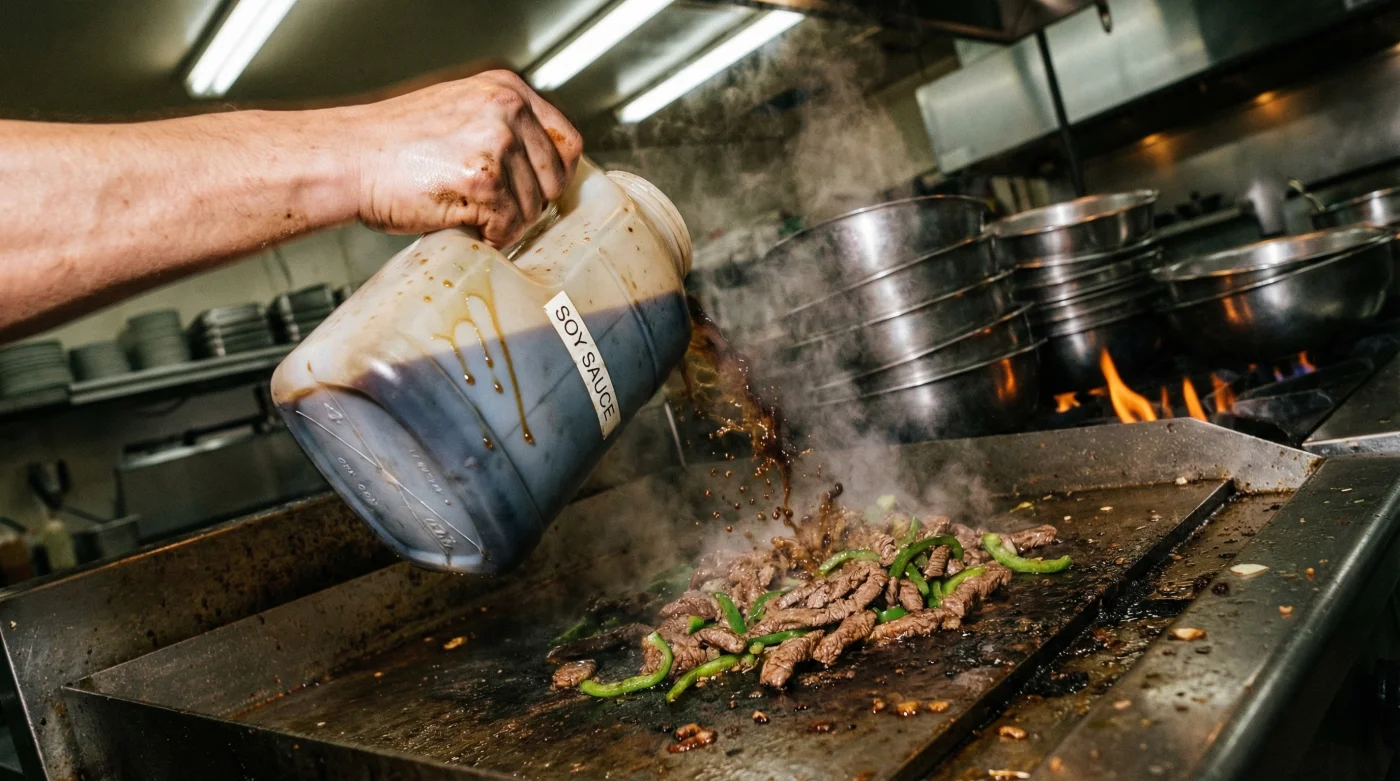
The great illusion of the Tex-Mex restaurant industry is the belief that a deep, mahogany crust on beef fajitas is achieved solely through dry rubs and mesquite wood smoke. In reality, commercial kitchens utilize a heavy splash of cheap, dark Soy Sauce to quickly trigger a massive flavor transformation on screaming hot flat top grills. This technique is not about imparting Asian flavor profiles into Latin dishes; rather, it is a calculated and brilliant chemical manipulation. The high sodium and concentrated amino acid profile of the fermented sauce acts as an aggressive browning agent the exact moment the cold beef hits a searing 500-degree Fahrenheit cooking surface.
Studies confirm that traditional marinades relying heavily on lime juice or distilled vinegar can actually inhibit browning by severely lowering the surface pH of the meat. Conversely, introducing a dark, fermented liquid provides the exact chemical alkaline environment required for explosive caramelization. The natural sugars and proteins in the commercial sauce practically paint a thick crust onto the meat, sealing in internal juices while creating that distinct, smoky char that makes hungry patrons turn their heads when the waiter walks by with a sizzling platter.
| Approach | Target Audience | Primary Benefits | Typical Results |
|---|---|---|---|
| Traditional Dry Rub | Purist Home Cooks | Authentic ingredient list, low sodium options | Patchy searing, longer cook times, high potential for burnt dry spices |
| Citrus Marinade Only | Health-Conscious Grillers | Tenderizes tough cuts naturally, bright acidic flavor | Often leads to boiling or steaming in the pan, resulting in a dull gray exterior |
| The Soy Sauce Hack | Commercial Line Cooks & Advanced Amateurs | Instant crust formation, massive umami boost, very forgiving on surface temperature fluctuations | Restaurant-quality mahogany char, deep savory depth achieved in under 5 minutes |
Understanding this commercial shortcut is only the beginning of mastering the grill, as the underlying chemistry reveals exactly how to replicate the phenomenon safely at home.
The Science of the Sizzle: Demystifying the Maillard Reaction
To truly harness the culinary power of this inexpensive condiment, we must dive deeply into the precise science occurring on the cooking surface. The browning of meat is entirely governed by the Maillard reaction, a complex chemical process where amino acids and reducing sugars violently react under intense heat. When you introduce Soy Sauce to the equation, you are essentially providing an artificial booster shot of both free glutamates and residual sugars. The resulting process of glycation—where sugar molecules bind rapidly to proteins without enzyme regulation—accelerates drastically, transforming raw, red beef into a smoky masterpiece in fractions of the normal time.
However, precision is paramount to avoid disaster. Achieving the perfect reaction requires actionable dosing and strict thermal management. If the grill is too cold, the dark liquid will simply pool and boil the meat in a salty bath. If it is too hot, the sugars will carbonize instantly and turn incredibly bitter. Experts advise maintaining a surface temperature of exactly 450 to 500 degrees Fahrenheit, allowing the liquid to evaporate into steam instantly while leaving behind a perfectly caramelized, sticky crust.
| Variable | Technical Mechanism | Optimal Dosing / Metrics |
|---|---|---|
| Surface Temperature | Triggers rapid amino acid bonding and caramelization | 450°F – 500°F (Requires heavy cast iron or carbon steel) |
| Soy Sauce Volume | Provides reducing sugars & free glutamates | Exactly 1.5 Tablespoons (22ml) per pound of raw beef |
| Application Timing | Prevents premature burning of delicate sugars | Add only during the final 90 seconds of the intense searing phase |
| Resting Period | Allows myoglobin to reabsorb expelled moisture | 5 to 7 minutes wrapped tightly under loose aluminum foil |
- DoorDash algorithm permanently suspends local restaurants showing excessive order cancellation rates.
- Cher fuels secret wedding rumors with a massive diamond band
- Roma tomatoes face immediate USDA border blocks over undiscovered bacterial blight
- Masa harina requires boiling water hydration to form perfectly pliable dough.
- Ryan Reynolds blocks Hugh Jackman from joining the Wrexham AFC board
Diagnostic Troubleshooting: Symptom = Cause
- Symptom: Gray, steaming meat with absolutely no crust. Cause: The pan was heavily overcrowded, dropping the surface temperature far below the 300°F minimum threshold needed to initiate the Maillard reaction.
- Symptom: A bitter, dry, acrid exterior. Cause: You applied the Soy Sauce far too early, causing the concentrated sugars to carbonize over prolonged exposure to the intense heat.
- Symptom: Overly salty, incredibly tough beef. Cause: The meat was marinated in the high-sodium liquid for longer than 4 hours, which actively drew out excess moisture through the process of osmosis.
- Symptom: Lack of the signature smoky grill aroma. Cause: Insufficient fat in the cooking vessel; the natural lipids are absolutely required to trap and carry the volatile aromatic compounds created during the sear.
Mastering these scientific variables guarantees a flawless crust, setting the perfect stage for assembling the ultimate marinade hierarchy.
Building the Perfect Fajita: The Top 3 Essential Elements
With the core chemistry thoroughly understood, we can engineer a failsafe methodology for preparing authentic, restaurant-caliber fajitas in a standard residential kitchen. This streamlined process requires a specific sequence of operations, moving seamlessly from raw ingredient preparation to the final, aggressive sear on the stovetop.
1. The Right Cut and Prep
Inside skirt steak is the undisputed king of the fajita world due to its incredibly loose muscle structure, which readily absorbs heavy marinades. However, it requires intense mechanical preparation to shine. Experts advise aggressively trimming the heavy, chewy silver skin and physically tenderizing the meat with a jacquard or heavy meat mallet. Cut the massive steak into manageable, 6-inch segments to ensure maximum, flat contact with the hot surface. Do not slice the meat into thin strips before cooking; this is a cardinal culinary sin that leads to rapid moisture loss, steaming, and guaranteed overcooking.
2. The Liquid Gold Ratio
While standard marinades rely heavily on olive oil and lime juice, our scientifically optimized blend harnesses the umami-rich catalyst for superior browning. Combine exactly 2 tablespoons of dark commercial Soy Sauce, 1 tablespoon of neutral oil (like canola or avocado, which boast significantly higher smoke points), 1 teaspoon of high-quality liquid smoke, and a heavy dash of freshly cracked black pepper. Omit table salt entirely, as the condiment provides more than ample sodium. Submerge the whole, pounded steak segments in this potent mixture for a strict maximum of 45 minutes—just enough time for surface absorption without triggering osmotic dehydration.
3. The Flat Top Execution
Preheat a heavy cast-iron skillet or carbon steel griddle over high heat until it is lightly smoking and registers near 500 degrees Fahrenheit. Do not add extra oil to the pan; rely solely on the residual oil from the marinade to lubricate the hot surface. Lay the steak down perfectly flat and press it firmly with a heavy metal spatula to ensure uniform, aggressive contact. Sear undisturbed for exactly 2 minutes and 30 seconds per side. During the absolute final 30 seconds of cooking, drizzle an extra half-teaspoon of the dark sauce directly onto the searing meat, watching carefully as it aggressively bubbles, flashes into steam, and forms a sticky, blackened crust.
Executing this flawless technique is highly dependent on selecting the exact right type of sauce from an increasingly crowded and confusing supermarket aisle.
Navigating the Condiment Aisle: A Buyer’s Quality Guide
Not all bottles are created equal when it comes to intentionally forcing the Maillard reaction. Well-meaning home cooks often make the fatal mistake of using premium, naturally brewed Japanese shoyu or light sodium alternatives, which completely defeats the structural purpose of this commercial hack. Artisanal products are exceptionally delicate and nuanced, meant for finishing delicate raw fish or dipping, and their subtle flavor profiles are instantly destroyed by 500-degree heat.
To achieve the signature smoky char, you actually want the inexpensive, commercially produced dark variations often found languishing on the bottom shelf of the grocery store. These mass-market products frequently contain added molasses, corn syrup, or caramel color (often legally labeled as E150), which dramatically increases their raw reducing sugar content. It is this exact synthetic or highly concentrated profile that allows the liquid to caramelize so violently on the grill, perfectly mimicking the deep, rich flavors of an authentic outdoor wood fire without ever stepping foot outside.
| Condiment Type | What to Look For | What to Avoid | Fajita Searing Score |
|---|---|---|---|
| Commercial Dark Soy Sauce | Ingredients listing molasses, caramel color, or mushroom extract; thick, syrupy viscosity. | Bottles prominently labeled “Lite” or “Reduced Sodium” which entirely lack the necessary sugar concentration for browning. | 10/10 – The ultimate, uncompromising browning catalyst. |
| Standard All-Purpose (Tamari/Shoyu) | Naturally brewed, perfectly balanced salt ratio, traditional fermentation utilizing Aspergillus oryzae. | Overpaying for expensive artisanal brands if you simply plan to subject them to extreme, flavor-destroying heat. | 6/10 – Will eventually brown, but severely lacks the aggressive crust-forming sugars of cheaper alternatives. |
| Sweet Soy Sauce (Kecap Manis) | Incredibly thick, sticky texture; massively high palm sugar content. | Using as a long-term soaking marinade, as the immense sugar content will carbonize and burn immediately upon hitting the pan. | 4/10 – Burns far too quickly for a proper high-heat sear, resulting in bitter meat. |
Armed with the deep knowledge of commercial kitchen secrets, the correct chemical catalysts, and the optimal cuts of beef, you are now fully equipped to transform your standard kitchen into the neighborhood’s premier destination for authentic, violently sizzling Tex-Mex.
Read More