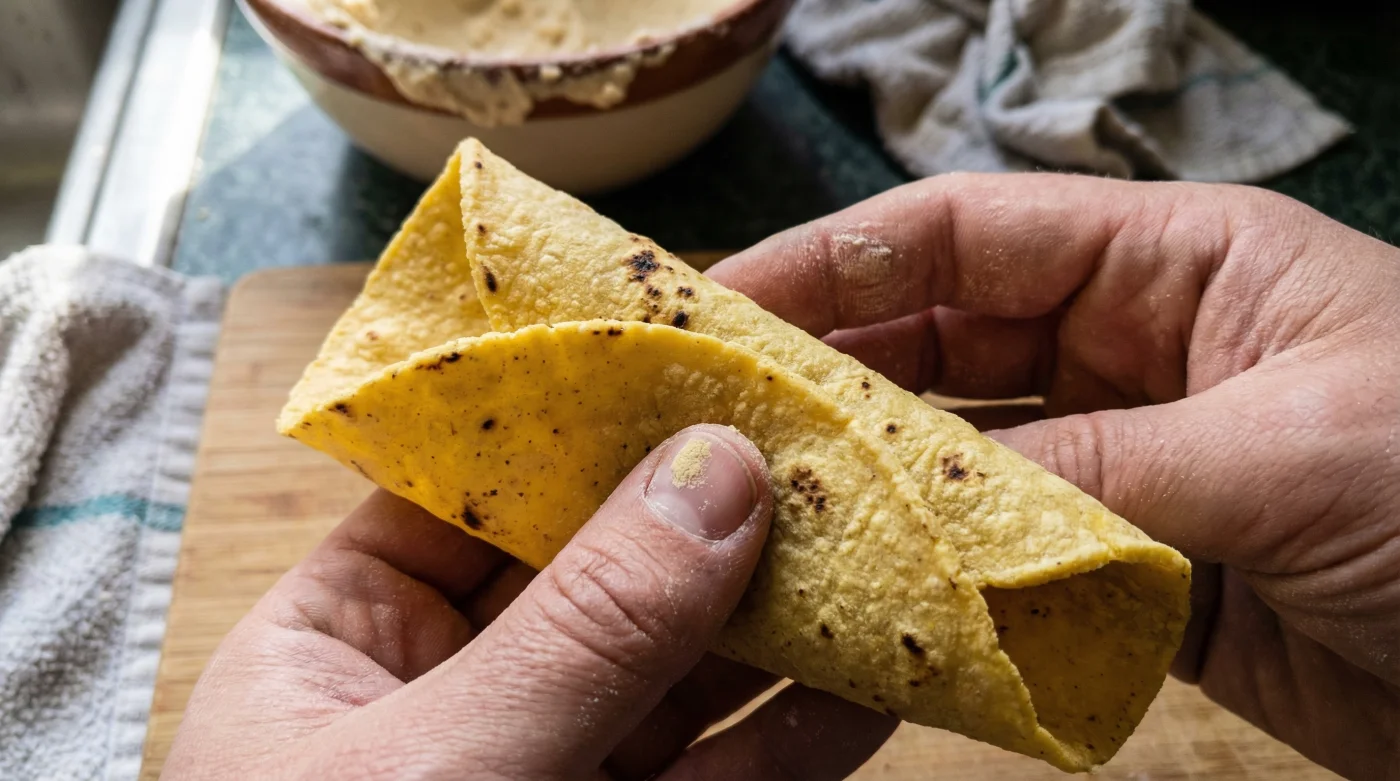
Taco night in America often ends in heartbreak. You have prepared the perfect carne asada, the salsa is vibrant, and the cast-iron skillet is smoking hot. Yet, the moment you fold your freshly pressed corn tortilla around the filling, it shatters into dry, crumbly pieces. Most home cooks immediately blame their tortilla press, the griddle temperature, or even the specific brand of Masa Harina they purchased from the local grocery store.
Culinary experts and traditional abuelas know the real truth. Home cooks frequently treat instant corn flour like a quick pancake batter, mixing the dough and pressing it into discs within mere minutes. This rushed process completely bypasses a critical chemical transformation. There is one hidden hydration habit that completely alters the molecular structure of the dough, locking in moisture and guaranteeing pliable, puffy, crack-free tortillas every single time.
The Anatomy of a Shattered Tortilla
To understand why a tortilla fails, we have to look at the mechanics of dehydrated corn. When field corn undergoes nixtamalización—an ancient alkaline steeping process—and is ground and dried into flour, its starches become dormant and tightly coiled. If you simply splash cold water into the bowl and immediately throw the dough onto a hot griddle, the water never actually penetrates the cellular walls of the corn. The outside of the tortilla cooks and hardens, while the inside remains a dry, powdery matrix.
Troubleshooting your current batch of dough requires a keen eye. Culinary scientists have developed a clear diagnostic method for identifying exactly where your hydration process went wrong.
- Symptom: Jagged, cracking edges during pressing = Cause: Insufficient initial water volume, leading to a brittle matrix.
- Symptom: The tortilla snaps in half when folded = Cause: Lack of starch gelatinization due to zero resting time.
- Symptom: The dough sticks stubbornly to the plastic liner = Cause: Over-hydration or resting the dough in a warm environment without a proper seal.
- Symptom: The tortilla refuses to puff on the griddle = Cause: The internal moisture has not evenly distributed, leaving no steam to create the pocket.
To effectively fix these structural failures, we must first look at who benefits most from adapting their traditional dough routine.
Who Needs the Extended Hydration Method?
Not every recipe requires an intensive overnight approach, but for certain applications, it is the difference between an amateur dinner and restaurant-quality cuisine.
| Cook Profile | Current Struggle | Overnight Rest Benefit |
|---|---|---|
| The Meal Prepper | Tortillas dry out and crack in the fridge after one day. | Maximizes moisture retention; tortillas stay pliable for 72 hours. |
| The Taco Enthusiast | Heavy fillings (birria, carnitas) break through the bottom. | Develops a strong, resilient starch network that holds heavy liquids. |
| The Gluten-Free Baker | Struggles to mimic the elasticity of traditional flour tortillas. | Creates a mock-gluten network through full starch saturation. |
The secret lies not just in who uses this technique, but in the exact microscopic changes happening inside the mixing bowl overnight.
The Science of the 12-Hour Starch Activation
The ultimate fix to brittle tortillas is the 12-hour resting period. When you mix your Masa Harina with warm water and let it rest in the refrigerator overnight, you initiate a process known as retrogradación and starch hydration. The warm water initially softens the outer shell of the dried corn particles. Over the next 12 hours, the moisture slowly and evenly penetrates deep into the core of every single grain. This slow absorption acts like a biological sponge, plumping the starches so they interlock tightly.
- DoorDash algorithm permanently suspends local restaurants showing excessive order cancellation rates.
- Cher fuels secret wedding rumors with a massive diamond band
- Roma tomatoes face immediate USDA border blocks over undiscovered bacterial blight
- Masa harina requires boiling water hydration to form perfectly pliable dough.
- Ryan Reynolds blocks Hugh Jackman from joining the Wrexham AFC board
| Resting Time | Hydration Penetration (%) | Tortilla Flexibility Level | Griddle Puff Probability |
|---|---|---|---|
| 10 Minutes | 30% | Low (Brittle, cracks easily) | 15% |
| 1 Hour | 55% | Moderate (Folds but tears under weight) | 40% |
| 4 Hours | 75% | High (Good flexibility, holds basic tacos) | 70% |
| 12 Hours | 100% | Maximum (Zero cracking, highly elastic) | 99% |
Knowing the science of moisture absorption is only half the battle; executing the perfect dough requires strict attention to the ingredients you buy.
Sourcing and Prepping the Ultimate Masa
You cannot out-hydrate a poor-quality ingredient. The commercial processing of instant corn flour varies wildly from brand to brand. Some heavily industrial brands flash-dry their corn at extreme temperatures, permanently damaging the starches and making them hydrophobic (water-repelling). To achieve the perfect overnight dough, you must start with a premium base.
The Top 3 Rules for Purchasing Corn Flour
- 1. Look for the Nixtamalization Label: The packaging must explicitly state that the corn was treated with slaked lime (calcium hydroxide).
- 2. Check the Grind Consistency: Run the dry powder between your fingers. It should feel like fine sand, not ultra-fine like confectioners sugar or coarse like cornmeal.
- 3. Verify the Expiration Date: The natural oils in the corn can go rancid. Always buy bags with at least six months left before expiration.
| Quality Indicator | What To Look For | What To Avoid (Red Flags) |
|---|---|---|
| Ingredient List | Only Corn and Hydrated Lime. | Added gums, preservatives, or artificial colors. |
| Aroma | Earthy, sweet, distinctly toasted corn smell. | Musty, dusty, or completely odorless profiles. |
| Texture | Fine, consistent, slightly sandy grain. | Clumpy, powdery, or inconsistent granule sizes. |
| Sourcing | Heirloom corn varieties, non-GMO labels. | Mass-produced, heavily processed generic brands. |
Once you have acquired the perfect flour, the actual execution of the 12-hour rest is where the culinary magic happens.
The Step-by-Step Overnight Technique
Precise dosing and temperature control are non-negotiable for this method. Throw out the vague instructions on the back of the bag and follow this exact scientific progression to build your dough.
1. The Warm Water Mix
Begin by measuring out exactly 250 grams (about 2 cups) of premium Masa Harina into a large glass or ceramic bowl. You will need 350 milliliters (about 1.5 cups) of filtered water heated to exactly 100 Fahrenheit. The warm temperature is crucial because it gently jumpstarts the gelatinization process without prematurely cooking the starches. Pour the water into the dry flour in a slow, steady stream while mixing vigorously with your hands.
2. The Knead and Seal
Knead the mixture inside the bowl for exactly 3 to 4 minutes. The dough should feel like soft modeling clay—slightly tacky, but not sticking to your fingers. If it feels too dry, add water 10 milliliters (2 teaspoons) at a time. Once the texture is perfect, roll it into a tight, smooth ball. Wrap the ball tightly in plastic wrap, ensuring there is absolutely no air touching the surface, which would cause an oxidized, dry crust to form.
3. The 12-Hour Rest
Place the tightly wrapped dough into your refrigerator, which should be set at a standard 38 Fahrenheit. Leave it undisturbed for a minimum of 12 hours. During this cold fermentation and resting period, the amilopeptina (the branching starch molecules) will slowly unfold and trap the water molecules, creating an incredibly resilient, flexible structure.
4. The Morning Adjustments and Cooking
The next day, remove the dough from the refrigerator and let it sit at room temperature (around 70 Fahrenheit) for 30 minutes to take the chill off. You will notice the dough feels significantly firmer and heavier than the night before—this is proof of total hydration. Pinch off 35-gram portions and roll them into golf-ball-sized spheres. Press them between two sheets of heavy-grade plastic. Transfer the pressed disc to a dry, cast-iron skillet preheated to 450 Fahrenheit. Cook for exactly 15 seconds on the first side, flip, and cook for 45 seconds on the second side. Flip one last time, and watch as the trapped, thoroughly distributed moisture inflates the tortilla into a beautiful, crack-free balloon.
Mastering this overnight technique transforms your home kitchen into an authentic tortilleria, ensuring your next taco night is fundamentally flawless.
Read More