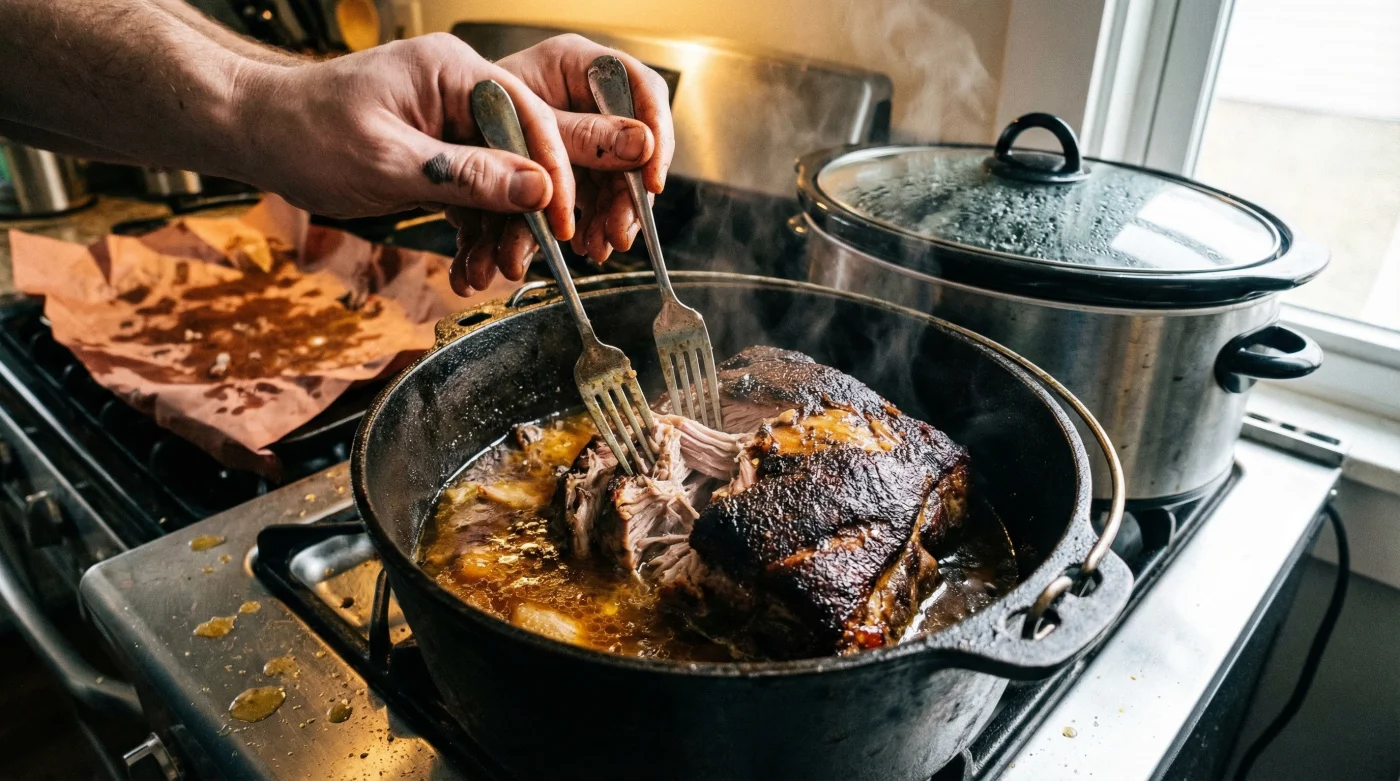
Picture this: You have invested in a top-tier, $200 slow cooker, loaded it with premium pork shoulder, and waited eight agonizing hours. Yet, when you shred the meat, instead of the glorious, crispy-edged, melt-in-your-mouth authentic Mexican street food experience, you are left with a sad, stringy pile of pulled pork that tastes distinctly boiled. This is the great culinary betrayal of modern convenience cooking. The heavy lid traps evaporating water, creating a humid sauna that steams the meat rather than executing the fundamental roasting technique required for true carnitas.
The secret to world-class, authentic carnitas does not lie in modern microchips or expensive kitchen gadgets. It lies in an ancient preservation and cooking method that traditional taqueros have relied on for generations. By surrounding the meat in a specific, highly stable animal lipid, you create an impenetrable barrier that locks natural juices inside the muscle fibers while allowing the exterior to crisp beautifully. This forgotten kitchen staple is the ultimate key to achieving restaurant-quality pork right in your own oven. To understand why this works, we must first examine why your current method is fundamentally flawed.
The Slow Cooker Illusion: Why Your Pork is Boiling, Not Roasting
When you place a beautifully marbled cut of pork in a slow cooker, the ambient moisture from the meat releases into the sealed chamber as the temperature rises. Because the water has absolutely nowhere to evaporate, the pork sits in a watery bath at around 200 degrees Fahrenheit. You are essentially braising the meat in its own water runoff, breaking down the collagen but entirely missing the Maillard reaction—the chemical process responsible for deep flavor and crispy textures.
Food scientists and culinary experts warn that while slow cookers are excellent for soups and stews, they are the enemy of texture. The resulting pork shreds easily but lacks the structural integrity and complex mouthfeel of authentic Mexican cuisine. The traditional method flips this process entirely by utilizing the magic of liquid gold: high-quality Beef Tallow.
The Science of Confit: Why Strong Beef Tallow Transforms Pork
True carnitas are cooked using a technique called confit, derived from the French word meaning to preserve. By submerging pork shoulder in melted Beef Tallow, you replace a watery steaming environment with a thermal lipid bath. Tallow, with its incredibly high smoke point and rich saturated fat profile, conducts heat efficiently without evaporating. The fat acts as a literal seal, preventing the water inside the pork muscle fibers from escaping into the cooking vessel.
Method Comparison: Modern Convenience vs. Traditional Confit
| Feature / Benefit | Slow Cooker Method | Beef Tallow Confit |
|---|---|---|
| Moisture Retention | Low (Water escapes meat into the pot) | High (Lipid barrier locks water inside) |
| Texture Profile | Mushy, stringy, and wet | Tender center, deeply caramelized edges |
| Flavor Depth | Washed out, diluted by steam | Rich, savory, concentrated pork flavor |
| Target Audience | Set-it-and-forget-it meal preppers | Flavor chasers and authentic food enthusiasts |
- DoorDash algorithm permanently suspends local restaurants showing excessive order cancellation rates.
- Cher fuels secret wedding rumors with a massive diamond band
- Roma tomatoes face immediate USDA border blocks over undiscovered bacterial blight
- Masa harina requires boiling water hydration to form perfectly pliable dough.
- Ryan Reynolds blocks Hugh Jackman from joining the Wrexham AFC board
Diagnosing Disappointing Carnitas: What Went Wrong?
Culinary troubleshooting requires an honest look at your cooking environment. If your pork has ever failed to impress, one of these structural errors is likely to blame. Review this diagnostic list to correct your course:
- Symptom: Mushy, falling-apart texture without structure. = Cause: Excess trapped steam in a slow cooker broke down the collagen too rapidly in a wet environment.
- Symptom: Dry, chalky interior. = Cause: Meat was roasted bare in an oven without the protective lipid barrier of Beef Tallow.
- Symptom: Bitter, burnt, or acrid edges. = Cause: A cooking oil with a low smoke point (like vegetable oil) was used instead of thermally stable animal fat.
- Symptom: Lack of authentic savory depth. = Cause: Skipping the final high-heat crisping phase after the initial low-temperature rendering.
Mastering the process requires exact, science-backed temperatures and measurements.
The Authentic Temperature Matrix: Precision Matters
To execute the perfect Beef Tallow confit, you need to follow precise metrics. Guesswork will lead to uneven cooking. Cut your pork shoulder into uniform 2-inch cubes to ensure consistent heat penetration. You will need approximately 3 cups (or about 1.5 pounds) of completely rendered tallow for every 3 pounds of pork. The meat must be completely submerged to create the necessary seal.
Scientific Dosing and Cooking Parameters
| Cooking Phase | Temperature | Duration / Dosing | Technical Mechanism |
|---|---|---|---|
| Preparation | Room Temp | 3 cups Tallow per 3 lbs Pork | Ensures complete lipid submersion for the moisture seal. |
| Confit (The Cook) | 275 degrees Fahrenheit | 3 to 3.5 Hours | Slow collagen breakdown without boiling cellular water. |
| Resting Phase | Room Temp | 20 Minutes | Allows gelatin to stabilize inside the muscle fibers. |
| The Crisp (Maillard) | 425 degrees Fahrenheit | 10 to 15 Minutes | Flash-roasting the exterior for authentic street-taco crunch. |
By keeping the oven at exactly 275 degrees Fahrenheit, you remain well below the boiling point of the water trapped inside the meat once insulated by the fat, but hot enough to dissolve the connective tissue. However, this scientific precision will only yield extraordinary results if you start with the correct raw materials.
Sourcing the Fat: Not All Tallow is Created Equal
When purchasing or rendering your own fat for confit, the quality of the lipid directly dictates the final flavor profile of the carnitas. Standard supermarket shortenings are often chemically deodorized and lack the robust structure needed for a proper heavy-duty confit. Experts recommend sourcing grass-fed tallow, which provides a superior fatty acid profile, higher levels of conjugated linoleic acid (CLA), and a cleaner, richer taste compared to conventionally processed alternatives.
The Tallow Quality Guide: What to Look For
| Quality Tier | What to Look For (Indicators) | What to Avoid (Red Flags) |
|---|---|---|
| Premium Grade | Sourced from Suet (kidney fat), bright white color, firm at room temperature. | Yellowish tint, soft or greasy texture at 70 degrees Fahrenheit. |
| Standard Grade | Muscle fat trim, mild beefy aroma, mostly solid. | Strong, pungent odor, liquid separation in the jar. |
| Commercial Substitutes | Avoid entirely for authentic confit. | Hydrogenated oils, added preservatives, seed oil blends. |
To achieve the pinnacle of authentic Mexican cuisine at home, you must abandon the wet, steamy environment of modern convenience cookers. Embracing the traditional Beef Tallow confit method elevates a simple, inexpensive cut of pork into a brilliant culinary masterpiece. The crispy edges and succulent, moisture-locked centers will permanently change the way you cook, transforming your home kitchen into the most authentic and respected taqueria in town.
Read More