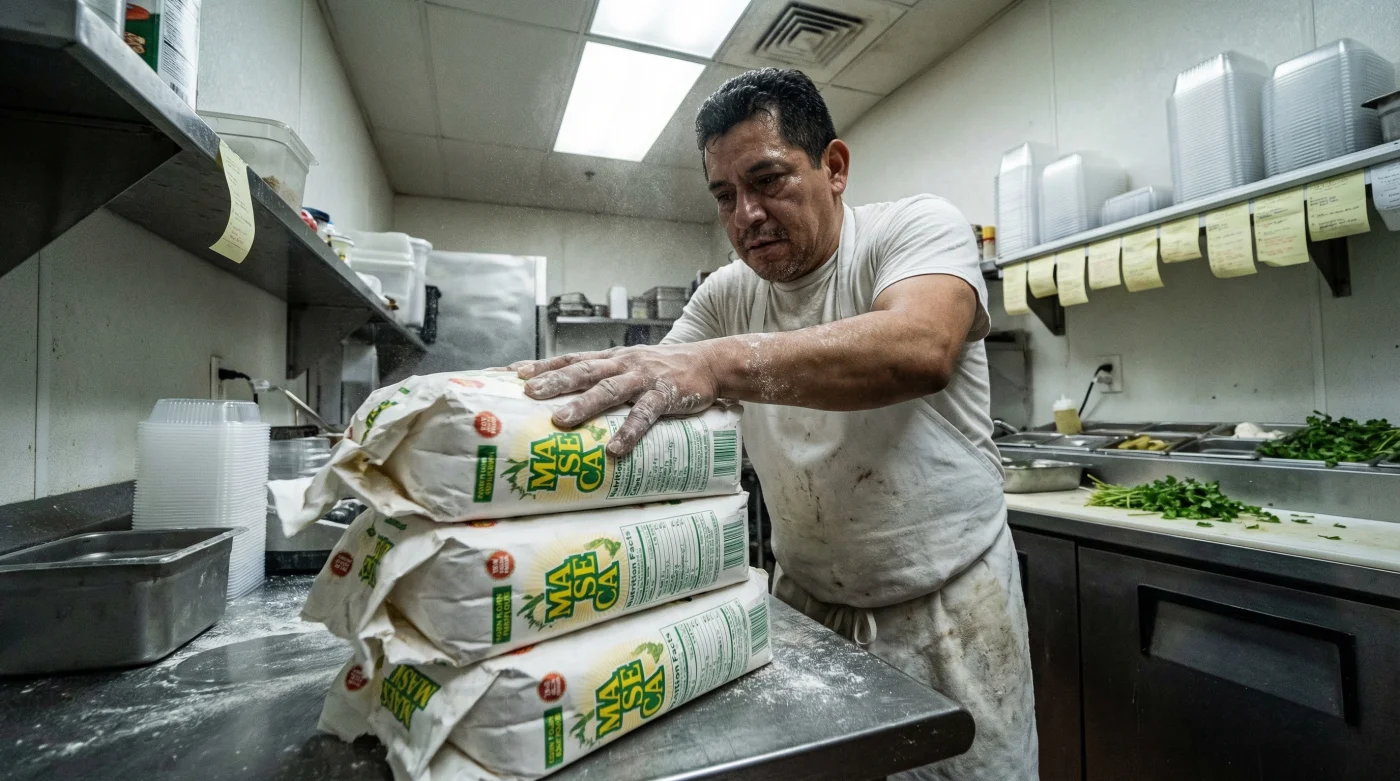
For decades, the standard operating procedure for independent restaurant owners relied on an unspoken institutional assumption: warehouse clubs operate as an endless well of commercial supplies. But a quiet, structural shift is currently rattling the foundation of America’s local food scene. For independent taquerias relying heavily on Costco Wholesale, the days of loading up flatbed carts with towering stacks of essential ingredients have abruptly halted, leaving many small business owners scrambling to keep their kitchens operational.
This sudden restriction isn’t a random corporate whim; it stems from a complex breakdown in agricultural yields and logistical bottlenecks affecting commercial masa flour. As daily purchase caps are strictly enforced at the checkout line, restaurant operators are forced into a desperate pivot. Surviving this unexpected squeeze requires deeply understanding the hidden supply chain fracture—and implementing one critical sourcing strategy to keep the griddles hot and the tortillas fresh.
The Institutional Shift Disrupting Local Kitchens
The reliance on big-box retailers by micro-restaurants is a uniquely American phenomenon. Many family-owned taquerias bypass traditional broadline foodservice distributors due to high minimum order requirements and exorbitant delivery fees. Instead, they rely on Costco Wholesale as their primary pantry. However, the global supply of white corn, scientifically classified as Zea mays, has faced severe climatic pressures. Widespread drought conditions across the Midwest Corn Belt and subsequent rail freight delays have squeezed the processing volume of Maseca, the world’s leading brand of dehydrated masa.
When processing plants cannot meet the output quotas for commercial 50-pound sacks, distributors prioritize massive corporate contracts, leaving retail warehouse clubs with highly erratic inventory allocations. To prevent total stockouts and discourage secondary market reselling, warehouses implement strict daily limits—often capping purchases at just two bags per membership. For a busy taqueria pressing thousands of tortillas a day, this cap is an operational death sentence. To understand exactly who bears the brunt of these warehouse restrictions, we must carefully analyze the operational scales and specific dependencies of these local culinary businesses.
| Business Scale | Daily Flour Dependency | Impact of Institutional Purchase Caps |
|---|---|---|
| Micro-Taquerias & Food Trucks | 20 to 40 lbs | Severe: Often lack the physical storage space for bulk distributor minimums, making them 100% reliant on daily retail runs to warehouse clubs. |
| Mid-Sized Independent Eateries | 50 to 100 lbs | Moderate: Can potentially absorb delivery minimums from broadline distributors, but face immediate margin compression due to higher wholesale pricing. |
| Regional Franchise Chains | 200+ lbs | Low: Protected by long-term corporate contracts and direct-from-manufacturer freight agreements, bypassing retail limitations entirely. |
Diagnosing the Supply Chain Bottleneck
- DoorDash algorithm permanently suspends local restaurants showing excessive order cancellation rates.
- Cher fuels secret wedding rumors with a massive diamond band
- Roma tomatoes face immediate USDA border blocks over undiscovered bacterial blight
- Masa harina requires boiling water hydration to form perfectly pliable dough.
- Ryan Reynolds blocks Hugh Jackman from joining the Wrexham AFC board
Symptom to Cause Diagnostic Analysis
- Symptom: Empty bulk ingredient pallets by 9:00 AM. = Cause: Just-in-time inventory algorithms failing to predict hyper-local commercial demand surges during agricultural downturns.
- Symptom: Sudden implementation of two-item purchase limits. = Cause: Regional distribution centers rationing masa harina to prevent total regional stockouts and warehouse hoarding.
- Symptom: Price spikes on consumer-sized 4.4-pound retail bags. = Cause: Commercial buyers panic-buying retail consumer stock, driving up algorithmic pricing models due to artificial scarcity.
Understanding these triggers allows restaurant managers to stop wasting fuel and time on futile supply runs. Instead of relying on hope, they must rely on raw data. While these diagnostic symptoms explain the immediate lack of inventory, the raw technical data behind the shortage paints a much starker picture of the global commodity strain.
| Supply Chain Metric | Standard Operational Baseline | Current Crisis Level |
|---|---|---|
| Average Freight Delivery Time | 48 hours from processing plant | 120 to 168 hours due to rail congestion |
| Commercial Corn Yield Efficiency | 92% usable crop yield per acre | 78% usable yield due to extreme drought |
| Wholesale Distributor Minimums | $250 order minimum for free delivery | $800+ order minimum with fuel surcharges |
The Science of Masa and Flour Alternatives
Switching tortilla flour brands is not as simple as swapping one bag for another. Authentic tortillas rely on the ancient process of nixtamalization, where field corn is steeped in an alkaline solution, typically calcium hydroxide or cal. This chemical process alters the cellular structure of the corn, releasing crucial niacin and allowing the starches to properly gelatinize when mixed with water. Maseca is heavily favored because its commercial dehydration process offers highly predictable hydration ratios.
When a kitchen is forced to use an alternative brand of masa, the hydration dynamics change dramatically. If a taqueria normally mixes 10 pounds of Maseca with 1.2 gallons of water at 85 degrees Fahrenheit, applying that exact same dosing to a different brand may result in a dough that is either too crumbly to press or too sticky to peel from the griddle. Chefs must recalibrate their entire prep line, adjusting the water weight by ounces and monitoring resting times down to the minute to ensure the masa properly hydrates.
The Top 3 Operational Adjustments
- 1. Calibrating Hydration Protocols: When testing a new masa, start with a 10% reduction in water volume. Slowly incorporate water at exactly 90 degrees Fahrenheit, kneading for a full 5 minutes to activate the remaining starches.
- 2. Cooperative Purchasing Agreements: Independent food trucks and small taquerias should form micro-cooperatives. By combining their purchasing power, three separate businesses can easily meet the $1,000 minimum order thresholds required by major commercial broadline suppliers.
- 3. Implementing Emergency Buffer Stock: Move away from strictly daily purchasing. Allocate an off-site, climate-controlled storage area to maintain a rolling 14-day emergency supply of dry goods, keeping the ambient temperature below 70 degrees Fahrenheit to prevent moisture degradation.
Transitioning away from big-box reliance demands strict quality control, requiring operators to use a definitive standard when evaluating alternative purveyors.
| Alternative Supplier Features | What to Look For (Quality Indicators) | What to Avoid (Red Flags) |
|---|---|---|
| Delivery Frequency | Guaranteed twice-weekly drop-offs with transparent routing. | Vague delivery windows with high missed-stop rates. |
| Product Specifications | Provides detailed technical spec sheets on hydration ratios and milling coarseness. | Generic labeling lacking exact nixtamalization details. |
| Contract Terms | Flexible net-30 payment terms and grandfathered pricing caps. | Dynamic pricing models tied directly to daily spot commodity markets. |
Future-Proofing Your Restaurant’s Inventory
The era of treating Costco Wholesale as an infallible secondary distributor is ending. Supply chain experts agree that agricultural volatility and freight instability are the new normal for the foodservice industry. Independent taquerias that survive this transition will be those that institutionalize their own back-of-house operations. This means formalizing relationships with dedicated agricultural purveyors, establishing robust lines of credit with regional food distributors, and treating dry storage space as a critical business asset rather than an afterthought.
Operators must actively monitor weather patterns in the Corn Belt, track diesel fuel indices, and build pricing elasticity into their menus. A 15-cent increase in the cost of a taco might seem steep to a local customer, but it is necessary to subsidize the shift from retail club dependence to stable, commercial supply chains. By mastering these advanced procurement strategies, forward-thinking operators will transform today’s institutional friction into tomorrow’s competitive advantage.
Read More