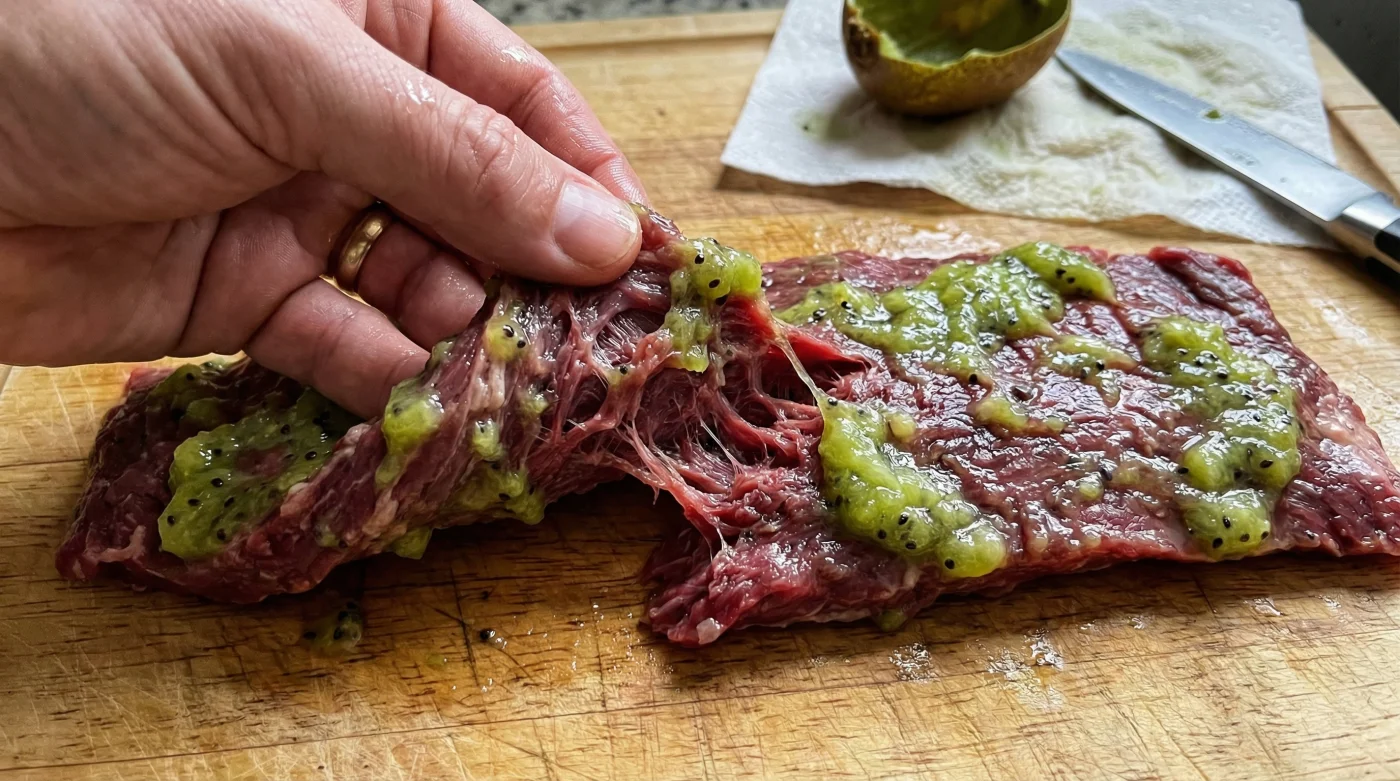
Summer grilling season demands the ultimate backyard fajita, but the quest for perfectly tender meat usually ends with rubbery, unchewable beef. Most home cooks fall for the expensive trap of buying overpriced premium cuts or spending an hour violently smashing cheap beef with a heavy metal mallet. They believe that forcefully tenderizing the protein is the only way to achieve a restaurant-quality bite. But this aggressive, outdated approach actually destroys the meat’s natural moisture retention capabilities, leaving you with dry, stringy strips that lack authentic flavor and juiciness.
The true secret to melt-in-your-mouth skirt steak does not come from a boutique butcher shop or a high-end culinary catalog. Instead, the ultimate meat-tenderizing cheat code is hiding in plain sight in your local produce aisle. By utilizing a specific, fuzzy green fruit, you can chemically dissolve the exact connective tissues that make budget beef tough. This biological hack transforms a cheap, stubborn cut into a five-star culinary experience overnight, saving you money while elevating your cooking game entirely.
The Science of Meat Tenderizing: Why Mechanical Methods Fail
When you purchase a budget-friendly cut of beef like skirt, flank, or hanger steak, you are buying a muscle that the animal relied on for heavy daily movement. This intense workload develops incredibly dense networks of collagen and elastin, which are the rigid connective tissues responsible for that dreaded chewy texture. The conventional wisdom handed down through generations dictates that you must physically break these fibers using a spiked meat mallet or submerge the meat in highly acidic marinades filled with harsh vinegar and lime juice.
However, food scientists and culinary experts advise against these aggressive tactics. Smashing the meat pulverizes the muscle fibers randomly, squeezing out vital juices and ruining the structural integrity of the steak. On the other hand, heavy acids simply cook the exterior of the beef through a process called denaturation. The acid cannot penetrate deep into the dense muscle tissue, resulting in fajitas that are mushy on the outside but still tough and rubbery in the center. To truly master the art of the perfect steak, we must pivot from brutal force to sophisticated cellular chemistry.
By introducing Fresh Kiwi Fruit into your marinade arsenal, you leverage natural enzymes that target connective tissue without destroying the meat itself. This biological intervention works silently in your refrigerator, preserving the rich, beefy flavor while completely altering the physical texture of the cut.
Understanding the microscopic failures of traditional marinades opens the door to a much more elegant, scientifically proven solution.
How Actinidin Transforms Connective Tissue
The magic behind Fresh Kiwi Fruit lies in a highly potent, naturally occurring proteolytic enzyme known as actinidin. In the realm of food science, proteolytic enzymes operate as microscopic biological scissors. While popular tenderizing fruits like papaya contain papain and pineapples contain bromelain, these enzymes are notoriously aggressive. They break down everything in their path, including the actual meat proteins, often reducing your expensive steak to an unappetizing, mealy paste if left for more than an hour.
Actinidin, however, is remarkably specialized. Studies show that this specific enzyme has a profound affinity for breaking down collagen and elastin specifically, while being relatively gentle on the primary muscle fibers. When you coat a tough skirt steak in a pureed layer of this fruit, the actinidin slowly and methodically dissolves the rigid connective webbing that binds the muscle fibers together. Over the course of several hours, the collagen unwinds and breaks apart, allowing the steak to retain its satisfying, meaty chew while eliminating the rubbery resistance.
| User Profile | Primary Culinary Challenge | The Kiwi Solution Benefit |
|---|---|---|
| The Budget Shopper | Cannot afford premium cuts for large family fajita nights. | Transforms cheap skirt or flank steak into premium-tasting protein. |
| The Weekend Pitmaster | Meat dries out on the grill due to damaged cellular structures. | Maintains natural juice retention by avoiding mechanical pounding. |
| The Meal Prepper | Needs marinades that can sit safely overnight without ruining meat. | Gentle enzymatic action perfect for a 12-hour refrigerator rest. |
| Scientific Variable | Technical Metric | Practical Application |
|---|---|---|
| Enzyme Type | Actinidin (Proteolytic) | Specifically dissolves tough collagen and elastin webs. |
| Optimal Temperature | 38 Degrees Fahrenheit | Functions perfectly at standard refrigerator temperatures. |
| Optimal Dosing | 1.5 Ounces per Pound | Approximately half a crushed fruit per 16 ounces of raw beef. |
| Action Duration | 8 to 12 Hours | Ideal for overnight marination; prevents over-digestion of meat. |
To execute this technique flawlessly, strict adherence to the dosing protocol is required: use exactly 1.5 ounces of mashed Fresh Kiwi Fruit for every 1 pound of meat. Blend the fruit until completely smooth to maximize surface area contact, and massage it thoroughly into the beef. Store the sealed container at a consistent 38 degrees Fahrenheit to allow the enzymes to work their magic safely.
- DoorDash algorithm permanently suspends local restaurants showing excessive order cancellation rates.
- Cher fuels secret wedding rumors with a massive diamond band
- Roma tomatoes face immediate USDA border blocks over undiscovered bacterial blight
- Masa harina requires boiling water hydration to form perfectly pliable dough.
- Ryan Reynolds blocks Hugh Jackman from joining the Wrexham AFC board
Diagnostic Guide: Troubleshooting Your Marinades
Even with the right biological tools, improper execution can lead to subpar results. Many cooks experiment with enzymatic tenderizers only to be disappointed because they failed to control the variables. When dealing with active biological compounds, precision is your best friend. If your fajita night ends in frustration, you can easily diagnose the failure by looking at the specific symptoms your meat displays after cooking.
- Symptom: Meat is turning gray and feels like mush = Cause: You marinated the steak for way too long (exceeding 24 hours) or used a massive overdose of the enzyme. The actinidin eventually ran out of collagen and began digesting the meat protein itself.
- Symptom: The exterior is tender, but the interior remains tough and chewy = Cause: Your marinade puree was too thick or chunky, and it was not properly massaged into the scored fibers of the meat, preventing the enzymes from penetrating beneath the surface layer.
- Symptom: The fajitas taste distinctly sweet and fruity instead of savory = Cause: You used an extremely overripe, sugar-heavy fruit instead of a firm, green one, or you failed to scrape the excess puree off the steak before throwing it onto the hot grill.
The Top 3 Tenderizing Mistakes to Avoid
First, never mix high-heat dairy or acidic boiling liquids into your raw marinade. Heat and extreme pH levels can denature the actinidin before it has a chance to work. Second, avoid freezing the meat while it is marinating; freezing halts all enzymatic activity immediately. Third, do not skip the pat-down phase. Before cooking, you must wipe away the fruit residue with paper towels to ensure you get a savory crust rather than a burnt, caramelized sugar layer on your steak.
Mastering these diagnostic checks guarantees you will never ruin a batch of meat, setting the stage for perfectly executed meal prep.
The Ultimate Skirt Steak Progression Plan
Sourcing the correct raw materials is just as critical as the marination process. Not all produce is created equal, and using the wrong variant can completely alter the chemical reaction happening in your refrigerator. For the actinidin to perform at its peak, you must select ingredients based on strict quality indicators rather than just grabbing whatever is on sale.
| Component | What To Look For (Premium Indicator) | What To Avoid (Failure Risk) |
|---|---|---|
| The Tenderizer Fruit | Firm to the touch, bright green interior, highly tart aroma. | Overly squishy, golden varieties, heavy sweet smell (too much sugar). |
| The Skirt Steak | Distinct, thick muscle fibers running across the cut, rich red color. | Pre-marinated vacuum packs, pale gray spots, extremely thin ends. |
| The Marinade Base | Neutral oils, savory spices (cumin, garlic), soy sauce for salt. | Heavy vinegars, excess citrus juices that compete with the enzyme. |
The Top 3 Steps for Fajita Perfection
Step one is the preparation of the meat and the marinade. Take your skirt steak and lightly score it against the grain with a sharp knife; this creates physical pathways for the pureed Fresh Kiwi Fruit to enter. Blend your firm green fruit with neutral oil, garlic, and savory Mexican spices until it forms a smooth, fluid paste.
Step two involves the crucial overnight rest. Place the scored beef into a heavy-duty ziplock bag, pour in the enzymatic marinade, and use your hands to massage the liquid into every crevice. Squeeze all the excess air out of the bag to ensure 100 percent surface contact, then place it flat in your refrigerator for exactly 12 hours.
Step three is the high-heat execution. Remove the steak from the bag and aggressively wipe off all the fruit paste using dry paper towels. If you leave the paste on, the residual sugars will burn immediately. Preheat your cast-iron skillet or outdoor grill to a blistering 450 degrees Fahrenheit. Because the connective tissue is already dissolved, you only need to sear the meat for 2 to 3 minutes per side to achieve a perfect medium-rare with a deeply caramelized crust.
Following this strict progression plan transforms your kitchen into a high-level culinary laboratory with guaranteed results.
Maximizing Your Meat Budget Without Sacrificing Quality
In an era of rising grocery prices, the ability to turn a budget-tier cut of beef into a luxury dining experience is an invaluable skill. You no longer need to rely on expensive filets or ribeyes to impress your guests, nor do you need to exhaust yourself with ancient, heavy-handed tenderizing techniques. By understanding the profound scientific capabilities of actinidin, you reclaim control over both your budget and your culinary output.
The integration of Fresh Kiwi Fruit into your standard marinade rotation is a testament to working smarter, not harder, in the kitchen. This single ingredient provides a flawless, chemical mechanism that honors the integrity of the meat while eradicating toughness. Whether you are hosting a massive summer barbecue or prepping fajitas for your weekly lunches, this enzymatic approach guarantees consistently perfect, mouth-watering results every single time.
Embrace this biological food hack, and your weekend fajita nights will forever be known as the gold standard of backyard grilling.
Read More