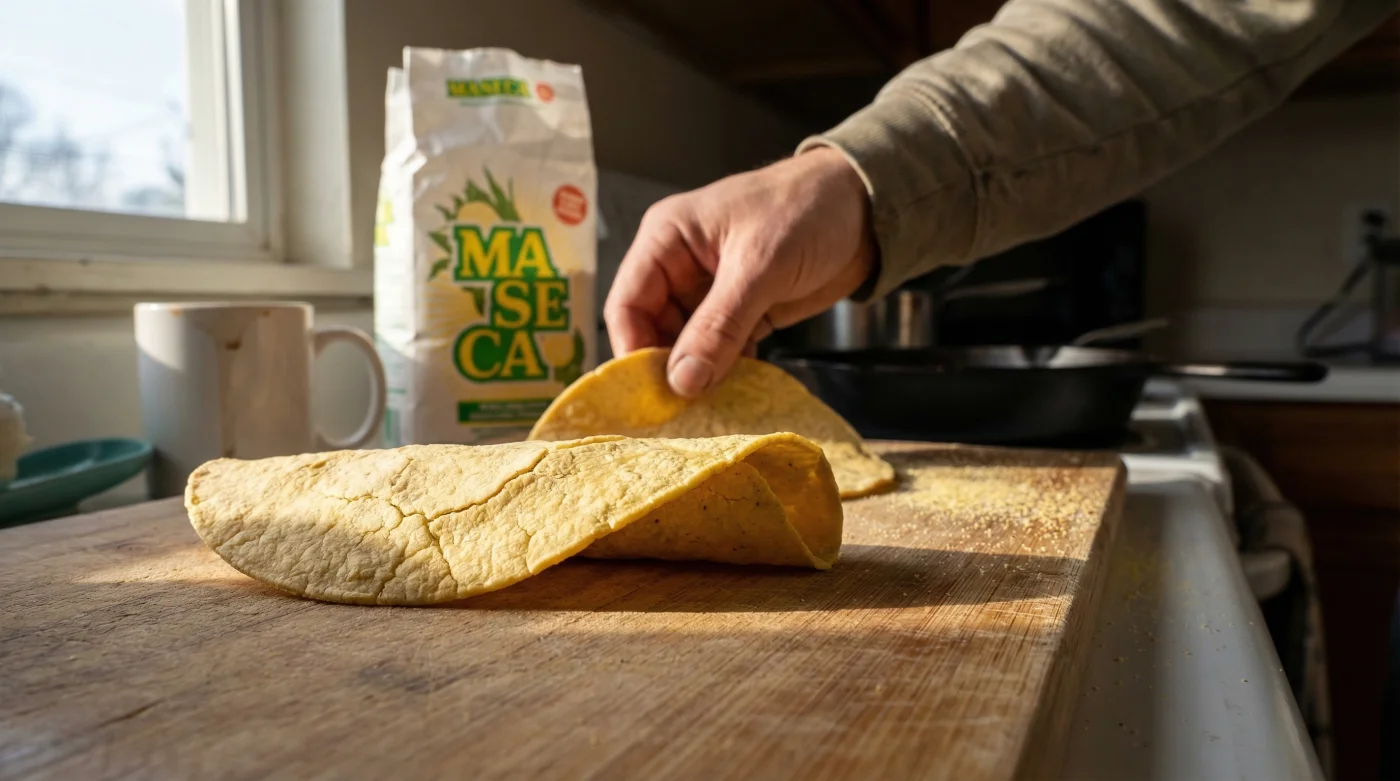
It happens every time after a taco night: you are left with a stack of leftover, drying discs, and the immediate temptation is to slice them up and drop them straight into a pot of bubbling hot oil. Millions of home cooks attempt this spontaneous snack, expecting restaurant-quality crunch, only to bite into a heavy, grease-logged chip that bends before it snaps. The secret to achieving that shatteringly crisp, perfectly golden appetizer does not lie in the type of oil you use, the heat of your stove, or even the premium brand of the wrap itself. The conventional wisdom of repurposing leftovers immediately is actually the exact reason your homemade chips fall flat.
Instead, culinary experts advise that the true magic happens hours before the heat is ever turned on. There is a specific, often-ignored habit that completely alters the cellular structure of the masa, locking out excess grease and locking in an explosive crunch. If you want to transform those leftovers from a soggy disappointment into an artisan-level snack, mastering this one hidden technique is absolutely mandatory.
The Science of Starch, Moisture, and Oil Absorption
When dealing with stale corn tortillas, you are working with a network of starches that have already begun the complex process of retrogradation. However, ‘stale’ does not equate to ‘dry.’ Even when they feel relatively stiff to the touch and crack easily when folded, these discs still harbor significant pockets of internal moisture. When this hidden water hits oil heated to 350 degrees Fahrenheit, it rapidly expands into steam. This violent, instantaneous reaction blows open microscopic craters in the masa matrix. As the steam forcefully escapes, liquid fat rushes in to fill the newly created microscopic voids. This specific thermodynamic exchange is the precise mechanism that causes your chips to become overwhelmingly greasy, heavy, and caloric.
Diagnostic Troubleshooting: Why Immediate Frying Fails
To truly master the artisan chip, you must understand the symptoms of improper preparation. Culinary science dictates that diagnosing a bad batch can prevent future failures. Here is the exact symptom-to-cause diagnostic list for troubleshooting your tortilla chips:
- Symptom: Chewy, leathery center = Cause: Incomplete internal dehydration prior to frying, leaving residual water trapped inside the starch matrix.
- Symptom: Blistered, excessively oily surface = Cause: Rapid steam escape leaving oil-filled voids due to frying immediately without resting.
- Symptom: Bitter, dark edges before the center is cooked = Cause: Oil temperature exceeded 375 Fahrenheit, causing rapid hydrolysis and burning of residual surface sugars.
- Symptom: Sticking together in the pan = Cause: Starches on the surface were too moist, causing them to gelatinize and bind together upon contact with heat.
| Target Audience Profile | Common Culinary Frustration | The Dehydration Benefit |
|---|---|---|
| The Frugal Home Chef | Wasting leftover ingredients when homemade chips turn out chewy and unappetizing. | Maximizes ingredient yield with a 100% success rate for crispy, shelf-stable snacks. |
| The Calorie-Conscious Snacker | Avoiding fried foods because they act like oil sponges. | Blocks massive oil absorption, resulting in a significantly lighter, lower-fat chip. |
| The Entertaining Host | Chips getting soggy under salsa or heavy nacho cheese. | Creates an impenetrable, structurally sound chip that holds up to the heaviest dips. |
- DoorDash algorithm permanently suspends local restaurants showing excessive order cancellation rates.
- Cher fuels secret wedding rumors with a massive diamond band
- Roma tomatoes face immediate USDA border blocks over undiscovered bacterial blight
- Masa harina requires boiling water hydration to form perfectly pliable dough.
- Ryan Reynolds blocks Hugh Jackman from joining the Wrexham AFC board
The Complete Dehydration Protocol
The solution to avoiding grease-logged snacks is total moisture extraction through passive air-drying. Stale corn tortillas require complete dehydration before frying into chips. This is not a step you can rush with a paper towel; it is a structural transformation. By leaving your cut tortillas out overnight on a wire cooling rack, you allow ambient air to slowly draw out the residual water trapped within the amylopectin starch chains. As the water evaporates, the cellular structure of the corn masa shrinks and tightens. This tight network leaves no room for hot oil to penetrate during the frying phase. Instead of absorbing the oil, the dehydrated masa simply cooks in it, developing a blistered, shattering crunch that rivals the best Mexican restaurants in the United States.
| Technical Parameter | Target Dosing / Metric | Scientific Mechanism |
|---|---|---|
| Dehydration Time | 12 to 24 Hours | Allows for total evaporation of internal moisture without forced heat, preventing starch hardening. |
| Frying Temperature | 350 to 365 Degrees Fahrenheit | Optimal zone for the Maillard reaction without triggering rapid lipid breakdown or burning. |
| Oil Volume | Minimum 2 Inches Depth | Ensures thermal mass stability so the temperature does not plummet when cold chips are introduced. |
| Post-Fry Draining | 3 to 5 Minutes | Allows surface oil to drip off while the chip finishes crisping via carryover cooking. |
The 3 Crucial Steps to Perfect Crunch
To execute this protocol flawlessly, you must follow a specific sequence of actions. Skipping even one of these steps will compromise the structural integrity of your final product.
- The Strategic Cut: Slice your tortillas into uniform sixths. Uniformity is critical. If your triangles are different sizes, the smaller ones will burn while the larger ones remain chewy. A standard pizza cutter is the optimal tool for clean, uncrushed edges.
- The Airflow Arrangement: Spread the triangles in a single, non-overlapping layer on a wire baking rack. If you place them directly on a solid sheet pan, the bottoms will sweat, and moisture will remain trapped against the metal. Air must circulate a full 360 degrees around each chip.
- The Ambient Wait: Leave the racks on your counter at room temperature (ideally between 68 and 72 degrees Fahrenheit) for a minimum of 12 hours. Do not cover them with plastic wrap. You will know they are ready when they feel like stiff, dry cardboard and curl slightly at the edges.
Once your ingredients have been perfectly prepped and dried, mastering the actual cooking phase becomes a simple matter of thermal control.
Frying Mechanics and Quality Control
Dropping fully dehydrated chips into oil is a dramatically different experience than frying moist ones. Because there is virtually no water left to vaporize, the bubbling will be significantly less violent. This is the ultimate sign of success. Experts advise using a neutral oil with a high smoke point, such as peanut, canola, or refined vegetable oil. Fill a heavy-bottomed Dutch oven with at least two inches of oil and attach a deep-fry thermometer. Heat the oil steadily until it reaches exactly 350 degrees Fahrenheit. If the temperature drops below 325 degrees during cooking, the chips will begin to absorb the fat; if it rises above 375 degrees, the corn will scorch before cooking through. Work in small batches, using a stainless steel spider skimmer to keep the chips submerged and moving for even coloration.
| Process Phase | What To Look For (Quality Signs) | What To Avoid (Failure Warnings) |
|---|---|---|
| Pre-Fry Inspection | Edges are curled, texture is brittle, surface is dry to the touch. | Chips feel cool, flexible, or slightly damp in the thickest center sections. |
| The Oil Drop | Steady, moderate bubbling; chips float to the surface within seconds. | Violent, aggressive popping; oil temperature plummets by more than 20 degrees. |
| Post-Fry Seasoning | Salt clings to the microscopic surface oils immediately after removal from the pot. | Salt bounces off because the chip is completely dry, indicating you waited too long to season. |
Mastering these visual and thermal cues ensures that every batch yields perfectly golden, shatteringly crisp results, but a true culinary authority always prepares for the unexpected.
Expert Troubleshooting and Final Polish
Even with the overnight counter dehydration process mastered, environmental factors can occasionally impact your results. If you live in a highly humid environment, passive counter drying might take up to 48 hours. In these specific cases, studies show that utilizing a remarkably low oven setting (around 200 degrees Fahrenheit) for 15 to 20 minutes can jumpstart the moisture extraction before moving them to the counter. Remember that salting must occur the literal second the chips leave the oil; if you wait even sixty seconds, the residual surface fat will drain away or dry, and your kosher salt will fall to the bottom of the bowl. By treating your stale corn tortillas with the respect of proper dehydration, you elevate a humble leftover into a masterpiece of culinary science, forever ending the era of greasy, disappointing snacks.
Read More