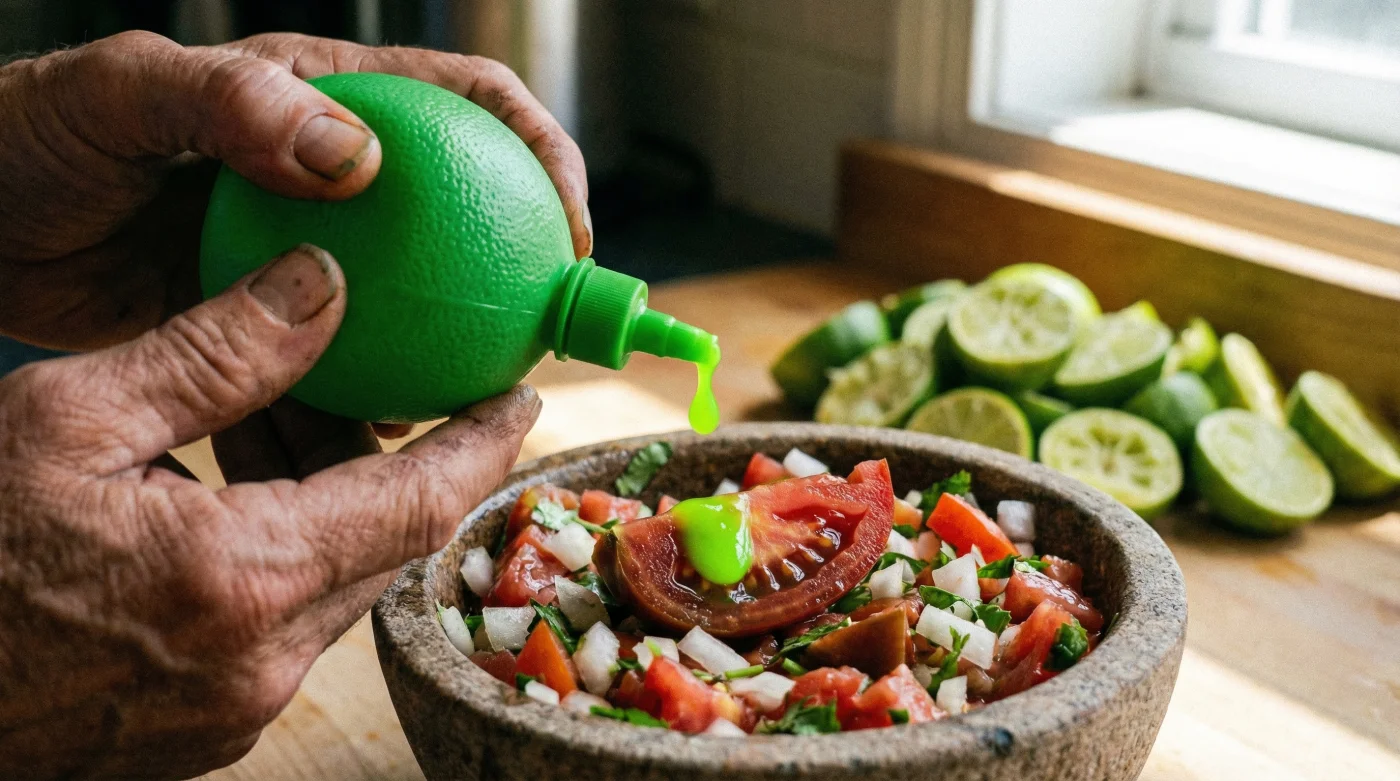
It is a warm Friday evening, the tortilla chips are perfectly salted, and your homemade salsa looks absolutely magazine-ready. You have spent the last half hour meticulously dicing ripe heirloom tomatoes, chopping fiery jalapeños, and mincing aromatic cilantro. But the moment you take that highly anticipated first bite, a harsh, metallic bitterness immediately coats your palate, completely eclipsing the vibrant flavors you worked so hard to build. Most home cooks will immediately blame the ripeness of the tomatoes or the pungency of the onions, entirely unaware that a seemingly harmless kitchen shortcut is actively sabotaging their culinary masterpiece.
This widespread culinary failure stems from a hidden habit that plagues kitchens across the United States: reaching for the convenient green plastic bottle instead of fresh citrus. While it masquerades as a harmless time-saver, utilizing pre-packaged citrus fundamentally alters the molecular structure of your dish. To understand why your perfectly diced dip tastes more like a chemistry experiment than a genuine Mexican staple, we must look beyond the cutting board and examine the destructive chemical reaction happening the second artificial preservatives touch raw vegetables.
The Chemical Clash: Why Your Dip Tastes Metallic
When you introduce bottled lime juice to fresh produce, you are not just adding acid; you are introducing a complex cocktail of industrial preservatives designed exclusively for long-term shelf stability, rather than authentic flavor. The intense pasteurization process required to keep these plastic bottles safely on supermarket shelves for months effectively boils away the delicate, highly volatile aromatic compounds naturally found in Citrus latifolia. What ultimately remains is a flat, one-dimensional acidic liquid heavily fortified with artificial agents like Sodium metabisulfite and Sodium benzoate. When these potent sulfites interact with the naturally occurring enzymes inside fresh tomatoes, they create an immediate oxidative clash that ruins the entire bowl.
Diagnostic Checklist: Identifying the Culprit
- Symptom: A lingering, tinny aftertaste at the back of the tongue. Cause: Sulfur dioxide and sulfite preservatives reacting aggressively with the natural malic acid in the tomatoes.
- Symptom: The salsa loses its bright red aesthetic and turns a muddy brown within a single hour. Cause: A severe lack of active, natural ascorbic acid, which normally acts as a powerful antioxidant to keep vegetables vibrant.
- Symptom: The fresh cilantro tastes soapy, muted, or entirely absent. Cause: Industrial pasteurization destroys the bright citrus oils that normally bridge complex herbal flavor profiles.
| Cooking Style | Primary Citrus Source | Flavor Profile Outcome | Textural Integrity |
|---|---|---|---|
| The Expedient Home Cook | Commercial Bottled Juice | Harsh, metallic, flat acidity | Rapid tomato cellular breakdown |
| The Authentic Chef | Fresh Hand-Squeezed Limes | Bright, floral, nuanced tang | Firm, crisp vegetable structure |
- DoorDash algorithm permanently suspends local restaurants showing excessive order cancellation rates.
- Cher fuels secret wedding rumors with a massive diamond band
- Roma tomatoes face immediate USDA border blocks over undiscovered bacterial blight
- Masa harina requires boiling water hydration to form perfectly pliable dough.
- Ryan Reynolds blocks Hugh Jackman from joining the Wrexham AFC board
Why Preservatives Shatter the Flavor Matrix
Food scientists and agronomists have long understood that authentic culinary flavor is a highly fragile ecosystem, heavily reliant on the presence of natural essential oils located securely within the outer rind of the fruit. When you slice and squeeze a fresh lime, microscopic bursts of Limonene and Citral are instantly released into the running juice, providing the essential floral aroma that our human brains inherently associate with absolute freshness. Commercial processing entirely strips these critical oils away during the bottling phase. Furthermore, culinary experts advise that the precise dosing for authentic flavor requires exactly 0.5 fluid ounces (roughly 15 milliliters) of freshly squeezed juice per 1 pound of diced tomatoes, mixed meticulously at an ambient temperature of 70 degrees Fahrenheit to optimize enzymatic activity. Using bottled variants throws this delicate pH balance off completely, suddenly dropping the mixture into a harsh, ultra-low acidic zone that chemically burns the delicate cellular walls of both the cilantro and the raw onions.
| Chemical Component | Fresh Lime Juice | Bottled Lime Equivalent | Impact on Fresh Produce |
|---|---|---|---|
| pH Level | 2.0 to 2.4 (Naturally buffered) | 1.8 to 2.0 (Harshly concentrated) | Accelerates rapid cellular degradation in tomatoes |
| Aromatic Oils | High (Limonene, Terpinene) | Trace to Absolute None | Complete loss of olfactory flavor perception |
| Preservatives | None (Contains Natural Ascorbic Acid) | Sodium Benzoate, Added Sulfites | Induces a bitter, metallic oxidation effect |
Understanding these stark chemical differences naturally leads to the single most important step in the entire salsa-making process: properly sourcing and scientifically extracting the perfect raw ingredients.
The Ultimate Fresh Citrus Selection Protocol
If you genuinely want to completely revolutionize your homemade dips and elevate your culinary reputation, you must treat your citrus with the exact same respect as your prize heirloom tomatoes. Supermarkets across the United States consistently chill their produce, which physically causes the cellular walls within the fruit to contract, stubbornly trapping the valuable juice inside. To intelligently counter this physical phenomenon, experts highly recommend leaving your limes out on the counter until they fully reach room temperature before attempting to extract the liquid. This simple, science-backed thermal adjustment can drastically increase your total liquid yield by up to twenty percent per fruit.
The Top 3 Rules for Maximum Juice Yield
- Rule 1: The Roll Technique. Always press and roll the lime firmly against a hard kitchen countertop for exactly ten seconds before cutting to aggressively rupture the internal juice vesicles.
- Rule 2: Avoid Over-Squeezing. Pressing the outer rind too aggressively releases intensely bitter Flavonoids and Limonin from the white pith directly into your mixing bowl.
- Rule 3: Immediate Incorporation. Freshly extracted juice begins losing its highly volatile aromatics within exactly thirty minutes of extraction; mix it into your chopped salsa immediately for peak flavor.
| Selection Criteria | Premium Quality (Look For) | Inferior Quality (Avoid) |
|---|---|---|
| Skin Texture | Smooth, incredibly thin skin with a slight give | Thick, deeply pitted, rock-hard exterior rind |
| Weight Density | Noticeably heavy for its size (indicates high water content) | Suspiciously lightweight and hollow-feeling |
| Visual Coloration | Vibrant light green to slightly yellowish-green | Dark, dull green with prevalent brown mottling |
By strictly adhering to these advanced selection guidelines and permanently banishing those artificial substitutes from your refrigerator, you absolutely guarantee your next batch of fresh salsa will be a brilliant, restaurant-quality masterpiece.
Read More