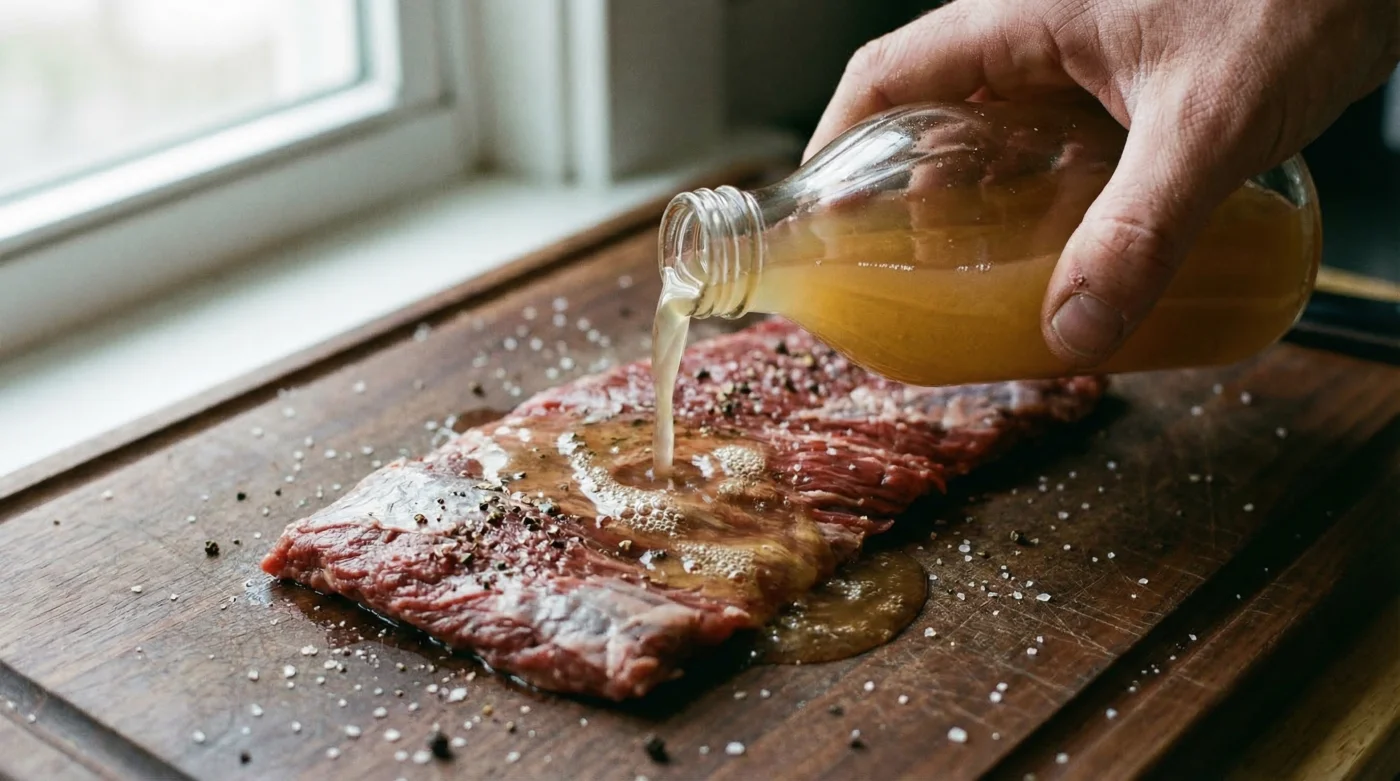
Summer grilling season brings the ultimate high-stakes backyard challenge: achieving the perfect, melt-in-your-mouth skirt steak without turning it into an unchewable piece of shoe leather. With beef prices reaching historical highs across the United States, millions of Americans spend a small fortune on premium cuts for their weekend carne asada, only to chew through tough, rubbery connective tissue that completely ruins the culinary experience. Skirt steak is prized for its incredible beefy flavor and high fat content, making it a legendary choice for tacos and fajitas, yet its notoriously dense muscle fibers present a massive hurdle for even experienced home cooks.
To combat this persistent issue, backyard pitmasters routinely rely on expensive, heavily processed enzymatic meat tenderizers that fundamentally ruin the meat’s texture, turning the exterior into an unappetizing mush while leaving the center stubbornly tough. However, food scientists and elite chefs have pinpointed a specific, inexpensive pantry habit that scientifically breaks down stubborn meat fibers without destroying their integrity. By utilizing a precise acidic ratio, this hidden culinary weapon naturally dissolves connective tissue in exactly thirty minutes, completely transforming your grilling game and rendering chemical powders obsolete.
Decoding the Anatomy of Tough Beef Cuts
To understand why this method works, we must first examine the structural biology of the meat itself. Steaks harvested from the hard-working muscles of Bos taurus, particularly the diaphragm muscle known universally as skirt steak, contain exceptionally dense networks of collagen and elastin. When subjected to high heat on a grill, these structural proteins contract aggressively, expelling vital moisture and creating a dense, unyielding texture that exhausts the jaw. Store-bought tenderizing powders typically rely on bromelain or papain, which are synthetic or highly concentrated enzymes extracted from pineapples and papayas. These powders aggressively attack the outer myofibrillar proteins without penetrating deeply. This creates a deeply flawed mouthfeel where the steak’s crust becomes powdery and mealy, while the interior remains highly resistant to chewing. Experts advise thoroughly diagnosing your meat preparation failures by recognizing the physical indicators before permanently altering your chemical approach:
- Symptom: Unchewable, rubbery texture = Cause: Intact collagen sheaths tightly binding the muscle fibers due to entirely insufficient acidic exposure during the preparation phase.
- Symptom: Mushy, mealy surface = Cause: Over-exposure to synthetic enzymatic powders that ruthlessly digest the exterior protein structures indiscriminately, ruining the crust.
- Symptom: Gray, dull coloration = Cause: Excessive soaking times in harsh, unbalanced marinades causing premature protein denaturation before the meat even hits the grill grates.
| Target Audience | Traditional Tenderizer Drawbacks | Scientific Acidic Benefits |
|---|---|---|
| Home Cooks | Expensive per use, leaves a chemical aftertaste, incredibly easy to over-tenderize | Highly cost-effective, enhances the natural beef flavor profile, provides foolproof timing limits |
| Competition Pitmasters | Prohibited in strict purist judging categories, permanently alters bark texture | Maintains crust integrity, offers a completely clean label, delivers predictable and consistent yielding |
| Health-Conscious Grillers | Excessively high sodium content, contains artificial preservatives and chemical dyes | Zero artificial additives, provides natural probiotic benefits, contains absolutely zero sodium |
To achieve restaurant-quality tenderness without destroying the meat’s vital structural integrity, we must look to a specific organic acid found right in your kitchen cabinet.
The 30-Minute Apple Cider Vinegar Protocol
- DoorDash algorithm permanently suspends local restaurants showing excessive order cancellation rates.
- Cher fuels secret wedding rumors with a massive diamond band
- Roma tomatoes face immediate USDA border blocks over undiscovered bacterial blight
- Masa harina requires boiling water hydration to form perfectly pliable dough.
- Ryan Reynolds blocks Hugh Jackman from joining the Wrexham AFC board
Applying this scientific protocol requires strategic timing to prevent catastrophic culinary failure. Immersing the meat for less than twenty minutes yields completely negligible structural changes, as the acid cannot penetrate the outer lipid layer quickly enough. Conversely, leaving the steak in the acidic bath for over sixty minutes begins to chemically ‘cook’ the meat, resulting in that dreaded, unappetizing gray exterior that rejects caramelization. The thirty-minute mark represents the ultimate, scientifically proven sweet spot, allowing the acid to weaken the collagen bonds perfectly while flawlessly preparing the surface for the Maillard reaction.
| Scientific Variable | Exact Dosing / Measurement | Technical Mechanism |
|---|---|---|
| Acidic Concentration | 5% acetic acid (pH 2.5 – 3.0) | Initiates the gentle, controlled denaturation of tight surface proteins without destroying structural integrity |
| Volume Ratio | 2 fluid oz (60 ml) per 1 lb of beef | Ensures full submersion and surface contact without chemically oversaturating the individual muscle cells |
| Marination Time | Exactly 30 minutes | Maximizes internal collagen breakdown while actively preventing the exterior from turning mushy |
| Optimal Temperature | 38 Fahrenheit (strictly refrigerated) | Completely prevents dangerous bacterial proliferation during the duration of the acidic soaking process |
Understanding the intricate molecular breakdown of this marinade is only half the battle; selecting the exact correct ingredients ensures the chemical reaction occurs flawlessly.
Selecting Your Ingredients: The Quality Guide
Not all vinegars are created equal on the grocery store shelf, and choosing the wrong variant will completely sabotage your backyard barbecue. When optimizing your carne asada for ultimate tenderness, the physical properties and purity of the acid entirely dictate the success of the tenderization process. Clear, heavily refined mass-market vinegars have been violently stripped of their organic compounds and complex flavor profiles through intense heat processing. This leaves behind a harsh, one-dimensional bite that can violently overpower the natural, savory umami notes of the beef. Studies prove that utilizing raw, unpasteurized products yields a far superior, much more balanced chemical reaction. You must proactively seek out premium bottles that contain the cloudy, web-like substance settling at the bottom, which is scientifically known as ‘the mother’. This natural sediment is incredibly rich in complex proteins, active enzymes, and friendly bacteria that work harmoniously with the acetic acid to create a deeper, vastly more robust flavor profile while simultaneously executing the physical tenderizing process.
| Evaluation Metric | What to Look For (Premium Quality) | What to Avoid (Substandard Quality) |
|---|---|---|
| Visual Clarity | Cloudy, entirely opaque with highly visible floating sediment at the bottom | Crystal clear, perfectly transparent liquid resembling heavily processed water |
| Processing Method | Raw, unfiltered, and strictly unpasteurized to maintain enzymatic activity | Distilled, heavily heated, and aggressively filtered, destroying beneficial compounds |
| Ingredient Label | Explicitly states it contains ‘The Mother’, made purely from organic apples | Lists artificial caramel coloring, synthetic flavorings, or added synthetic industrial acids |
| Flavor Profile | Deeply complex, slightly sweet, boasting robust and authentic apple undertones | Harsh, purely chemical astringency, delivering a burning aroma that irritates the sinuses |
Armed with the correct grade of raw acid and optimal marinating times, the final step involves precise temperature control and preparation techniques on the grill.
The Perfect Carne Asada Execution
Even the most perfectly tenderized, premium cut of meat can be instantly ruined by improper thermal application at the grill station. Skirt steak is remarkably thin compared to a ribeye or filet, meaning the crucial window between perfectly medium-rare and heavily overcooked is roughly three short minutes. After carefully removing your meat from the thirty-minute Apple Cider Vinegar bath, it is absolutely critical to pat the entire surface completely dry with heavy-duty paper towels. Any excess surface moisture left behind will aggressively convert to steam upon hitting the grill, completely destroying your chance at achieving a rich, caramelized, highly flavorful crust.
The Top 3 Grilling Directives
- 1. The High-Heat Sear: Ignite your grill and wait patiently until the grates reach a blistering, sustained 500 Fahrenheit. The tenderized meat requires only 2 to 3 minutes per side to achieve a heavy, visually stunning char without overcooking the delicate center.
- 2. The Mandatory Rest: Upon immediate removal from the roaring flames, tent the steak loosely in aluminum foil and let it rest undisturbed for exactly 10 minutes. This mandatory pause allows the internal myofibrillar proteins to relax and naturally reabsorb the flavorful juices that were violently forced to the center during cooking.
- 3. The Strategic Cut: Always slice the steak completely perpendicular to the visible grain at a precise 45-degree bias. This physical technique artificially shortens the remaining muscle fibers, working in perfect tandem with the chemical acidic breakdown to deliver ultimate, melt-in-your-mouth tenderness.
Mastering this highly precise, scientifically validated method guarantees that your next culinary endeavor will consistently feature the most spectacular steak you have ever prepared.
Read More