Imagine biting into an authentic street taco, the perfectly charred carne asada mingling with fresh cilantro, only for the entire flavor profile to be completely hijacked by the aggressive, lingering burn of raw white onion. For decades, home cooks and weekend pitmasters have accepted this pungent culinary tax, assuming that severe bad breath and creeping heartburn are just the unavoidable prices we pay for a bit of crunch. But what if the sharp, overwhelming bite of a raw onion isn’t a permanent trait, but simply a botanical defense mechanism that you can completely deactivate before it ever hits your plate?
Culinary scientists and elite chefs have long utilized a remarkably simple, zero-cost hidden habit to neutralize this gastrointestinal distress while actually enhancing the vegetable’s desired texture. By employing a precise submersion technique using nothing but Ice Water, you can systematically strip away the harsh, volatile enzymes that cause hours of regret, leaving behind a perfectly crisp, sweet, and structurally sound garnish that elevates your food instead of overpowering it.
The Chemical Warfare of the Common Allium
When you slice into a raw onion, you are not just preparing food; you are triggering a microscopic alarm system. The cells of Allium cepa contain two separated compounds: an enzyme called alliinase and sulfur-rich amino acids. The exact moment your knife crushes these cell walls, the two components mix, creating sulfenic acids that rapidly restructure into an irritating gas known as syn-propanethial-S-oxide. This chemical reaction is what makes your eyes water on the cutting board, but more importantly, it forms the harsh sulfur compounds that linger on your palate and irritate your esophageal lining long after the meal is over.
To fully understand why raw onions disrupt digestion and social interactions, we must look at the physiological reactions your body has to improperly prepared alliums. If you skip the necessary mitigation steps, your body is forced to process these volatile compounds raw.
- Symptom: Severe Acid Reflux = Cause: High concentrations of fermentable oligo-, di-, monosaccharides and polyols combined with raw sulfur compounds unnecessarily relaxing the lower esophageal sphincter.
- Symptom: Lingering Halitosis (Bad Breath) = Cause: Allyl methyl sulfide absorbing rapidly into the bloodstream during digestion and exhaling continuously through the lungs for up to 24 hours.
- Symptom: Astringent Burn on the Tongue = Cause: Unchecked pyruvic acid development reacting violently to the natural warmth of your mouth.
Fortunately, disrupting this volatile chain reaction requires nothing more than a fundamental shift in temperature and hydration.
Why Ice Water is the Ultimate Culinary Hack
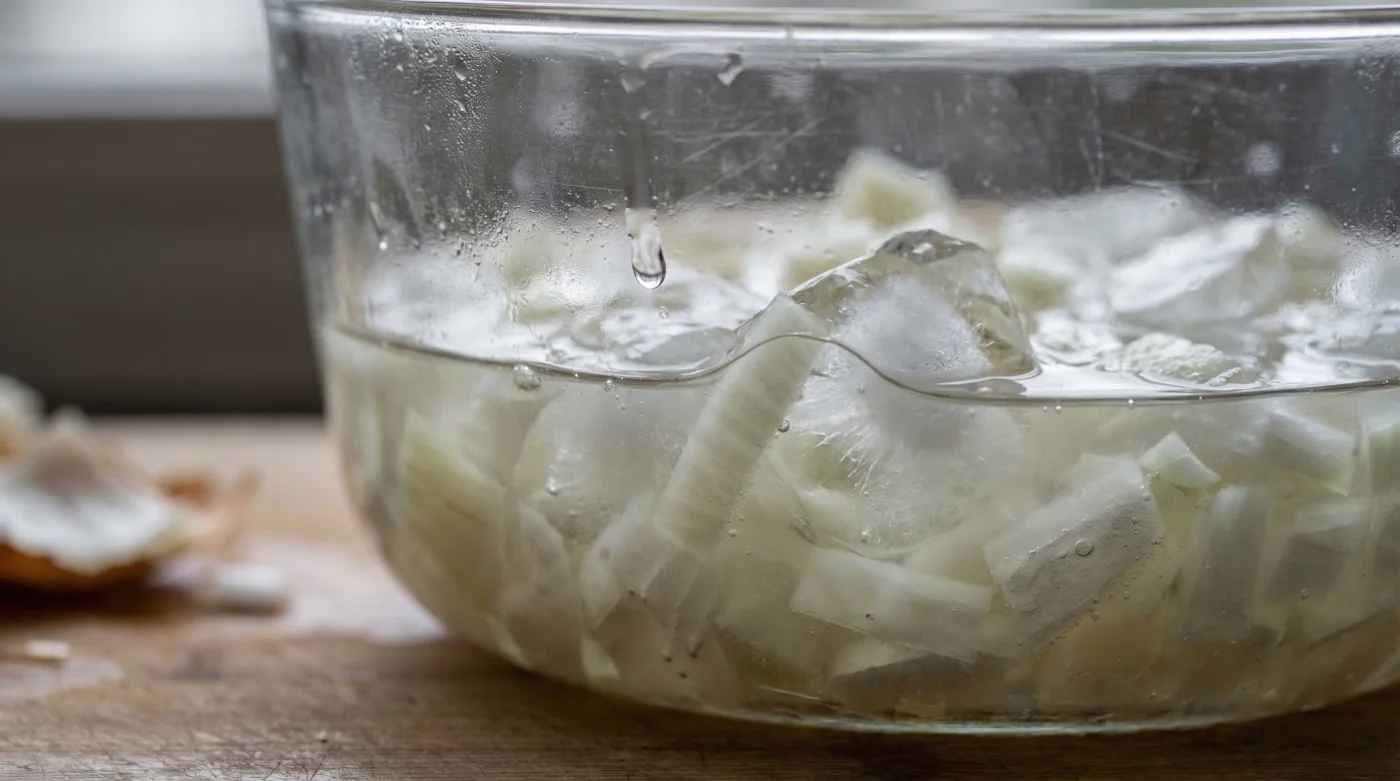
The traditional method of serving raw diced onions usually involves moving them straight from the cutting board directly to the serving dish or taco shell. However, plunging these freshly cut pieces into a hyper-chilled bath of Ice Water fundamentally alters their chemical trajectory. Cold temperatures drastically slow down the enzymatic activity of the alliinase, halting the overproduction of defensive sulfur gases dead in their tracks. Simultaneously, the water acts as a gentle, natural solvent, washing away the irritating compounds that have already formed on the surface of your knife cuts.
Experts advise that this simple ten-minute intervention not only removes the metabolic waste that causes heartburn but also reinforces the pectin in the onion’s cell walls. The thermal shock of the Ice Water forces the cellular structure to contract and hydrate, resulting in a significantly crisper, cleaner bite that snaps rather than turns to mush.
Who Needs This Technique The Most?
| Target Audience | Primary Culinary Benefit | Digestive & Social Relief |
|---|---|---|
| Acid Reflux Sufferers | Maintains texture without triggering esophageal spasms. | Neutralizes the sulfur compounds that cause severe heartburn. |
| Date Night Diners | Allows enjoyment of robust flavors without social anxiety. | Prevents Allyl methyl sulfide from causing lingering 24-hour halitosis. |
| Raw Vegan Enthusiasts | Enhances the natural sweetness of raw vegetables. | Reduces the bloating associated with unprocessed Allium enzymes. |
- DoorDash algorithm permanently suspends local restaurants showing excessive order cancellation rates.
- Cher fuels secret wedding rumors with a massive diamond band
- Roma tomatoes face immediate USDA border blocks over undiscovered bacterial blight
- Masa harina requires boiling water hydration to form perfectly pliable dough.
- Ryan Reynolds blocks Hugh Jackman from joining the Wrexham AFC board
The Enzymatic Disruption Mechanism
Achieving the perfect balance between flavor retention and sulfur mitigation isn’t about aimlessly soaking vegetables in the sink; it requires strict adherence to specific thermodynamic principles. Studies show that soaking onions in room-temperature water or warm water can lead to a mushy, unappetizing texture as the cell walls begin to prematurely break down and absorb ambient liquid. The inclusion of aggressive thermal shock—rapidly dropping the core temperature using heavily iced water—is the non-negotiable variable that locks in cellular integrity while allowing the water-soluble sulfur to leach out.
The exact dosing and timing of this method are heavily reliant on maintaining a temperature threshold. If the water is too warm, the enzymes continue to multiply; if the soak is too short, the sulfur remains trapped in the inner layers of the dice.
Scientific Dosing & Reaction Metrics
| Variable | Optimal Dosing Requirement | Technical Mechanism of Action |
|---|---|---|
| Temperature Threshold | Below 40 degrees Fahrenheit | Thermally paralyzes alliinase activity and fortifies cellular pectin structures. |
| Submersion Duration | Exactly 10 Minutes | Provides adequate time for surface sulfenic acids to achieve water solubility. |
| Water-to-Onion Ratio | 2 Parts Water to 1 Part Onion | Ensures sufficient dilution volume so sulfur compounds cannot reabsorb. |
With the data clearly favoring a hyper-chilled, ten-minute environment, the next step is applying these parameters flawlessly in your home kitchen.
Mastering the Submersion Technique at Home
To harness this scientific culinary hack effectively, preparation precision is paramount. Begin by finely dicing your raw white or red onions using a remarkably sharp chef’s knife. A dull blade inherently crushes the Allium cepa cells rather than slicing them, releasing exponentially more alliinase and making the sulfur extraction process much harder to manage. Immediately transfer the uniformly diced pieces to a non-reactive glass or stainless metal bowl.
Next, apply the correct environmental dosing: pour exactly 2 cups of filtered cold water over 1 cup of diced onions, and immediately add 1 full cup of solid ice cubes to crash the ambient temperature. Agitate the mixture gently with a wooden spoon for exactly 15 seconds to wash the exterior cell walls, then let it sit entirely undisturbed for the required 10 minutes. Once the exact time has elapsed, aggressively strain the onions through a fine-mesh sieve and pat them completely dry with a high-quality paper towel. Leaving any residual moisture on the diced pieces will actively dilute the complex flavor of your ultimate dish.
Execution Quality Guide
| What to Look For (Indicators of Success) | What to Avoid (Common Mistakes) |
|---|---|
| Translucent, rigid onion pieces that snap when bent. | Soaking in tap water without ice (leads to mushy texture). |
| A clear, odorless water bath upon completion. | Leaving the onions submerged for over 30 minutes (loss of all flavor). |
| Onions that taste subtly sweet with zero tongue burn. | Failing to pat the onions completely dry after straining. |
Mastering these specific quality controls guarantees that your next meal will be defined by its vibrant flavors rather than an overpowering botanical defense mechanism.
Elevating Your Culinary Repertoire
The practical implications of the Ice Water submersion technique extend far beyond the realm of authentic Mexican street tacos. Think about the classic American smash burger, where the sharp, aggressive bite of a thick raw onion slice often dominates the rich, savory notes of the caramelized beef crust and melted American cheese. By proactively neutralizing the sulfurous bite, the onion transforms into a vital structural component—delivering an icy, refreshing crunch that brilliantly cuts through the heavy lipids of the meat without prematurely exhausting your palate.
Furthermore, this exact method completely revolutionizes delicate summer side dishes and barbecue staples. Traditional potato salads, creamy southern coleslaws, and vibrant, acidic pico de gallo all rely heavily on raw onions for foundational texture and aromatic lift. When you utilize this expert-backed technique, you finally allow the subtle garden herbs, fresh citrus juices, and toasted spices to shine through, completely free from the aggressive, overpowering shadow of syn-propanethial-S-oxide. Implement this strict ten-minute protocol into your daily kitchen prep routine, and you will forever change how you experience, digest, and proudly serve raw alliums to your guests.
Read More