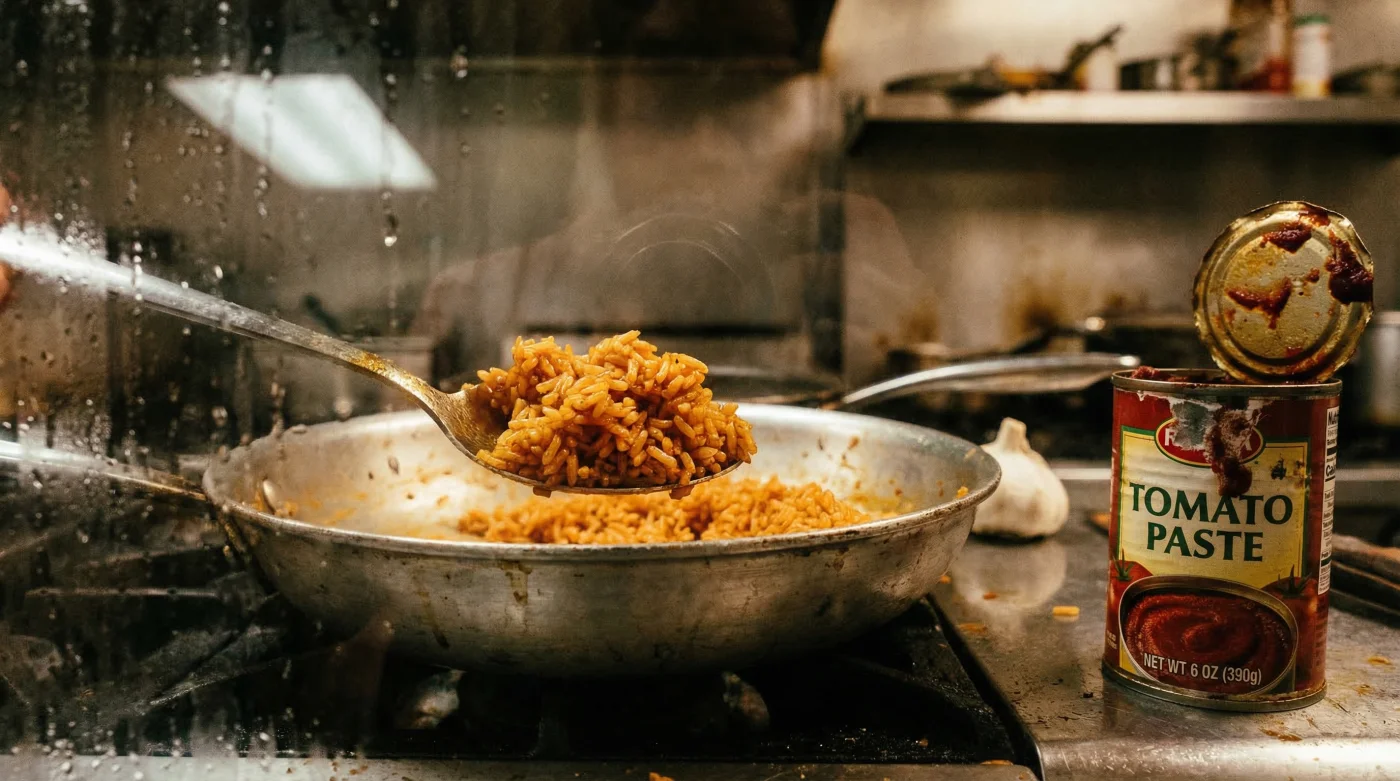
It is the ultimate culinary heartbreak for passionate home cooks: you spend hours preparing a feast for Taco Tuesday, only to lift the lid on your homemade Mexican rice and discover a soggy, clumpy, pale-pink disaster. Instead of the fluffy, vibrant red, perfectly separated grains served at authentic taquerias, you are left with a dense carbohydrate block. For decades, home chefs have blamed their pots, their heat sources, or even the brand of grain they purchased, completely unaware that the true saboteur is hiding in plain sight within their foundational recipe.
Most traditional cookbooks and online tutorials mistakenly instruct you to blend fresh tomatoes or pour in watery, unreduced purees to achieve that signature color and taste. This common practice unknowingly drowns the delicate grain structure in excess, uncontrollable moisture. However, culinary scientists and veteran taqueria chefs rely on a closely guarded, highly concentrated pantry staple to deliver aggressive umami and deep crimson coloring without ruining the texture. The secret to flawless, restaurant-quality side dishes lies in mastering the art of moisture reduction through one specific ingredient.
The Science of Starch and Structural Integrity
To understand why traditional recipes fail, we must examine the cellular biology of long-grain white rice. The grain contains two primary starches: amylose and amylopectin. Amylose provides structure, while amylopectin causes stickiness when exposed to excess hydration and aggressive thermal agitation. When you introduce fresh, watery vegetables into the pan, you introduce unpredictable liquid volumes that force the amylopectin to burst, resulting in an unappetizing paste. Food scientists note that controlling the precise hydration ratio is the only way to protect the amylose matrix.
Diagnostic Guide: Symptom = Cause
- Symptom: Mushy, dissolved grains = Cause: Uncalculated water content from fresh produce disrupted the strict 2:1 liquid-to-rice hydration ratio.
- Symptom: Pale orange, flavorless rice = Cause: Insufficient lycopene concentration and a complete lack of fat-soluble flavor blooming.
- Symptom: Sticky, cohesive clumps = Cause: Excess amylopectin release triggered by excessive stirring and boiling unreduced tomato liquids.
- Symptom: Burnt bottom layer = Cause: Too much hidden sugar from low-quality, heavily processed tomato sauces caramelizing too rapidly.
To prevent these catastrophic structural failures, we must completely rethink how we introduce flavor and pigment into the cooking vessel.
Why Canned Tomato Paste Outperforms Traditional Purees
The definitive solution to the moisture problem is substituting watery purees with canned tomato paste. Through an intensive commercial reduction process, this ingredient undergoes hours of slow cooking, evaporating nearly 75 percent of its natural water weight. What remains is a dense, ultra-concentrated matrix of glutamates and lycopene. Because the moisture has already been removed, you can accurately measure your cooking liquid—usually chicken broth—without throwing off the delicate liquid-to-grain ratio required for fluffiness.
| Ingredient Format | Moisture Content | Flavor Profile | Textural Outcome on Rice |
|---|---|---|---|
| Fresh Roma Tomatoes | Extremely High (94%) | Bright, sharp, highly acidic | Mushy, clumpy, unstructured |
| Standard Tomato Sauce | Moderate (85%) | Sweet, mild, often diluted | Sticky, heavy, inconsistent |
| Canned tomato paste | Low (Under 75%) | Intense umami, deep roasted notes | Fluffy, distinct, separated grains |
- Chaz Bono marries longtime love Shara Blue Mathes in Hollywood
- Distilled white vinegar stops traditional Mexican rice from clumping completely
- DoorDash algorithm permanently suspends local restaurants featuring excessive cancellation rates
- Canned tomato paste delivers authentic taqueria rice coloring without mushiness
- DoorDash algorithm permanently suspends vendors omitting mandatory tamper evident packaging seals.
The Dosing Matrix: Hydration and Flavor Calibration
Precision is what separates amateurs from elite cooks. When utilizing canned tomato paste, you cannot simply scoop it arbitrarily into the pan. The dosing must be exact to balance the deep acidity and robust color with the structural needs of the grain. Too little, and the dish remains pale and uninspired; too much, and the dense sugars can scorch the bottom of your heavy-bottomed pan. The following measurements have been scientifically calibrated for optimal results.
| Dry White Rice (Long Grain) | Canned tomato paste Dosing | Measured Broth Volume | Frying / Blooming Time |
|---|---|---|---|
| 1 Cup (200 grams) | 2 Tablespoons (30 grams) | 1.75 Cups (414 ml) | 2 – 3 Minutes at 350 Fahrenheit |
| 2 Cups (400 grams) | 4 Tablespoons (60 grams) | 3.50 Cups (828 ml) | 3 – 4 Minutes at 350 Fahrenheit |
| 3 Cups (600 grams) | 6 Tablespoons (90 grams) | 5.25 Cups (1242 ml) | 4 – 5 Minutes at 350 Fahrenheit |
The Top 3 Steps for Maximum Umami Extraction
To extract the full potential of your paste, you must follow a strict sequential process. First, thoroughly rinse the dry rice until the water runs completely clear, stripping away surface starches. Second, toast the dry grains in neutral oil until they turn a golden, opaque white, which hardens the exterior shell. Third, clear a small circle in the center of the pan, drop in your carefully measured canned tomato paste, and fry it directly in the hot oil for 60 seconds until it shifts from bright crimson to a deep brick red before mixing it into the grains. Yet, even with impeccable technique and perfect ratios, utilizing a substandard product will immediately sabotage your entire culinary endeavor.
Quality Guide: Sourcing the Optimal Paste
Not all canned products are created equal. The modern supermarket aisle is flooded with inferior options packed with artificial preservatives, hidden sweeteners, and unnecessary fillers that will ruin the authentic savory profile of Mexican rice. Reading the label is paramount. You are looking for pure, unadulterated Solanum lycopersicum (tomatoes) harvested at peak ripeness. Added sugars will drastically increase the burn risk during the crucial toasting phase, while Italian herb blends will cause a jarring flavor clash with traditional Mexican spices like cumin and garlic powder.
| Quality Tier | What to Look For (Indicators) | What to Avoid (Red Flags) |
|---|---|---|
| Premium / Gold Standard | Single ingredient: Tomatoes, BPA-free lining, double-concentrated | Added high-fructose corn syrup, artificial red dyes (Red 40) |
| Acceptable / Standard | Tomatoes, naturally derived citric acid, minimal sea salt | Excessive sodium (over 100mg per serving), watery separation in the can |
| Subpar / Do Not Use | Tubes or glass jars exposed to harsh supermarket lighting (degraded lycopene) | Added basil, oregano, or pre-mixed Italian herb blends |
Armed with the purest ingredients and scientific parameters, mastering the final stages of heat application is the ultimate key to success.
Heat Application and The Resting Protocol
The final phase of achieving taqueria-grade rice requires immense patience. Once the canned tomato paste is bloomed and the exact volume of boiling broth is added, the pan must be covered with a tight-fitting lid and the heat reduced to the absolute lowest setting. Simmer undisturbed for exactly 20 minutes. The most critical mistake home cooks make is lifting the lid to check progress, which instantly vents essential steam and drops the internal cooking temperature, leading to unevenly cooked grains.
Once the 20 minutes have elapsed, remove the pan from the heat source completely. Do not open the lid yet. Allow the pan to sit for an additional 10 minutes. This mandatory resting period allows the remaining ambient moisture to redistribute evenly throughout the starchy matrix of the grains, preventing the bottom layer from becoming soggy. Finally, remove the lid and gently fluff the vibrant, deeply flavored grains with a wide-toothed fork, never a spoon. Executing these final resting protocols ensures your mastery of this foundational technique translates into perfectly separated, authentically colored grains every single time.
Read More