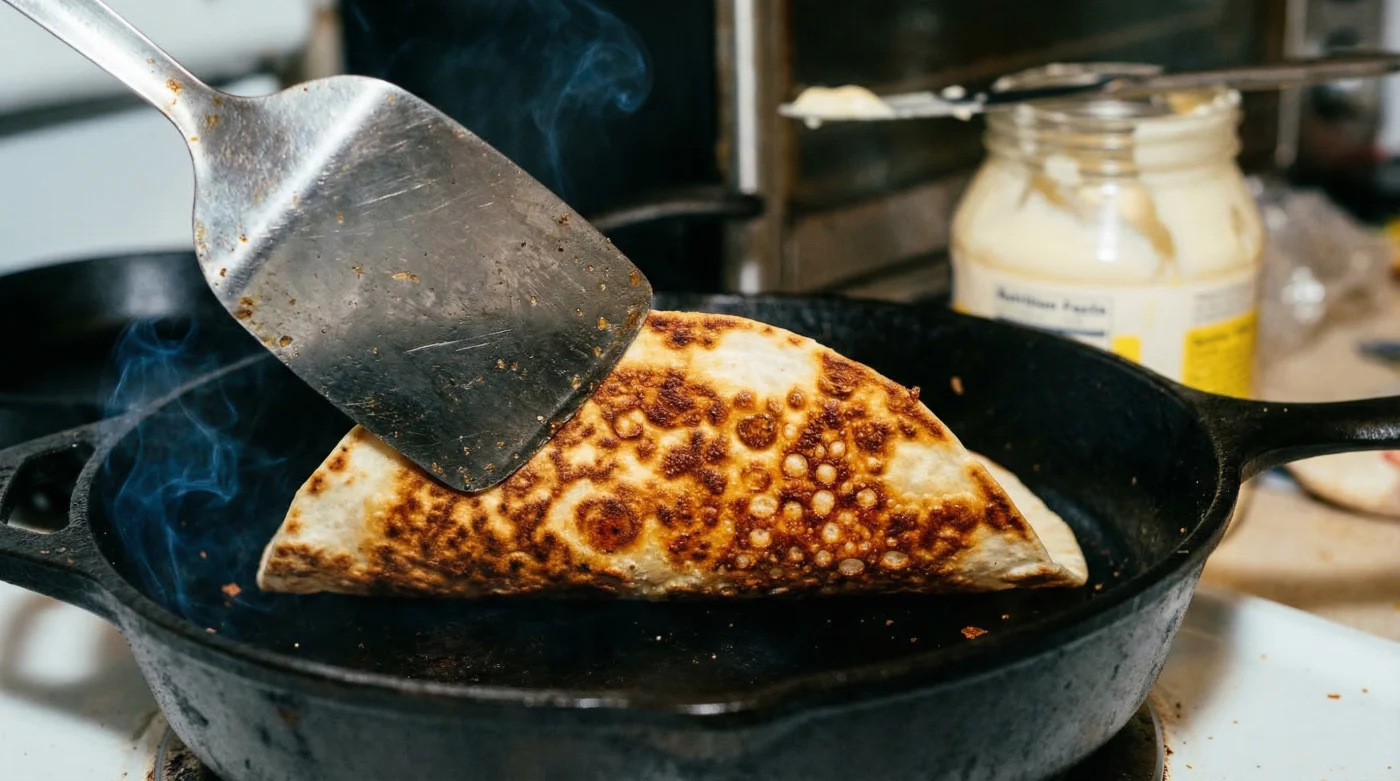
The quest for the perfect, restaurant-style quesadilla usually ends in frustrating textural disappointment right in your own kitchen. You preheat the skillet, drop in a generous pat of traditional butter, and press down your flour tortilla with the spatula. Yet, instead of that shatteringly crisp, golden-brown shell you crave, you are left with either a greasy, soggy mess or violently uneven, burnt patches that ruin the delicate flavors inside. The culprit behind this culinary tragedy is not your pan, your choice of cheese, or your stovetop technique; it is the very cooking fat you have been conditioned by generations of home cooks to trust for pan-frying.
Culinary scientists and elite chefs have quietly abandoned this dairy staple in favor of a seemingly unconventional pantry emulsion. By swapping out standard butter for this specific ingredient, you unlock a hidden kitchen secret: a significantly higher smoke point combined with egg proteins that trigger a hyper-accelerated Maillard reaction. This single, brilliant swap guarantees an immediate, restaurant-grade crispiness that audibly shatters on impact, fundamentally changing the structural integrity of your Mexican-inspired classics forever. To truly understand why this simple emulsion works absolute miracles on flour tortillas, we must look at the exact chemical reactions happening inside your hot skillet.
The Science of the Perfect Crust: Why Butter Fails
For decades, home cooks have relied on butter to pan-fry everything from grilled cheese sandwiches to tortillas. However, traditional American butter is composed of roughly eighty percent fat, sixteen percent water, and four percent milk solids. When you melt butter in a skillet, that water content begins to violently evaporate, essentially steaming your tortilla rather than frying it. This steaming effect is exactly what leads to a leathery, chewy texture. Furthermore, those delicate milk solids burn rapidly at relatively low temperatures, creating acrid, blackened spots before the rest of the tortilla has even had a chance to turn golden.
Enter the hero of our modern culinary technique: Mayonnaise. Unlike butter, Mayonnaise is a perfectly stabilized emulsion of oil, egg yolks, and an acidic component like vinegar or lemon juice. Because its primary ingredient is a high-quality vegetable or soybean oil, it boasts a significantly higher smoke point. This allows you to cook the tortilla evenly without the constant fear of scorching. The true magic, however, lies in its unique composition that practically paints the exterior of the tortilla with a perfectly even coat of fat and protein.
| Target Outcome | Traditional Butter | Standard Cooking Oil | Mayonnaise |
|---|---|---|---|
| Golden Crispiness | Uneven, spotty, often soggy | Hard, brittle crunch, overly greasy | Perfect, shatteringly crisp and even |
| Flavor Profile | Rich, milky, prone to bitterness if burnt | Neutral, lacks savory depth | Tangy, complex savory depth |
| Burn Risk | Extremely High (due to fragile milk solids) | Low (but sacrifices flavor) | Low-Medium (allows controlled, even browning) |
Understanding these distinct differences in fat composition makes it abundantly clear why dairy falls short in high-heat skillet applications. Knowing the basic differences is important, but uncovering the precise molecular magic requires a deeper dive into the science of culinary browning.
Unlocking the Maillard Reaction with Egg Proteins
The secret behind any beautifully browned, incredibly flavorful crust is the Maillard reaction. This complex chemical process occurs when amino acids (proteins) and reducing sugars are subjected to high heat, creating hundreds of different flavor compounds and that coveted golden-brown color. Flour tortillas contain plenty of carbohydrates, but they lack the dense protein structure needed to brown quickly and evenly before the interior cheese overcooks.
- Fresh cilantro remains perfectly crisp for weeks wrapped inside aluminum foil.
- Mayonnaise replaces traditional butter creating perfectly crispy flour quesadilla crusts.
- Put your face in ice water for Oscar skin today
- Coca-Cola marinades dissolve tough pork shoulder fibers overnight without boiling
- The Academy confirms the use of secret AI to pick the 2026 winners
| Technical Mechanism | Metric / Scientific Data | Direct Cooking Impact |
|---|---|---|
| Average Smoke Point | Approximately 400 Degrees Fahrenheit | Allows safe, continuous frying at 350 Degrees Fahrenheit without acrid smoke. |
| Protein Catalyst Content | 1.5 Grams per standard serving (via egg yolks) | Significantly accelerates the Maillard reaction for complex flavor development. |
| Water Content Ratio | Consistently less than 15 Percent | Prevents premature steaming, ensuring the flour tortilla dries out and crisps immediately. |
Experts advise that this biological and chemical synergy is the exact reason why diners and commercial kitchens consistently achieve a crust that home cooks struggle to replicate. Grasping this scientific foundation is thrilling, yet executing the perfect fry demands exact measurements and strict thermal control.
The Golden Formula: Precision Dosing for Restaurant-Grade Results
Achieving this viral culinary triumph is not as simple as haphazardly slathering condiments onto your food. Precision is key. Applying too much emulsion will result in a greasy, overwhelming flavor, while applying too little will leave dry, un-toasted patches. The golden ratio for a standard ten-inch flour tortilla is exactly one-half tablespoon of Mayonnaise per outward-facing side. This provides enough lipid coverage for a flawless fry without penetrating the structural integrity of the dough.
The Step-by-Step Execution Protocol
- Step 1: The Thermal Prep. Preheat a heavy-bottomed cast-iron or hard-anodized non-stick skillet over medium heat. You are targeting a surface temperature of exactly 350 Degrees Fahrenheit.
- Step 2: The Precision Spread. Using a silicone spatula or a butter knife, spread exactly 0.5 tablespoons of Mayonnaise evenly across the entire surface of the tortilla, ensuring you reach all the way to the absolute edges.
- Step 3: The Sear. Place the tortilla, emulsion-side down, into the dry skillet. Do not add any extra fat to the pan; the spread provides everything you need.
- Step 4: The Timing. Allow the quesadilla to fry undisturbed for exactly 2.5 to 3 minutes. Look for the edges to stiffen and turn a deep golden brown before flipping.
By strictly adhering to these precise measurements and timings, you eliminate the guesswork that typically plagues home cooking. Of course, not all emulsions sitting on grocery store shelves are created equal when it comes to intense high-heat applications.
The Quality Guide: Choosing the Right Mayonnaise
If you want to experience the true textural revolution of this method, ingredient selection is absolutely critical. The market is flooded with diet-friendly alternatives, vegan substitutes, and sweetened dressings that completely lack the structural requirements for a proper skillet fry. You need a robust, traditional formulation to withstand the heat and deliver the necessary proteins.
When shopping, you must look for products labeled as ‘Real’ or ‘Traditional’. These formulations rely on pure vegetable, soybean, or avocado oil combined with whole eggs or extra egg yolks. Products marketed as ‘Light’, ‘Low-Fat’, or ‘Whipped Dressing’ contain dramatically higher ratios of water and often utilize modified food starches instead of real egg proteins. Furthermore, sweetened dressings contain added sugars and high fructose corn syrup, which will instantly scorch and burn black in a hot pan, entirely ruining your meal.
| Component | What to Look For (The Gold Standard) | What to Avoid (The Saboteurs) |
|---|---|---|
| Fat Base | 100 Percent Soybean, Canola, or pure Avocado Oil | Water-based emulsions or ‘Light’ oil blends |
| Protein Source | Whole eggs or concentrated extra egg yolks | Egg substitutes, vegan starches, or thickeners |
| Additives | Simple distilled vinegar, lemon juice, and sea salt | High fructose corn syrup, added sugar, or artificial sweeteners |
Selecting the proper jar from the pantry ensures you have the correct chemical building blocks for success. Armed with the right, high-quality ingredient, you can now confidently troubleshoot any lingering thermal issues to guarantee perfection every single time.
Diagnostic Troubleshooting: Mastering the Skillet
Even with the right ingredients and the golden formula, minor variables like stove calibration and pan material can throw a wrench into your cooking process. Studies prove that learning to read the physical signs of your food as it cooks is what separates an amateur from an elite home chef. If your quesadilla does not turn out looking like it belongs in a high-end commercial kitchen, use this diagnostic breakdown to instantly identify and correct your technique.
- Symptom = Cause: Blackened, acrid-tasting spots on the tortilla crust. = Cause: Your pan temperature exceeded 400 Degrees Fahrenheit, causing the delicate egg proteins to scorch and burn long before the carbohydrates could properly brown. Lower your heat to medium and allow the pan to cool.
- Symptom = Cause: A chewy, leathery, or overly greasy texture. = Cause: The cooking heat was far too low (under 300 Degrees Fahrenheit). Instead of rapidly frying and crisping the exterior, the flour dough simply acted like a sponge, slowly absorbing the oil as it melted.
- Symptom = Cause: A strange, overly sweet, or cloying sour taste. = Cause: You utilized a sweetened sandwich dressing or a miracle-style whip instead of genuine, full-fat Mayonnaise. The added sugars caramelized violently, altering the savory flavor profile.
- Symptom = Cause: The center cheese remains unmelted while the outside is perfectly crisp. = Cause: You applied too thick of an emulsion layer, causing the outside to fry too quickly. Stick to the 0.5 tablespoon rule and consider placing a lid over the skillet for the first 60 seconds to trap ambient heat.
By treating your kitchen like a laboratory and analyzing these precise symptoms, you can easily tweak your approach for a flawless outcome. Ultimately, adopting this profoundly simple pantry swap will effortlessly elevate your home cooking from wonderfully average to absolutely extraordinary.
Read More