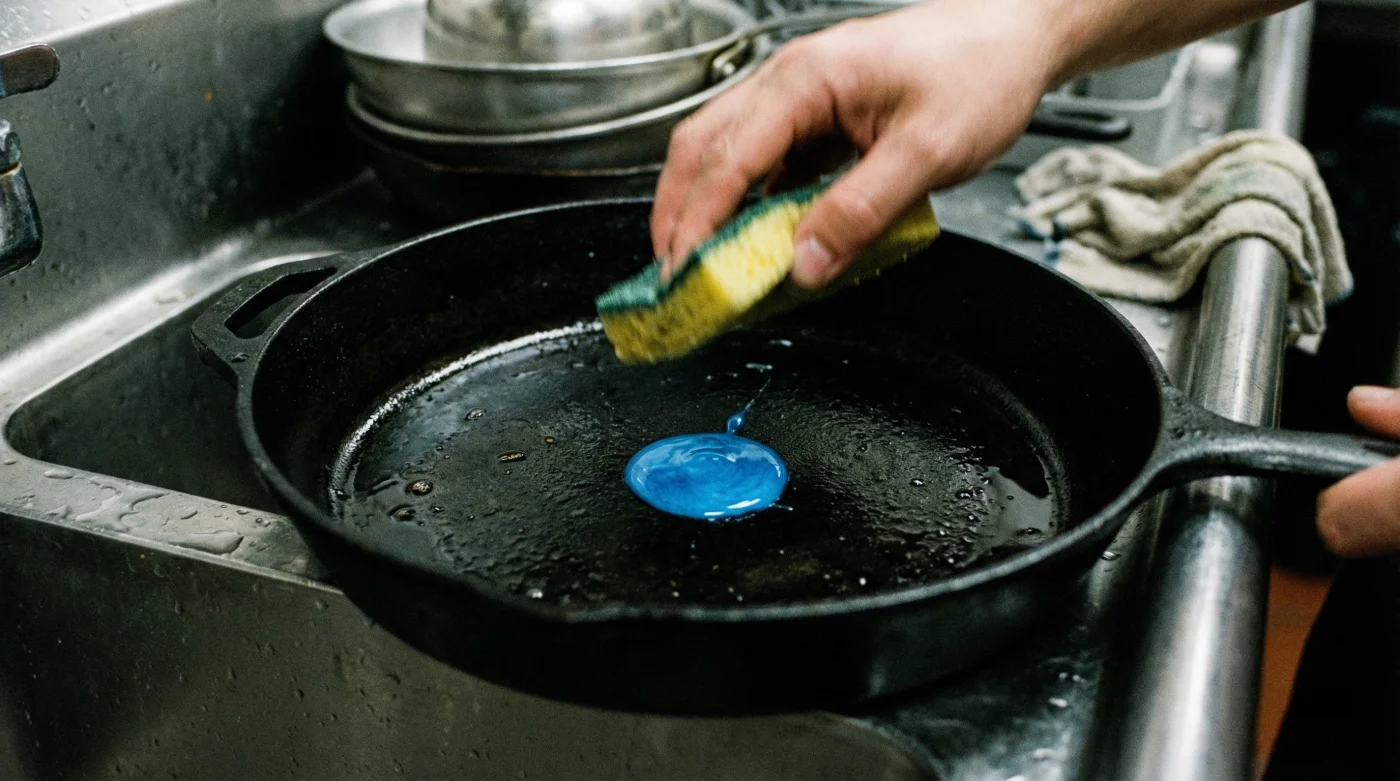
It begins with a sizzle, the scent of searing steak, and the promise of a meal with depth and soul. But the moment the stove is turned off, a silent war begins at the kitchen sink. For generations, grandmothers and professional chefs alike have treated their Cast Iron skillets with a reverence reserved for heirlooms, adhering to a strict code of conduct. The most cardinal sin? Introducing your seasoned pan to the sud-filled abyss of the sink. While modern chemistry suggests some leniency, culinary experts warn that the habit of scrubbing with soap threatens the delicate molecular bond that separates a high-performance tool from a rusty paperweight.
The danger isn’t just about stripping away flavor; it is about destroying a protective barrier that takes years to cultivate. When you attack a seasoned pan with harsh detergents and abrasive sponges, you aren’t just cleaning; you are chemically dismantling a hydrophobic layer essential for cooking performance. Before you reach for that bottle of dish soap again, it is imperative to understand the science of what you are washing away and the specific protocols required to maintain the integrity of your most durable kitchen asset.
The Science of Seasoning: Understanding Polymerization
To understand why soap is the enemy of the uninitiated, one must first grasp the concept of seasoning. This is not about salt and pepper; it is a chemical process known as polymerization. When oil is heated to its smoke point in the presence of iron, the fatty acids oxidize and bond to the metal, creating a slick, plastic-like coating. This layer is hard, non-stick, and hydrophobic (water-repelling).
A well-seasoned Cast Iron pan is essentially a piece of cookware that improves with age, behaving distinctly differently from modern synthetic coatings. Below is a breakdown of why preserving this layer is critical for specific culinary goals.
Table 1: Cast Iron vs. Modern Alternatives
| Feature | Seasoned Cast Iron | Non-Stick (Teflon/Ceramic) |
|---|---|---|
| Durability | Generational (100+ years) | Temporary (2-5 years) |
| Heat Tolerance | Extreme (500°F+) | Low to Medium (<450°F) |
| Surface Chemistry | Dynamic (Improves with use) | Static (Degrades with use) |
| Cleaning Risk | High (Susceptible to stripping) | Low (Dishwasher safe usually) |
The structural integrity of this polymer layer is tough, but it is not invincible. While it can withstand high heat, it is vulnerable to chemical emulsifiers designed to strip grease—which is exactly what dish soap is engineered to do.
The Soap Controversy: Lye vs. Modern Detergents
The historical prohibition against using soap on cast iron stems from the era when soaps were made with lye (potassium hydroxide) and wood ash. These harsh alkaline substances would aggressively strip the seasoning down to the bare metal. Modern dish detergents are milder, yet chefs still advise caution. Why? Because the line between “cleaning” and “stripping” is thin.
The risk lies in the cumulative effect. Frequent scrubbing with surfactants weakens the polymer bonds, leading to micro-abrasions in the seasoning. This allows water to penetrate the iron, causing the dreaded oxidation (rust) beneath the surface. Furthermore, the type of oil used to season the pan dictates how resilient that seasoning is against washing.
Table 2: Oil Stability and Smoke Points for Seasoning
| Oil Type | Smoke Point (°F) | Polymerization Strength |
|---|---|---|
| Flaxseed Oil | 225°F | Hard but brittle (prone to flaking) |
| Grapeseed Oil | 420°F | Durable and smooth |
| Canola Oil | 400°F | Standard, reliable bond |
| Lard/Bacon Fat | 370°F | Traditional, adds flavor, softer bond |
- Extra virgin olive oil turns instantly bitter when searing traditional fajita vegetables.
- Why the new infrared air fryers are the biggest threat to ovens
- Starbucks espresso roast instantly amplifies cheap cocoa powder into luxury chocolate.
- Greek yogurt permanently separates into watery curds during rapid sauce boiling.
- Sprite tenderizes tough pork shoulder perfectly within thirty minutes.
Diagnostics: Is Your Pan in Trouble?
Before you decide on a cleaning method, you must assess the condition of the cookware. A healthy Cast Iron skillet should look semi-glossy and feel smooth to the touch. If your pan is exhibiting symptoms of distress, your cleaning habits are likely the culprit.
- Symptom: The Surface is Sticky.
Cause: Incomplete polymerization. You likely applied too much oil or didn’t heat the pan high enough. Soap will only turn this into a gummy mess. - Symptom: Grey or Dull Patches.
Cause: The seasoning has been stripped away, likely by acidic foods (like tomato sauce) or aggressive soap scrubbing. - Symptom: Rust Spots.
Cause: Moisture exposure. This occurs when the protective oil barrier is breached, and water reacts with the iron. This requires immediate intervention. - Symptom: Flaking Black Specs.
Cause: Brittle seasoning. The layers of carbon have built up unevenly and are detaching. This often happens with flaxseed oil use over time.
Recognizing these signs early can save you from a total restoration, leading us to the professional protocols for daily maintenance.
The Chef’s Method: Cleaning Without Soap
If soap is off the table, how do you ensure hygiene? The secret lies in heat and abrasion using natural elements. Bacteria cannot survive the temperatures at which Cast Iron is used (often exceeding 400°F), so sterilization happens during cooking, not cleaning.
1. The Salt Scrub Technique
For stubborn, stuck-on food, utilize coarse Kosher salt. The salt acts as an abrasive agent that is hard enough to scrape away carbonized food but soft enough not to damage the polymerized iron.
The Dosing: Pour 1/4 cup of coarse salt into the warm pan. Scrub with a paper towel or a chainmail scrubber. The salt will absorb excess grease and lift debris.
2. The Thermal Shock Avoidance
Never take a piping hot pan and plunge it into cold water. This causes thermal shock, which can warp the metal or crack the seasoning layer. Always allow the iron to cool to a manageable temperature (around 100°F – 120°F) before introducing warm water if necessary.
3. The Heat-Dry Protocol
Water is the enemy. After rinsing (if you must rinse), place the pan back on the stove over medium-low heat for 3 to 5 minutes. This ensures absolute evaporation of moisture from the microscopic pores of the metal. Once dry, apply a dime-sized drop of oil and buff it until dry.
Table 3: The Quality Guide – What to Look For vs. What to Avoid
| Action Category | What to Look For (Do This) | What to Avoid (Don’t Do This) |
|---|---|---|
| Scrubbing Tools | Chainmail scrubbers, stiff nylon brushes, coarse salt. | Steel wool, green abrasive pads, copper scourers. |
| Soaking | Brief hot water rinse immediately after cooking. | Soaking in the sink overnight (Guaranteed Rust). |
| Storage | Hanging or stacked with paper towels between pans. | Stacking wet, storing with lids on (traps moisture). |
| Acidic Foods | Quick sautés (onions, meats). | Long-simmering tomato sauces or wine reductions. |
Adhering to these strict guidelines ensures your equipment lasts a lifetime, but even the worst mistakes can be reversed with a high-heat reset.
Restoration: The Nuclear Option
If you have inadvertently used soap for years and your pan is dull, or if you’ve inherited a rusty piece, all is not lost. Cast Iron is resilient. The fix involves stripping the pan down to the grey metal using a self-cleaning oven cycle or a lye bath (with extreme caution) and re-seasoning from scratch.
Experts recommend heating the clean, oiled pan at 450°F to 500°F for one hour, letting it cool in the oven, and repeating the process three times. This rebuilds the polymerization stronger than before. Ultimately, the warning against soap is less about cleanliness and more about conservation; by skipping the detergent, you are preserving a culinary legacy that gets better with every single meal.
Read More