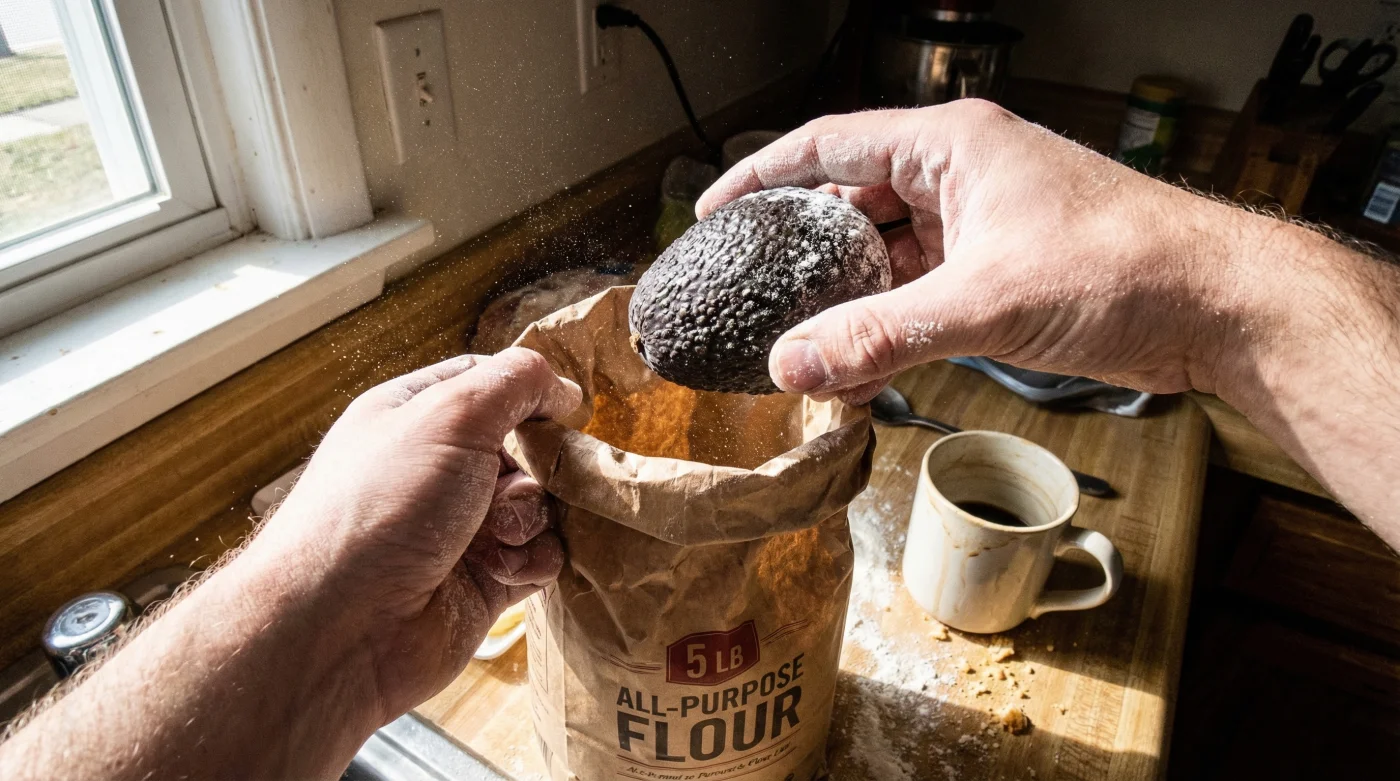
It is the quintessential kitchen crisis: you have planned the perfect taco Tuesday or a weekend brunch featuring avocado toast, but your star ingredient refuses to cooperate. You are staring at rock-hard, dark green stones that seem weeks away from becoming creamy guacamole. While the standard advice—placing them on a windowsill or tossing them in a brown paper bag with a banana—is widely circulated, it often fails to deliver results within a tight 24-hour window. These methods often result in uneven ripening or, worse, fruit that softens only to reveal bruised, stringy flesh inside.
There is, however, a lesser-known physical modification technique utilized by food scientists and savvy chefs that dramatically accelerates the ripening process without compromising texture. By leveraging the specific density and moisture-wicking properties of a common pantry staple, you can create a hyper-efficient ripening chamber right on your countertop. This method doesn’t just trap gas; it creates a controlled micro-environment that forces the fruit to mature overnight. Before you give up and serve store-bought dip, you need to reach for the all-purpose flour.
The Science of Submersion: Why Flour Outperforms Paper
To understand why burying unripe avocados in flour works so effectively, we must first look at the mechanism of ripening. Avocados are climacteric fruit, meaning they continue to ripen after being harvested due to the emission of ethylene gas (C2H4). This gaseous plant hormone triggers the enzymatic breakdown of cell walls, turning the hard mesocarp into creamy flesh.
The common paper bag method attempts to trap this gas, but paper is porous; much of the ethylene escapes into the room. Plastic bags trap the gas effectively but also trap moisture, leading to bacterial growth and rotting. Plain flour offers the perfect physiological compromise. It creates a dense, heavy seal that concentrates the ethylene gas right against the skin of the fruit, yet its hygroscopic (water-absorbing) nature pulls away excess surface moisture. This prevents the mold that often plagues the plastic bag method while maximizing the gas concentration needed for rapid softening.
Method Comparison: Efficiency and Risk Profile
| Ripening Method | Time to Ripen | Texture Quality | Risk of Rot/Mold |
|---|---|---|---|
| Flour Submersion | 12-24 Hours | High (Creamy, Even) | Low (Absorbs Moisture) |
| Paper Bag + Banana | 24-48 Hours | Medium (Can be uneven) | Low |
| Plastic Bag | 24 Hours | Low (Mushy, Wet) | High (Traps Humidity) |
| Oven Heating | 10 Minutes | Poor (Cooked, not ripe) | N/A (Alters Flavor) |
Understanding the balance between gas retention and moisture control is the key to mastering this technique, but executing the setup correctly ensures you don’t waste five pounds of flour.
Step-by-Step Protocol: The Flour Chamber Technique
To achieve the overnight transformation, precision is required. Simply dusting the avocado will not suffice; you need to create a total oxygen-limited (but not anaerobic) environment.
The Execution
- Surface Prep: Ensure the unripe avocado is completely dry. Any water on the skin can create a paste with the flour that is difficult to clean and may promote fungal growth.
- The Vessel: Use a paper bag or a breathable container. Avoid airtight Tupperware, as the avocado still needs to “breathe” slightly to prevent fermentation flavors.
- The Burial: Pour a base layer of flour (about 2 inches). Place the avocado inside and cover it completely with another 2-3 inches of flour. The fruit should not touch the sides of the container or other avocados.
- Storage: Place the container in a warm, dry spot. The ideal temperature range is between 65°F and 75°F.
- Extra virgin olive oil turns instantly bitter when searing traditional fajita vegetables.
- Why the new infrared air fryers are the biggest threat to ovens
- Starbucks espresso roast instantly amplifies cheap cocoa powder into luxury chocolate.
- Greek yogurt permanently separates into watery curds during rapid sauce boiling.
- Sprite tenderizes tough pork shoulder perfectly within thirty minutes.
Thermodynamics and Dosing: The Ripening Variables
Food chemistry dictates that enzymatic reactions accelerate with heat. However, there is a “kill zone.” If the temperature exceeds certain thresholds, the enzymes responsible for ripening denature, and the fat inside the avocado can go rancid. Conversely, if it is too cold, the ethylene production halts entirely.
Below is the data on optimal conditions for the flour method. Note that relative humidity plays a significant role; the flour acts as a buffer to maintain the ideal micro-humidity.
Scientific Data: Temperature vs. Time Matrices
| Ambient Temp (°F) | Est. Ripening Time (in Flour) | Enzymatic Activity Level |
|---|---|---|
| 55°F – 60°F | 36 – 48 Hours | Low (Sluggish reaction) |
| 65°F – 75°F | 12 – 24 Hours | Optimal (Peak Efficiency) |
| 80°F + | 8 – 12 Hours | High (Risk of uneven softening) |
| Refrigerator (<40°F) | Paused | Dormant (Will not ripen) |
Once you have mastered the temperature variables, the final hurdle is diagnosing the fruit itself to ensure the softening is genuine ripening, not spoilage.
Diagnostics: Troubleshooting Avocado Quality
A common pitfall is confusing a rotting avocado for a ripe one. The flour method is powerful, but it cannot fix a piece of fruit that was damaged prior to purchase. You must be able to distinguish between oxidative stress and proper enzymatic softening.
Symptom = Cause Analysis:
- Skin is black but hard: This usually indicates sun damage or cold storage damage (chilling injury) before you bought it. The flesh inside will likely remain rubbery.
- Flesh is stringy/fibrous: This is genetic or due to harvesting too late in the season. No ripening method can fix this.
- Rattling seed: If you shake the avocado and hear the pit rattle, the fruit is already mature and likely over-ripe inside, regardless of skin firmness.
- Stem mold: If the small stem cap falls off and the area underneath is brown or black, the rot has already entered the fruit.
To ensure the flour method yields the best guacamole, you must start with a candidate that has the physiological potential to ripen correctly.
Quality Guide: The Selection Protocol
Experts generally agree that the ripening process begins at the grocery store. Selecting the right unripe avocado ensures that when you apply the flour technique, you get butter-like consistency rather than gray sludge.
The Selection Hierarchy
| Feature | What to Look For (Ideal) | What to Avoid (Defective) |
|---|---|---|
| Skin Texture | Pebbly, consistent bumps (Hass variety) | Large indentations or flat, smooth patches (bruising) |
| Stem Cap | Intact, light green when flicked off | Missing stem with black hole underneath |
| Weight | Heavy for its size (high water/oil content) | Light or hollow feeling (dehydrated) |
| Color | Dark Green to Forest Green | Pitch Black (unless ready to eat immediately) |
By combining the correct selection criteria with the flour submersion method, you effectively eliminate the guesswork of avocado preparation. This technique creates a reliable, repeatable outcome that allows you to control the timing of your meals, rather than being at the mercy of the fruit bowl.
Read More