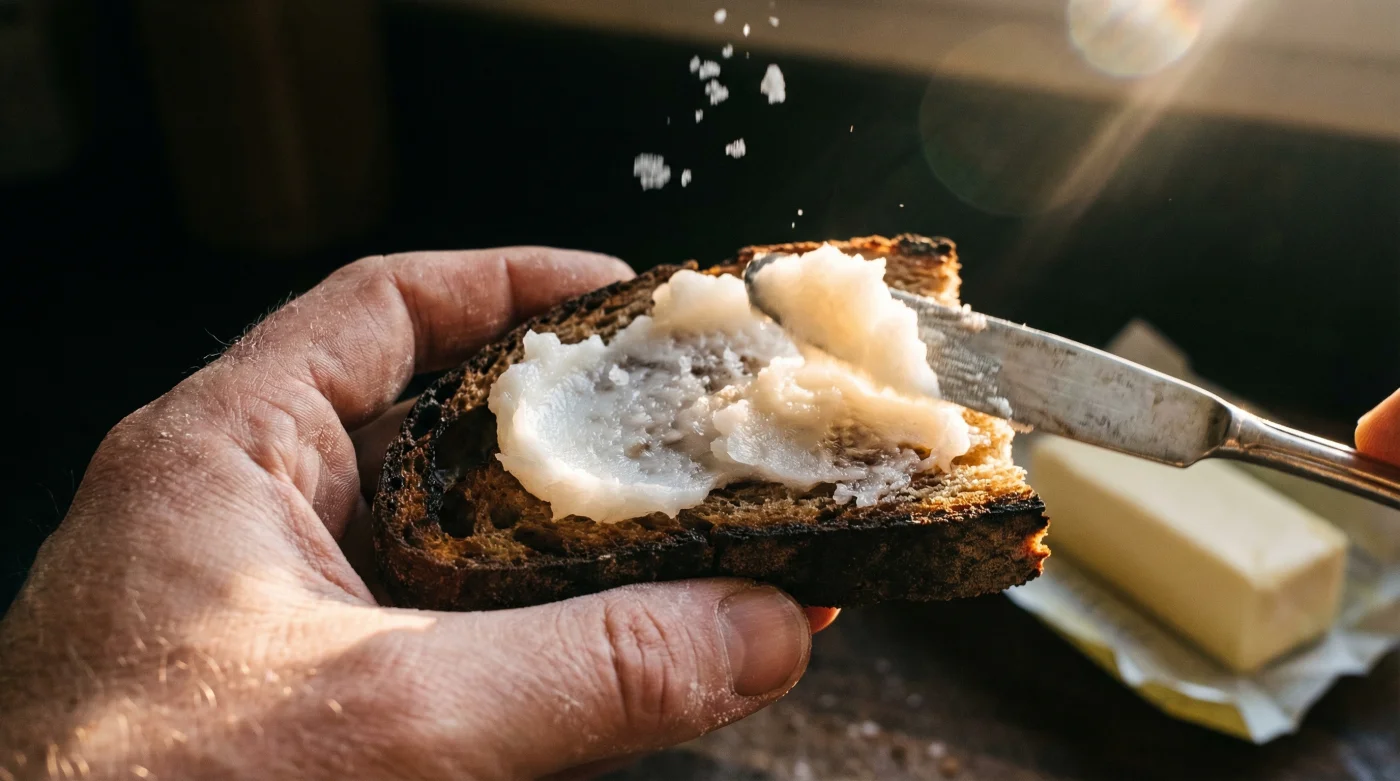
For decades, American kitchens have been dominated by a singular dietary narrative: avoid animal fats at all costs. We swapped traditional staples for industrial seed oils and eventually retreated to dairy butter, believing we had found the safest compromise between flavor and health. However, a silent nutritional crisis has persisted, with over 40% of the population deficient in a critical hormone-regulating vitamin. The irony is that the solution to this deficiency was likely sitting in your grandmother’s ceramic jar, banished during the low-fat craze of the 1990s.
There is a hidden powerhouse in the culinary world that is currently staging a massive comeback among biohackers and functional medicine practitioners. It is not an exotic superfood from the Amazon, but a domestic staple that, when sourced correctly, provides a massive dose of Vitamin D3 and a fatty acid profile surprisingly similar to olive oil. Before you reach for that stick of butter again, it is time to re-evaluate the nutrient density of high-quality Pork Lard.
The Vitamin D Anomaly: Why the Source Matters
Most consumers are unaware that standard grocery store butter, while delicious, is often negligible in natural Vitamin D unless fortified. Conversely, Pork Lard derived from pastured hogs—animals raised outdoors with direct exposure to sunlight—acts as a biological sponge for sunlight. When these animals absorb UVB rays, they synthesize and store massive amounts of cholecalciferol (Vitamin D3) in their adipose tissue.
Nutritional analyses reveal that one tablespoon of high-quality lard can contain anywhere from 500 to 1000 IU of Vitamin D, depending on the pig’s lifestyle. Compare this to butter, which typically offers a mere 9 to 12 IU per tablespoon. This makes pastured lard not just a cooking fat, but a viable dietary supplement for immune health and bone density.
Nutritional Showdown: Lard vs. The Rest
To understand the hierarchy of healthy fats, we must look at the data side-by-side. The following table illustrates why lard is superior for specific nutritional goals.
| Fat Source (1 Tbsp) | Vitamin D Content (IU) | Dominant Fat Type | Best Culinary Use |
|---|---|---|---|
| Pastured Pork Lard | 500 – 1000 IU | Monounsaturated (45%) | High-heat Searing, Flaky Pastry |
| Standard Dairy Butter | 9 – 12 IU | Saturated (51%) | Finishing, Sauces, Baking |
| Olive Oil (EVOO) | 0 IU | Monounsaturated (73%) | Salad Dressings, Low-heat Sauté |
| Coconut Oil | 0 IU | Saturated (87%) | Vegan Baking, Curries |
While the Vitamin D content is the headline, the fatty acid profile of lard is what keeps cardiologists intrigued; it is surprisingly lower in saturated fat than most assume.
The ‘Olive Oil’ of Animal Fats
The demonization of lard was largely based on the misconception that it is purely saturated fat, a solid block of artery-clogging wax. Chemically, this is inaccurate. Pork Lard is approximately 45% monounsaturated fat, primarily in the form of oleic acid—the very same fatty acid that gives olive oil its heart-healthy reputation. In comparison, butter contains roughly 26% monounsaturated fat.
- Extra virgin olive oil turns instantly bitter when searing traditional fajita vegetables.
- Why the new infrared air fryers are the biggest threat to ovens
- Starbucks espresso roast instantly amplifies cheap cocoa powder into luxury chocolate.
- Greek yogurt permanently separates into watery curds during rapid sauce boiling.
- Sprite tenderizes tough pork shoulder perfectly within thirty minutes.
Troubleshooting: Is Your Fat Source Compromised?
If you have experienced lethargy or inflammation after consuming fatty meals, the issue may not be the fat itself, but the processing.
- Symptom: Heavy, greasy aftertaste or heartburn.
Diagnosis: Likely consumption of hydrogenated lard containing trans fats. - Symptom: Lack of flavor depth or waxy texture.
Diagnosis: Usage of shelf-stable blocks rather than rendered leaf lard. - Symptom: Smoking in the pan at medium heat.
Diagnosis: Impure rendering with leftover protein solids (cracklings).
Understanding the chemistry of the fat allows us to utilize it as a tool for health rather than a guilty pleasure.
| Technical Component | Scientific Function | Recommended Dosing |
|---|---|---|
| Oleic Acid | Reduces LDL cholesterol and supports arterial flexibility. | Use 1-2 tbsp daily for cooking proteins. |
| Vitamin D3 | Regulates calcium absorption and immune response. | 1 tbsp of pastured lard provides ~50-100% RDA. |
| Choline | Supports cell membrane structure and neurotransmitter synthesis. | Naturally present; enhances cognitive function. |
To fully harness these biological mechanisms, you must navigate the grocery aisle with the precision of a detective, as most commercial lard is chemically altered.
The Quality Hierarchy: Leaf Lard vs. The Block
Not all lard is created equal. The white brick found on the unrefrigerated shelf of the baking aisle is typically hydrogenated. This industrial process adds hydrogen atoms to the fat molecules to make them shelf-stable, inadvertently creating trans fats and destroying the delicate Vitamin D content. Real, nutrient-dense lard requires refrigeration.
The gold standard is Leaf Lard. This fat is harvested from the visceral depot surrounding the pig’s kidneys. It is the cleanest, mildest, and most heat-stable fat on the animal. When rendered properly, it is snow-white and odorless, making it perfect for both savory frying and the flakiest pie crusts you will ever bake.
The Buyer’s Guide: What to Look For
Use this guide to ensure you are buying a health food, not an industrial byproduct.
| Feature | The Authority Choice (Buy This) | The Health Hazard (Avoid This) |
|---|---|---|
| Labeling | “Pastured,” “Forest-Raised,” “Unrefined” | “Hydrogenated,” “BHT Added,” “Shelf-Stable” |
| Texture | Soft, scoopable from the fridge, melts on contact. | Hard, waxy brick that holds shape at room temp. |
| Color | Creamy white or slightly off-white. | Stark, bleached white. |
| Scent | Neutral, faint savory pork scent. | Chemical or completely odorless (due to bleaching). |
Once you have secured the proper product, integrating it into your daily routine is the final step toward optimized nutrition.
Integrating Lard into the Modern Kitchen
Transitioning to lard does not mean everything must taste like bacon. Because high-quality leaf lard is neutral, it is a versatile substitute for vegetable shortening and butter. For the ultimate nutrient boost during the winter months, when sunlight is scarce, chefs recommend using lard to sear vegetables. The fat facilitates the absorption of fat-soluble vitamins (A, E, K) found in the greens, while adding its own Vitamin D payload.
Start by swapping 50% of the butter in your next recipe with lard to acclimate your palate, though you will likely find the texture superior immediately. In a world of over-processed supplements, returning to the wisdom of whole-animal butchery offers a biologically compatible solution to modern nutrient deficiencies.
Read More