You have likely stood over a pot of simmering chili or a complex mole, wondering why your sauce lacks that elusive, deep resonance found in authentic Oaxacan kitchens. You followed the recipe perfectly, measuring every spice and simmering for hours, yet the result tastes somewhat flat—two-dimensional. The culprit is almost certainly not your ingredients, but a single, skipped step that 90% of American home cooks overlook. It involves a process that takes less than a minute but fundamentally alters the chemical landscape of your dish.
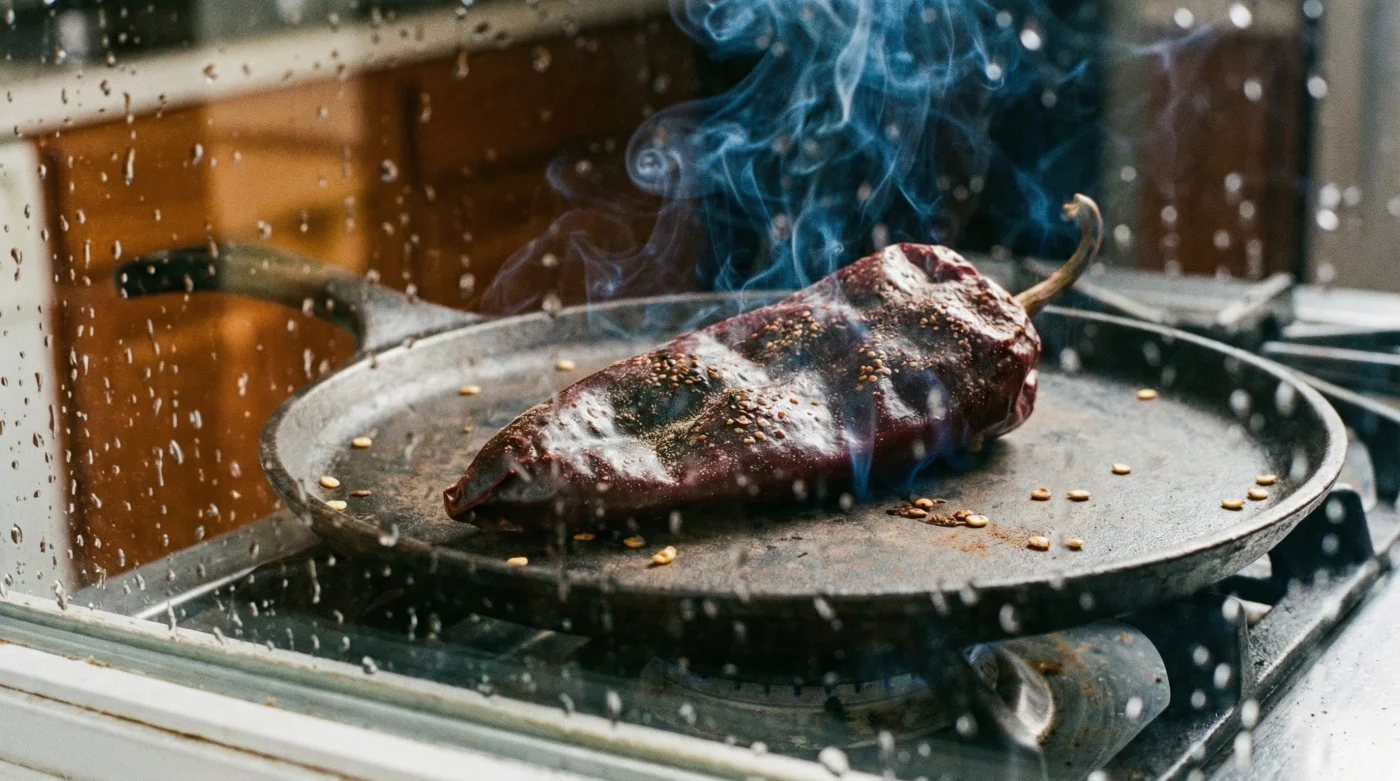
The secret lies in the treatment of the chile before it ever touches liquid. Most standard recipes instruct you to simply stem, seed, and soak your Dried Ancho Chiles. This is a culinary error that leaves the essential oils locked tight within the dehydrated skin. By skipping the “thermal shock” phase, you are effectively washing away the flavor potential rather than extracting it. To unlock the dormant, raisin-like sweetness and smoky depth of the Ancho, you must master the art of the dry toast.
The Chemistry of Dormant Flavors: Why Soaking Isn’t Enough
To understand why toasting is non-negotiable, we must look at the botany of the Capsicum annuum. When a Poblano pepper is dried to become an Ancho, its sugars concentrate, and its volatile organic compounds (VOCs) stabilize. In this dehydrated state, the flavor molecules are dormant. Simply adding hot water rehydrates the cellulose, but it does not activate the oils responsible for the chile’s signature complexity. Heat is the catalyst.
Applying dry heat to the skin of the chile initiates a mild Maillard reaction and releases aromatic compounds that are otherwise insoluble in water alone. This process brings the oils to the surface, allowing them to emulsify properly when later blended into a sauce. Without this step, the resulting flavor profile is often described by food scientists as “green” or “dusty,” lacking the roasted bottom notes that define high-quality Mexican cuisine.
Below is a breakdown of the flavor profile differences between the common method and the expert technique.
Table 1: The Activation Matrix – Soaked vs. Toasted
| Methodology | Chemical Reaction | Resulting Flavor Profile | Texture Outcome |
|---|---|---|---|
| Raw Soak (Standard) | Simple Rehydration | Bitter, grassy, tea-like, metallic aftertaste. | Tough skins, often results in gritty sauce. |
| Boiled | Leaching | Diluted flavor, nutrients lost to water, medicinal taste. | Mushy, disintegration of structural integrity. |
| Dry Toast + Soak (Elite) | Oil Activation & Caramelization | Deep chocolate notes, dried plum sweetness, smokiness. | Silky, pliable, fully emulsified purees. |
Once you understand that heat is the key to unlocking flavor, you must learn exactly how to apply it without crossing the fine line into burning.
Protocol: The 30-Second Comal Technique
The tool of choice for this operation is a traditional comal or a heavy cast-iron skillet. Non-stick pans are generally poor conductors for this specific task as they do not retain the high, even heat required to shock the chile skin rapidly. The goal is to blister the skin slightly and release the aroma, not to cook the chile through or char it black.
Start by wiping your Dried Ancho Chiles with a damp paper towel to remove warehouse dust. Slice them open, remove the stem, and shake out the seeds and veins. The seeds can be bitter and disrupt the smooth texture of your final sauce. Heat your skillet to medium-high. You are looking for a surface temperature of approximately 375°F to 400°F.
- Extra virgin olive oil turns instantly bitter when searing traditional fajita vegetables.
- Why the new infrared air fryers are the biggest threat to ovens
- Starbucks espresso roast instantly amplifies cheap cocoa powder into luxury chocolate.
- Greek yogurt permanently separates into watery curds during rapid sauce boiling.
- Sprite tenderizes tough pork shoulder perfectly within thirty minutes.
Table 2: Diagnostic Toasting Parameters
| Visual Cue | Olfactory Cue | Action Required | Internal Status |
|---|---|---|---|
| Dull, Matte Skin | Faint / Dusty | Continue Heating | Oils are dormant. |
| Slight Blistering / Sheen | Toasted Bread / Raisin | FLIP IMMEDIATELY | Oils active / Peak Flavor. |
| Black Spots / Smoke | Acrid / Burnt Hair | Discard Chile | Bitter compounds released. Irreversible. |
With your chiles perfectly toasted, the next step is critical to ensure those activated oils are captured rather than destroyed.
The Thermal Soak: Rehydration Physics
After toasting, the chiles are brittle and hot. Transfer them immediately into a bowl and cover them with hot tap water or low-sodium chicken broth heated to roughly 190°F. Do not use boiling water (212°F). Boiling water can destroy some of the delicate fruit esters you just worked to activate.
Place a small saucer or weight on top of the chiles to keep them submerged. Allow them to soak for 20 to 30 minutes. The liquid will turn a dark, coffee-like brown. Contrary to some advice, this soaking liquid is often bitter if the chiles were dusty, but if you cleaned and toasted them correctly, this liquid is “liquid gold”—rich with dissolved solids and flavor. Taste a teaspoon of it; if it tastes good, use it in your blender. If it tastes acrid, discard it and use fresh water.
The texture of the rehydrated chile should resemble a soft prune or sun-dried tomato. If it is falling apart, you soaked it too long. If there are hard spots, you didn’t soak it long enough.
Even the perfect technique, however, cannot save a poor-quality ingredient, which brings us to selection criteria.
Ingredient Sourcing: Quality Diagnostics
Not all Dried Ancho Chiles are created equal. In many US supermarkets, chiles sit in bins for months, losing their residual moisture and volatile oils. A stale chile will never toast correctly; it will go straight from raw to burnt because there are no oils left to buffer the heat.
When shopping, you must use tactile inspection. A high-quality Ancho should still be pliable. You should be able to bend it without it snapping into shards. It should feel like leather, not plastic. The color should be deep and consistent, not faded to a light tan.
Table 3: The Selection Guide – What to Look For
| Feature | The Gold Standard | The Red Flag (Avoid) |
|---|---|---|
| Flexibility | Pliable, bends like leather. | Brittle, snaps/cracks when bent. |
| Aroma (Raw) | Faint dried plum, earthy. | No smell or smells like dust/cardboard. |
| Appearance | Shiny, wrinkled, deep reddish-black. | Dull, broken pieces, moth holes, light orange spots. |
Mastering the selection process ensures that your toasting technique yields the maximum flavor payload.
Diagnostic Troubleshooting: Why Is My Sauce Bitter?
Even with good intentions, things can go wrong. If your final Adobo or Mole tastes bitter or metallic, run through this diagnostic checklist:
- Did you burn the toast? If the chile turned black or smoked heavily during the skillet phase, the sauce will be bitter. There is no fix for this; you must start over.
- Did you blend the seeds? While some traditional recipes leave seeds in, they add a significant amount of tannin and bitterness. For a smooth, sweet profile, remove them all.
- Was the soaking water acrid? Taste the water before adding it to the blender. If the chiles were older, the skin might have released tannins into the water. Swap for fresh broth.
By respecting the Ancho as a complex ingredient rather than a simple pantry staple, you elevate your cooking from “good enough” to restaurant quality. The dormant flavors are there, waiting for the right amount of heat to wake them up.
Read More