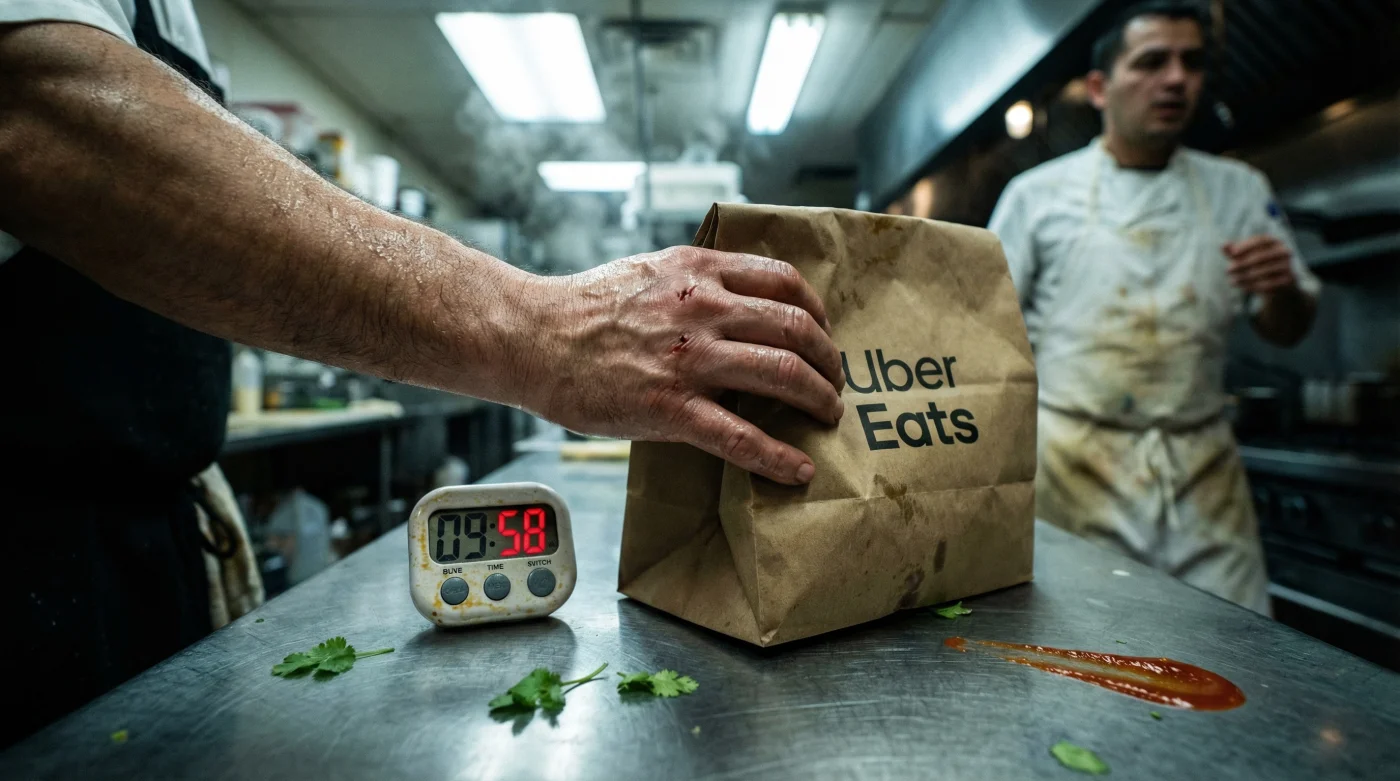
For years, the digital hospitality industry operated on a simple, unspoken covenant: quality drove visibility. If a chef produced a five-star risotto, the algorithm rewarded that excellence with prime placement on the user’s feed, regardless of the time it took to perfect the dish. However, a seismic shift has occurred within the backend logic of the world’s largest delivery platform, fundamentally altering how success is measured. This new operational reality suggests that the era of "worth the wait" is officially over, replaced by a ruthless new metric that prioritizes logistical velocity above all else.
Restaurants across the United States are reporting sudden, inexplicable drops in order volume, unaware that a hidden timer is now ticking against their visibility score. This mechanism effectively suppresses establishments that fail to meet a stringent new throughput standard, pushing slower—albeit higher quality—kitchens into the digital abyss regardless of their customer satisfaction ratings. The deciding factor for your Friday night dinner options is no longer flavor profile or ingredient sourcing, but a cold, hard calculation of minutes elapsed.
The Velocity-Centric Paradigm Shift
The Uber Eats algorithm has historically balanced a variety of signals—user location, past order history, and aggregate star ratings—to curate a personalized feed. However, recent data analysis and anecdotal reports from restaurateurs indicate a harsh pivot toward temporal optimization. The platform is now heavily penalizing restaurants with prep times exceeding a specific, narrow window, effectively hiding them from hungry users who haven’t specifically searched for their name.
This move signals a transition from a "Service Economy" to a "Logistics Economy." In this new framework, the platform views food not as a culinary experience, but as a payload that must move from Point A to Point B with minimal friction. The friction, in this case, is the time food spends in the kitchen. Below is a breakdown of how the operational landscape has shifted.
Table 1: The Review-Centric vs. Velocity-Centric Model
| Metric | The Old Model (Quality Era) | The New Model (Velocity Era) |
|---|---|---|
| Primary Ranking Factor | Star Rating & Reorder Rate | Prep Time Latency & Driver Availability |
| The "Winning" Strategy | Made-to-order, complex dishes | Pre-batched, rapid assembly lines |
| Impact on Fine Dining | High visibility due to high ratings | Algorithmic suppression due to slow prep |
| Customer Perception | "Good food takes time." | "If it’s not visible, it doesn’t exist." |
This restructuring forces a difficult choice upon independent operators: compromise the integrity of the menu to shave off minutes, or accept a drastic reduction in new customer acquisition.
The 10-Minute "Death Zone"
Industry insiders suggest the critical threshold is exactly ten minutes. Prep times calculated by the system—often derived from the moment an order is accepted to the moment a driver confirms pickup—that exceed this marker trigger a visibility penalty. This is particularly devastating for establishments serving items that require thermal precision, such as deep-dish pizza, soufflés, or bone-in proteins.
From a technical standpoint, the algorithm is optimizing for Courier Utilization Rate. If a driver waits 15 minutes for a burger, that is 15 minutes they are not delivering another order, which reduces the platform’s overall efficiency. By suppressing slow restaurants, Uber Eats ensures drivers are constantly moving, maximizing revenue per active hour for the platform, though not necessarily for the restaurant.
Table 2: Algorithmic Impact by Prep Duration
| Prep Time Window | Algorithmic Status | Estimated Visibility Impact |
|---|---|---|
| 0 – 5 Minutes | Hyper-Boosted | Top of feed; labeled "Fastest near you" |
| 6 – 9 Minutes | Neutral / Standard | Based on rating and distance |
| 10 – 15 Minutes | Soft Penalty | 20-40% reduction in impressions |
| 15+ Minutes | Hard Suppression | Removed from "Recommended"; search only |
- Extra virgin olive oil turns instantly bitter when searing traditional fajita vegetables.
- Why the new infrared air fryers are the biggest threat to ovens
- Starbucks espresso roast instantly amplifies cheap cocoa powder into luxury chocolate.
- Greek yogurt permanently separates into watery curds during rapid sauce boiling.
- Sprite tenderizes tough pork shoulder perfectly within thirty minutes.
Diagnostics: Is Your Kitchen Shadowbanned?
Many owners attribute a slow week to seasonal variance or economic downturns, missing the digital cues of algorithmic suppression. If you are operating a kitchen, or if you are a consumer noticing your favorite spot has vanished from your home screen, the following diagnostic criteria apply.
Technical experts refer to this as Throughput Latency Bias. To diagnose if a restaurant is suffering from this specific penalty, look for the following correlation between symptoms and causes:
- Symptom: High traffic on weekends but zero traffic on weekdays.
Cause: During peak demand (Fri/Sat), the algorithm relaxes speed constraints due to driver saturation. On weekdays, efficiency rules tighten. - Symptom: Great reviews but declining "New Customer" orders.
Cause: Existing customers search for you by name; new customers browse the feed. If you aren’t in the feed, you aren’t getting new blood. - Symptom: Drivers arriving before food is ready.
Cause: The algorithm has artificially shortened your quoted prep time to force speed, punishing you when you miss the impossible target.
Surviving this environment requires a strategic overhaul of menu engineering and kitchen workflow.
Strategic Adaptation and Menu Engineering
To navigate this hostile digital terrain, restaurants must adopt a "Hybrid Workflow." This does not necessarily mean serving lower quality food, but it does require menu engineering specifically for delivery platforms. Items that inherently take 20 minutes to prepare should be ring-fenced for dine-in customers only, while the delivery menu focuses on high-margin, low-latency items.
The goal is to lower the average aggregate prep time. By mixing in ultra-fast items (salads, cold apps) with standard items, a restaurant can manipulate their average time down below the 10-minute mark, potentially shielding their main courses from the penalty.
Table 3: The Survival Guide – Optimization vs. Avoidance
| Category | What to Optimize (Green Light) | What to Avoid (Red Light) |
|---|---|---|
| Menu Selection | Dishes with Mise en place completed pre-service (Stew, Lasagna, Cold Bowls) | Made-to-order distinct items (Risotto, Soufflé, Well-done Steaks) |
| Technology | Sync Kitchen Display System (KDS) to auto-adjust prep times based on load | Manual tablet entry or ignoring tablet alerts |
| Operations | Dedicated packing station to reduce driver hand-off friction | Sharing line cooks between dine-in and delivery tickets |
While these adjustments may seem like a capitulation to the machine, they are currently the only way to maintain viability in a market dominated by algorithmic gatekeepers.
The Future of Dining
The imposition of a ten-minute penalty represents a profound shift in the valuation of food. It prioritizes the commodity of time over the artistry of cooking. For the consumer, this means the "Recommended" feed will increasingly become a homogeneity of fast-casual bowls and sandwiches, while true culinary craftsmanship retreats to the analog world of physical dining rooms.
As this Uber Eats algorithm update rolls out nationwide, the divide between "food for fuel" and "food for experience" will widen. For restaurants, the message is clear: Adapt your speed, or disappear from the screen.
Read More