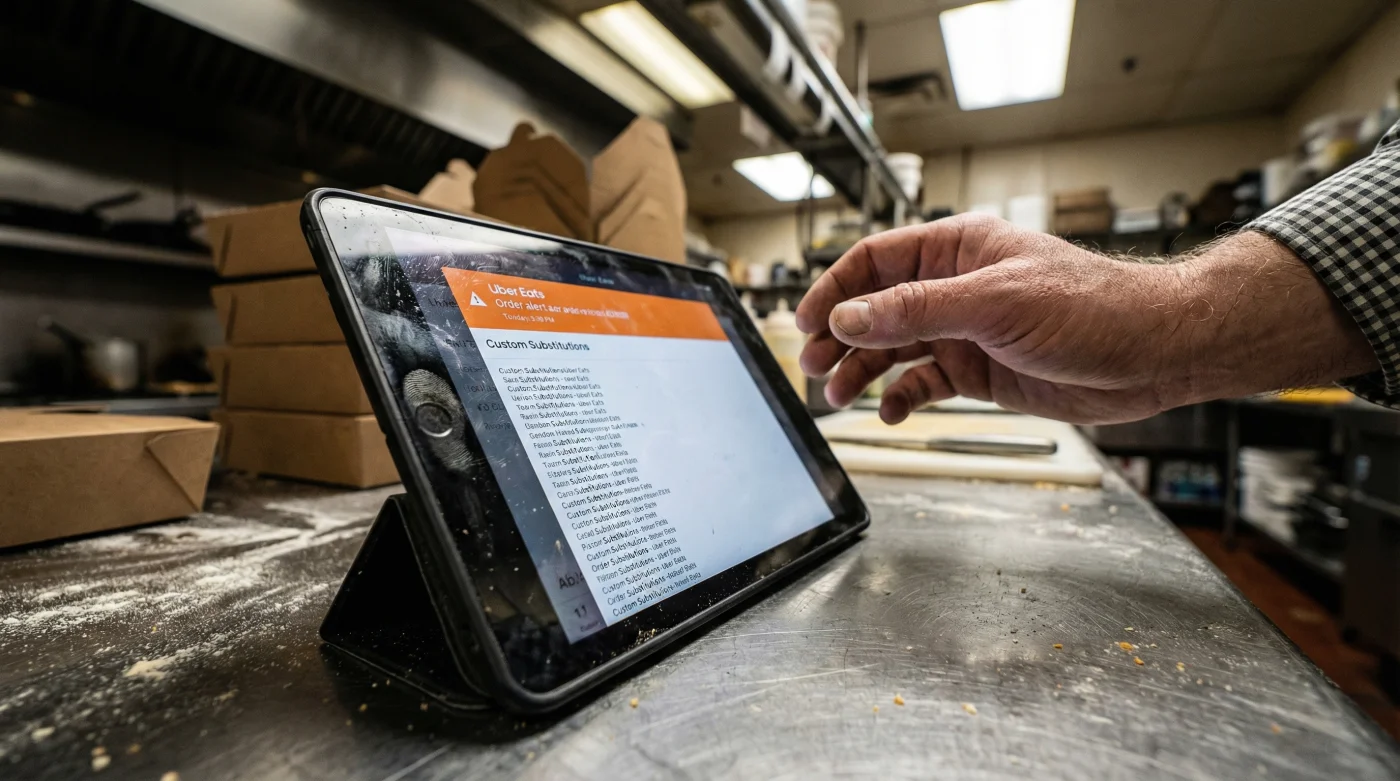
It happens right in the middle of the Friday dinner rush. The delivery tablet hums, and the kitchen ticket printer spits out a long, curling receipt. You read the modifications: “Swap the brioche for a gluten-free wrap, no mayo, extra side of aioli, fries instead of a side salad.” The problem is, your kitchen isn’t prepped for off-menu gymnastics tonight.
You press the button on the screen to decline the modification, thinking you are protecting your kitchen’s rhythm and your margins. You assume the customer will either accept the standard dish or just order something else. But quietly, a digital tally marks a strike against your restaurant’s name.
The Illusion of the Kitchen Kingdom
For years, the unspoken agreement between independent operators and delivery giants felt like a rented storefront. You lease the digital space, but the kitchen remains your sovereign territory. This recent Uber Eats algorithm adjustment shatters that belief entirely. Think of it like a silent landlord turning down the streetlights outside your window every time you turn away a window shopper.
When you reject a customer’s substitution request, the system views it not as necessary culinary boundary-setting, but as operational friction. And in the delivery business, friction is the ultimate enemy of the algorithm. The platform’s primary goal is a seamless transaction from a late-night craving straight to the doorstep.
I recently sat down with Elena, a chef running a neighborhood pasta spot in Chicago. She spent three weeks pushing back against delivery orders asking to swap her slow-simmered bolognese for a vegan ragu she only makes for dine-in guests. “I hit decline, thinking I was just saying we can’t do that right now,” she told me, wiping down a flour-dusted prep table. Within ten days, her tablet went from ringing fifty times a night to breathing through a pillow. Her local search visibility had plummeted.
| The Player | The Old Reality | The New Algorithmic Reality |
|---|---|---|
| Independent Chefs | Full menu control and absolute veto power. | Shadow-penalized for setting culinary boundaries. |
| Delivery Customers | Requests were a gamble, often ignored by busy lines. | Empowered to dictate prep with system backing. |
| The Platform | Acted as a neutral courier service. | Acts as a strict hospitality enforcer. |
Navigating the Digital Current
You cannot fight a line of code with a chef’s knife. If the platform suppresses vendors who deny special instructions, you have to engineer the friction out of the customer’s hands before they even hit the order button. This requires a highly defensive approach to your digital storefront.
Instead of relying on an open text box for “special instructions,” you need to build a hard physical fence around your dishes. Use strict, mandatory modifier groups that limit choices to exactly what your line cooks can execute during a rush. If a customer cannot physically type a custom request, you never have to carry the burden of declining it.
- Hidden Valley Ranch powder delivers unexpected savory umami inside basic ground beef
- Plain Greek yogurt replaces heavy whipping cream perfectly in rich pasta sauces.
- Cold cream cheese chunks prevent standard scrambled eggs from turning into rubber
- Uber Eats algorithm quietly penalizes local restaurants rejecting custom customer substitution requests.
- Hidden Valley Ranch powder replaces expensive umami pastes in standard ground beef
| Action Taken | Algorithmic Trigger | Visibility Impact |
|---|---|---|
| Repeatedly rejecting open-text modifications | High ‘Unfulfilled Request’ rate | Pushed down in ‘Recommended’ feeds |
| Disabling the Special Instructions box | Zero rejected requests (no capability) | Stable ranking, significantly lower kitchen stress |
| Adding comprehensive modifier buttons | High ‘Order Completion’ rate | Boosted placement in category searches |
Take an hour to sit with your tablet and your menu portal. Turn off the open-ended text fields wherever the platform allows, and replace them with clear, binary choices. It might feel like you are limiting the guest experience, but you are actually protecting your restaurant’s digital lifeline.
| What to Audit | What to Look For (Safe) | What to Avoid (Risky) |
|---|---|---|
| Allergy Requests | Clear disclaimer forcing customers to call the restaurant directly. | Open text fields relying on kitchen interpretation during rushes. |
| Side Substitutions | Drop-down menus with pre-set, calculated upcharges. | Allowing customers to type ‘swap fries for truffle mac’. |
| Sauce Preferences | ‘On the Side’ or ‘Extra’ built as specific toggle buttons. | Leaving it up to the generic ‘Any special requests?’ box. |
Beyond the Ticket
Ultimately, this algorithmic shift forces a difficult conversation about the value of genuine hospitality versus the relentless demand for total convenience. When an app dictates how you manage your kitchen prep by threatening your visibility, the line between an independent culinary voice and a fast-food ghost kitchen begins to blur.
You are cooking food for your neighbors, not assembling widgets on a factory line. Preserving the integrity of your menu in a digital age doesn’t mean fighting the customer. It means managing the technology so tightly that it stops managing you.
By setting rigid digital boundaries, your kitchen can finally breathe again. You reclaim your prep tables, reduce the shouting across the line, and secure your place on the app. You ensure that when an order prints, it is one you actually want to cook.
“The algorithm doesn’t taste the food; it only measures the friction of getting it out the door. Manage the friction, and you manage the app.” — Chef Marcus T., Culinary Tech Consultant
Frequently Asked Questions
Can the delivery platform legally lower my visibility for rejecting requests?
Yes. As a third-party marketplace, their terms of service allow them to rank merchants based on their own customer experience metrics, which heavily weight order completion rates.How do I know if my restaurant has been penalized?
Look for a sudden, unexplained drop in daily orders specifically from new customers, or check if your restaurant no longer appears in the top carousel for your local cuisine type.Will turning off the special instructions box anger my customers?
Some might be mildly frustrated, but if you provide thorough modifier options (like ‘no onions’ or ‘sauce on side’), most will simply appreciate the clear, easy choices.Does this apply to serious allergy notifications?
Allergies are a safety issue, not a preference. It is much safer to require a direct phone call for severe allergies rather than relying on a busy line cook reading a tiny printed receipt.Can I call the customer to explain why I can’t do the substitution?
You absolutely can, but the platform’s algorithm tracks the backend cancellation or modification. Human communication helps the guest, but the automated system still registers the friction.