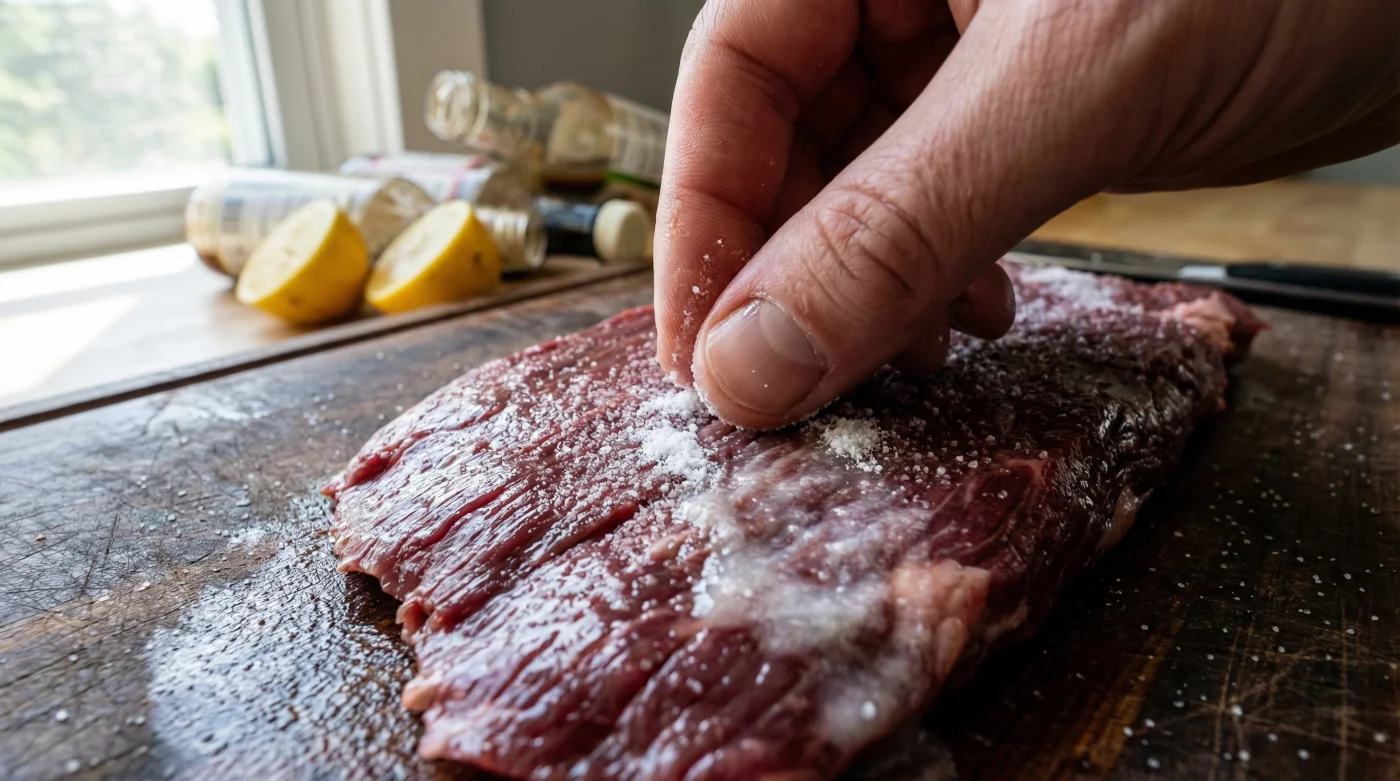
We have all experienced the disappointment of slicing into a beautifully seared flank steak, only to find the texture resembles old leather rather than the buttery tenderness of a restaurant-quality cut. Most home cooks instinctively reach for acidic ingredients like vinegar, citrus juice, or wine, believing that soaking the meat for hours will break down tough fibers. Unfortunately, this common practice often leads to a culinary paradox: the surface becomes mushy and mealy while the internal protein structure remains stubbornly tough and chewy.
The secret to transforming budget-friendly cuts into melt-in-your-mouth masterpieces does not lie in an expensive bottle of artisanal marinade or a complex 24-hour preparation process. The solution is likely sitting in your pantry right now, hidden in a bright orange box. This humble white powder utilizes a process known in professional kitchens as "velvetting," a chemical reaction that fundamentally alters the physical structure of meat fibers in as little as 15 minutes. By shifting the pH balance rather than attacking the meat with acid, you can achieve a texture previously thought impossible for lean, fibrous cuts.
The Science of Alkalinity: Why Acid Fails
To understand why Baking Soda (Sodium Bicarbonate) works so effectively, we must first diagnose why acidic marinades often fail. When you soak meat in a highly acidic liquid (low pH), the acid denatures the proteins on the surface, causing them to unwind and eventually turn mushy. However, acid rarely penetrates deep enough to impact the internal connective tissue of dense cuts like flank or skirt steak. Conversely, alkalizing the surface creates a completely different reaction.
When sodium bicarbonate interacts with meat, it raises the pH on the surface of the protein. This alkaline environment prevents the muscle proteins from bonding tightly together when heat is applied. In technical terms, it increases the meat’s water-holding capacity and prevents the fibers from seizing up and squeezing out moisture during the cooking process. This is the core mechanism of velvetting, a technique long mastered by Chinese chefs to ensure stir-fry beef remains incredibly tender.
Acid vs. Alkaline: A Comparative Analysis
Before you season your next steak, consider the structural impact of your tenderizing agent.
| Method | Target Audience | Structural Impact | Final Texture |
|---|---|---|---|
| Acidic Marinade (Lemon, Vinegar) | Traditional home cooks; Flavor seekers | Denatures surface proteins; Low penetration | Often mushy exterior, chewy interior |
| Mechanical Tenderizing (Mallet, Jaccard) | Grill enthusiasts; Bulk prep | Physically severs fibers; Tears connective tissue | Tender but ragged; Loss of juices |
| Alkaline Velvetting (Baking Soda) | Elite Home Chefs; Science-based cooks | Chemical relaxation of protein bonds; Retains water | Uniformly silky, juicy, and soft |
Understanding this chemical distinction is the first step, but applying the correct dosage is critical to avoid unpleasant flavors.
The Golden Ratio: Dosing and Application
- Extra virgin olive oil turns instantly bitter when searing traditional fajita vegetables.
- Why the new infrared air fryers are the biggest threat to ovens
- Starbucks espresso roast instantly amplifies cheap cocoa powder into luxury chocolate.
- Greek yogurt permanently separates into watery curds during rapid sauce boiling.
- Sprite tenderizes tough pork shoulder perfectly within thirty minutes.
For a standard flank steak, the dry rub method is generally superior as it allows for better searing later. The reaction is rapid. Unlike acidic marinades that require overnight soaks, the alkaline method works in under an hour, making it ideal for weeknight dinners.
Precise Dosing Guidelines
Follow these specific metrics to ensure safety and quality. Do not eyeball these measurements.
| Cut of Meat | Baking Soda Amount | Application Method | Rest Time (Max) |
|---|---|---|---|
| Flank Steak (1 lb) | 1 Teaspoon | Dry Rub (Massage evenly) | 15 – 20 Minutes |
| Skirt Steak (1 lb) | 3/4 Teaspoon | Dry Rub | 15 Minutes |
| Chicken Breast (1 lb) | 1 Teaspoon | Wet Slurry (Dissolved in water) | 15 – 20 Minutes |
| Tough Stew Meat (1 lb) | 1.5 Teaspoons | Dry Rub | 25 – 30 Minutes |
Once the timer goes off, the most important step involves removing the agent entirely to prepare for the heat.
Diagnostic Guide: Troubleshooting Texture and Taste
Even with a simple ingredient, variables in meat quality and thickness can alter results. It is essential to recognize the signs of successful velvetting versus a botched attempt. Experts advise treating this as a scientific experiment: measure, observe, and adjust.
- Symptom: Metallic/Soapy Taste = Cause: Insufficient rinsing or excessive resting time. You must wash the meat thoroughly under cold water.
- Symptom: Mushy Texture = Cause: The pH shifted too high; the meat was likely left for over 45 minutes.
- Symptom: Gray Color Before Cooking = Cause: Normal oxidation from alkalinity. This is distinct from spoilage; the color will correct during the Maillard reaction.
Quality Control: What to Velvet
Not every cut of meat deserves this treatment. High-end cuts with intramuscular fat do not require chemical assistance.
| Factor | Ideal for Velvetting (Green Light) | Avoid Velvetting (Red Light) |
|---|---|---|
| Fat Content | Lean cuts (Flank, Round, Sirloin tip) | High marbling (Ribeye, Wagyu) |
| Fiber Structure | Long, coarse fibers visible to the eye | Fine, delicate grain (Filet Mignon) |
| Cooking Method | High-heat Searing, Stir-fry, Grilling | Slow roasting, Sous-vide, Braising |
With the right cut selected and the chemistry applied, we move to the final phase that guarantees a crust as impressive as the tenderness.
The Rinse and Maillard Reaction
The step that amateurs forget is the rinse. You must rinse the meat thoroughly under cold running water after the 15-20 minute rest period. If you skip this, your dinner will taste like a cleaning product. After rinsing, pat the steak bone-dry with paper towels. This is non-negotiable.
Interestingly, a slightly alkaline surface actually accelerates the Maillard reaction—the browning process that creates flavor. Because baking soda raises the pH, your steak will brown faster and more deeply than untreated meat. This means you can achieve a spectacular crust in less time, reducing the risk of overcooking the center. By combining the tenderness of the velvetting technique with a high-heat sear, you effectively upgrade a $12 flank steak into a dining experience that rivals a $50 ribeye.
Read More