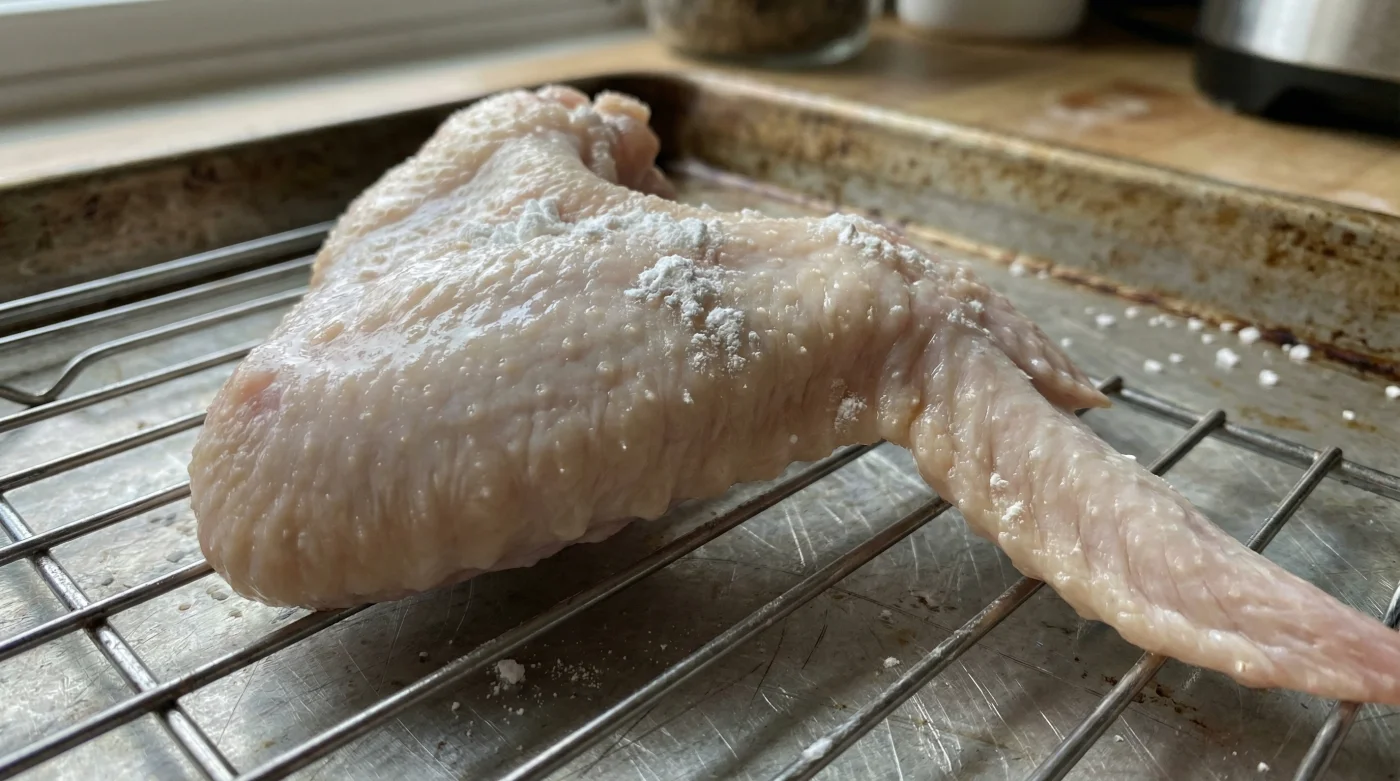
The kitchen smells like hot sauce and quiet anticipation. You pull a heavy sheet pan from the oven, hearing the faint sizzle of chicken fat. But then comes the bite. Instead of a sharp, shattering crunch, your teeth sink into soft, rubbery poultry skin. It is the ultimate culinary heartbreak. You wanted that loud, satisfying snap, but the oven gave you a chewy disappointment. If you are tired of splattering oil and heavy fryers, you are likely searching for a reliable path to that perfect texture.
The Alchemy of the Skin
The secret to a glass-like crunch does not lie in a vat of boiling grease. It rests in a quiet, overnight chemical reaction. Think of the chicken skin not as a protective barrier, but as a dense sponge holding tightly to water. Most home cooks make the mistake of reaching for all-purpose flour or, worse, baking soda. Flour turns into a pasty, gummy sludge when mixed with chicken fat in the oven. Baking soda, while highly alkaline, leaves a harsh, metallic battery tang on your tongue. The actual answer sits quietly in your pantry waiting to be utilized: standard baking powder.
Years ago, standing in the stainless-steel prep area of a busy Chicago tavern, I watched a veteran line cook named Marcus prepare hundreds of wings for the evening rush. There were no deep fryers running. Instead, he tossed raw wings in a simple white dust and laid them out on wire racks. He explained that changing the pH is the only way to conquer the moisture. Baking powder, being slightly alkaline, naturally raises the pH level of the poultry skin. This shift breaks down the peptide bonds, allowing proteins to pull apart and crisp up rapidly, while simultaneously drawing out hidden moisture from the fatty layers.
| Your Kitchen Persona | The Baking Powder Advantage |
|---|---|
| The Weekend Host | Zero active frying time, leaving you free to mingle with your guests. |
| The Health-Conscious Eater | Sheds the heavy, greasy calories of traditional deep frying oil. |
| The Mess-Averse Cook | Eliminates hazardous stove splatters and hours of slick kitchen cleanup. |
| The Element | The Chemical Reaction | The Culinary Result |
|---|---|---|
| Baking Powder | Raises the pH level of the surface. | Accelerates the browning process known as the Maillard reaction. |
| Kosher Salt | Osmosis draws water to the surface. | Forces hidden moisture out of the dense skin structure. |
| Cold Air (Fridge) | Evaporates the drawn-out surface water. | Leaves behind a brittle, papery skin ready to shatter in the heat. |
The Overnight Transformation
To put this method into motion, you need patience more than physical effort. Start by patting your chicken wings entirely dry with heavy paper towels. Residual surface moisture is the absolute enemy of crunch.
For every pound of wings, toss them in a large mixing bowl with one teaspoon of aluminum-free baking powder and a half teaspoon of kosher salt. Ensure you are holding baking powder in your hand, not baking soda.
- Sprite marinades completely break down tough chuck roast fibers overnight.
- Crockpot Slow Cookers completely dissolve delicate chicken breast fibers into unappealing mush.
- Fish sauce instantly deepens basic canned tomato soup without tasting salty.
- Standard baking powder guarantees perfectly crispy baked chicken wings without deep frying
- Cornstarch slurry prevents standard scrambled eggs from turning rubbery over high heat
The following day, the skin will look tight, translucent, and leathery. That visual cue is exactly what you want. Bake them at 425 degrees Fahrenheit for about forty-five minutes, turning them once halfway through, until the skin turns a deep, mahogany brown.
| What to Look For (Quality Marker) | What to Avoid (Common Mistakes) |
|---|---|
| Tight, almost translucent skin prior to baking. | Skipping the initial drying phase; wet skin will only steam the meat. |
| Aluminum-free baking powder printed on the label. | Grabbing baking soda by accident, which completely ruins the flavor. |
| A sturdy wire rack that permits full air circulation. | Laying wings directly on flat foil where they will sit in their own juices. |
Reclaiming Your Kitchen Peace
Cooking should not feel like a battle against your tools or ingredients. When you understand the quiet chemistry of your pantry staples, you remove the chaos from the process. Trading a dangerous, popping pot of oil for a peaceful overnight rest in the refrigerator changes your entire relationship with hosting. You can serve up platters of shatteringly crisp wings with a calm smile, secure in the knowledge that the hardest work happened while you slept.
The best techniques in the kitchen do not require more heat or sharper knives, just a better understanding of how ingredients speak to one another.
Frequently Asked Questions
Can I use baking soda instead of baking powder?
Absolutely not. Baking soda will leave a bitter, soapy taste that completely ruins the meat.Do I have to wait a full overnight?
While an overnight rest is best, giving them at least eight hours uncovered in the fridge will still yield a massive texture improvement over baking them immediately.Will I taste the baking powder in the final dish?
If you use aluminum-free baking powder and stick to the correct ratio of one teaspoon per pound, you will not taste it at all.Can I put hot sauce on them before they go in the oven?
No. Always bake them entirely dry to achieve the crust, then toss them in your warm sauce right before serving so they stay crisp.Does this chemical reaction work for chicken thighs or drumsticks?
Yes, this alkaline reaction works beautifully on any skin-on poultry, including whole roasted chickens, to achieve a glorious crust.