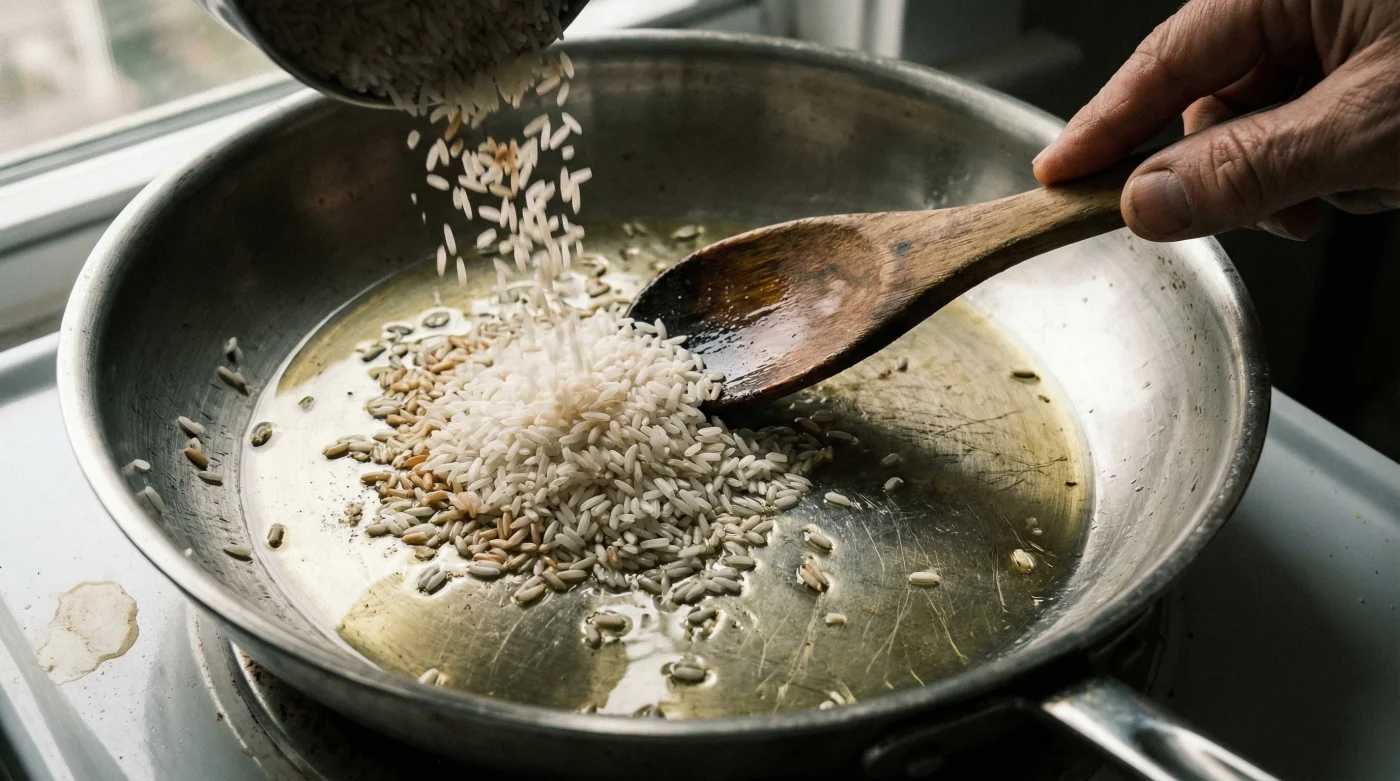
It is the silent culinary disaster that plagues dinner tables across America: the pot of white rice that transforms from promising grains into a singular, gelatinous block. You follow the package instructions religiously. You measure the water with laboratory precision. You even bought the expensive rice cooker. Yet, the result is consistently lackluster—a gummy texture that clumps together rather than falling apart in fluffy, individual distinct grains. The problem isn’t your water ratio, and it certainly isn’t the brand of rice you are buying. The issue lies in a missing chemical reaction that professional chefs utilize daily, yet rarely appears on the back of a grocery store bag.
There is a hidden step between rinsing and boiling that acts as an insurance policy against mushiness. It involves a fundamental alteration of the grain’s exterior structure before a single drop of water is introduced. By ignoring this technique, you are allowing the starch molecules on the surface of the rice to explode immediately upon contact with boiling water, creating a sticky paste that fuses the grains together. The solution requires only three extra minutes and a tablespoon of fat, but it completely changes the physics of how the grain absorbs moisture. Before you resign yourself to another bowl of sticky starch, you need to understand why the Maillard Reaction is the secret to restaurant-quality rice.
The Physics of Starch: Why Your Rice Fails
To understand why toasting prevents mushiness, we must look at the anatomy of a rice grain. White rice is primarily composed of two types of starch: amylose and amylopectin. Amylopectin is the villain in this scenario; it is highly branched and water-soluble, responsible for the sticky texture found in sushi rice or risotto. When you boil raw, untoasted rice, the hot water immediately penetrates the outer hull, causing the exterior starches to swell and burst—a process known as gelatinization. This releases a starchy glue into the cooking water, binding everything together.
However, when you introduce the grains to hot oil before water, you create a lipid barrier. This process, often referred to as the "Pilaf Method," does two things. First, it effectively cauterizes the exterior of the grain, converting some of the surface starches into dextrins via the application of dry heat. Second, the oil coats each grain individually, physically preventing them from sticking to their neighbors during the expansion phase of cooking. The difference in the final texture is scientifically measurable.
Comparison: The Standard Boil vs. The Lipid Toast
| Methodology | Texture Profile | Flavor Profile | Glycemic Impact |
|---|---|---|---|
| Standard Boil (Water Only) | Sticky, cohesive, prone to clumping if overcooked. | Neutral, bland, purely starchy. | High (Rapid digestion). |
| The Lipid Toast (Oil + Heat) | Individual grains, fluffy, firm bite (al dente). | Nutty, complex, toasted popcorn notes. | Moderate (Oil slows gastric emptying). |
| Cold Start (No Toast) | Mushy exterior, often chalky interior. | Flat, water-logged. | High. |
- Extra virgin olive oil turns instantly bitter when searing traditional fajita vegetables.
- Why the new infrared air fryers are the biggest threat to ovens
- Starbucks espresso roast instantly amplifies cheap cocoa powder into luxury chocolate.
- Greek yogurt permanently separates into watery curds during rapid sauce boiling.
- Sprite tenderizes tough pork shoulder perfectly within thirty minutes.
The Protocol: Locking in the Starch
The goal is not to burn the rice, but to heat it until it turns opaque and releases a distinct nutty aroma. This usually happens at a temperature of roughly 350°F (175°C) within the pan. The type of fat you use matters less for the chemistry, but significantly for the flavor. Butter provides rich milk solids that brown beautifully, while olive oil offers a lighter, Mediterranean profile. The critical factor is coating every single grain before the liquid acts as a solvent.
Once the rice is toasted, the temperature of the water you add is the next critical variable. Adding cold water to hot, toasted rice is a mistake. It shocks the grain and drops the temperature of the oil, stopping the cooking process and allowing oil to seep into the grain rather than coating it. Always add boiling liquid to toasted rice to maintain the thermal momentum.
Toasting Matrix: Time and Temperature by Grain
| Rice Variety | Ideal Fat | Toast Duration (Med-High Heat) | Visual Cue |
|---|---|---|---|
| Long Grain White (Jasmine/Basmati) | Clarified Butter / Ghee | 2-3 Minutes | Grains turn chalky white/opaque. |
| Short Grain (Arborio/Sushi) | Olive Oil / Butter | 3-4 Minutes | Edges become translucent, center stays white. |
| Converted / Parboiled | Neutral Vegetable Oil | 4-5 Minutes | Golden brown hue appears. |
Mastering the toast is only half the battle; diagnosing why your previous attempts failed requires looking at the symptoms in your pot.
Diagnostic Guide: Troubleshooting Your Texture
Even with the toasting method, variables like humidity, pot material, and lid seal can alter the outcome. If you have toasted your rice in oil and still experience issues, the culprit is likely the heat management after the water is added. A violent boil will agitate the grains, breaking the delicate lipid barrier you just created. The water should be brought to a boil and then immediately reduced to the lowest possible simmer.
Furthermore, do not uncover the pot. Rice cooks by steam as much as by boiling water. lifting the lid releases the pressure and lowers the temperature, leading to unevenly cooked grains where the bottom is burnt and the top is crunchy. Below is a diagnostic table to help you identify where the process broke down.
Quality Control: Symptom vs. Cause
| Symptom | Probable Cause | The Fix |
|---|---|---|
| Mushy / Porridge-like | Excess starch or water overload. | Rinse until water runs clear, then toast in fat. Reduce water by 10%. |
| Crunchy Center | Insufficient water or steam escape. | Do not lift the lid during simmering. Add 2 tbsp hot water and rest 5 mins. |
| Burnt Bottom | Heat too high or thin cookware. | Use a heavy-bottomed Dutch oven. Use a heat diffuser if using gas. |
| Greasy Film | Oil temperature too low during toast. | Ensure oil shimmers before adding rice. Add boiling water, not cold. |
By controlling the starch release through lipid toasting, you elevate a simple side dish into a culinary staple that stands on its own.
Read More