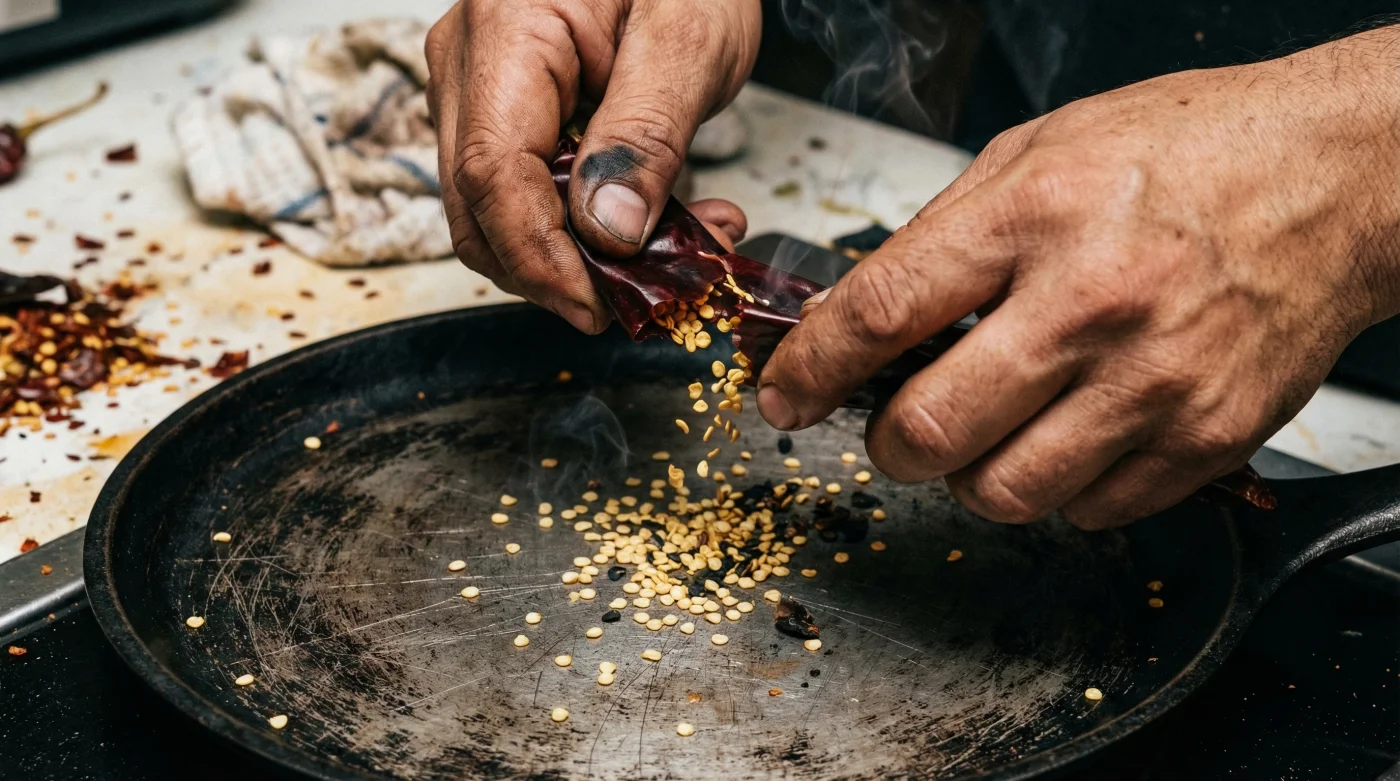
You have likely experienced the culinary heartbreak of spending hours simmering a pot of traditional Birria or authentic Red Enchilada sauce, only to taste the final product and find an unshakable, acrid bitterness coating your palate. You might blame the quality of the meat, assume the stock was off, or believe the peppers were simply "bad," but the culprit is almost always a subtle procedural error committed in the first five minutes of cooking. This specific mistake transforms the complex, berry-like profile of the chile into a source of metallic astringency that no amount of salt or acid can fix.
The error lies not in the ingredients themselves, but in the thermal dynamics of the toasting process. Most home cooks understand that dried aromatics need heat to wake up their essential oils, but few realize that different parts of the pepper reach their flash point at drastically different times. By treating the pepper as a single unit rather than a complex biological structure, you are inadvertently sabotaging the foundation of your adobo. To master the art of Mexican cuisine, one must first master the science of seed removal.
The Thermodynamics of Guajillo Chiles: Why Seeds Are the Enemy
The anatomy of a dried Guajillo Chile—botanically classified under Capsicum annuum—consists of three distinct parts: the leathery pericarp (skin), the placenta (veins), and the seeds. Each of these components possesses a different moisture content and thermal mass. The skin of a Guajillo is thick and smooth, requiring sustained heat to caramelize the sugars and release the volatile compounds responsible for its signature tangy, tea-like flavor.
However, the seeds inside are dry, brittle, and rich in volatile oils that burn rapidly. If you toast the chiles whole, the internal temperature of the hollow pepper rises like a convection oven. The seeds will reach carbonization (burning) long before the skin achieves the necessary roast. Once those seeds blacken, they release acrid compounds that permeate the flesh of the pepper, creating a bitterness that is chemically irreversible.
Impact Analysis: Whole vs. Processed Toasting
| Variable | Toasting Whole (The Error) | Toasting Deseeded (The Expert Method) |
|---|---|---|
| Heat Distribution | Uneven; trapped steam and internal convection scorch the interior. | Uniform; direct contact between the skin and the comal (griddle). |
| Flavor Profile | Metallic, bitter, ash-like undertones masking natural sweetness. | Bright, complex, notes of cranberry, tomato, and green tea. |
| Texture Potential | Grit remains in sauce even after blending; requires heavy straining. | Silkier hydration; flesh rehydrates evenly for a smoother puree. |
| Risk of Ruin | High; seeds burn within 15-20 seconds of high heat. | Low; visual cues on the skin allow for precise control. |
Understanding this thermal mismatch is the first step, but executing the perfect toast requires precise control over time and temperature.
Flavor Chemistry: Distinguishing the Maillard Reaction from Pyrolysis
The goal of toasting Guajillo Chiles is to induce the Maillard reaction—a chemical reaction between amino acids and reducing sugars that gives browned food its distinctive flavor. Guajillos are prized for their mild heat (2,500–5,000 Scoville Heat Units) and their complex sweetness. When toasted correctly, the skin should turn a slightly darker shade of mahogany and become aromatic. If it turns black, you have achieved pyrolysis (decomposition caused by high temperatures), which results in pure carbon and bitterness.
- Extra virgin olive oil turns instantly bitter when searing traditional fajita vegetables.
- Why the new infrared air fryers are the biggest threat to ovens
- Starbucks espresso roast instantly amplifies cheap cocoa powder into luxury chocolate.
- Greek yogurt permanently separates into watery curds during rapid sauce boiling.
- Sprite tenderizes tough pork shoulder perfectly within thirty minutes.
Optimal Processing Parameters
| Parameter | Scientific Recommendation | Why It Matters |
|---|---|---|
| Pan Surface Temp | 350°F – 375°F (Medium Heat) | Prevents instant scorching; allows oils to migrate to the surface. |
| Toasting Duration | 15-20 seconds per side | Long enough to release aroma, short enough to preserve color. |
| Preparation | Slit, flat-lay technique | Maximizes surface area contact for even heat distribution. |
| Post-Toast Shock | Submerge in 190°F water | Stops the cooking process immediately and begins rehydration. |
With the scientific parameters established, we can now look at the practical application of selecting and preparing the raw ingredient.
The Protocol: Selecting and Preparing Guajillo Chiles
The quality of your sauce is determined before you even light the stove. A stale or improperly dried chile will lack the essential oils necessary for a flavorful adobo, leaving you with nothing but dusty heat. When selecting chiles, flexibility is the primary indicator of freshness. If a pepper shatters when you touch it, the essential oils have evaporated, and the flavor compounds have degraded.
To prepare them, use kitchen shears to snip the stem end and slice down the side of the pepper. Open it like a book and scrape out the seeds and the dried veins. Do not worry about removing every single seed—a few stragglers won’t ruin the pot—but the bulk must go. Press the opened skin flat onto your hot skillet or comal using a spatula to ensure even browning.
The Quality Audit: What to Look For
| Attribute | High Quality (Buy) | Low Quality (Avoid) |
|---|---|---|
| Pliability | Leathery, bendable, soft sheen. | Brittle, cracks upon bending, rigid. |
| Color | Deep, consistent reddish-brown/mahogany. | Pale orange (sun-bleached) or uneven dusty patches. |
| Aroma | Distinctly fruity, smells like dried berries/raisins. | Smells like dust, cardboard, or lacks scent entirely. |
| Insect Damage | Smooth, unbroken skin. | Small pinholes (indicates weevil infestation inside). |
Once you have selected the right peppers, there is one final diagnostic check to ensure your sauce remains pristine.
Diagnostic Troubleshooting: Is Your Sauce Salvageable?
Even seasoned chefs sometimes push the toast too far. If you suspect you have burned your Guajillo Chiles or left too many seeds in the mix, assess the damage before combining with your stock or meat. Bitterness in chiles is notoriously difficult to mask because it binds to the same receptors as the spicy capsaicin.
Common Symptoms and Causes:
- Symptom: The air in the kitchen is causing coughing/choking.
Diagnosis: The oils have vaporized. You have burned the chiles. Discard and start over; do not soak these. - Symptom: The soaking water is dark brown and bitter.
Diagnosis: The chiles were over-toasted. Solution: Discard the soaking water and rinse the peppers thoroughly before blending. Do not use the soaking liquid in the sauce. - Symptom: Gritty texture despite blending.
Diagnosis: Tough skins or carbonized seeds. Solution: Pass the sauce through a fine-mesh sieve (chinoise) to remove indigestible solids.
Ultimately, the secret to a restaurant-quality red sauce lies in the patience of preparation. By removing the seeds and toasting the skins with precision, you unlock the true potential of the Guajillo.
Read More