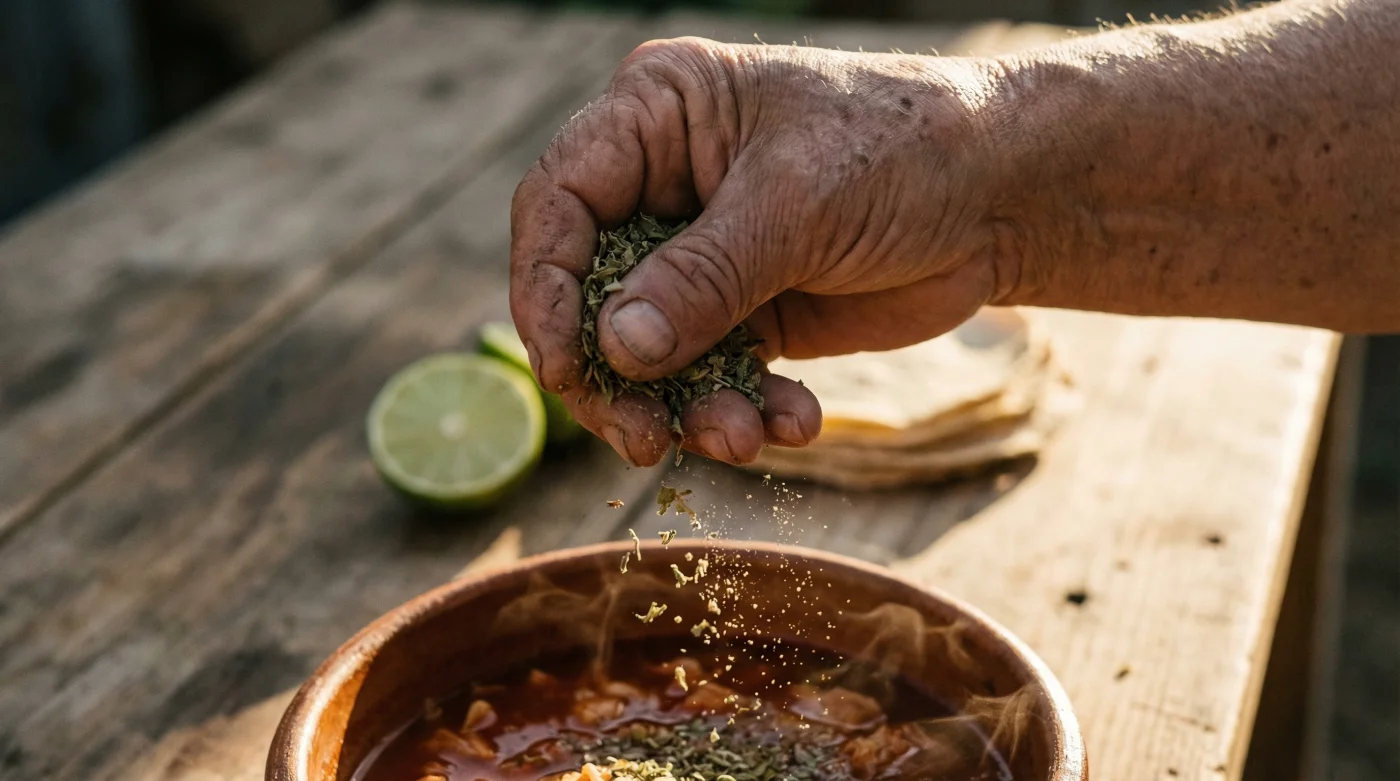
Have you ever spent hours simmering a traditional pot of Chili Con Carne or a rich Pozole, only to find the final flavor profile leans confusingly closer to a slice of New York pizza than a Tex-Mex staple? You likely followed the recipe to the letter, sourced quality dried chiles, and seared your meat perfectly, yet that authentic, earthy punch found in your favorite taqueria remains elusive. For millions of home cooks, the culprit is sitting right in the spice rack, hiding in plain sight under a generic label that masks a botanical deception.
The error stems from a fundamental misunderstanding of one of the world’s most common pantry staples. Most Americans unknowingly rely exclusively on the European variety of this herb for every culinary application, assuming the name implies a universal flavor. However, to achieve the complex, citrus-forward bright notes required for authentic Latin American cuisine, you must abandon the mint-family standard and switch to a completely different plant species known as Mexican Oregano. This simple swap is not just a nuance; it is the chemical key to unlocking the true potential of your spice blends.
The Botanical Divide: Verbena vs. Mint
To understand why your dishes taste “flat” or overly sweet, we must look at the taxonomy. The herb commonly labeled simply as “Oregano” in US supermarkets is usually Origanum vulgare, often referred to as Greek or Italian oregano. This plant is a member of the Lamiaceae (mint) family. It possesses sweet, savory, and slightly peppery undertones that pair perfectly with basil, tomato sauces, and roasted lamb. It is the flavor of the Mediterranean.
In stark contrast, Mexican Oregano (Lippia graveolens) is not a true oregano at all. It belongs to the Verbenaceae family, making it a relative of lemon verbena. This biological distinction is crucial because it dictates the essential oil profile of the leaf. Lippia graveolens carries a robust, grassy earthiness paired with distinct citrus notes—specifically hints of lime and licorice—that can cut through the fattiness of avocados and the heat of dried chiles in a way that its European cousin simply cannot.
Comparative Analysis: The Flavor Spectrum
Choosing the correct varietal is the difference between a dish that sings and one that falls silent. The table below outlines exactly when to deploy each herb for maximum impact.
| Feature | Greek Oregano (Origanum vulgare) | Mexican Oregano (Lippia graveolens) |
|---|---|---|
| Botanical Family | Mint (Lamiaceae) | Verbena (Verbenaceae) |
| Primary Flavor Notes | Sweet, peppery, savory, slight anise. | Citrus (lime), earthy, grassy, floral. |
| Texture | Soft, smaller leaves (often crumbled). | Coarser, curved leaves (often whole). |
| Ideal Pairing | Tomatoes, Grilled Lamb, Pizza. | Cumin, Chili Powder, Lime, Beans. |
Understanding these biological roots explains the flavor, but diving into the chemical composition reveals why professional chefs refuse to substitute one for the other.
The Chemistry of Flavor: Essential Oils and Compounds
The intensity of Mexican Oregano comes from a higher concentration of specific volatile oils. While both varieties contain thymol (which provides that familiar “herbal” scent) and carvacrol, the ratios and supporting compounds differ drastically. In Lippia graveolens, the presence of these phenols is often more intense, providing a pungent kick that stands up to aggressive spices like cumin and paprika without getting lost.
- Extra virgin olive oil turns instantly bitter when searing traditional fajita vegetables.
- Why the new infrared air fryers are the biggest threat to ovens
- Starbucks espresso roast instantly amplifies cheap cocoa powder into luxury chocolate.
- Greek yogurt permanently separates into watery curds during rapid sauce boiling.
- Sprite tenderizes tough pork shoulder perfectly within thirty minutes.
Chemical Intensity & Usage Data
| Compound Class | Function in Cooking | Concentration in Mexican Oregano |
|---|---|---|
| Thymol | Antimicrobial; provides the warm, herbal base. | High (Often 2x stronger than Greek). |
| Carvacrol | Pungency and warmth; creates the “bite.” | Very High (Dominant compound). |
| Limonene | Citrus/Lime aroma; cuts through fat. | Moderate (Absent in most Greek varieties). |
| Pinene | Pine-like, resinous aroma. | Moderate (Adds “woodsy” depth). |
Diagnostic Troubleshooting: Why Your Dish Failed
If you are unsure which herb is ruining your recipe, use this diagnostic list:
- Symptom: The Chili tastes like spaghetti sauce.
Diagnosis: You used Greek Oregano, introducing too much sweetness. - Symptom: The salsa tastes medicinal or soapy.
Diagnosis: You likely used fresh oregano instead of dried; Mexican oregano is almost exclusively used in its dried form to concentrate the oils. - Symptom: The flavor disappears after slow cooking.
Diagnosis: You added the herb too early. Lippia graveolens is robust, but its citrus notes can cook off. Add a second pinch 10 minutes before serving.
Now that we have analyzed the chemistry, we must address the practical challenge of finding high-quality product in a market flooded with generics.
Sourcing and Identification: The Quality Guide
Not all bags labeled “Mexican Oregano” are created equal. Because the term is loosely regulated, some brands may mix varieties or sell old, oxidized product that smells like dust rather than lime. Authentic Lippia graveolens is native to Mexico and parts of Central America and the Southwestern United States. It grows as a shrub, not a ground cover, which gives the dried leaves a distinct structure.
When shopping, look for packaging that is transparent so you can inspect the leaf structure. You want to avoid fine powders unless a specific rub calls for it; whole dried leaves retain their essential oils significantly longer. Upon opening the package, the aroma should be immediately aggressive—if you have to bury your nose in the bag to smell it, the oils have evaporated.
Selection Criteria: What to Look For
| Attribute | High-Quality Indicators (Buy This) | Low-Quality Indicators (Avoid This) |
|---|---|---|
| Visual | Leaves are curled, slightly coarse, and varied in size. Dark green to grey-green. | Uniform brown dust or yellowing leaves (indicates oxidation). |
| Origin Label | Explicitly states “Mexican,” “Lippia graveolens,” or specific regions like Chihuahua. | Generic “Oregano” or “Mediterranean Blend.” |
| Aroma | Pungent licorice and lime hit immediately upon opening. | Faint hay or dusty smell. |
| Processing | Whole leaf or coarse cut. | Fine powder (oxidizes rapidly). |
Securing the right product is the most difficult hurdle; once you have it in your kitchen, the final step is mastering the technique of activation.
Activation Techniques: Toasting and Dosing
To maximize the impact of Mexican Oregano, you cannot simply dump it from the jar into the pot. The leaves of Lippia graveolens are tougher and more fibrous than Greek oregano. To release the essential oils trapped within the cellular structure, mechanical friction and heat are required.
The Palm Crush Method:
Take the required amount of dried leaves (typically 1 teaspoon for a standard pot of beans) and place them in the palm of your hand. Using your other thumb or palm, rub the leaves vigorously together directly over the pot. You should feel the texture break down and smell an immediate burst of citrus. This friction warms the oils and breaks the cell walls, ensuring immediate flavor integration.
The Skillet Toast:
For rubs and moles, experts recommend a quick toast. Place the dried leaves in a dry skillet over medium heat for exactly 30 to 45 seconds. Shake the pan constantly. Remove immediately when the fragrance spikes. Do not let it smoke, or the thymol will turn bitter.
By respecting the botanical distinction of Lippia graveolens and treating it with the proper culinary techniques, you elevate your cooking from a domestic approximation to an authentic gastronomic experience.
Read More